Field notes
Best Soft Plastics and How to Fish Them
Best Soft Plastics and How to Fish Them
The best soft plastics are the ones you can rig to match the water in front of you, not the ones with the loudest packaging. A soft plastic is the most adaptable bait in fishing: change the hook, the weight, or the retrieve and the same body imitates a worm, a baitfish, a craw, or a shrimp. That flexibility is why a small collection of shapes covers bass ponds, walleye lakes, and inshore flats. This guide sorts out the core soft plastic shapes, explains how to rig each one for open water, cover, and current, and covers the sizes, colors, and retrieves that catch fish rather than just filling a tackle bag.
Why Soft Plastics Work Everywhere
A soft plastic is a chunk of scented or unscented plastic molded into a shape that moves. It has no built-in action, no rattle, and often no realistic paint job. What it has is versatility.
- You control the action. A rod-tip twitch, a slow lift, or a dead stick changes how the bait looks. No hard bait can do that.
- It can be rigged weedless. A soft plastic with a buried hook slides through grass, brush, and lily pads where treble-hooked lures cannot go.
- It covers every depth. Weightless, it sinks slowly in inches of water. On a heavy jighead, it works a channel. On a drop-shot rig, it suspends above the bottom.
- It is cheap and repairable. Torn baits can be glued or trimmed, and losing one costs less than losing a crankbait.
The trade-off is that soft plastics demand more from the angler. A crankbait wobbles on its own; a soft plastic only looks alive if you make it. That is also why soft plastics reward learning. Once you understand how a bait responds to the rod, you can adapt to almost any water. The live bait vs lures comparison explains when a real worm still wins.
The Core Shapes Worth Carrying
Most soft plastic fishing runs through a handful of shapes.
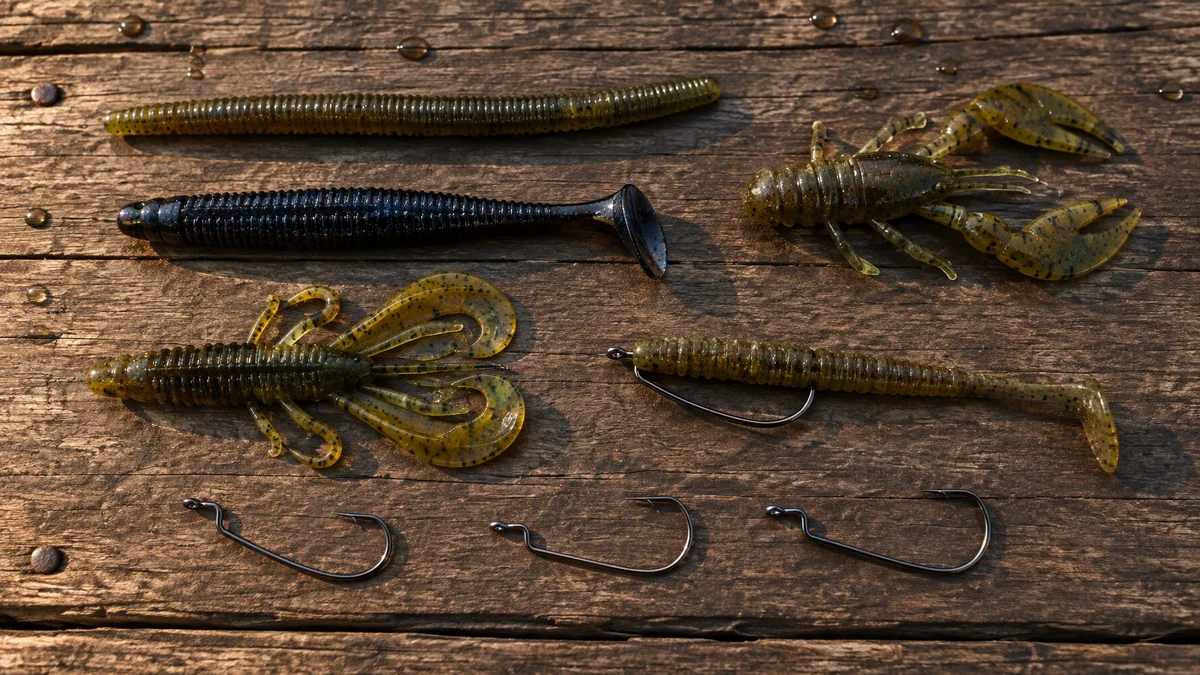
- Stick worms — the Senko-style bait. A straight, salty plastic that shimmies as it falls. Fished weightless and Texas-rigged or wacky-rigged, it is the default bass bait in ponds and shallow lakes.
- Curly-tail grubs — 2 to 4 inches, with a tail that throbs at slow speed. A panfish and walleye staple on jigheads.
- Paddle-tail swimbaits — 3 to 5 inches, with a boot or paddle tail that kicks on a steady retrieve. The best search bait for bass, walleye, and inshore fish.
- Creature baits and craws — bulky plastics with claws and appendages. Texas-rigged around cover and on spawning flats.
- Jerk shads and flukes — slim, darting baits that imitate baitfish. Good over grass and around docks.
- Tubes — hollow baits that glide and spiral on the fall, with a jighead inserted inside.
- Ned-style baits — short, buoyant plastics on a light mushroom head. A finesse option for pressured fish.
If you carry stick worms, grubs, paddle tails, and one creature bait, you can fish almost any freshwater situation. Add jerk shads and a few Ned baits for clear, pressured water.
Rigging for the Water
Rigging is where soft plastics separate from other lures. The same bait fishes differently depending on how it is hooked.
Texas rig — a bullet weight above an offset hook, with the hook point buried in the plastic. This is the weedless standard for grass, brush, and rock. Use it when you need the bait to slide through cover. How to tie a Texas rig walks through the setup.
Weightless Texas or wacky — no weight, slow fall, maximum shimmy. Best in shallow water and around docks where a fast drop spooks fish. A wacky-rigged stick worm hooked through the middle falls even slower.
Carolina rig — a weight above a swivel and a leader, with the bait dragging behind. It covers deep structure and keeps the bait in the strike zone while the weight ticks bottom. The Carolina rig basics guide covers leader length and retrieve.
Drop shot — a hook tied above a weight, so the bait suspends and quivers in place. Deadly for pressured bass and deep walleye.
Swimbait hook — a weighted hook with a screw-lock keeper, used with paddle tails for a straight, snag-resistant retrieve.
Ned head — a light mushroom jighead that stands the bait up on the bottom.
Hook size should match bait size. A 4- to 5-inch plastic usually takes a 1/0 to 3/0 offset hook; a 6- to 7-inch bait takes a 4/0 to 5/0. Too small a hook lacks bite; too large kills action. The fishing hook sizes chart is a useful cross-check.
Sizes and Colors by Water and Season
Size is the first decision, color the second.
- Panfish and crappie — 2- to 3-inch grubs, tubes, and small paddle tails.
- Bass — 4- to 5-inch stick worms and creatures in most water, 6- to 7-inch worms and swimbaits for big fish and thick cover.
- Walleye — 3- to 5-inch grubs, paddle tails, and jerk shads on jigheads.
- Inshore fish — 3- to 5-inch paddle tails and jerk shads, plus shrimp imitations.
For color, start natural in clear water: green pumpkin, watermelon, shad, and translucent baitfish tones. In stained water, darker solids and chartreuse tails add visibility. In muddy water, black-blue and dark red with some flash or vibration help fish find the bait. Junebug and black-blue are classic low-light and dirty-water bass colors.
Season changes the presentation more than the color. In spring, fish shallow with weightless stick worms and creature baits. In summer, fish early and late with swimbaits and topwater, and slow down around deep cover at midday. In fall, paddle tails and jerk shads match baitfish. In winter, downsize, slow down, and fish the drop shot or Ned rig. The best lures for pond fishing guide applies the same logic to small water.
Soft Plastics by Species and Water
Largemouth bass — stick worms around docks and grass, creature baits on spawning flats, paddle tails along weed edges. The largemouth bass guide covers seasonal patterns.
Smallmouth bass — tubes and drop-shot plastics on rocky points and river current. The smallmouth bass guide explains the rock-and-current focus.
Walleye — grubs and paddle tails on jigheads, fished slow along breaks and structure. See how to catch walleye.
Redfish and flounder — paddle tails, jerk shads, and shrimp imitations on jigheads around oyster bars and grass. The best inshore lures guide and how to catch redfish cover saltwater rigging and retrieves.
Panfish — small grubs and tubes under a bobber or on a light jighead. The pond fishing for beginners article pairs them with simple rigs.
Retrieves and Hook Sets
A soft plastic is only as good as its retrieve.
- Lift and drop — the foundational bass retrieve. Lift the rod tip, let the bait fall on a semi-tight line, and watch for the line to tick or move sideways. Most strikes come on the fall.
- Slow drag — for cold water and bottom-oriented fish. Drag the bait along the bottom with short pauses.
- Slow roll — a paddle tail retrieved just fast enough to thump. Good for covering water and finding active fish.
- Twitch and pause — for jerk shads and flukes. Sharp twitches followed by a dead pause trigger reaction strikes.
- Dead stick — cast, let it sit, and do almost nothing. Pressured fish often eat a motionless bait.
Hook sets depend on the rig. With a Texas rig, reel down until you feel weight, then sweep the rod sideways. With a swimbait hook or a moving bait, a firm sweep is enough. With a drop shot, lift the rod and reel. Do not swing for the fences on a soft plastic; excess force tears the bait and pulls hooks out of thin lips.
Common Mistakes
- Wrong hook size. A hook that is too small misses fish; one that is too large ruins action. Match hook to bait length.
- Over-rigging. Bulky weights, large swivels, and heavy line kill the natural fall that makes soft plastics work.
- Fishing too fast in cold water. Winter fish want a bait that barely moves. Slow down before changing baits.
- Changing color too soon. Depth and speed matter more than color. Fix the presentation first.
- Ignoring the fall. Many strikes happen while the bait sinks. Watch the line, not just the rod tip.
- Using worn baits that will not stay rigged. Torn plastics slide down the hook and foul. Replace or glue them.
- Heavy line in clear water. It reduces action and spooks fish. Step down the leader when fish are wary.
FAQ
What are the best soft plastics for bass? Stick worms, creature baits, and paddle-tail swimbaits cover most bass situations. Start with a weightless stick worm in green pumpkin and a 4-inch paddle tail on a 1/8- to 1/4-ounce jighead.
Is a Ned rig better than a Texas rig? They solve different problems. The Texas rig is weedless and covers cover; the Ned rig is finesse for pressured, clear water and cold conditions. Carry both.
What color soft plastic should I use in muddy water? Dark, solid colors — black-blue, dark red, junebug — with some flash or vibration. In muddy water, fish locate baits by feel and sound more than sight.
Can you use soft plastics in saltwater? Yes. Paddle tails, jerk shads, and shrimp imitations on jigheads are standard inshore baits. Rinse them after saltwater use to keep the plastic from degrading.
How long do soft plastics last? It depends on the plastic and how often it is used. Scented baits dry out and tear faster. Store them in their original bags, keep them out of direct sun, and glue torn baits to extend their life.
Soft plastics reward experimentation more than any other lure family. Learn one shape, then change weight, hook, and retrieve until it matches the water. The Baits & Lures category collects the related guides, and how to fish a spinnerbait is the natural next step when you want to cover water faster.
About the author and how this was tested
About the author
FishermanGuy
Bank, boat and kayak angler · fishing, crabbing and shrimping since 2021
I buy the gear, fish it for a season and write down what failed. No sponsored verdicts, no free-sample flattery. Every rig on this page has landed fish in water I can point at on a map.
How this was tested
- Every rig gets at least six trips on the same water before it is published.
- Gear is bought at retail. Free samples are labelled in the first paragraph.
- Dates show first publication and the last time the page was updated.