Field notes
How to Catch Redfish: Tactics, Baits & Timing
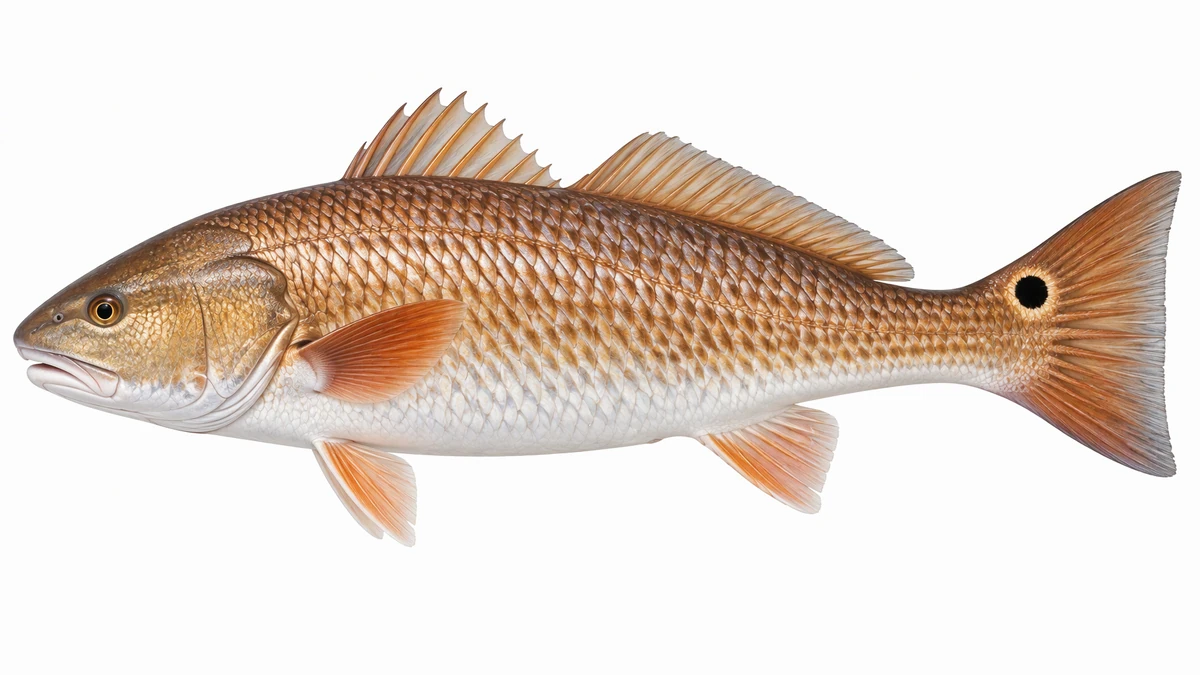
How to Catch Redfish
The redfish is the fish Gulf Coast anglers plan whole trips around, and for good reason. It bites readily, fights with a hard first run, and turns up everywhere from Texas marsh flats to Carolina surf. Learning how to catch redfish is really about reading tides, matching the bait they already eat, and knowing which fish you are allowed to keep — because the same Sciaenops ocellatus is a rat red in one hand and a bull red in the other. For identification, range, and biology, read the full Redfish species profile; here we focus on catching them.
Best Time to Catch Redfish
The best time to catch redfish is fall, especially around the Bull Redfish Run that pushes big fish onto Gulf beaches from roughly mid-August through October. Stormy weather during that run often fires the bite, and surf and pier anglers wait all year for it.
The season is only half the story. Day to day, redfish feed most actively on a moving tide, so plan around the tide rather than a clock. Many inshore anglers do best in the early morning hours as the water starts to move, working channels, flats, and passes as current delivers food.
Spring and fall put redfish in shallower water — often under 33 feet — where they are easier to reach from a boat, kayak, or the bank. Summer pushes fish deeper, past 98 feet in some cases, so fishing concentrates around deeper structure and passes. Winter gathers them in rivers and tidal creeks.
Water temperature drives the day-to-day pattern too. Redfish are comfortable across a wide range, and the same fish that feeds on a shallow flat in fall may push into a channel in winter. Most redfish stay within about 72 feet of water near shore, with a practical offshore maximum around 141 feet. Watch the tide, the bait, and the temperature together, and the timing makes sense.
Best Gear for Redfish
You do not need heavy offshore tackle for redfish, but you do need gear that can turn a strong fish away from structure. A medium spinning outfit handles most inshore work, with a step up for bull reds in the surf.
| Component | Redfish-ready choice |
|---|---|
| Rod | 7 ft medium to medium-heavy spinning rod |
| Reel | 2500–4000 size spinning reel with a smooth, strong drag |
| Main line | 15–20 lb braid |
| Leader | 20–30 lb fluorocarbon or mono |
| Hooks | 3/0–5/0 circle hooks for bait; 1/0–3/0 jigheads for plastics |
| Extras | Popping corks, a landing net, a measuring board, pliers |
Braid gives you casting distance and a direct connection to the fish, and a longer fluorocarbon leader adds abrasion resistance around oyster bars and shell. Circle hooks improve hookups and reduce gut-hooking on bait, which matters for a fish with strict release rules. A measuring board is essential, because redfish are managed by slot limit and you need an accurate length at the boat.
For surf and bull reds, step up to a 4000-size reel and heavier leader. These fish can run 20 to 50 pounds and beyond, and the first run is where gear fails.
Best Bait for Redfish
The best bait for redfish is what they already eat: shrimp, crabs, and baitfish. Match that menu and you are most of the way there.
Natural bait is the inshore staple.
- Shrimp. Live or fresh shrimp on a circle hook is the universal redfish bait, fished on the bottom or under a popping cork.
- Cut bait. Fish chunks on the bottom draw fish by scent. Cut mullet is the classic surf choice — it is what caught the standing world record.
- Crabs. Adults eat big crabs, and a whole or half crab on the bottom is a solid big-fish bait.
Artificial lures cover water and find active fish.
- Soft plastics. Paddletails and shrimp imitations on a jighead are the go-to, worked slowly along the bottom over grass, shell, and sand.
- Minnow-style lures. Shallow-running minnows do well on the flats where redfish feed.
- Spoons. A gold or silver spoon is a fish-finder around passes, points, and oyster bars.
Around mangroves, oyster bars, and artificial reefs, work lures tight to structure. On open flats, longer casts and a slow, steady retrieve keep fish interested.
Redfish Rigs
A redfish rig puts bait where the fish feed — usually on or near the bottom. These three cover most situations.
Fish-finder rig. Slide an egg sinker onto your main line, add a bead and a swivel, then tie a leader to a circle hook. The weight holds bottom while a fish can take line without feeling it. It is the standard bait rig for surf, passes, and deep channel edges.
Popping cork rig. Tie a popping cork above a leader and a jighead or hook below it. The cork keeps the bait at a set depth, and the popping sound draws fish in. It shines on shallow flats and around grass edges.
Jighead and soft plastic. The simplest artificial setup: a 1/8–3/8 oz jighead with a paddletail or shrimp imitation. Cast it, let it sink, and drag or hop it slowly along the bottom. It covers water fast and is easy to fish from a kayak or the bank.
For big bull reds in the surf, a heavier fish-finder rig with cut mullet and a stout circle hook is the proven setup. Keep the leader long enough to survive a run along shell or sand.
How to Catch Redfish, Step by Step
- Read the tide. Fish moving water — the hour or two around a tide change is often best. Current positions fish and delivers food.
- Look for signs. Tailing fish in shallow grass, mud boils, and nervous bait all point to feeding redfish. Cast to the sign, not at random.
- Make a quiet approach. Redfish in skinny water spook from vibration. Pole or drift in, and cast well ahead of the boat.
- Present the bait naturally. On the flats, lead a feeding fish and let the bait sit or move slowly. On the bottom, keep contact and wait for the tap.
- Wait for the weight. With circle hooks, do not swing hard. Let the fish load the rod and come tight, then reel down and lift.
- Fight with the rod, not the reel. Use side pressure to turn a fish away from structure and keep the drag smooth.
- Measure before you keep. Check the fish against your state's slot limit on the measuring board, and release anything outside it.
When redfish are tailing, the strike can be visual and violent. Cast past the tail, bring the lure into the fish's path, and be ready — a redfish that sees a lure often commits hard.
Where to Catch Redfish
Where to catch redfish depends on the fish's age. Juveniles stay in shallow estuarine water — marshes, oyster reefs, seagrass beds, and small creeks. Adults move out to the coastal surf zone, bay mouths, and natural or artificial reefs.
The range runs from the U.S. Gulf Coast — Texas through Florida — up the Atlantic coast to Massachusetts, with the core states being Texas, Louisiana, Mississippi, Alabama, Florida, Georgia, South Carolina, North Carolina, and Virginia. Cape Cod and Long Island mark the practical northern edge, and fish are now rare north of Chesapeake Bay.
Depth and salinity both matter. Most redfish stay inside about 72 feet of water near shore, and they tolerate everything from tidal freshwater to full-strength salt. That wide tolerance is why they turn up in so many spots, from muddy river mouths to clear Gulf flats.
Look for structure and edges: channel mouths, oyster bars, grass edges, points, passes, and the surf troughs where bait collects. In fall, big fish concentrate at bay mouths and Gulf beaches during the spawn and the Bull Redfish Run.
Redfish Regulations and Safety
Redfish rules are strict and vary a lot by state, so treat any number here as a snapshot to confirm. As of 2025, most states manage redfish with a slot limit plus a daily bag limit, and the slot is designed to protect both small fish and the big breeding fish.
- Florida: an 18–27 inch slot with one fish per person per day (zone-dependent, with vessel limits), open year-round; the Indian River Lagoon is catch-and-release only.
- Texas: a 20–28 inch slot with three per person per day, plus a Red Drum Tag and Bonus Tag that each allow one oversize fish.
- Louisiana: an 18–27 inch slot with four per person per day, with a July 2024 rule prohibiting keeping anything over 27 inches.
- Alabama: a 16–26 inch slot with three per person, one of which may exceed 26 inches.
- Mississippi: an 18–30 inch slot with three per person, one of which may exceed 30 inches.
- Georgia: currently 14–23 inches, with a proposal to move to 15–24 inches.
In federal Gulf waters, redfish harvest is closed under a moratorium, and the species is managed as a game fish in state waters. You will need a saltwater fishing license, with requirements and fees that differ by state. Always check your state's fish and wildlife agency for the current rules.
On safety: redfish have no venom and no venomous spines, and they are safe to eat. The cautions are practical. Large, old fish — the oldest on record reached 37 years — can carry the usual mercury concerns of big marine fish, so check your state's consumption advisories. And a big redfish has large, hard scales and a powerful tail, so handle it with a wet hand or towel and watch your thumb at the boat.
Common Mistakes and Redfish Fishing Tips
- Fishing a dead tide. Redfish feed on moving water. Fish the tide change instead of the middle of slack.
- Swinging on a circle hook. Do not set the hook like a bass angler. Let the fish load the rod and come tight.
- Blowing your approach on the flats. Tailing fish spook from noise and shadow. Cast long and stay quiet.
- Ignoring the slot limit. Measure every fish. Keeping an oversize or undersize redfish can cost you a citation.
- Too-light gear for bull reds. Step up the reel and leader for surf fish or lose them on the first run.
- Skipping the leader around shell. Oyster bars cut line. Use abrasion-resistant leader.
- Only fishing the bottom. Redfish will chase bait up in the water column when it is worth it. Be ready.
- Keeping the big breeders. Releasing bull reds protects the spawn and keeps the run strong.
FAQ
What is the best time to catch redfish? Fall, especially during the Bull Redfish Run from mid-August through October. Day to day, fish a moving tide, and early morning is often best.
What bait for redfish works best? Shrimp and cut bait on the bottom, with cut mullet the classic surf choice. Soft plastics and spoons do the work on artificials.
What are the best redfish fishing techniques for beginners? Fish a moving tide with shrimp on a fish-finder or popping-cork rig. Look for tailing fish on the flats, cast ahead of them, and let circle hooks do the work.
Can you catch redfish from shore? Yes. Surf anglers catch redfish, especially bull reds, on cut bait during the fall run. Fish troughs and passes where bait collects.
Where can you catch redfish? Inshore marshes, bays, passes, and surf from Texas to Florida and up the Atlantic coast to Massachusetts, with the core fishery in the Gulf and Southeast states.
How big do redfish get? Slot keepers run about 18–27 inches and 3–8 pounds. Bull reds over the slot can reach 20 to 50-plus pounds, and the world record is 94 pounds 2 ounces.
Learning how to catch redfish is mostly about water movement and honest bait. Fish the tide, match what the fish eat, respect the slot, and the redfish will reward you with one of the hardest-fighting inshore battles on the coast.
Related Articles
- How to Catch Summer Flounder — another inshore bottom fish on the same flats and channels.
- How to Catch Blue Crab — the estuary staple that redfish love to eat.
- Red Snapper — the offshore reef target for when the inshore bite slows.
- Striped Bass — the Atlantic coast's other great inshore game fish.
About the author and how this was tested
About the author
FishermanGuy
Bank, boat and kayak angler · fishing, crabbing and shrimping since 2021
I buy the gear, fish it for a season and write down what failed. No sponsored verdicts, no free-sample flattery. Every rig on this page has landed fish in water I can point at on a map.
How this was tested
- Every rig gets at least six trips on the same water before it is published.
- Gear is bought at retail. Free samples are labelled in the first paragraph.
- Dates show first publication and the last time the page was updated.