Field notes
How to Catch Summer Flounder: Tactics, Baits & Timing
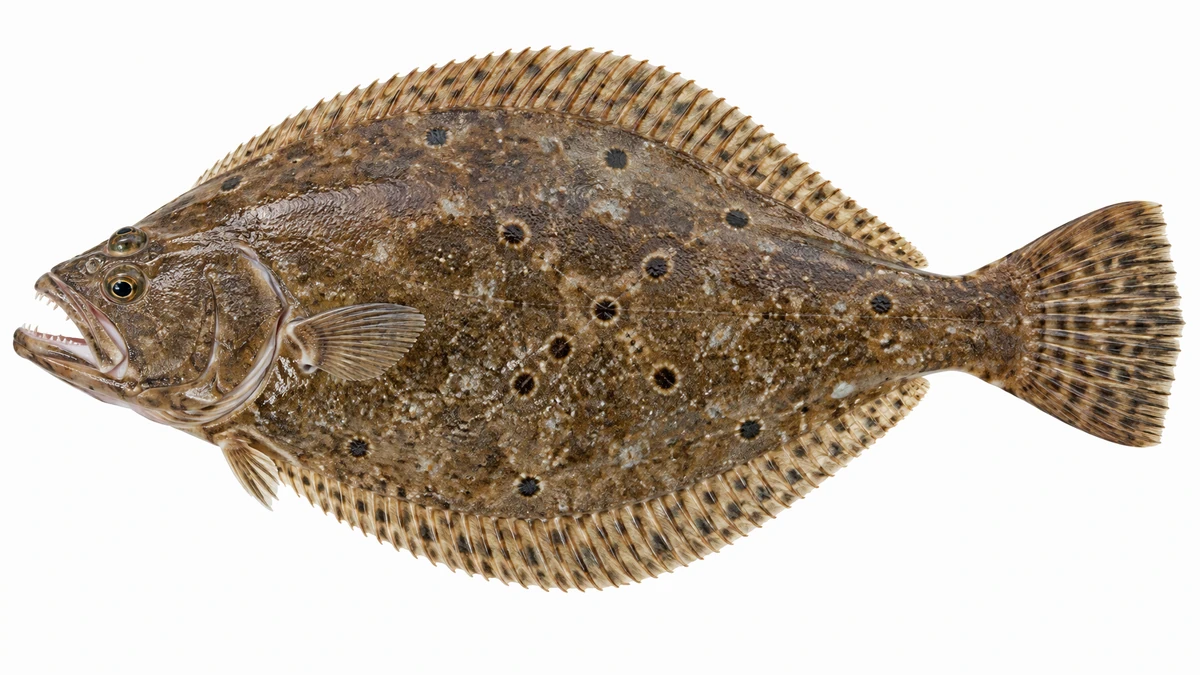
How to Catch Summer Flounder
The summer flounder is the flatfish East Coast anglers call fluke, and it is also the fish behind a lot of sushi-menu hirame. It lies half-buried in the sand, matches the bottom color, and explodes upward to grab bait that drifts too close. Learning how to catch summer flounder comes down to two facts: it is a daytime ambush feeder, and it is only reachable from shore and small boats during the inshore half of the year. For identification, range, and biology, read the full Summer Flounder species profile; here we focus on catching them.
Best Time to Catch Summer Flounder
The best time to catch summer flounder is late spring through early fall, when the fish are inshore in shallow water and estuaries. Summer is the main season, and that is when most anglers do their drifting.
The timing is tied to a hard migration. In winter and early spring, summer flounder move offshore to the edge of the outer continental shelf, overwintering in roughly 100 to 600 feet of water. Late spring and early summer bring them back inshore to shallow water and estuaries, and fall sends them back offshore. That seasonal swing is the whole game — the fish are reachable from shore and small boats only during the inshore half of the year.
Within a day, summer flounder are mostly daytime feeders. That is a useful contrast to many inshore fish that bite best at dawn and dusk. Daylight hours over sandy structure are when a drifting bait pays off, so you do not need to be on the water before sunrise to catch fluke.
Water temperature and bait movement fine-tune the pattern. Fish the inshore shallows and estuary edges as the water warms in late spring, and follow them back toward the inlets and deeper channels as fall pushes them offshore.
Best Gear for Summer Flounder
Summer flounder are aggressive strikers once you find them, but keepers are size-regulated, so gear that lets you feel a light take and land fish cleanly matters. A medium spinning or baitcasting outfit built for drifting does the job.
| Component | Fluke-ready choice |
|---|---|
| Rod | 6 ft 6 in to 7 ft medium spinning or baitcasting rod |
| Reel | 3000–4000 size spinning reel or a low-profile baitcaster |
| Main line | 15–20 lb braid for feel and a direct connection |
| Leader | 20–30 lb fluorocarbon or mono |
| Terminal | Bucktail jigs 1/2–2 oz; sinkers sized to depth and current |
| Extras | A drift sock, a landing net, a measuring board, pliers |
Braid lets you feel a fluke pick up a bait on the drift and set the hook before it drops it. A fluorocarbon leader adds abrasion resistance over sand and shell. Because fluke fishing is often a drift, a drift sock to control speed is a big help — too fast and the fish cannot catch up to the bait.
That said, not every keeper is legal. Keep a measuring board handy, because size limits are the hard part of fluke fishing in most states.
Best Bait for Summer Flounder
The best bait for summer flounder is what it already eats: squid, shrimp, small baitfish, and marine worms. Match that and you are most of the way there.
Natural bait is the traditional choice and still the most reliable for putting keepers in the box.
- Squid strips. A fresh squid strip on a hook is a fluke staple. It stays on the hook through a drift and gives off scent.
- Shrimp. Whole or half shrimp are a strong bait, especially in the estuaries and bays.
- Small baitfish. Strips or whole small fish, including silversides and similar bait, catch fish on the drift.
- Marine worms. Sandworms and bloodworms are deadly in the surf and on the flats.
Artificial lures cover water and are excellent for active fish.
- Bucktail jigs. A bucktail tipped with a strip bait or a soft plastic is the classic fluke lure. Bounce it along the bottom on the drift.
- Soft plastics. Paddletails and scented minnows on a jighead draw reaction strikes from fish that would ignore a plain bait.
Because fluke strike from cover and chase, a slow-moving bait dragged near the bottom is what draws the bite. A live or fresh strip is hard to beat, but a jig with a scented trailer often out-fishes bait when the fish are aggressive.
Summer Flounder Rigs
A summer flounder rig puts bait on or just off the bottom, because that is where a buried, waiting fluke sits. These three cover most drifting.
Bucktail and teaser rig. Tie a bucktail jig to your leader and add a small teaser hook a foot or two above it, often dressed with a strip bait or plastic. The jig bounces along the bottom while the teaser rides above. This is the go-to fluke rig for drifting open water.
Fish-finder (sinker) rig. Slide an egg or bank sinker onto your main line above a swivel, then tie a leader to a hook with a strip bait. The weight keeps the bait on the bottom while a fish can pick it up without feeling the sinker. It is the standard bottom rig for deeper drifts.
Three-way rig. Tie a three-way swivel between your main line, a dropper to a sinker, and a longer leader to a hook or jig. It keeps the bait off the bottom by a measured amount and works well when you want the bait to swim slightly above the sand.
Keep your bait on or just off the bottom, and size the sinker so you stay in contact without dragging. Fluke often sit in a small depression in the sand, so a bait that hugs the bottom gets more looks than one drifting high.
How to Catch Summer Flounder, Step by Step
- Pick a sandy drift. Fluke relate to sand, shoals, channel edges, and estuary flats. Set up a drift that runs over that bottom.
- Control your speed. Slow is almost always better. Use a drift sock, or bump the motor, to keep the bait near the fish.
- Keep the bait on the bottom. Bounce a bucktail or drag a bait along the sand, and keep a tight line so you feel the take.
- Watch for the tap. A fluke often picks up the bait and holds. If you feel weight or the bait stops, lower the rod and set the hook with a firm sweep.
- Set the hook through the bait. Their mouths are big and bony, so a solid hookset is needed. Do not strike too early on a nibble.
- Land it carefully. Fluke have sharp canine teeth in both jaws, so watch your fingers at the boat. Use a net and a wet hand.
- Measure and release. Check the fish against your state's minimum size and bag limit before it goes in the box.
When the drift slows, work the edges of the shoal or move to a new one. Fluke cluster in small areas, so when you find one fish, make another pass over the same spot before you move.
Where to Catch Summer Flounder
Where to catch summer flounder shifts with age and season. Juveniles hold in estuaries, coastal lagoons, marsh creeks, seagrass beds, mudflats, and open bays — Pamlico Sound and Chesapeake Bay are classic nursery water. Adults are bottom fish for life, lying on sand bottoms, shoals, marsh creeks, and seagrass beds, often partially buried.
The range runs along the western Atlantic from Nova Scotia down to Florida's east coast. Within U.S. water, summer flounder are most abundant in the Mid-Atlantic, from Cape Cod, Massachusetts, down to Cape Fear, North Carolina.
That means the best fishing is concentrated. Look for sandy bottom with structure nearby: channel edges, shoals, inlet mouths, and the edges of grass beds. Drift along those edges and cover ground until you find fish. In summer, the inshore bays, estuaries, and nearshore ocean water hold plenty of fish; in fall, work closer to the inlets as the fish begin their offshore migration.
Summer Flounder Regulations and Safety
Summer flounder is one of the most heavily managed inshore fish on the East Coast, and the rules change every year. As of 2025, it is managed jointly by NOAA Fisheries, the Mid-Atlantic Fishery Management Council, and the Atlantic States Marine Fisheries Commission, with an annual total catch limit split roughly 60 percent commercial and 40 percent recreational.
Each state sets its own minimum size, daily bag limit, and open season, and those numbers are usually adjusted annually. That means a slot or minimum size that worked last year may not apply this year. Check your state's fish and wildlife agency for the current rules before you keep anything. You will also need a saltwater fishing license, with requirements and fees that vary by state.
On safety, the summer flounder is non-toxic and safe to eat — the meat is white, tender, and mild, and it is a major East Coast food fish. The one real hazard is the teeth: with sharp canines in both jaws, a live fluke can bite a finger while you unhook it, so handle the head carefully and use pliers on deep hooks.
One more note for peace of mind: according to the 2025 stock assessment, summer flounder is not overfished and not subject to overfishing. It hit a low in the late 1980s and early 1990s and has rebuilt under management since.
Common Mistakes and Summer Flounder Fishing Tips
- Drifting too fast. A fluke is an ambush feeder with a short burst. If your bait races by, it will not chase far. Slow down.
- Fishing off the bottom. Buried fish are on the sand. Keep your bait down and in contact.
- Striking too early. Let the fish load the rod before you set the hook through a bony mouth.
- Skipping the size check. Fluke are size-regulated, and rules move yearly. Measure every fish.
- Ignoring the edges. Shoals, channel edges, and grass edges hold fish. Drift the transition zones.
- Only fishing bait. A bucktail with a scented trailer often out-fishes plain bait when fish are active.
- Handling a live fluke carelessly. The teeth work. Use a net, a wet hand, and pliers.
- Keeping short fish. Releasing undersized fish protects the stock and keeps the fishery healthy.
FAQ
What is the best time to catch summer flounder? Late spring through early fall, when fish are inshore in shallow water and estuaries. Summer is the peak, and daytime hours are when fluke feed most actively.
What bait for summer flounder works best? Squid strips, shrimp, small baitfish, and marine worms on the bottom. A bucktail jig with a strip or scented plastic is the top artificial choice.
What are the best summer flounder fishing techniques for beginners? Drift a bucktail or bottom rig slowly over sandy shoals and channel edges. Keep the bait on the bottom, watch for the tap, and set the hook firmly.
Can you catch summer flounder from shore? Yes, especially in the surf and at inlets during the inshore season. Sandworms and jigs worked along the bottom produce from the beach.
Where can you catch summer flounder? Along the Atlantic from Nova Scotia to Florida, most abundant between Cape Cod and Cape Fear, on sandy bottoms, shoals, bays, and creeks.
How big do summer flounder get? Most run 15–22 inches and 1–4 pounds. Females reach about 3 feet, and the largest documented catch measured 4 feet and 30 pounds.
Learning how to catch summer flounder is mostly about drifting the right bottom at the right speed. Stay on the sand, keep the bait down, slow the drift, and measure every fish — and the fluke will keep your cooler and your fryer busy all summer.
Related Articles
- How to Catch Redfish — another inshore bottom feeder that shares channels and flats.
- How to Catch Blue Crab — the estuary staple found on the same water.
- Striped Bass — the Mid-Atlantic's other great inshore game fish.
- Atlantic Cod — a bottom fish for the offshore side of the migration.
About the author and how this was tested
About the author
FishermanGuy
Bank, boat and kayak angler · fishing, crabbing and shrimping since 2021
I buy the gear, fish it for a season and write down what failed. No sponsored verdicts, no free-sample flattery. Every rig on this page has landed fish in water I can point at on a map.
How this was tested
- Every rig gets at least six trips on the same water before it is published.
- Gear is bought at retail. Free samples are labelled in the first paragraph.
- Dates show first publication and the last time the page was updated.