Field notes
How to Catch Blue Crab: Tactics, Baits & Timing
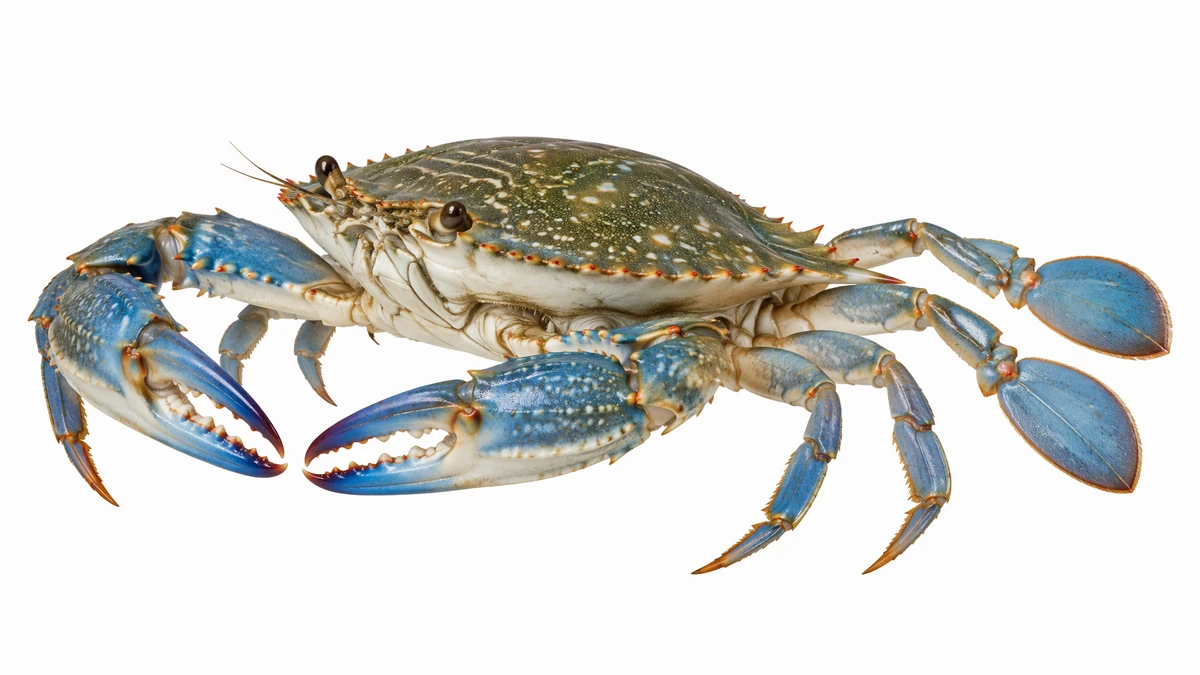
How to Catch Blue Crab
The blue crab is the crab most East Coast anglers picture when someone says "crabbing." It is a swimming crab that turns up from Nova Scotia to Argentina, but nowhere in bigger numbers than the Chesapeake Bay, and it is about as friendly a target as shellfish gets. A chicken-neck hand line runs around $20, and you do not need a boat. Learning how to catch blue crab is mostly about reading its seasons, its molting cycle, and a rulebook that changes from state to state. For identification, range, and biology, read the full Blue Crab species profile; here we focus on catching them.
Best Time to Catch Blue Crab
The best time to catch blue crab is spring through fall in most states, peaking in summer from about June through August, when the water is warm enough for steady feeding and molting.
The year has a clear rhythm. In spring, around April and May, crabs dig out of their winter mud and move shallow, and the first peelers and hard crabs show up. Summer is the peak, with heavy feeding and constant molting. Fall is about fattening up before the females head toward the bay mouth to spawn. Winter is the slow season: crabs bury in deeper, warmer water, mostly inactive, and many states close crabbing or watch it slow to a crawl.
Day to day, dawn and dusk are the prime feeding windows, and a rising tide ramps activity up. Many crabbers swear by the two hours before high tide. The moon matters too — new and full moons bring the month's strongest currents, and a lot of crabbers build trips around the two or three days on either side of them. Quarter moons bring weak tides and, usually, slow pots.
Water temperature is the on-off switch. Around 50°F is the line where shallow-water crabbing either wakes up or shuts down. In the 50s crabs are sluggish; by the 60s and 70s, feeding, growth, and molting all kick into gear. Treat those numbers as a guide, because local conditions bend them.
Best Gear for Blue Crab
Blue crab is a beginner's target because the entry cost is so low and the gear is simple. You can start with a hand line and a net, or scale up to pots and a trotline once you learn the water.
| Gear | What it does |
|---|---|
| Chicken-neck hand line | The classic beginner setup: a baited line you pull up slowly. About $20 to start |
| Long-handled dip net | Scoops crabs at the surface before they let go of the bait |
| Gloves | Protect your hands from claws |
| Cooler or bushel basket | Holds your catch, ideally with some damp seaweed or ice |
| Measuring gauge | Checks each crab against the size limit point-to-point |
| Crab pots or traps | Soak-and-check traps for larger hauls |
| Trotline | A long baited line staked across a creek or flat |
A hand line and a dip net are all you need to get started, and they work from a dock, a bridge, or the bank. As you learn, a crab pot or a short trotline lets you cover more water. Whatever the method, carry a measuring gauge and know your state's minimum size — some crabs look big until you measure them point-to-point across the shell.
Best Bait for Blue Crab
The best bait for blue crab is anything oily and fishy, because crabs are opportunistic scavengers. They eat clams, mussels, and small fish, and they will grab whatever they can catch.
The classic is a chicken neck — cheap, tough, and oily enough to draw crabs from a distance. Tie it to your line and you are in business.
Other proven baits include:
- Fish heads and racks. Oily fish scraps are a top bait for pots and trotlines.
- Chicken parts. Necks, backs, and wings are the budget standard.
- Clams and mussels. Natural prey the crabs already eat.
- Bunker and menhaden. Oily baitfish that put scent in the water.
Because crabs are scavengers, scent matters more than presentation. Fresher, oilier bait draws more crabs and holds them at your line longer. Change bait when it goes pale and washed out, and use a bait box in pots so crabs cannot pull the bait free.
Blue Crab Rigs
A "blue crab rig" is simpler than a fish rig, but there are a few standard setups. These three cover most crabbing.
Chicken-neck hand line. Tie a chicken neck to a length of twine or light rope, drop it to the bottom, and wait. When you feel weight, pull up slowly and steadily, keeping tension so the crab holds on. Slide a dip net under it at the surface before it lets go. It is the classic beginner rig and costs almost nothing.
Crab pot. A box- or dome-shaped trap with bait inside and funnels that let crabs in but not out. Bait it with fish or chicken, drop it on a line with a float, and let it soak. Check it regularly, then measure and sort the catch.
Trotline. A long line staked at both ends with bait tied every few feet along it. You work the line from a boat, pulling it up slowly and netting crabs as they come. It covers far more water than a hand line and is a favorite in the mid-Atlantic.
Whichever you choose, the key is to keep the bait fresh and to check frequently. A crab that sits in a pot too long is a crab a competitor takes, and a bait that stops smelling stops working.
How to Catch Blue Crab, Step by Step
- Check the rules and the tide. Confirm your state's license, size limit, and season, then plan around a rising tide near dawn or dusk.
- Set up where crabs move. Fish docks, creek mouths, grass edges, and structure where crabs feed and travel.
- Bait up. Tie a chicken neck or fish scrap to your hand line, or load your pot or trotline with fresh, oily bait.
- Work the bait slowly. Crabs grab and hold. Pull up with steady tension rather than a fast jerk that spooks them into letting go.
- Net before the surface. Slide the dip net under the crab as it nears the top, before it lets go of the bait.
- Measure every crab. Check each one point-to-point against the minimum size, and release shorts, sponge crabs, and any protected fish.
- Keep them cool. Put keepers in a cooler or basket with damp seaweed or ice, and keep them out of direct sun.
The whole game is patience and a slow hand. A crab that feels a sudden jerk will drop the bait and disappear. Keep tension, bring it up smooth, and net it low.
Where to Catch Blue Crab
Where to catch blue crab is brackish water, mostly. These crabs live in estuaries, bays, and nearshore coastal water, anywhere from the intertidal zone down to roughly 120 feet deep. They favor shallow grass beds — eelgrass and widgeon grass — along with mud and sand bottoms, and they tolerate everything from nearly fresh water to full-strength saltwater.
The range is wide. Blue crabs run the Atlantic from Nova Scotia to Argentina, but the mid-Atlantic is where they pile up. The Chesapeake Bay is the global hotspot — the Maryland and Virginia bay outproduces any other body of water on Earth. Behind it sit North Carolina, the second-biggest producer, and Louisiana, which claims the title of Gulf of Mexico blue crab capital. South Carolina, Delaware, New Jersey, and Florida round out the list, and every one of them has a recreational crabbing scene.
Within a bay or creek, look for structure and edges: pilings, marsh banks, grass beds, creek mouths, and channel edges. Crabs use these areas to feed and to move with the tide. In winter, once shallow water drops below about 50°F, adults pull out of the creeks and bury in deeper, warmer water, so the shallow bite shuts down.
Blue Crab Regulations and Safety
Blue crab rules vary a lot by state and shift year to year, so treat any number here as a snapshot to confirm before you fish. As of 2025, most states require a recreational crabbing or saltwater license, set a minimum size around 5 inches, and require that egg-bearing females — "sponge crabs" — go back everywhere.
- Maryland: recreational crabbers may keep male hard crabs only. The minimum is 5 inches point-to-point before July 14, then 5¼ inches from July 15 through December 15. Female hard crabs and female peelers are off limits. Shore fishing without pots (or with two pots) caps at 2 dozen male hard crabs; a licensed crabber may take 1 bushel. The Chesapeake Bay and its tidal rivers run April 1 through December 15. New recreational boat limits take effect July 1, 2026.
- Virginia: 1 bushel of hard crabs plus 2 dozen peelers per person per day, with a boat total of 1 bushel. Males and immature females need to be 5 inches; mature females carry no size limit. Pots close December 1 through March 16, trotlines run April 15 through October 15, and hand lines, dip nets, and cast nets stay legal year-round in tidal water.
- Louisiana: no recreational minimum size, 12 dozen per person per day, sponge females protected, open all year.
- Texas: no bag or possession limit and a 5-inch minimum, with up to 5 percent of a day's catch undersized for bait in a separate container. There is no closed season, but crab traps must come out of coastal waters for 10 straight days starting the third Friday in February, and you need the saltwater endorsement on your license.
Always check your state's marine agency for the current rules, because these numbers move.
On safety, the blue crab has no venom or poison, but its claws are strong and they will pinch. Handling comes down to one rule: never reach for a crab from the front, because the claws strike forward and to the side. Grip it from behind, pinching the two rear swimming legs together. If one latches on, put it back in the water — a blue crab will open its claw to escape and let go quickly.
Common Mistakes and Blue Crab Fishing Tips
- Pulling too fast. A fast jerk makes a crab let go. Keep steady tension and bring it up slowly.
- Skipping the measuring gauge. Some crabs look big until measured point-to-point. Check every one.
- Forgetting the tide. Crabs feed on moving water. Fish a rising tide, especially the hours before high.
- Ignoring the moon. New and full moons bring strong currents and better crabbing. Quarter moons are slow.
- Keeping sponge crabs. Egg-bearing females are protected almost everywhere and are the future of the fishery.
- Stale bait. Bait that has gone pale and washed out stops drawing crabs. Keep it fresh.
- Grabbing from the front. The claws work. Grip from behind and wear gloves.
- Leaving crabs in the sun. Keep your catch cool and shaded to preserve quality.
FAQ
What is the best time to catch blue crab? Spring through fall, peaking in summer from about June through August. Day to day, dawn, dusk, and a rising tide — especially the two hours before high tide — are best.
What bait for blue crab works best? Chicken necks are the classic budget bait, and oily fish parts, fish heads, clams, and bunker all work. Scent matters more than presentation.
What are the best blue crab fishing techniques for beginners? Start with a chicken-neck hand line and a dip net. Drop the bait, pull up slowly when you feel weight, and net the crab before it lets go at the surface.
Do you need a license to catch blue crabs? In most states, yes — a recreational crabbing or saltwater/shellfish license. Trotlines and multiple pots often need extra permits, so check your state's rules.
Where can you catch blue crabs? In brackish estuaries and bays — shallow grass beds, mud, and sand from the intertidal zone down to about 120 feet. The Chesapeake Bay is the global hotspot.
How big do blue crabs get? Most adults run 5 to 7 inches across the shell. The biggest on record stretch past 9 inches and a pound, and most states set a minimum around 5 inches.
Learning how to catch blue crab is mostly about patience and a slow hand. Fish the right tide, keep the bait fresh, measure every crab, and respect the spawn — and a $20 hand line will fill a cooler all summer.
Related Articles
- How to Catch Redfish — the inshore game fish that shares the same estuaries.
- How to Catch Summer Flounder — another bay-and-creek target worth knowing.
- Dungeness Crab — the West Coast's favorite crab, with its own tactics.
- Brown Crab — a bigger, harder-fighting crab from colder water.
About the author and how this was tested
About the author
FishermanGuy
Bank, boat and kayak angler · fishing, crabbing and shrimping since 2021
I buy the gear, fish it for a season and write down what failed. No sponsored verdicts, no free-sample flattery. Every rig on this page has landed fish in water I can point at on a map.
How this was tested
- Every rig gets at least six trips on the same water before it is published.
- Gear is bought at retail. Free samples are labelled in the first paragraph.
- Dates show first publication and the last time the page was updated.