Field notes
Summer Flounder: Identification, Habitat & Diet
Summer Flounder: Identification, Habitat & Diet
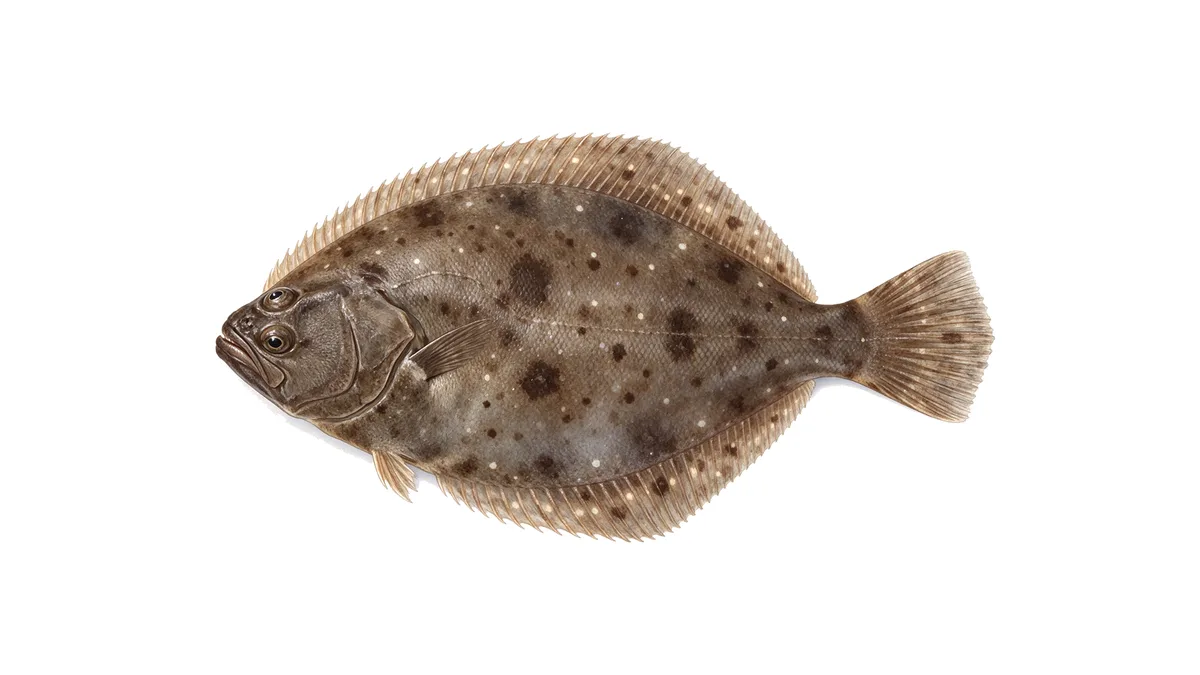
The summer flounder is the flatfish East Coast anglers call fluke — and it's also the fish behind a lot of sushi-menu hirame. Paralichthys dentatus is a left-eyed flounder that lies half-buried in the sand, changes color to match the bottom, and explodes off it to grab bait. It's a bottom fish with a short, fast burst, and it's one of the most important food flounders in the western Atlantic.
Summer Flounder at a Glance
| Field | Detail |
|---|---|
| Scientific name | Paralichthys dentatus |
| Common names | Fluke, summer flounder, northern fluke, hirame (sushi) |
| Typical size | 15–22 in, usually 1–4 lb; males over 2 ft, females to 3 ft |
| Water | Northwest Atlantic, from Nova Scotia to Florida's east coast |
| Difficulty | Varies — an aggressive striker once you find it, but keepers are size-regulated |
| Best season | Late spring to early fall in inshore shallows; summer is the main season — check your state's open season |
Summer Flounder Identification: How to Tell a Fluke Apart
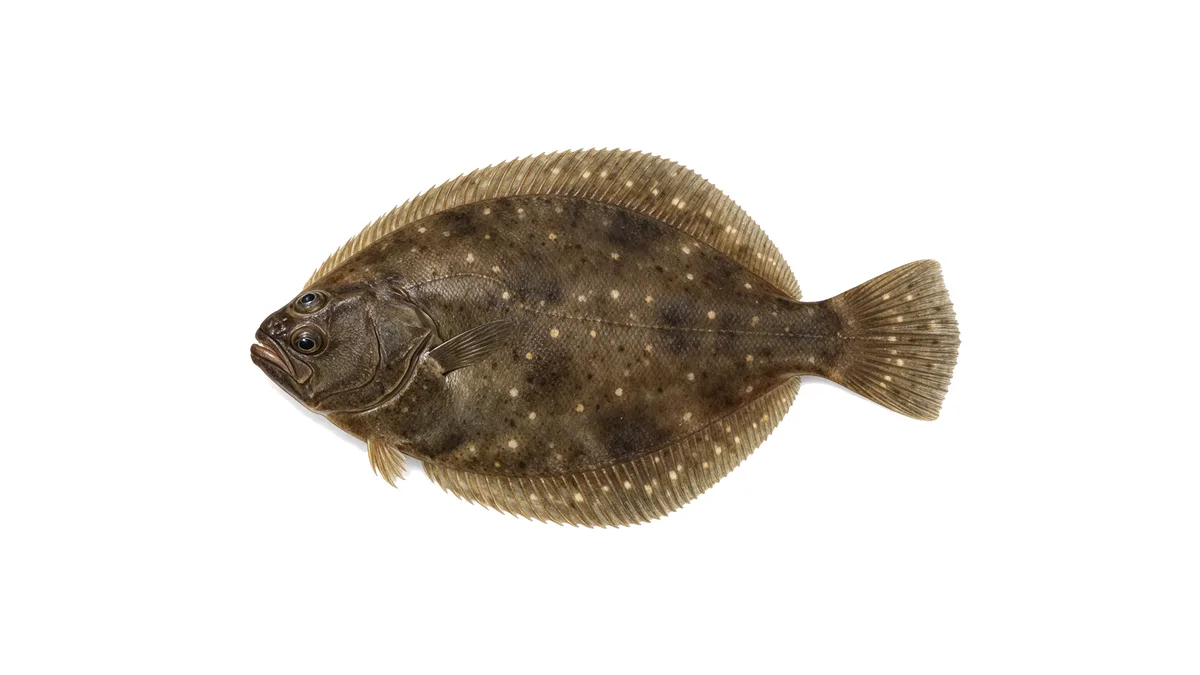
Summer flounder identification starts with the eyes. This is a left-eyed flatfish: both eyes sit on the left side of the head when you hold the fish dorsal-side up. The right eye migrates around the head to the left side during the juvenile's metamorphosis — the body flattens out and the fish settles onto its right side for life.
The body is extremely flat, with the eyed (top) side in browns, grays, and darks and the blind (bottom) side white. Across the top run 5 to 14 ocellated spots, and at least five of the dark spots line up in a rough "X" — that X is the field mark that sorts fluke from everything else.
Two more things stand out. The mouth is large and full of sharp canine teeth in both jaws, and the fish is a color-matching machine — a "chameleon of the sea" that shifts its hue and pattern to copy the color and grain of whatever bottom it's sitting on. That camouflage is what lets a fluke sit in plain sight and stay unseen, so the X of dark spots is the reliable tell when you finally get one in hand.
Summer Flounder vs Winter Flounder and Similar Species
The summer flounder vs winter flounder matchup is the one to memorize:
- Eyes — summer flounder is left-eyed; winter flounder (Pseudopleuronectes americanus) is right-eyed.
- Mouth — summer flounder has a big mouth with sharp teeth; winter flounder has a tiny mouth, thick lips, and small or missing teeth.
- Spots — summer flounder shows the X-shaped ocellated spots; winter flounder has no such spots and runs plain and dark.
Southern flounder (Paralichthys lethostigma) ranges farther south and can overlap with fluke around Florida, but it lacks the ocellated spots. Windowpane flounder (Scophthalmus aquosus) is also left-eyed and gets confused with fluke, but it doesn't carry the distinct spots either.
Is a Summer Flounder Dangerous?
No. The summer flounder is non-toxic and safe to eat — the meat is white, tender, and mild, and it's one of the most important food flounders on the East Coast for both commercial and recreational fisheries. There are no venomous spines or toxin concerns. The one thing to watch is the teeth: with sharp canines in both jaws, a live fluke can bite a finger while you're unhooking it. Handle the head carefully.
Summer Flounder Habitat: Where Do Summer Flounder Live?
Summer flounder range the western Atlantic from Nova Scotia down to Florida's east coast. Within U.S. water, they're most abundant in the Mid-Atlantic, from Cape Cod, Massachusetts, down to Cape Fear, North Carolina.
Where do summer flounder live shifts with age and season. Juveniles hold in estuaries, coastal lagoons, marsh creeks, seagrass beds, mudflats, and open bays — Pamlico Sound and Chesapeake Bay are classic nursery water. Adults are bottom fish for life, lying on sand bottoms, shoals, marsh creeks, and seagrass beds, often partially buried in the sand.
They migrate hard. In winter and early spring they move offshore to the edge of the outer continental shelf, overwintering in roughly 100 to 600 ft of water. Late spring and early summer bring them back inshore to shallow water and estuaries; fall sends them back offshore. That seasonal swing is the whole game for anglers — the fish are reachable from shore and small boats only during the inshore half of the year.
What Do Summer Flounder Eat?
What do summer flounder eat depends on their stage. Larvae and post-larvae feed on zooplankton and small crustaceans. Juveniles take crustaceans and small fish. Adults turn opportunistic, eating small fish, squid, shrimp, crabs, and marine worms.
They're ambush predators. A fluke buries partway into the sand, camouflages to the bottom, leaves only its head exposed, and waits — then lunges when prey swims close. It's mostly a daytime feeder, and though it lives on the bottom, it's quick over short distances and will chase prey up into the mid-water or all the way to the surface.
When do summer flounder spawn? Spawning happens during the fall-to-early-winter offshore migration, peaking in October and November. Fluke mature around two to three years old, and a female releases anywhere from 460,000 to more than four million eggs, depending on her size.
How Big Do Summer Flounder Get? Size and Regulations
The typical summer flounder runs 15–22 in and 1–4 lb. They live about 12–14 years, with the oldest on record at 20. The largest caught measured 4 ft and weighed 30 lb, and Maryland's Chesapeake Bay state record sits at 15 lb.
When you search "world record summer flounder," you'll mostly run into that 30 lb, 4 ft fish — the largest documented catch. Treat record listings with the usual caution and confirm against current records, because the sources here mark it as needing verification. Check your state's fish and wildlife agency for the official record it recognizes.
Regulations vary by state, always check your local rules. Summer flounder is managed jointly by NOAA Fisheries, the Mid-Atlantic Fishery Management Council, and the Atlantic States Marine Fisheries Commission, with an annual total catch limit split 60% commercial and 40% recreational. Each state sets its own minimum size, daily bag limit, and open season, and those numbers are usually adjusted every year. You'll also need a saltwater fishing license, with requirements and fees that vary by state.
How to Catch Summer Flounder and the Best Bait for Summer Flounder
The best bait for summer flounder is what it already eats: squid, shrimp, small baitfish, and marine worms. Anglers drift or work baits and jigs along the bottom over sand, shoals, and channel edges, because that's where a buried, waiting fluke sits. Because they strike from cover and chase, a slow-moving bait dragged near the bottom draws the bite, and a live or fresh strip is hard to beat.
The how-to-catch part comes down to reading the migration and the clock. Fluke feed most actively during the day, so daylight hours over sandy structure are when the drift pays off. Target inshore shallows, estuaries, and bay edges from late spring through early fall, with summer as the main season. Keep your bait on or just off the bottom and be ready for a short, hard strike — and mind the teeth when you land it. Check your state's open season and size rules before you keep anything.
Frequently Asked Questions
Is fluke the same as flounder?
Yes. Fluke is simply the most common name for the summer flounder (Paralichthys dentatus).
How do you tell summer flounder from winter flounder?
Three quick checks: eyes (summer is left-eyed, winter is right-eyed), mouth (summer is big with sharp teeth, winter is small with thick lips), and spots (summer has the X-shaped ocellated spots, winter has none).
How big do summer flounder get?
Most run 15–22 in and 1–4 lb. Females reach 3 ft, and the largest documented catch measured 4 ft and 30 lb.
Is summer flounder safe to eat?
Yes — non-toxic, with white, tender, mild meat, and it's a major East Coast food fish.
Where do summer flounder live?
Along the Atlantic from Nova Scotia to Florida, most abundant between Cape Cod and Cape Fear; adults sit on sandy bottoms and in bays and creeks, moving offshore in winter.
What's the best time to catch summer flounder?
Late spring through early fall, when the fish are inshore in shallow water and estuaries; summer is the peak. Check your state's open season.
Are summer flounder overfished?
According to the 2025 stock assessment, the stock is not overfished and not subject to overfishing. It hit a low in the late 1980s and early 1990s and has rebuilt under management since.
Related Articles
- [Placeholder: Summer Flounder vs Winter Flounder — Side-by-Side]
- [Placeholder: Winter Flounder Species Profile]
- [Placeholder: Best Fluke Drifting Rigs for the Mid-Atlantic]
- [Placeholder: Reading Sandy Bottoms for Buried Flounder]
Ready to catch one? Read our step-by-step guide: How to Catch Summer Flounder.
About the author and how this was tested
About the author
FishermanGuy
Bank, boat and kayak angler · fishing, crabbing and shrimping since 2021
I buy the gear, fish it for a season and write down what failed. No sponsored verdicts, no free-sample flattery. Every rig on this page has landed fish in water I can point at on a map.
How this was tested
- Every rig gets at least six trips on the same water before it is published.
- Gear is bought at retail. Free samples are labelled in the first paragraph.
- Dates show first publication and the last time the page was updated.