Field notes
How to Catch Smallmouth Bass: River & Lake Tactics
How to Catch Smallmouth Bass
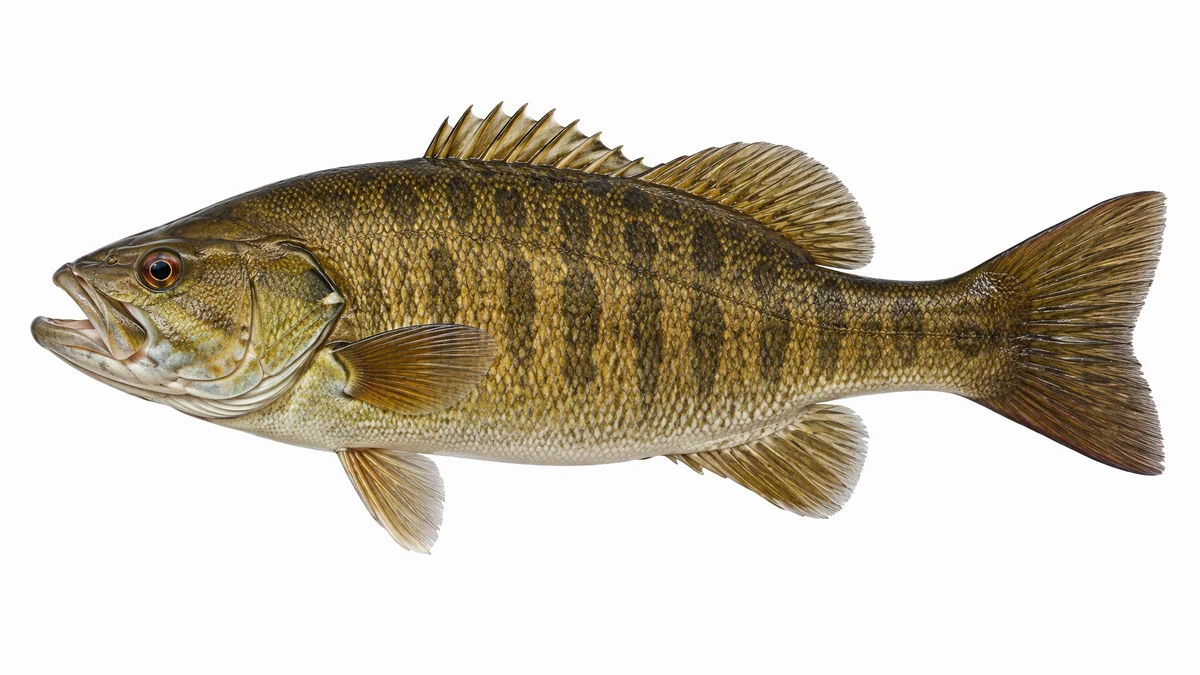
The smallmouth bass is a bronze, hard-fighting freshwater fish that anglers link to clear water, rocky shorelines, and cold northern rivers. It shares the genus Micropterus with the largemouth and spotted bass, but compared with its relatives it prefers cooler, cleaner water and stronger current. That preference shapes everything about how you fish for it. If you want to learn how to catch smallmouth bass, the short answer is to find hard bottom and current, slow down in clear water, and match the crayfish and baitfish they eat. The long answer fills this guide. Read the full Smallmouth Bass species profile for identification, range, and biology; here we focus on the fishing.
Best Time to Catch Smallmouth Bass
Timing is the first lever, and smallmouth respond to water temperature more than most bass.
Smallmouth stay active from roughly 59°F to 81°F (15–27°C). They feed best in the middle of that band and get sluggish at the upper end. That sets the seasonal pattern.
Late spring is prime. After the spawn, which runs when water reaches about 60–70°F (16–21°C) from late April through June, smallmouth feed hard in shallow water near gravel and rock. Catch-and-release on visible beds keeps the year class strong.
Summer splits the day. At dawn and dusk, fish roam shallow rock and current edges. By midday, when the water pushes past the low 80s, they slide to deeper, cooler water or hold in current that carries oxygen. In clear water they often feed after dark.
Fall is the feeding season. As water cools back through the 60s and into the 50s, smallmouth put on weight and feed aggressively before winter. This is the best window to cover water with moving baits.
Winter is slow but honest. Fish group in deep pools and move little. A blade bait or a small finesse jig fished painfully slowly can still produce.
Across every season, dawn and dusk beat high sun in clear water. A stable, overcast day usually out-fishes a bluebird sky after a cold front.
Best Gear for Smallmouth Bass
Smallmouth are not a heavy-cover fish, so light, sensitive tackle is the advantage. A medium spinning outfit handles most of it.
| Component | Smallmouth-ready choice |
|---|---|
| Rod | 6 ft 6 in to 7 ft medium or medium-light spinning rod; add a medium baitcaster for moving baits |
| Reel | 2500-size spinning reel; 6.4:1 to 7.3:1 baitcaster |
| Main line | 8–12 lb fluorocarbon in clear water; 15–20 lb braid with a fluorocarbon leader for tubes in current |
| Leader | 6–10 lb fluorocarbon for pressured, clear rivers |
| Hooks | 1/0–3/0 hooks; 1/8–3/8 oz tube and Ned jig heads |
| Terminal | Drop-shot weights, small swivels, and light clips |
Fluorocarbon sinks, disappears in clear water, and shrugs off rock abrasion, which is why it suits smallmouth so well. Braid to a fluorocarbon leader gives you feel and hook-set power while keeping the business end invisible. A medium-light spinning rod with 6 to 8 lb line is the answer when fish are pressured and the bite is soft.
Carry the basics: a rubber-mesh net, long-nose pliers, hook cutters, and a scale. Smallmouth have sharp gill plates and a habit of throwing treble hooks at the boat.
Best Bait for Smallmouth Bass
Crayfish form the core of the adult diet, followed by minnows, shiners, sculpins, darters, leeches, and aquatic insects. Big fish lean heavily on crayfish and fish; small fish eat more insects. Match that menu.
Natural bait works where it is legal. Live crayfish on the bottom and live minnows under a float both catch smallmouth. They are strong choices for kids and for heavily pressured water.
Artificial lures cover water and last longer. These categories handle most situations.
- Tubes. A 3 to 4 inch tube on a 1/8–3/8 oz jig head is the classic smallmouth bait, especially in rivers. It imitates a crayfish and skips and hops along rock.
- Ned rigs. A short, buoyant stickbait on a light mushroom head is a finesse machine for pressured fish. It stands up off bottom and triggers bites.
- Drop-shot plastics. A small worm or minnow bait above a drop-shot weight hangs in place for suspended, clear-water fish.
- Crayfish imitations. Craw-style plastics and small jigs match the forage on rocky and gravel bottoms.
- Small crankbaits. A 3 to 5 foot diver fished over rock and gravel is a spring and fall search bait.
- Topwater poppers. At dawn, dusk, and over shallow rock in summer, a popper draws violent strikes.
Color stays simple: natural crayfish browns and greens, shad patterns, and dark colors for low light. Size usually matters more than shade.
Smallmouth Bass Rigs
A rig is a bait, a hook, and a weight arranged to solve a problem. These four cover smallmouth water.
The tube jig rig. Thread a 3 to 4 inch tube onto a 1/8–3/8 oz tube jig head, often with the hook exposed or Tex-posed for rock. Cast to gravel, rock, and current seams and hop it along bottom. In current, let it tumble naturally and keep a semi-tight line. This is the most versatile smallmouth setup on rivers.
The Ned rig. Nose-hook a short, buoyant stickbait on a light mushroom jig head and drag or shake it slowly along bottom. The bait stands up and wobbles on the pause, which is exactly what pressured, clear-water smallmouth want. Fish it painfully slow.
The drop-shot rig. Tie a hook 12 to 24 inches above a drop-shot weight and nose-hook a small worm. The bait hangs in place while you shake the rod tip. Use it for suspended fish, deep clear water, and finicky post-front conditions.
The Carolina rig. Thread a 1/2 to 1 oz egg sinker above a swivel, tie an 18 to 36 inch leader, and fish a floating craw or worm behind it. The weight stirs the bottom while the bait trails above. It covers deep points, humps, and flats fast.
Add a small swimbait for hunting big fish and you can fish nearly any smallmouth water in the country.
How to Catch Smallmouth Bass, Step by Step
- Read the water for hard bottom and current. Gravel, cobble, and rock mean crayfish, and crayfish mean smallmouth. Look for current seams, riffles, and the slack water behind boulders.
- Approach quietly. Smallmouth in clear water spook from vibration. Kill the trolling motor early and cast before you get close.
- Cast past the target. Land the lure beyond a boulder or seam and bring it through the strike zone rather than dropping it on the fish's nose.
- Match the retrieve to the water. Hop a tube along rocky bottom in current; drag a Ned rig slowly in clear, pressured water; burn a small crankbait over rock in fall.
- Watch the line. Smallmouth often take on the fall or the pause. If the line jumps, stops, or moves sideways, set the hook.
- Set the hook firmly. Sweep the rod for single-hook plastics and jigs; for treble baits, lean into the fish with a steady reel-set.
- Play the current. A river smallmouth uses current to fight. Keep the rod low, keep pressure on, and do not let it turn downstream into fast water.
- Land and release with care. Wet your hands or use a rubber net, support the body, and keep the fish out of the water briefly.
The most common beginner error is fishing too fast in clear, pressured water. When the bite is tough, halve your speed and double your pauses.
Where to Catch Smallmouth Bass
Smallmouth habitat comes down to cool water, clean substrate, and structure. Find all three and you find fish.
- Rocky points and boulder flats. Classic lake and reservoir spots, especially in spring and fall.
- Bluff walls and deep drop-offs. Summer and winter fish slide to depth along hard edges.
- Riffles and pool tails. In rivers, smallmouth hold where fast water dumps into slow, facing upstream.
- Eddies behind boulders. Slack water behind rock holds fish that dart out to take prey swept past.
- Current seams along bridge pilings. Current concentrates bait, and smallmouth line up along the edge.
- Gravel and cobble runs. Hard bottom supports the crayfish and insect life the fish depend on.
In lakes, let sonar and a contour map narrow the water to hard-bottom points and drops. In rivers, walk the bank or float and fish every piece of current-breaking rock. Smallmouth are more migratory on rivers than largemouth, moving between pools and riffles with the seasons.
Smallmouth Bass Regulations and Safety
Every state requires a fishing license, and smallmouth rules vary by water. Common tools include a minimum length of 12 to 14 inches, daily bag limits of five or six fish, and special rules on famous rivers and reservoirs, including catch-and-release and slot limits. Some states protect bedding fish in spring.
Do not rely on a blog for the rule that applies to your water. Dale Hollow, which produced the world record, is covered by the Tennessee Wildlife Resources Agency (TWRA) and the Kentucky Department of Fish and Wildlife Resources; other waters have their own agencies. Check the current regulation booklet or website before you fish.
Safety is about spines and hooks. Smallmouth have sharp dorsal, anal, and pelvic spines plus a hard, serrated gill cover. Handle them with wet hands or a rubber-mesh net, support the belly if you lift a fish horizontally, or grip the lower jaw vertically and keep the body straight. Do not bend the jaw sideways, and do not let a fish drop onto rocks; a dropped bass loses scales and mucus and is open to infection. Treble hooks cause most injuries, so carry cutters and watch fingers during a shake.
Common Mistakes and Smallmouth Bass Tips
- Fishing fast in clear water. Pressured smallmouth want slow, natural presentations. Slow down before you change lures.
- Line too heavy. In clear, pressured rivers, dropping from 12 lb to 6–8 lb fluorocarbon turns follows into bites.
- Ignoring the current. Smallmouth use current to feed and to fight. Fish the seams and keep pressure on when hooked.
- Skipping the deep summer bite. When shallow rock goes quiet at midday, the fish slid deeper or into oxygen-rich current.
- Fishing midday in summer. Dawn, dusk, and after dark in clear water beat high sun.
- Sloppy boat control. Banging the boat and running the trolling motor close shuts down shallow fish fast.
- Bad knots and dull hooks. Retie after rock abrasion and sharpen or replace hooks.
- Keeping every fish. Selective harvest and quick release keep smallmouth populations and the fishing healthy.
FAQ
What is the best time to catch smallmouth bass? Late spring and fall, when fish feed hard in shallow water, are the best windows. In summer, fish dawn, dusk, and after dark, or target deeper structure and current. Winter fishing is slow but possible in deep pools.
What bait for smallmouth bass works best? A tube jig in rivers and a Ned rig in pressured, clear water cover most situations. Crayfish imitations, small crankbaits, drop-shot plastics, and topwater poppers fill in the rest, and live crayfish work where legal.
What are the best smallmouth bass fishing techniques? Match the presentation to the water: hop a tube along rocky current, drag a Ned rig slowly in clear water, and cover rock with a small crankbait in fall. Watch the line on the fall, set the hook firmly, and play fish against the current.
Where can you catch smallmouth bass? Clear, cool lakes, reservoirs, and rocky rivers across North America. They favor gravel and boulder bottom, current, and clean water, holding on rocky points, pool tails, eddies behind boulders, and bridge-piling seams.
How big do smallmouth bass get? Most adults run 12 to 16 inches and 1 to 3 pounds. A 20-inch fish is serious, and anything over 5 pounds is a northern trophy. The all-tackle world record is 11 pounds 15 ounces, caught at Dale Hollow Lake, Tennessee, in 1955.
Do smallmouth and largemouth look alike? They can, but the jaw settles it. A smallmouth's upper jaw ends at or before the rear of the eye; a largemouth's passes it. Smallmouth are bronze with faint bars; largemouth are greener with a broad dark band.
Learning how to catch smallmouth bass is mostly a matter of finding hard bottom and current, matching the crayfish and baitfish they eat, and slowing down when the water is clear and pressured. Do that, and the bronze fight will be there on the next cast. For the spotted cousin, see how to catch Spotted Bass, and compare notes with the green-headed version in how to catch Largemouth Bass.
Related Articles
- Smallmouth Bass — the full profile, including the jaw test and the Dale Hollow record.
- Spotted Bass — a similar jaw but spots on the belly instead of bars.
- How to Catch Spotted Bass — finesse and schooling tactics for the southern cousin.
- How to Catch Largemouth Bass — cover-oriented tactics for the warm-water bass.
- How to Catch Rainbow Trout — another cool, clear-water fish that shares rocky rivers.
About the author and how this was tested
About the author
FishermanGuy
Bank, boat and kayak angler · fishing, crabbing and shrimping since 2021
I buy the gear, fish it for a season and write down what failed. No sponsored verdicts, no free-sample flattery. Every rig on this page has landed fish in water I can point at on a map.
How this was tested
- Every rig gets at least six trips on the same water before it is published.
- Gear is bought at retail. Free samples are labelled in the first paragraph.
- Dates show first publication and the last time the page was updated.