Field notes
Spotted Bass: Identification, Habitat & Diet
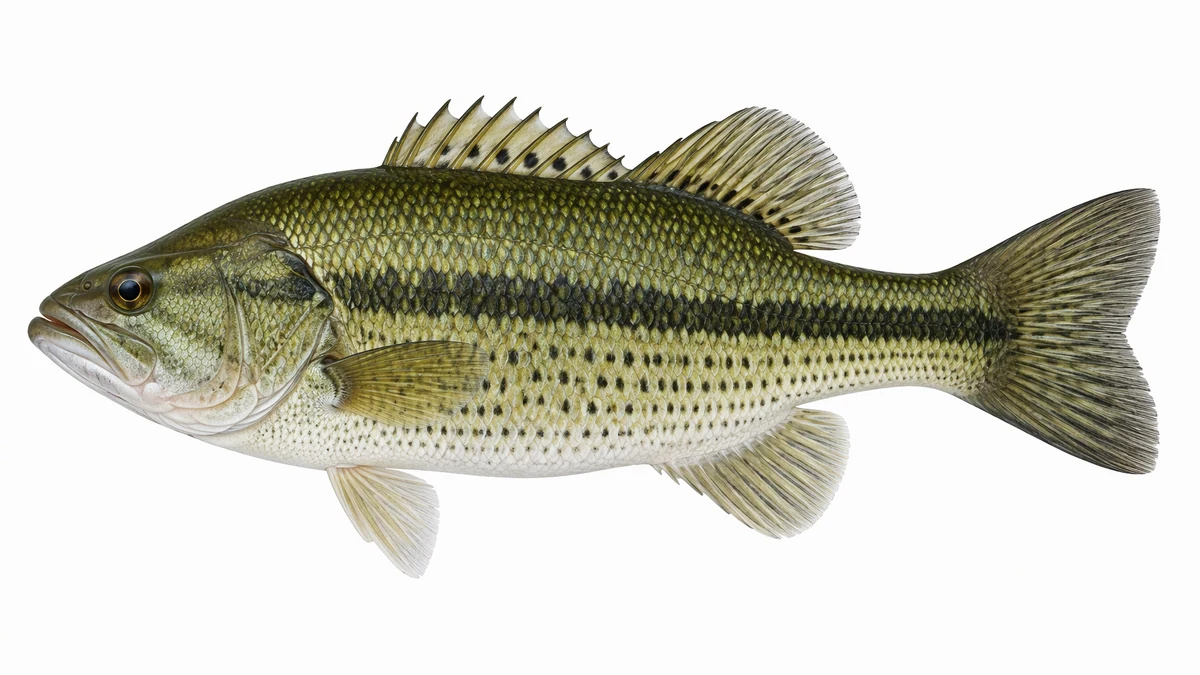
Spotted Bass: Identification, Habitat & Diet
The spotted bass is the middle child of North American black bass: smaller than a largemouth in most waters, more aggressive than a smallmouth in warm reservoirs, and easy to misidentify at a glance. It is a native of the Mississippi River basin and the rivers of the Southeast, and it has been stocked far beyond that range. Anglers value the spotted bass for its willingness to bite, its dogged fight, and its habit of grouping in open water where schools can be found and worked one after another. This guide covers spotted bass identification, habitat, diet, size, spawning, regulations, and the presentations that produce fish.
Quick ID Card
| Field | Details |
|---|---|
| Scientific name | Micropterus punctulatus |
| Common names | Spotted bass, Kentucky bass, spot, Alabama spotted bass |
| Family | Centrarchidae (sunfishes) |
| Typical size | 10–16 inches (25–40 cm), 0.5–2 lb |
| Maximum size | About 20–24 inches (50–60 cm), 7–9 lb in exceptional fish |
| Water type | Rivers and reservoirs with rock, gravel, and current |
| Active water temperature | Roughly 60–80°F (16–27°C) |
| Difficulty | Easy to moderate; aggressive and often schooled |
| Best season | Spring and fall; early morning topwater in summer |
How to Identify a Spotted Bass
The mouth is the first checkpoint. A spotted bass has a jaw that stops at or before the rear edge of the eye, much like a smallmouth. A largemouth's jaw runs well past the eye. Once the jaw says "not largemouth," look at the pattern along the lower side.
Spotted bass carry rows of small dark spots below the lateral line, scattered across the belly and lower flank. The back is olive-green to brown, often with a dark lateral band that breaks into blotches toward the tail. The base of the dorsal fin usually shows a row of black spots. On a largemouth, the dorsal fin base is clean and the lateral band is solid and broad. On a smallmouth, the lower side is mostly unspotted bronze with faint vertical bars.
The dorsal fin is another clue. A spotted bass has a dorsal fin that is broadly connected between the spiny and soft sections, with only a shallow notch. The largemouth's dorsal fin is nearly split into two, with a deep dip. Many anglers also check the tongue: spotted bass often have a small patch of teeth on the tongue, while largemouth usually do not. That trait is not universal, so use it with the jaw and the spotting pattern rather than alone.
Body shape falls between the other two bass. Spotted bass are more streamlined than largemouth but heavier through the shoulders than smallmouth, with a slightly larger head relative to body length than a smallmouth of the same size.
Spotted Bass vs Largemouth Bass
The two fish share reservoirs across the South, and tournament bags often contain both. The differences below are the ones that matter when you are deciding whether to weigh a fish as a spot or a largemouth.
| Feature | Spotted bass | Largemouth bass |
|---|---|---|
| Jaw | Stops at or before the rear edge of the eye | Extends past the rear edge of the eye |
| Lower side | Rows of small dark spots | Plain or lightly blotched, no spot rows |
| Lateral band | Broken, blotchy, often faint | Broad, solid, dark |
| Dorsal fin | Broadly joined, shallow notch | Nearly separate, deep notch |
| Dorsal fin base | Usually marked with black spots | Usually clean |
| Tongue | Often has a small tooth patch | Usually smooth |
| Typical water | Rock, gravel, current, open water | Weeds, wood, shallow cover |
Spotted bass also behave differently. They school more, suspend more, and chase shad in open water more often than largemouth. That schooling habit is a big part of their appeal: find one, and there are usually more nearby.
Smallmouth and spotted bass can overlap in clear rocky rivers. The jaw is similar, so rely on the spotting. A bronze fish with faint bars and no rows of spots on the belly is a smallmouth. A greener fish with a spotted lower half and black marks at the dorsal base is a spot.
Is the Spotted Bass Dangerous?
The spotted bass is harmless to people. It has no venom and no cutting teeth. Like other black bass, it carries sharp spines in the dorsal, anal, and pelvic fins, and the gill cover has a hard edge. A hooked fish can rake a hand during release.
Wet your hands, use a net with soft mesh, and support the fish properly. Grip the lower jaw vertically or cradle the belly. Avoid squeezing the body or dropping the fish on rocks. A quick photo and release does far less damage than a long handling session, especially in hot summer water when oxygen is low.
Range and Habitat
Spotted bass are native to the Mississippi River basin, the Ohio River drainage, and rivers from the Gulf Slope across the Southeast. Their historic range runs from Texas and Louisiana through Mississippi, Alabama, Georgia, and the Carolinas, and north into Missouri, Illinois, and Kentucky. Stocking has moved them into reservoirs in the West and other regions, sometimes with unintended consequences for native fish.
The Alabama spotted bass (Micropterus punctulatus henshalli) is the subspecies most often discussed by trophy hunters. It is native to the Mobile River basin and has been stocked into deep, clear California reservoirs, where it has produced enormous fish. Alabama-strain spots are known for fast growth and a preference for open water, and they account for many of the largest specimens on record.
Habitat comes down to hard bottom and moving or oxygen-rich water. Good spotted bass habitat combines rock, gravel, current, and nearby deep water. In rivers, spotted bass hold around rock ledges, gravel bars, bridge pilings, and current seams. In reservoirs, they use rocky points, bluff walls, standing timber, and the mouths of creeks. They tolerate warmer water than smallmouth and are more likely to suspend offshore than largemouth. In summer, schools often follow shad over deep water and can be found with electronics along ledges and channel swings.
Water temperature in the low 60s to low 80s Fahrenheit keeps them feeding. They remain active through winter in southern reservoirs but move deeper and feed less.
Behavior and Diet
Spotted bass are predators with a broad menu. Shad and minnows make up much of the diet where these forage fish are abundant. Crayfish are important in rocky rivers, and aquatic insects, worms, and small crustaceans fill in the rest. Young spotted bass eat insects and small invertebrates before shifting to fish and crayfish.
The schooling habit sets them apart. Spots often hunt in loose groups, pushing bait against the surface or trapping it over points and humps. When shad are driven up, the feeding can turn into a topwater bite that lasts minutes and then stops. Anglers who stay on the school and cast quickly often catch several fish before the group moves.
Spawning starts when water reaches about 60–70°F (16–21°C), usually from April into June depending on latitude and elevation. Males fan nests in gravel or hard clay, often a bit deeper than largemouth nests. They guard the eggs and fry. Females may spawn with more than one male. After the spawn, fish move to summer structure and settle into a routine of dawn and dusk feeding, with deep-water schools holding through the day.
Current is a major advantage for spotted bass. In rivers they sit behind rocks and ledges, facing upstream, and take food swept past. The same instinct shows in reservoirs when wind or current stacks bait against a point. Find the edge, and the fish are usually nearby.
Size, Records and Regulations
Most spotted bass caught by anglers run 10–16 inches and under 2 pounds. A 3-pound spot is a good fish in most waters, and a 5-pound fish is exceptional. The species can reach roughly 20–24 inches and 7–9 pounds in the best southern and western reservoirs, where Alabama-strain fish and abundant shad combine.
The IGFA all-tackle world record is a fish of about 10 pounds 4 ounces (4.65 kg) taken from New Bullards Bar Reservoir, California, in 2019. That reservoir holds introduced Alabama spotted bass, and it has rewritten expectations for the species. Southern rivers and reservoirs continue to produce fish in the 6–8 pound class.
State records in the South generally run from about 6 to 9 pounds, with Alabama-strain fish setting the pace. Seasons are usually open year-round, though some states protect spawning fish or apply special river rules.
Regulations are rarely simple. Some states manage spotted bass under the same rules as largemouth, with a minimum length and a daily bag that may combine all black bass. Others have separate limits, protected slot lengths, or special rules on rivers and tournament waters. Because spotted bass are native in some basins and stocked in others, bag limits can differ sharply between neighboring states.
Check the current rules for the specific water before you fish. A license is required, and some states require a special permit for certain rivers or border waters. In Alabama, the Department of Conservation and Natural Resources (ADCNR) publishes the rules; in California, the Department of Fish and Wildlife (CDFW) manages New Bullards Bar and other stocked waters. Last verified: November 2025.
FAQ
How big do spotted bass get? Most adults are 10–16 inches and under 2 pounds. Exceptional fish reach 20–24 inches and 7–9 pounds, mainly in southern reservoirs and California waters stocked with Alabama spotted bass.
What is the spotted bass world record? The IGFA all-tackle record is about 10 pounds 4 ounces (4.65 kg), caught at New Bullards Bar Reservoir, California, in 2019. The fish was an Alabama-strain spotted bass.
How do you tell a spotted bass from a largemouth? The jaw stops at the eye instead of passing it, the lower side has rows of small dark spots, the lateral band is broken, and the dorsal fin is broadly joined rather than deeply notched.
Where do spotted bass live? They are native to the Mississippi basin and southeastern rivers, from Texas to the Carolinas, and have been stocked into reservoirs in the West. They prefer rock, gravel, current, and open water with baitfish.
What do spotted bass eat? Shad and minnows are the main prey, with crayfish, aquatic insects, and small crustaceans filling out the diet. Schools often follow baitfish over deep structure.
When do spotted bass spawn? From April through June, when water reaches about 60–70°F (16–21°C). Males nest in gravel and guard the eggs.
What is the best bait for spotted bass? Finesse jigs, shakey heads, drop-shot plastics, small swimbaits, crankbaits, and spinnerbaits all work. Match the size of the local shad, and cast quickly when a school surfaces.
Do spotted bass fight hard? Yes. They are known for a strong initial run and a stubborn, deep fight. On light tackle they outperform their size.
The spotted bass may lack the fame of the largemouth, but it makes up for it with a hard fight and a willingness to bite. Learn the jaw, the spots, and the schooling habit, and you will find spotted bass in water you once passed by.
Related Articles
- Smallmouth Bass — the bronze, cool-water cousin with a similar jaw but no belly spots.
- Yellow Perch — another schooling fish that shares southern and midwestern reservoirs.
- Longear Sunfish — a small, colorful native of the same rocky creeks.
- All bass and panfish profiles
Ready to catch one? Read our step-by-step guide: How to Catch Spotted Bass.
About the author and how this was tested
About the author
FishermanGuy
Bank, boat and kayak angler · fishing, crabbing and shrimping since 2021
I buy the gear, fish it for a season and write down what failed. No sponsored verdicts, no free-sample flattery. Every rig on this page has landed fish in water I can point at on a map.
How this was tested
- Every rig gets at least six trips on the same water before it is published.
- Gear is bought at retail. Free samples are labelled in the first paragraph.
- Dates show first publication and the last time the page was updated.