Field notes
How to Catch Spotted Bass: Schooling & Finesse Tactics
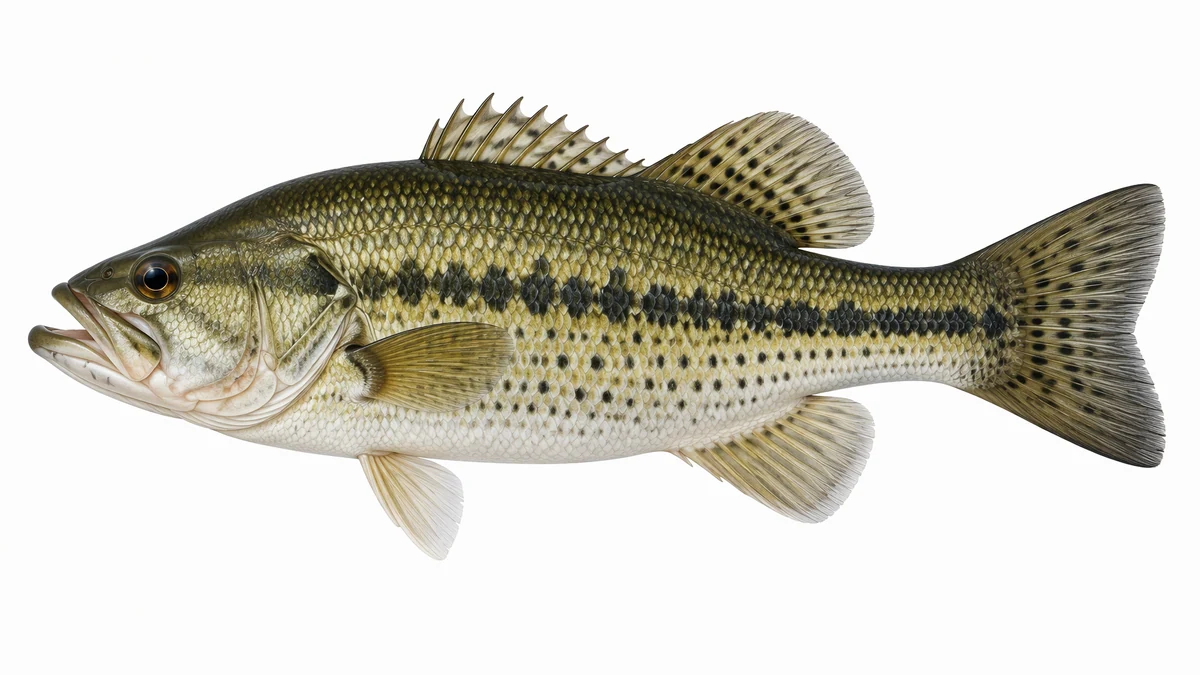
How to Catch Spotted Bass
The spotted bass is the middle child of North American black bass: smaller than a largemouth in most waters, more aggressive than a smallmouth in warm reservoirs, and easy to misidentify at a glance. It is a native of the Mississippi River basin and the rivers of the Southeast, and it has been stocked far beyond that range. Anglers value the spotted bass for its willingness to bite, its dogged fight, and its habit of grouping in open water where a school can be found and worked one fish after another. If you want to learn how to catch spotted bass, the key is to find the school and match the shad they feed on. Read the full Spotted Bass species profile for identification, range, and biology; here we focus on the fishing.
Best Time to Catch Spotted Bass
Spotted bass stay active in water from roughly the low 60s to the low 80s Fahrenheit, and that wide comfort band means they are catchable much of the year.
Spring and fall are the best seasons. Fish feed hard in shallow water around rock, gravel, and current in both windows. Spring also brings the spawn, which starts when water reaches about 60–70°F (16–21°C) from April into June, and males fan nests in gravel and hard clay.
Summer calls for an early start. Before the sun climbs, spotted bass push bait to the surface over points and humps, and the topwater bite can be fast. Once the sun is high, schools suspend over deep water and follow shad along ledges and channel swings, where electronics find them.
Winter slows down in the north but stays workable in southern reservoirs, where fish move deeper and feed less. Finesse presentations and a slow, deep approach are the answer.
Time of day matters less than finding bait. Spots are schooling fish, and a feeding school can turn on for a few minutes and then vanish. Dawn is the safest bet for surface activity, but electronics and a quick cast keep you on fish all day.
Best Gear for Spotted Bass
Spotted bass are not a heavy-cover fish, so light, sensitive tackle suits them, with just enough backbone for open-water schooling.
| Component | Spotted bass choice |
|---|---|
| Rod | 6 ft 10 in to 7 ft 2 in medium spinning rod; add a medium baitcaster for moving baits |
| Reel | 2500-size spinning reel; 6.4:1 to 7.3:1 baitcaster |
| Main line | 10–15 lb braid with a fluorocarbon leader; straight 8–12 lb fluorocarbon in clear water |
| Leader | 8–12 lb fluorocarbon |
| Hooks | 1/0–3/0 hooks; 1/8–3/8 oz shakey-head and finesse jig heads |
| Terminal | Drop-shot weights, small swivels, and light clips |
A medium spinning rod with a fast tip casts light baits a long way, which matters when you are trying to reach a surfacing school before it moves. Fluorocarbon sinks and disappears in clear reservoir water, while braid adds casting distance and hook-set power. Keep a baitcaster rigged with a swimbait or spinnerbait for covering water fast.
Carry a rubber-mesh net, long-nose pliers, hook cutters, and a scale. Spotted bass have sharp gill plates and shake treble hooks hard at the boat.
Best Bait for Spotted Bass
Spotted bass are predators with a broad menu. Shad and minnows make up much of the diet where those forage fish are abundant, and crayfish matter in rocky rivers, with aquatic insects, worms, and small crustaceans filling in the rest. Match that menu, and match the size of the local shad.
Natural bait works where legal. Live minnows under a float and live crayfish on the bottom catch spots, and they are good choices for kids and pressured water.
Artificial lures cover water and last longer. These categories handle most situations.
- Finesse jigs and shakey heads. A small jig or a shakey-head worm dragged along rock and gravel is a staple for pressured spots.
- Drop-shot plastics. A small worm or minnow bait above a drop-shot weight hangs in place for suspended, clear-water fish.
- Small swimbaits. A paddle-tail swimbait matched to the local shad size is the best bait for schooling fish in open water.
- Crankbaits. A medium diver fished along ledges and points covers water and triggers reaction bites.
- Spinnerbaits. A 3/8 oz spinnerbait is a fall and spring search bait around rock and brush.
- Topwater. Walking baits and poppers shine when spots drive shad to the surface at dawn.
Color stays simple: shad patterns for open water, craw colors around rock, and dark colors for low light. Size usually matters more than shade.
Spotted Bass Rigs
A rig solves a specific problem. These cover the spotted bass playbook.
The shakey-head rig. Thread a straight-tail or finesse worm onto a shakey-head jig and drag or shake it along rock and gravel bottom. The stand-up head keeps the bait up and wobbling, which triggers pressured fish. Fish it slowly on points, ledges, and rocky banks.
The drop-shot rig. Tie a hook 12 to 24 inches above a drop-shot weight and nose-hook a small worm or minnow bait. The bait hangs in place while you shake the rod tip. Use it for suspended schools over deep water and for finicky clear-water fish.
The swimbait rig. Rig a paddle-tail swimbait on a weighted swimbait hook or a small jig head and cast it through a surfacing school. A steady, medium retrieve matches a fleeing shad, and the bait covers water fast when a school is up.
The Texas-rigged worm. Slide a 1/8–3/8 oz bullet weight onto the line, add an offset hook, and rig a worm or creature bait weedless. It goes anywhere — through brush, along timber, and over rock — and it is the standard for working standing timber and creek mouths.
Add a spinnerbait for fall and a topwater walking bait for dawn, and you can fish a spotted bass lake from top to bottom.
How to Catch Spotted Bass, Step by Step
- Find the bait first. Spots follow shad. Use electronics to mark bait over ledges, points, humps, and channel swings, and fish where the bait stacks.
- Work the surface at dawn. When shad get pushed up, cast a walking bait or swimbait into the commotion.
- Cast fast and accurately. A surfacing school lasts minutes. Land the bait on the edge of the boil, not in the middle of it.
- Watch for the follow. Spots often chase a swimbait and swipe at the boat. Keep a steady retrieve and be ready for a strike near the rod tip.
- Go finesse when the school sounds. When fish drop, switch to a drop shot or shakey head and work the depth they settled into.
- Set the hook firmly. Spots have hard mouths; sweep the rod hard on single-hook plastics and jigs.
- Play the fight. Spots run hard and fight deep. Keep pressure on and keep them out of cover.
- Land and release with care. Wet your hands or use a rubber net, support the body, and keep the fish out of the water briefly.
The rhythm is hunt, cast, catch, and move. Stay on the school and cast quickly, because the window is short.
Where to Catch Spotted Bass
Spotted bass habitat comes down to hard bottom and moving or oxygen-rich water, with deep water nearby.
- Rocky points and gravel bars. Classic river and reservoir spots, fished in spring and fall.
- Bluff walls and standing timber. Reservoir cover that holds fish around creek mouths and main-lake structure.
- Ledges and channel swings. Summer schools suspend here, following shad along the drop.
- Rock ledges and bridge pilings in rivers. Current seams and hard structure hold feeding fish.
- Creek mouths. Where current and bait meet, spotted bass stack up.
- Humps and offshore structure. Electronics find the bait, and the fish are usually just under it.
In rivers, spotted bass sit behind rocks and ledges, facing upstream, and take food swept past. In reservoirs, they suspend offshore more than largemouth and tolerate warmer water than smallmouth. Summer schools often follow shad over deep water and show up on sonar along ledges and channel swings — find the bait, and the fish are close.
Spotted Bass Regulations and Safety
Spotted bass rules are rarely simple. Some states manage them under the same rules as largemouth, with a minimum length and a daily bag that may combine all black bass. Others have separate limits, protected slot lengths, or special rules on rivers and tournament waters. Because spotted bass are native in some basins and stocked in others, bag limits can differ sharply between neighboring states.
Do not rely on a blog for the rule that applies to your water. A license is required, and some states require a special permit for certain rivers or border waters. In Alabama, the Department of Conservation and Natural Resources (ADCNR) publishes the rules; in California, the Department of Fish and Wildlife (CDFW) manages New Bullards Bar and other stocked waters. Check the current rules for the specific water before you fish.
Safety is about spines and hooks. Spotted bass have no venom and no cutting teeth, but they carry sharp dorsal, anal, and pelvic spines and a hard gill cover. Wet your hands, use a soft-mesh net, and support the fish properly. Grip the lower jaw vertically or cradle the belly, and avoid squeezing the body or dropping the fish on rocks. In hot summer water, release fish quickly; a long handling session in low-oxygen water does real harm.
Common Mistakes and Spotted Bass Tips
- Leaving a surfacing school. The topwater window is minutes. Cast fast, land the bait on the edge, and stay with the school as it moves.
- Mismatching the shad. Spots key on bait size. A swimbait that is too big or too small gets ignored.
- Ignoring electronics. Summer fish suspend offshore over deep water. Sonar finds the bait and the school.
- Fishing too fast in clear water. Pressured spots want slow finesse. Slow down with a drop shot or shakey head.
- Skipping the dawn bite. Early morning surface action is the most reliable window in summer.
- Line too heavy. In clear, pressured reservoirs, dropping to 8–10 lb fluorocarbon turns follows into bites.
- Sloppy boat control. Spots spook from vibration in clear water. Approach quietly.
- Keeping every fish. Selective harvest and quick release keep school fish and the fishing healthy.
FAQ
What is the best time to catch spotted bass? Spring and fall are the best seasons, with dawn topwater in summer and deeper schooling fish the rest of the day. Spots stay active from the low 60s to the low 80s Fahrenheit.
What bait for spotted bass works best? Match the local shad. A small swimbait for schooling fish, a drop-shot plastic for suspended fish, and a shakey-head worm for pressured fish cover most situations. Live minnows work where legal.
What are the best spotted bass fishing techniques? Find the bait with electronics, cast a swimbait or topwater into a surfacing school, then switch to a drop shot or shakey head when the school sounds. Stay on the school and cast quickly.
Where can you catch spotted bass? Rivers and reservoirs with rock, gravel, and current across the Southeast and Mississippi basin, plus stocked western reservoirs. Look for rocky points, bluff walls, ledges, channel swings, and creek mouths.
How big do spotted bass get? Most adults run 10 to 16 inches and under 2 pounds. A 3-pound spot is a good fish and a 5-pounder is exceptional; the best reservoirs reach 20 to 24 inches and 7 to 9 pounds.
What is the spotted bass world record? The IGFA all-tackle record is about 10 pounds 4 ounces (4.65 kg), caught at New Bullards Bar Reservoir, California, in 2019. The fish was an Alabama-strain spotted bass.
Learning how to catch spotted bass comes down to three habits: find the bait, match the shad, and stay on the school. Do that and a sonar screen full of suspended spots turns into bent rods. For the bronze cousin, see how to catch Smallmouth Bass, and compare the jaw and the spots in how to catch Largemouth Bass.
Related Articles
- Spotted Bass — the full profile, including the jaw test and the New Bullards Bar record.
- Smallmouth Bass — a similar jaw but faint bars instead of belly spots.
- How to Catch Smallmouth Bass — river and lake tactics for the bronze cousin.
- How to Catch Largemouth Bass — the warm-water bass that shares southern reservoirs.
- How to Catch Crappie — another schooling fish that stacks on brush and structure.
About the author and how this was tested
About the author
FishermanGuy
Bank, boat and kayak angler · fishing, crabbing and shrimping since 2021
I buy the gear, fish it for a season and write down what failed. No sponsored verdicts, no free-sample flattery. Every rig on this page has landed fish in water I can point at on a map.
How this was tested
- Every rig gets at least six trips on the same water before it is published.
- Gear is bought at retail. Free samples are labelled in the first paragraph.
- Dates show first publication and the last time the page was updated.