Field notes
How to Catch Crappie: Jigs, Minnows & Seasonal Patterns
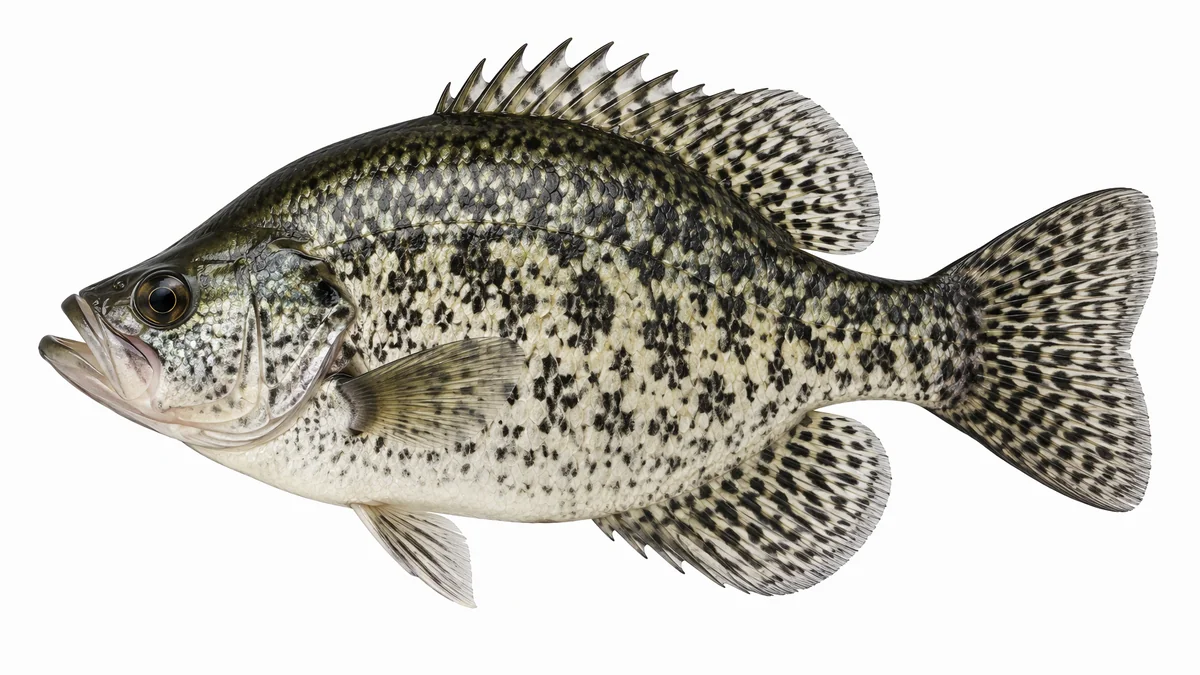
How to Catch Crappie
Crappie are the slab-sided panfish that turn a quiet spring afternoon into a cooler full of fillets. Two species share the name: the white crappie and the black crappie, both in the genus Pomoxis. They school tightly around cover, feed on small baitfish and insects, and bite best when the water warms in spring. Learning how to catch crappie is mostly about finding the school and then presenting a small jig or minnow at the right depth. This guide covers seasons, tackle, bait, jigs, locations, and the tactics that work from a boat, a dock, or the bank. Read the full Crappie species profile for identification and range.
Best Time to Catch Crappie
Crappie fishing has a clear peak, and it happens in spring. As water climbs through the 50s, fish move from deep winter haunts toward shallow brush, docks, and creek arms. When the surface reaches 60–70°F (15–21°C), crappie spawn in two to six feet of water, often around brush, stickups, and dock pilings. That is the easiest fishing of the year.
Spring is the headline season. Pre-spawn fish stage on creek channel edges and the first cover they find. Spawn fish sit on shallow structure. Post-spawn fish slide back to the first drop-off. Follow that progression and you can stay on fish for weeks.
Summer pushes crappie to deeper cover. Schools suspend over brush piles, ledges, and standing timber, often 10–25 feet down. They are still catchable, but you need to find the depth. Night fishing under lights over deep brush can be excellent. Fall brings fish back toward creek channels and shad schools, and they feed aggressively before winter. Winter is the deepest and slowest pattern; fish group tight on deep brush and bridge pilings and respond to small jigs fished slowly.
Time of day matters, but less than for bass. Dawn and dusk are best in summer, and cloudy days extend the bite. In spring, fish feed throughout the day. A warming trend after a cold snap is a green light.
Best Gear for Crappie
Crappie tackle sits between bluegill gear and light bass gear. You need enough rod to set a small hook and enough sensitivity to feel a soft take.
| Component | Crappie-ready choice |
|---|---|
| Rod | 6 ft 6 in to 7 ft 6 in light or ultralight spinning rod |
| Reel | 1000–2000 size spinning reel |
| Main line | 4–8 lb monofilament, or 10 lb braid to a 4–6 lb leader |
| Hook | 1/0–2/0 light-wire hook for minnows; jig hook for plastics |
| Jigs | 1/32–1/16 oz tube, curly-tail, and marabou jigs |
| Extras | Slip floats, jigheads, minnow bucket, depth finder |
Light line matters. Crappie have keen eyesight and paper-thin mouths. Four to six pound mono or a light leader gets more bites and lets a small jig behave naturally. The soft rod tip protects light line and stops you from tearing the hook out of a delicate mouth.
A slip float is worth its weight in gold. It lets you suspend a jig or minnow at an exact depth over brush, which is often the difference between fishing and catching.
Best Bait for Crappie
Crappie eat small fish, aquatic insects, and zooplankton. Match that with something small and lively.
- Live minnows. A 2–3 inch minnow on a light-wire hook under a float is the classic crappie bait. Hook it through the lips or behind the dorsal fin so it swims naturally.
- Tube jigs. A 1/32–1/16 oz tube jig in white, chartreuse, or black-blue is the standard artificial. It imitates a small baitfish and can be fished vertically or under a float.
- Curly-tail grubs and marabou jigs. These add action and work well when fish want movement. Marabou jigs are a favorite in cold water.
- Small crankbaits and spinners. A tiny crankbait or beetle-spin style lure covers water and catches aggressive fish, especially in spring.
- Waxworms and small worms. When fish are finicky, a waxworm on a small jig is hard to beat.
The old rule is simple: minnows for numbers, jigs for size and durability. Many anglers tip a jig with a minnow or a waxworm and get the best of both.
Crappie Jigs and Rigs That Catch Slabs
A crappie jig is just a small jighead dressed with plastic or hair. How you present it decides whether it works.
Vertical jigging. Drop a 1/16 oz jig straight down over brush or timber, count it to the right depth, and jig it with short lifts. This is the core technique for deep summer and winter fish. Watch the line for a tick on the fall.
Slip-float rig. Set a slip float so the jig hangs just above the brush tops, cast, and let it drift. Twitch the float every few seconds. This keeps the bait in the strike zone and is deadly in spring.
Spider rigging. Slow-troll several long rods with jigs or minnows at different depths to find the school. It covers water and is popular with boat anglers.
Casting and counting down. Cast a jig or small crankbait, let it sink to a count, and retrieve slowly. Vary the count until you find the depth fish are using.
For shore anglers, a slip float under a dock or beside a bridge piling is the most reliable approach. Cast past the structure and let the bait settle naturally.
How to Catch Crappie, Step by Step
- Find the cover. Look for brush piles, standing timber, docks, bridge pilings, and creek channel edges. Electronics help, but visible structure works too.
- Find the depth. Crappie suspend, so the school may be 15 feet down over 25 feet of water. Use a slip float or count down until fish respond.
- Present small and natural. A 1/16 oz jig or a 2-inch minnow is the baseline. Size down if the bite is tough.
- Jig gently. Short lifts and pauses. Crappie often take on the fall, so watch the line.
- Set the hook with a firm lift. Crappie mouths are thin. A hard hookset tears out. Reel down and sweep.
- Stay on the school. When you catch one, fish the same depth and area. Crappie travel in groups.
- Handle with wet hands and release or ice quickly. Crappie are fragile compared with bass. Keep them cool if you plan to eat them.
The biggest mistake is fishing too deep or too shallow. Crappie are often suspended in the middle of the water column, and a bait on the bottom misses them entirely.
Where to Catch Crappie
Crappie love cover, and the best spots combine cover with a nearby depth change.
- Brush piles. The classic crappie magnet. Fish the top and edges, not the middle of the tangle.
- Docks and marinas. Shade and structure hold fish, especially in spring and fall. Fish the pilings and the shadow line.
- Bridge pilings. Current, shade, and structure in one spot. Good from shore and from a boat.
- Standing timber. Flooded trees in reservoirs hold crappie year-round.
- Creek channel edges. Fish stage along the channel before and after spawning.
- Riprap and rock banks. Warm rock attracts bait and crappie in spring.
From shore, focus on docks, bridges, and any brush you can reach. Crappie often sit within a cast of the bank in spring and fall, so you do not need a boat to catch them.
Crappie Regulations and Safety
Crappie are managed by state agencies, and rules vary by water. Many states set a minimum length of 9–10 inches on some lakes and daily limits commonly in the 15–30 range. Some waters have no length limit but stricter bag limits. A fishing license is required on public water in almost every state.
Check the current regulations for the specific lake or river. Agencies such as the state fish and wildlife department publish limits, seasons, and any special crappie rules online. Do not rely on what worked on a different lake last year.
Safety is mostly about handling. Crappie have sharp gill covers and spiny dorsal fins, and their mouths tear easily. Hold them with a wet hand across the back, press the dorsal fin down, and use light-wire hooks so removal is quick. Keep fish cool on ice if you plan to eat them. Last verified: November 2025.
Common Mistakes and Crappie Fishing Tips
- Fishing the bottom when fish suspend. Crappie often hold mid-column over deep brush. Use a slip float or count down.
- Line too heavy. In clear water, 8–10 lb line reduces bites. Use 4–6 lb.
- Hooksets too hard. Thin mouths tear. Sweep, do not snap.
- Ignoring the school. Crappie group up. After one fish, fish the same depth immediately.
- Too large a jig. A 1/4 oz jig is usually too big. Downsize to 1/16 or 1/32 oz.
- Sitting still too long. If no fish in 15–20 minutes, move to the next brush pile or depth.
- Poor fish care. Crappie are delicate. Wet hands, quick release, and ice for keepers.
- Skipping spring. The spawn window is short and the best bite of the year. Plan around it.
FAQ
What is the best time to catch crappie? Spring, when water reaches 60–70°F and fish move shallow to spawn. In summer, dawn, dusk, and night are best; in winter, fish deep brush slowly.
What bait for crappie works best? Live 2–3 inch minnows under a float, or a 1/32–1/16 oz tube jig. Tipping a jig with a minnow or waxworm combines the strengths of both.
What are the best crappie fishing techniques? Vertical jigging over brush, slip-float fishing at a set depth, and slow-trolling jigs. Match the depth first, then the lure.
How do you catch crappie from shore? Fish a slip float with a jig or minnow beside docks, bridge pilings, and reachable brush. Spring and fall put fish within casting range of the bank.
How do you catch big crappie? Use slightly larger jigs or minnows, fish deeper cover, and target the edges of schools. Big crappie often sit below the smaller fish.
Do crappie bite at night? Yes. In summer, lights over deep brush attract bait and crappie. Fish small jigs or minnows just below the light line.
Crappie reward a patient, precise approach. Find the cover, find the depth, and keep the presentation small. Do that, and how to catch crappie stops being a mystery and becomes a spring ritual.
Related Articles
- How to Catch Bluegill — the other panfish that shares docks and brush.
- How to Catch Largemouth Bass — bass patrol the same cover edges.
- Yellow Perch — a cool-water panfish with a similar jigging approach.
- Pumpkinseed — a colorful sunfish often caught alongside crappie.
- All species profiles
About the author and how this was tested
About the author
FishermanGuy
Bank, boat and kayak angler · fishing, crabbing and shrimping since 2021
I buy the gear, fish it for a season and write down what failed. No sponsored verdicts, no free-sample flattery. Every rig on this page has landed fish in water I can point at on a map.
How this was tested
- Every rig gets at least six trips on the same water before it is published.
- Gear is bought at retail. Free samples are labelled in the first paragraph.
- Dates show first publication and the last time the page was updated.