Field notes
Pumpkinseed: Identification, Habitat & Diet
Pumpkinseed: Identification, Habitat & Diet
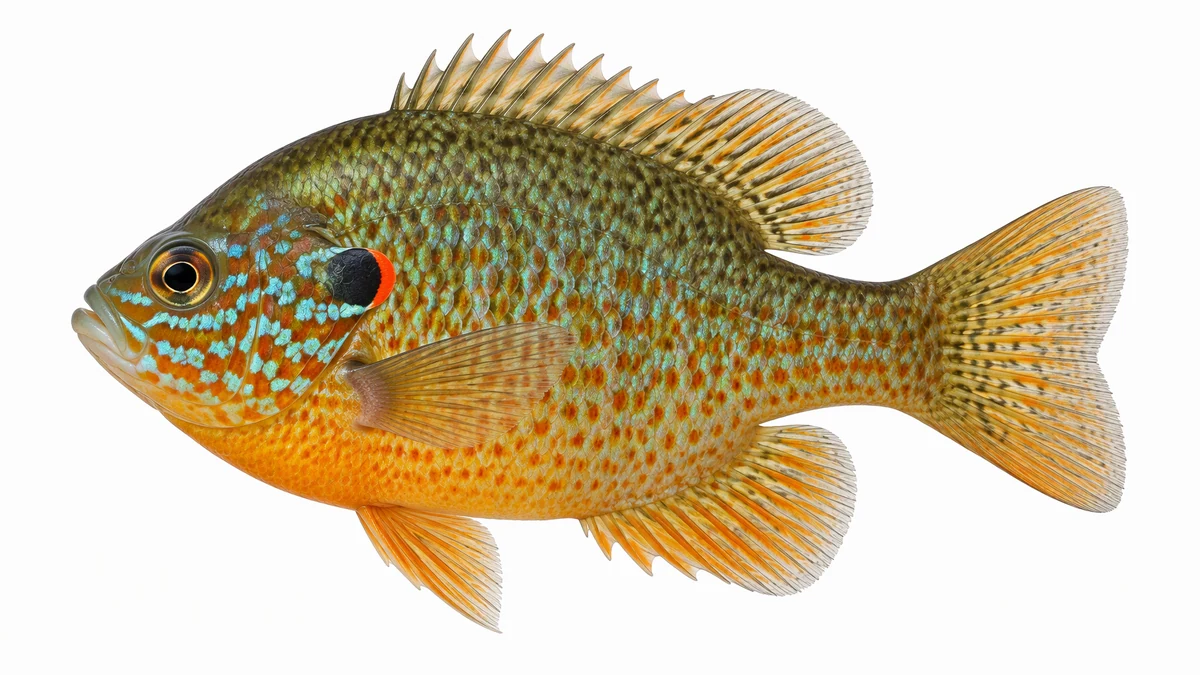
The pumpkinseed is the showiest small fish in many North American ponds. Its orange belly, blue-green speckles, and wavy blue cheek lines make it look like something from a warm aquarium rather than a cold northern lake. The name comes from the body shape: deep, flat, and roughly the size and outline of a pumpkin seed. Despite the looks, the pumpkinseed is a tough, adaptable sunfish that readily takes a worm, fights well on ultralight gear, and thrives in quiet, weedy water. This profile covers pumpkinseed identification, habitat, diet, size, spawning, regulations, and simple ways to catch them.
Quick ID Card
| Field | Details |
|---|---|
| Scientific name | Lepomis gibbosus |
| Common names | Pumpkinseed, pumpkinseed sunfish, common sunfish, pond perch, sunny |
| Family | Centrarchidae (sunfishes) |
| Typical size | 4–8 inches (10–20 cm), 0.2–0.5 lb |
| Maximum size | About 10–11 inches (25–28 cm), 1.3 lb (0.6 kg) |
| Water type | Warm, quiet ponds, lakes, and slow streams with vegetation |
| Active water temperature | Roughly 65–80°F (18–27°C) |
| Difficulty | Easy; ideal for beginners and fly anglers |
| Best season | Late spring through early fall; shallow beds in early summer |
How to Identify a Pumpkinseed
Pumpkinseed sunfish identification starts with the body. A pumpkinseed is deep and strongly flattened side to side, with a steep forehead and a small mouth. The profile is almost round, like a dinner plate with fins. Bluegill are also deep-bodied, but the pumpkinseed looks more circular and carries more color.
The ear flap is the decisive mark. Behind the eye and gill cover sits a small black flap. On a pumpkinseed, the rear edge of that flap carries a bright red or orange crescent, often trimmed with a thin pale border. No other common sunfish combines a black ear flap with that red-orange edge. Bluegill have a solid black flap with no red.
Color reinforces the ID. The back is olive-green, the sides are covered in orange and blue-green speckles, and the belly glows orange-yellow, especially on breeding males. Wavy blue lines run across the cheek and gill cover, and the eye is dark with a pale rim. The pectoral fins are long and pointed, reaching toward the eye when folded forward. Fins are translucent with orange or olive tint.
Young pumpkinseed look like faded adults: less orange, weaker blue lines, but the same body shape and the same red-edged ear flap. Hybrids with bluegill occur and can blur the pattern, so check the ear flap and the body shape together rather than relying on color alone.
Pumpkinseed vs Bluegill
This is the comparison that causes the most confusion, because the two fish share ponds, nests, and anglers. The ear flap settles it.
| Feature | Pumpkinseed | Bluegill |
|---|---|---|
| Ear flap | Black with a red-orange crescent at the rear edge | Solid black, no red edge |
| Body shape | Deeper, more circular, smaller mouth | Deep but slightly longer, larger mouth |
| Sides | Orange and blue-green speckles, no bars | Dark vertical bars, plainer olive |
| Cheek | Wavy blue lines | Mostly plain or faintly lined |
| Typical size | 4–8 inches | 5–9 inches, often larger |
| Fight | Quick, spinning fight on light tackle | Strong sideways pull |
Bluegill grow larger and are more widespread in farm ponds, while pumpkinseed tend to favor clearer water with abundant plants. Both nest in colonies, and hybrids show mixed traits: a dark ear flap with a weak red edge, bars that fade into speckles, and a body that sits between the two shapes.
Is the Pumpkinseed Dangerous?
No. The pumpkinseed has no venom and no teeth that can hurt a person. It does have sharp dorsal and anal spines, and the gill cover edge is firm. A small fish thrashing in a hand can poke a finger, which is uncomfortable but not serious.
Wet your hands before handling, hold the fish gently around the body, and avoid squeezing. If you use a hook, pinch the barb or use a small barbless hook for easy release. Pumpkinseed are hardy, but they still deserve quick handling and a clean release, especially in warm summer water.
Range and Habitat
Pumpkinseed are native to northeastern North America, from southern Canada through the Great Lakes region and down the eastern seaboard into parts of the southeastern United States. They have been introduced widely in Europe, where they are now established in many slow rivers, ponds, and canals and are considered invasive in some countries.
In their native range, pumpkinseed habitat means shallow, warm, vegetated water. Ponds, lake bays, oxbows, and slow-moving streams with lily pads, pondweed, and submerged brush hold the most fish. They avoid strong current and deep, cold water. Weed edges, dock shadows, and gravel patches near vegetation are reliable spots.
The fish tolerate warm water and low oxygen better than trout or smallmouth bass, which is why they persist in ponds that would stress other species. They still prefer clean water with good visibility, and dense algae blooms reduce growth. In small ponds with too many sunfish and too little food, pumpkinseed become stunted: many fish, few over 6 inches.
Depth follows light and temperature. In spring, pumpkinseed move into 1–3 feet of water to feed and nest. In midsummer, the biggest fish often sit a little deeper, along the outer edge of weed beds in 4–8 feet, while small fish stay in the shallows. In winter, they drift to deeper water and feed little. Anglers who fish the weed edge rather than the middle of the bed tend to catch larger fish.
Behavior and Diet
Pumpkinseed are daytime feeders with a varied diet. Aquatic insect larvae, small crustaceans, snails, worms, and small fish all appear on the menu. They are one of the few sunfish with teeth in the throat adapted to crushing snails, and snail shells are a regular part of the diet where the fish are common. That is one reason pumpkinseed do well in weedy ponds with abundant invertebrates.
Feeding happens in the shallows and around plant cover. Fish pick insects from stems, take larvae from the bottom, and rise to small prey on the surface. They are not shy, and a worm dropped near a weed edge usually gets attention within minutes. On calm evenings, pumpkinseed and bluegill feed at the surface, and a small popper or dry fly can draw strikes.
Spawning starts in late spring and continues into summer, with water temperatures around 68–75°F (20–24°C). Males clear shallow nests in gravel or sand, often in groups, and guard the eggs and fry. Colonies can contain many nests packed together, and the activity attracts bluegill, bass, and anglers. After the spawn, fish spread back into weed beds and feed heavily through the warm months.
Pumpkinseed are not long-distance migrants. They stay close to cover, move short distances with the seasons, and retreat to deeper water only in cold weather or drought. That makes them easy to find: if the habitat looks right, the fish are usually there.
They are also curious and aggressive for their size. A small jig hopped along a weed line draws fish from several feet away, and a float rig with a worm lets the bait sit in the strike zone. Because the fish are small, a light rod and 4–6 pound line make the fight entertaining and allow accurate casts into tight cover.
Size, Records and Regulations
Pumpkinseed sunfish size stays modest. Most adults are 4–8 inches long and weigh a few ounces to half a pound. A 9-inch fish is a good one, and the maximum is around 10–11 inches and 1.3 pounds (0.6 kg). Growth depends on food and crowding; overpopulated ponds produce many small fish, while lakes with snails, insects, and room to grow produce thicker fish.
State records for pumpkinseed generally fall near or a little above one pound, with the largest fish coming from large lakes and clear water. Record programs vary, and a state's pumpkinseed category may be combined with other sunfish, so check the current list before claiming a record. Most states keep panfish season open year-round, though some waters have closed seasons or gear restrictions.
Regulations are usually simple. Pumpkinseed are managed as panfish, often with no minimum length and a generous daily bag, sometimes 25–50 fish, sometimes unlimited in private ponds. Some states combine all sunfish under one limit; others list pumpkinseed separately. A license is required for public water in most states, and special rules may apply to certain lakes or border waters.
Because panfish rules change and vary by water, confirm the current bag and length limits with the state fish and wildlife agency before keeping fish. In New York, for example, the Department of Environmental Conservation (NYSDEC) publishes freshwater fishing regulations; other states have equivalent agencies. Last verified: November 2025.
FAQ
How big do pumpkinseed get? Most adults are 4–8 inches and under half a pound. Large specimens reach about 10–11 inches and 1.3 pounds, and state records sit near the one-pound mark.
How do you tell a pumpkinseed from a bluegill? Look at the ear flap. A pumpkinseed has a black flap with a bright red-orange crescent at the rear edge. A bluegill's flap is solid black with no red. Pumpkinseed also have wavy blue cheek lines and no dark vertical bars.
Where do pumpkinseed live? They live in warm, quiet, vegetated water: ponds, lake bays, oxbows, and slow streams. They are native to northeastern North America and have been introduced to Europe.
What do pumpkinseed eat? Aquatic insects, snails, small crustaceans, worms, and small fish. They are especially good at crushing snails, which helps them thrive in weedy ponds.
When do pumpkinseed spawn? From late spring into summer, when water reaches about 68–75°F (20–24°C). Males build shallow nests in gravel and guard the eggs.
What is the best bait for pumpkinseed? A worm or piece of worm under a small float is the classic. Mealworms, crickets, tiny jigs, and small flies also work. Ultralight tackle makes even small fish fun.
Are pumpkinseed good to eat? Yes. The meat is white, mild, and sweet. They are small, so most anglers keep only the largest fish and release the rest.
The pumpkinseed is small, bright, and easy to catch, which makes it a fine first fish and a pleasant target on a summer evening. A worm, a float, and a weedy edge are all the pumpkinseed really needs.
Related Articles
- Bluegill — the larger, more common sunfish that shares the same ponds.
- Longear Sunfish — another colorful sunfish, with a much longer ear flap.
- Yellow Perch — a cool-water schooling fish for the same light tackle.
- All bass and panfish profiles
Ready to catch one? Read our step-by-step guide: How to Catch Pumpkinseed.
About the author and how this was tested
About the author
FishermanGuy
Bank, boat and kayak angler · fishing, crabbing and shrimping since 2021
I buy the gear, fish it for a season and write down what failed. No sponsored verdicts, no free-sample flattery. Every rig on this page has landed fish in water I can point at on a map.
How this was tested
- Every rig gets at least six trips on the same water before it is published.
- Gear is bought at retail. Free samples are labelled in the first paragraph.
- Dates show first publication and the last time the page was updated.