Field notes
How to Catch Pumpkinseed: Rigs and Tips for Ponds
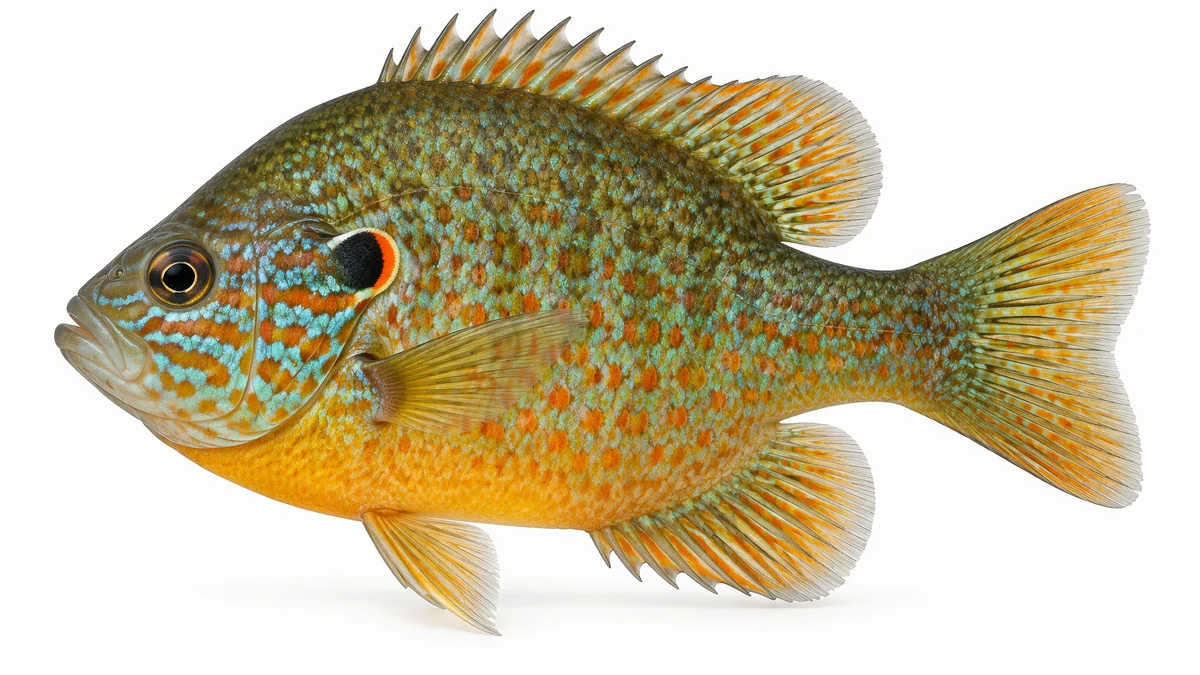
How to Catch Pumpkinseed
The pumpkinseed is the brightest small fish in many North American ponds, and it is one of the easiest to catch. Its orange belly, blue-green speckles, and wavy blue cheek lines make it look like a warm-water aquarium fish, yet it takes a plain worm as readily as anything. If you want to know how to catch pumpkinseed, the formula is simple: fish warm, weedy shallows with light tackle, a small hook, and a natural bait, and watch the float. This guide covers timing, gear, the best bait for pumpkinseed, rigs, technique, and location. Read the full Pumpkinseed species profile for identification and biology.
Best Time to Catch Pumpkinseed
Pumpkinseed feed through most of the warm season, but they bite best when the water sits between about 65°F and 80°F (18–27°C). That covers late spring, summer, and early fall in most of their range. When the water is colder than the mid-50s, fish slow down and move deeper, and bites come slowly.
Late spring to early summer is the prime window. As water climbs toward 68–75°F (20–24°C), pumpkinseed move into the shallows to spawn. Males clear shallow nests in gravel or sand, often in colonies, and guard them hard. A small bait or lure dropped near a bed rarely sits long. This is the easiest stretch of the year to catch numbers of fish, and the best time to catch pumpkinseed of any real size.
Summer keeps fish shallow early and late, with the biggest pumpkinseed sliding to the outer edge of weed beds in four to eight feet during bright midday hours. Fall brings them back to the shallows to feed before winter, and they stay catchable until the water drops into the 40s. Winter pushes them deep, but pumpkinseed remain active enough to take a tiny jig through the ice on lakes that freeze.
Time of day matters less than it does for bass. These are daytime feeders, and dawn and late afternoon are best in clear, sunny water. Overcast days fish well all day, and a warm rain that lifts the water temperature can turn on a shallow bay within hours.
Best Gear for Pumpkinseed
You do not need much tackle to catch pumpkinseed, and light gear is half the fun. A half-pound fish on an ultralight rod feels like a trophy, and light line gets far more bites in clear water.
| Component | Pumpkinseed-ready choice |
|---|---|
| Rod | 5–7 ft ultralight or light spinning rod |
| Reel | 1000–2500 size spinning reel |
| Main line | 4–6 lb monofilament, or 6–8 lb braid to a light leader |
| Hook | Size 6 to 10 bait hook, or a small jig hook |
| Float | Small slip float or clip-on bobber |
| Extras | Split shot, forceps, small bait cup, small net |
The rule of thumb is simple: go as light as the water allows. In clear ponds, 4 lb mono draws strikes that 8 lb line ignores, because pumpkinseed have sharp eyesight and inspect bait closely. A 5 to 6 foot ultralight rod also casts accurately into tight weed pockets and lets you feel a light bite.
Carry a long-handled pair of forceps. Pumpkinseed have small mouths and a habit of swallowing bait, and forceps let you back a hook out cleanly without tearing the fish up. A small rubber-mesh net helps you land fish without lifting them by the line.
Best Bait for Pumpkinseed
Pumpkinseed are opportunistic feeders that eat aquatic insects, small crustaceans, snails, worms, and tiny fish. They are one of the few sunfish with throat teeth built for crushing snails. Match that varied diet with something small and natural, and you are in business.
- Worms. A piece of nightcrawler or a whole red wiggler is the classic bait for pumpkinseed. Thread it so the point stays buried and the tail wiggles.
- Mealworms and waxworms. Tough, cheap, and easy to hook. Waxworms are soft and effective when the water is cold.
- Crickets. A live cricket on a size 6 hook is a summer magnet. Hook it through the collar so it stays lively.
- Small jigs. A 1/32 to 1/64 oz tube jig or curly-tail grub imitates an insect or small minnow and tends to catch bigger fish.
- Flies and poppers. Small nymphs, tiny poppers, and dry flies draw pumpkinseed to the surface on calm evenings.
For the biggest pumpkinseed, size up slightly. A 1/32 oz jig or a whole cricket selects larger fish and still gets plenty of bites. When an angler asks what bait for pumpkinseed is best, the honest answer is a small piece of worm under a float on light line. Everything else is a refinement.
Pumpkinseed Rigs for Ponds, Weeds and Docks
Three rigs cover almost every pumpkinseed situation, from a farm pond to a weedy lake bay.
Bobber and split shot. Tie a size 6 to 10 hook to 4–6 lb line, pinch a small split shot six to twelve inches above it, and clip a float above that. Set the depth so the bait sits just above the weed tops or the bottom. This is the best all-around pumpkinseed rig and the easiest for beginners and kids.
Jig under a float. Swap the bait hook for a 1/32 oz jig and fish it under a float, twitching it every few seconds. The float shows the strike, and the jig selects bigger fish.
Drop-shot or tight-line rig. For deeper fish along a weed edge, a small jig or bait on a short drop-shot leader keeps the offering in the strike zone. On ice, a 1/64 to 1/32 oz jig tipped with a waxworm fished vertically is the standard winter presentation.
Build each rig with as little hardware as possible. A bulky swivel or a large bobber spooks fish in clear, shallow water. Small, clean, and light is the theme.
How to Catch Pumpkinseed, Step by Step
- Find shallow cover. Look for weed edges, docks, fallen limbs, and sandy patches that could be spawning beds.
- Set the float depth. Start with the bait about a foot off the bottom, or just above the weed tops.
- Cast gently. Pumpkinseed are spooky in clear shallows. A soft lob beats a hard cast that scatters the school.
- Let it sit, then twitch. Fish often take a still bait. If nothing happens in a minute, give the float a small twitch.
- Watch the float. The classic bite is a quick dip, but a float that rises or moves sideways can mean a fish took the bait and swam up or off.
- Set the hook with a light lift. A gentle sweep is enough. A hard hookset tears small mouths and sends bait flying.
- Land, unhook, and release quickly. Use wet hands, back the hook out with forceps, and return the fish fast, especially in warm summer water.
The single biggest mistake is using too much bait on too large a hook. A fat gob of worm on a size 2 hook catches small fish and misses big ones. Use a small piece and a small hook, and your catch rate climbs.
Where to Catch Pumpkinseed
Pumpkinseed live in warm, quiet, vegetated water: ponds, lake bays, oxbows, and slow streams. They avoid strong current and deep, cold water, and they rarely stray far from cover. If the habitat looks right, the fish are usually there.
- Weed edges. Fish the outer edge and any gaps in the weeds. Pumpkinseed sit just inside cover and dart out to feed.
- Docks and piers. Shade and structure attract both fish and the insects they eat. Work the shadow line.
- Fallen trees and brush. A sunken limb is a pumpkinseed apartment building. Drop a bait straight down into it.
- Sandy spawning flats. In late spring, look for clusters of shallow circular nests and fish the edges of the colony.
- Gravel patches near vegetation. These hold insects and snails, two pumpkinseed staples.
In rivers, target backwaters, eddies, and the slack water behind boulders and bridge pilings. In summer, the biggest fish often sit along the outer weed edge in four to eight feet, while small fish stay in the shallows. In winter, they drift to deeper water and feed little. Fish the edge rather than the middle of a weed bed and your average size goes up.
Pumpkinseed Regulations and Safety
Pumpkinseed are managed as panfish, and the rules are usually simple. Many states set no minimum length and a generous daily bag, often 25 to 50 fish, while some private ponds have no limit at all. A few states combine all sunfish under one limit, and special rules can apply to certain lakes or border waters. A fishing license is required on public water in most states.
Because panfish rules change and vary by water, confirm the current bag and length limits with the state fish and wildlife agency before you keep fish. In New York, for example, the Department of Environmental Conservation (NYSDEC) publishes freshwater fishing regulations; other states have equivalent agencies. Last verified: November 2025.
Pumpkinseed are harmless to people. They have no venom and no cutting teeth, but they do carry sharp dorsal and anal spines, and a small fish thrashing in a hand can poke a finger. Wet your hands before handling, hold the fish gently around the body, and avoid squeezing. Pinch the barb or use a small barbless hook if you plan to release fish, and keep handling short in warm water, when fish are most stressed.
Common Mistakes and Pumpkinseed Fishing Tips
- Hook too big. A size 2 hook misses small fish and spooks big ones. Use size 6 to 10.
- Line too heavy. In clear water, 8 to 10 lb line cuts bites sharply. Drop to 4 to 6 lb.
- Too much bait. A small piece of worm outfishes a whole one.
- Fishing too deep. Pumpkinseed are often in two to six feet of water, not on the bottom of a deep lake.
- Setting the hook too early. Wait for the float to actually go under or move off, not for the first ripple.
- Staying in one spot. If the school drifts, follow the weed edge or try the next dock.
- Ignoring the edge. Big pumpkinseed usually hold on the outer weed line, not in the middle of the bed.
- Rough handling. Wet hands, quick unhooking, and a cool release keep fish healthy, especially in summer heat.
A few extra pumpkinseed fishing tips are worth keeping in mind. On calm evenings, these fish feed at the surface, and a tiny popper or dry fly can be electric. In cold water, slow everything down and use the smallest bait you can. And because pumpkinseed are curious and aggressive for their size, a small jig hopped along a weed line often draws fish from several feet away.
FAQ
What is the best time to catch pumpkinseed? Late spring through early fall, when the water is 65–80°F and fish are shallow. The spawn window around 68–75°F (20–24°C) is the easiest and most productive stretch.
What bait for pumpkinseed works best? A small piece of worm or a whole red wiggler under a float is the classic. Mealworms, crickets, and 1/32 oz jigs also work, and jigs tend to catch bigger fish.
What are the best pumpkinseed fishing techniques? Fish a float rig slowly around weed edges, twitch a small jig under a bobber, or cast a tiny popper at dusk. Light line and a gentle presentation matter more than any single technique.
What is the best pumpkinseed rig for beginners? A bobber-and-split-shot rig with a size 6 to 10 hook and 4–6 lb line. Set the bait just above the weeds and watch the float.
Where can you catch pumpkinseed? Warm, weedy shallows in ponds, lake bays, oxbows, and slow streams. Weed edges, docks, brush, and spawning flats are the most reliable spots.
How big do pumpkinseed get? Most adults are 4–8 inches and under half a pound. Large fish reach about 10–11 inches and 1.3 pounds, and state records sit near the one-pound mark.
Pumpkinseed fishing is a reminder that you do not need expensive tackle or a far-off lake to have a good day. A light rod, a small hook, and a quiet weedy bank are enough. That is how to catch pumpkinseed, and why so many anglers never stop chasing them.
Related Articles
- How to Catch Longear Sunfish — another colorful sunfish from clear creeks.
- How to Catch Yellow Perch — a cool-water schooling fish for the same light tackle.
- How to Catch Bowfin — a hard-fighting native that shares weedy backwaters.
- Pumpkinseed species profile — identification, habitat, and biology.
- All species profiles
About the author and how this was tested
About the author
FishermanGuy
Bank, boat and kayak angler · fishing, crabbing and shrimping since 2021
I buy the gear, fish it for a season and write down what failed. No sponsored verdicts, no free-sample flattery. Every rig on this page has landed fish in water I can point at on a map.
How this was tested
- Every rig gets at least six trips on the same water before it is published.
- Gear is bought at retail. Free samples are labelled in the first paragraph.
- Dates show first publication and the last time the page was updated.