Field notes
How to Catch Paddlefish: Snagging, Gear & Timing
How to Catch Paddlefish
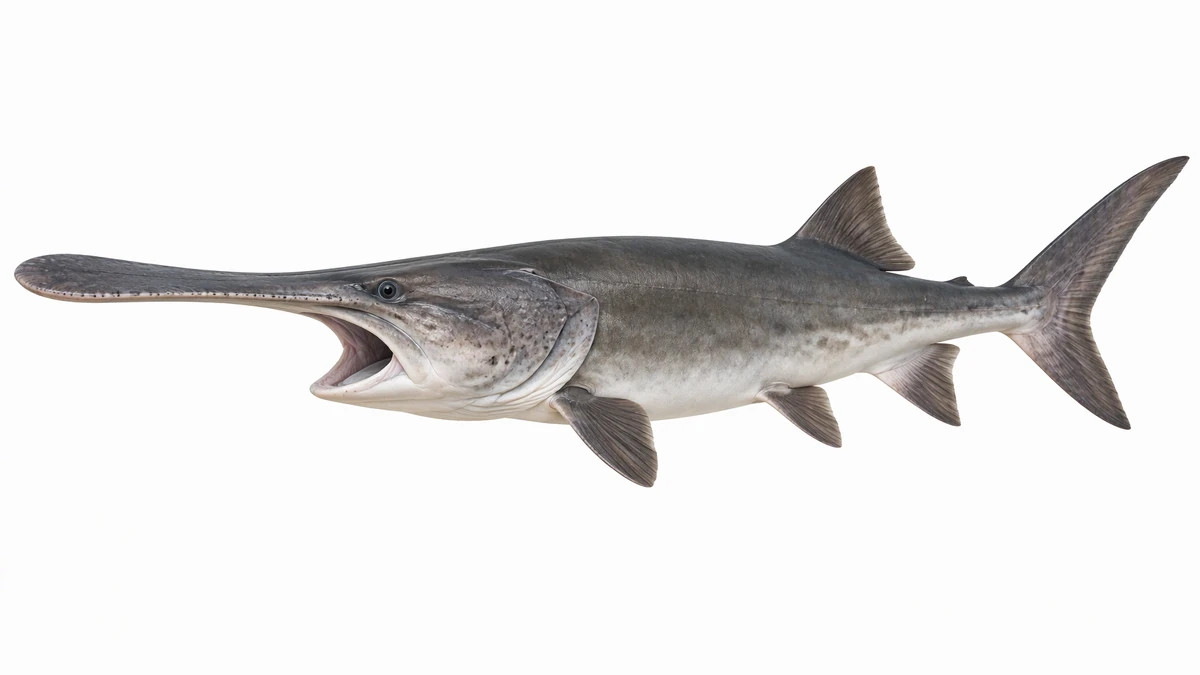
The paddlefish is one of the strangest fish in North American fresh water, and learning how to catch paddlefish means throwing out most of what you know about bait fishing. This fish has a snout shaped like a boat paddle, no real teeth as an adult, and a mouth built to strain plankton from the water. It will not eat a worm, a lure or anything else you dangle in front of it. That single fact changes everything: in most places you catch a paddlefish not by feeding it but by snagging it legally, during a tightly regulated season, with heavy gear and a steady hand. This guide covers the best time to catch paddlefish, the gear and the reality of bait, the rigs used for snagging, step-by-step tactics, and the rules and handling that keep this ancient, slow-growing fish in our rivers. Read the full Paddlefish species profile for identification, range and biology.
Best Time to Catch Paddlefish
Water temperature and river flow drive paddlefish movement, and the calendar is built around the spring spawning run. Paddlefish become active as water warms into the 50s and 60s Fahrenheit, and spawning is triggered near 55–60°F (13–16°C).
Spring is the season. The run usually begins in March and extends into May, when fish move upstream toward gravel bars and rocky riffles in free-flowing reaches. This upstream run concentrates fish and is the basis for most legal paddlefish seasons. Spring is also when the water is cold enough to keep fish active but warming fast.
Summer spreads fish through the river channel, where they feed in the current and can be harder to find in numbers. Fall sees fish moving as flows and temperatures change. Winter gathers them in deep holes where they slow down, and many seasons are closed.
Because paddlefish seasons are so specific, timing is less about "when do they bite" and more about "when is the legal season and where are the fish running." In states that allow spring snagging, seasons are often short and water-specific. For example, Missouri allows spring snagging for paddlefish on parts of the Missouri and Mississippi rivers, usually from mid-March through April, with strict limits. As of 2025, the state fish and wildlife agency for your water is the authority on dates, so check current rules before you plan a trip.
Best Gear for Paddlefish
Paddlefish fishing is snagging, and snagging demands heavy tackle. You are dragging a large treble hook through the water and hoping to foul-hook a fish that can weigh 30–60 pounds or more, so the rod, reel, line and hook all need to handle a hard, powerful fight.
| Component | Paddlefish snagging-ready choice |
|---|---|
| Rod | Heavy 7–9 ft rod rated for 30–50 lb or more |
| Reel | Large conventional or heavy spinning reel with a strong drag and good line capacity |
| Main line | 50–80 lb braid for strength and abrasion resistance |
| Leader | Heavy mono or braid leader sized for a big treble hook |
| Hook | Large, sharp treble hook used for legal snagging |
| Extras | Heavy gloves, large landing net or gaff where legal, bolt cutters, measuring device |
Heavy braid is the standard main line because it resists abrasion and gives you the strength to fight a big fish in current. The hook is a large, sharp treble used for snagging, and it must be legal for the water and season you are fishing. A heavy leader connects the hook to the braid.
Support gear matters as much as the rod. A large landing net or a legal gaff helps control a fish that can thrash in a small boat. Heavy gloves protect your hands from hooks and from a big, powerful fish, and bolt cutters let you cut a hook if a fish is foul-hooked somewhere difficult. Bring a measuring device, because minimum lengths and reporting rules are common. And bring patience, because snagging is a low-percentage game even on a good day.
Do not fish paddlefish with light tackle. A treble hook dragged through current needs a rod that can load and a line that will not snap when a 60-pound fish rolls. Match the gear to the fish and to the snagging method the law allows.
Best Bait for Paddlefish
This is the section where paddlefish break the rules of fishing. There is no bait. The best bait for paddlefish does not exist, because the fish is a filter feeder that lives on zooplankton: tiny drifting animals such as Daphnia, copepods, insect larvae and small shrimp. It strains them through gill rakers as it swims with its mouth open. A paddlefish has no interest in a worm, a minnow, a lure or a spoon.
That is why anglers who catch a paddlefish on a rod and reel almost always snag it by accident while fishing for something else, usually a catfish or a sturgeon. It is also why the species has its own special seasons: the only practical, legal way to target one is by snagging (or bowfishing where allowed) during a designated season, not by feeding it.
So the "bait" for paddlefish is really the technique. You present a large treble hook and retrieve it through water where fish are concentrated, trying to foul-hook a fish. Some anglers use a weight above the hook to keep it at a certain depth, and some add a flasher or attractor, but the hook itself is the tool. There is nothing to bite, so there is nothing to set. You feel the hook catch, and then you hang on.
If you want the best chance at a paddlefish, forget bait entirely and focus on locating fish and making the legal snag count.
Paddlefish Rigs
Because paddlefish are snagged rather than fed, the rigs are built for dragging a hook through water rather than presenting bait. These are the common setups where snagging is legal.
Basic snagging rig. Tie a large, sharp treble hook to a heavy leader on 50–80 lb braid. Some anglers add a heavy sinker above the hook to control depth in current, and some use a three-way swivel to run a weight off a dropper. Cast into concentrations of fish in deep runs, let the rig sink to the right depth, and retrieve steadily.
Weighted snagging rig for deep water. In deep pools and strong current, a heavier sinker keeps the hook down where fish are holding. Use a dropper or slider above the treble so the hook trails at the fishing depth. This rig is for fish holding deep in the channel.
Bowfishing setup. Where legal, bowfishing is another way to take a paddlefish. This uses bowfishing tackle rather than rod and reel, and it is regulated separately. Check whether bowfishing is allowed on your water before you go.
Whatever the rig, keep it simple and heavy, and confirm it is legal for the season and water. Snagging rules can specify hook type, season, water and even the method of retrieval. A rig that is fine on one river can be illegal on the next.
How to Catch Paddlefish, Step by Step
- Confirm the law first. Paddlefish are tightly regulated. Check that snagging or bowfishing is legal on your water, during an open season, with the allowed gear. This step comes before everything else.
- Find concentrated fish. Paddlefish gather on spring runs, in deep pools and in current. Use sonar, local knowledge or visible activity to locate fish before you cast.
- Set up a drift or position. Many snagging anglers fish from a boat, drifting or holding over concentrations of fish so the hook sweeps through the strike zone.
- Cast and let the rig sink. Put the treble hook into the water where fish are holding and let it drop to the right depth.
- Retrieve steadily. Drag the hook through the water in a smooth sweep. The idea is to foul-hook a fish, so keep the hook moving through where fish are thick.
- Feel for the catch. When the hook catches something solid that pulls back, you have a fish. Do not treat it like a bite; treat it like a hookup and get ready for a hard fight.
- Fight with steady pressure. A paddlefish is large and powerful. Keep the rod bent, let the drag work and keep the fish out of heavy structure.
- Land, measure and release or keep legally. Use a net or legal gaff, measure the fish, and follow the rules for keeping or releasing. Handle it with care and revive it if releasing.
The most common mistake is treating paddlefish like other fish: waiting for a bite that will never come. There is no bite. The catch is a hook that suddenly loads up. Understanding that is half the battle.
Where to Catch Paddlefish
The paddlefish is native to the Mississippi River basin and its major tributaries, historically across the Missouri, Ohio and Mississippi drainages from Montana and North Dakota south to Louisiana and east to Alabama and Pennsylvania. Today, wild populations are concentrated in the Mississippi and Missouri river systems, with smaller populations in the Ohio and several southern rivers. Within that range, focus on big water with current and depth.
- Deep river pools. Paddlefish hold in deep holes and slow eddies in large rivers.
- Free-flowing reaches with gravel bars. These are the key to spawning, and spring runs concentrate fish near gravel and rocky riffles.
- Current seams and channel edges. Fish cruise the channel and feed where plankton drifts.
- Oxbows and some reservoirs. Fish live in these waters and can grow fat on plankton, though they often fail to reproduce there.
- Below dams and barriers. Dams block migration, but fish still gather below them, and these areas can hold concentrations.
Free-flowing water is the best sign. Dams cut off the upstream runs the species depends on, which is a major reason paddlefish have declined across much of the range. Water temperature shapes movement: fish are active in spring as water warms into the 50s and 60s, spread through the channel in summer, and gather in deep holes in winter.
Paddlefish Regulations and Safety
Paddlefish regulations are where paddlefish fishing gets serious. Because the fish is slow to mature and vulnerable to overharvest, states regulate it closely. Common tools include closed seasons, limited snagging seasons, daily limits of one or two fish, minimum lengths and mandatory reporting, and some states prohibit harvest altogether. Snagging is legal only in specific seasons and waters, and bowfishing is regulated separately. As of 2025, the state fish and wildlife agency is the authority: check the current rules for the exact water you plan to fish before you go. Paddlefish roe is sold as caviar, and that trade drives poaching, so commercial harvest is tightly controlled and illegal caviar trafficking is a real enforcement issue in the Mississippi basin.
On safety, the fish itself is not dangerous. It is not venomous, has no spines and cannot bite with anything worse than a gum; adults have no functional teeth. The risk comes from the method. A treble hook dragged through the water can find a hand as easily as a fish, and a thrashing 60-pound paddlefish in a small boat can break tackle, bruise shins and throw hooks. Wear gloves, keep the net ready and control the fish before you touch it. Handle a paddlefish by supporting the body and avoiding the gill covers and the base of the tail. Never lift a big fish by the paddle; the rostrum is not a handle. If you are releasing the fish, keep it in the water, remove the hook quickly and revive it before letting go.
Common Mistakes and Paddlefish Fishing Tips
- Fishing out of season. Paddlefish seasons are short and water-specific. Fish only when and where snagging is legal.
- Waiting for a bite. There is no bite. You are snagging, so feel for the hook loading up.
- Light tackle. Snagging a 60-pound fish needs heavy braid, a strong rod and a big treble.
- Poor fish-finding. Paddlefish are filter feeders tied to current and depth. Use sonar and local knowledge to find concentrations.
- Lifting by the paddle. The rostrum is not a handle. Support the body.
- Ignoring reporting rules. Many states require reporting or tagging. Follow them.
- Assuming one state's rules apply elsewhere. Snagging and bowfishing rules vary widely. Check each water.
- Rough release. Keep the fish in the water, free the hook quickly and revive it before letting go.
FAQ
What is the best time to catch paddlefish? Spring, during the upstream spawning run, usually March into May when water reaches about 55–60°F (13–16°C). Seasons are short and water-specific, so check your state's rules.
What bait for paddlefish works best? None. Paddlefish are filter feeders that eat zooplankton and do not take bait or lures. They are caught by legal snagging or bowfishing where allowed, or incidentally on other gear.
How do you catch a paddlefish legally? Check your state's rules first, then fish a legal spring snagging season with heavy tackle and a large treble hook. Cast into concentrations of fish in deep runs, retrieve steadily and be ready for a hard fight. Bowfishing is legal in some states.
Where do paddlefish live? In large rivers, deep pools, oxbows and some reservoirs of the Mississippi River basin, from Montana and the Dakotas south to Louisiana and east to Alabama. Free-flowing reaches are essential for spawning.
Is paddlefish caviar legal to sell? Only under state commercial rules. Paddlefish roe is regulated as caviar, and illegal harvest or sale is prosecuted. Recreational anglers should check possession and sale rules before keeping roe.
Are paddlefish dangerous to handle? The fish is harmless, but snagging is not. A treble hook can catch a hand, and a big fish can thrash in a small boat. Wear gloves, use a net and control the fish before touching it.
Paddlefish cannot be fooled with bait, so catching one is about the right season, the right water and a legal snag. Find the run, put a heavy hook through it, fight with steady pressure and handle the fish with care. That is how to catch paddlefish, and why this ancient filter feeder deserves both respect and a careful release.
Related Articles
- How to Catch Alligator Gar — another giant of big southern rivers, with its own strict rules.
- How to Catch Brown Trout — a cold-water fish that shares tailwaters below dams.
- How to Catch Rainbow Trout — a cold-water fish of rivers and stocked lakes.
- Paddlefish species profile — identification, habitat and caviar rules.
- All species profiles
About the author and how this was tested
About the author
FishermanGuy
Bank, boat and kayak angler · fishing, crabbing and shrimping since 2021
I buy the gear, fish it for a season and write down what failed. No sponsored verdicts, no free-sample flattery. Every rig on this page has landed fish in water I can point at on a map.
How this was tested
- Every rig gets at least six trips on the same water before it is published.
- Gear is bought at retail. Free samples are labelled in the first paragraph.
- Dates show first publication and the last time the page was updated.