Field notes
How to Catch Northern Pike: Tactics, Baits & Timing
How to Catch Northern Pike
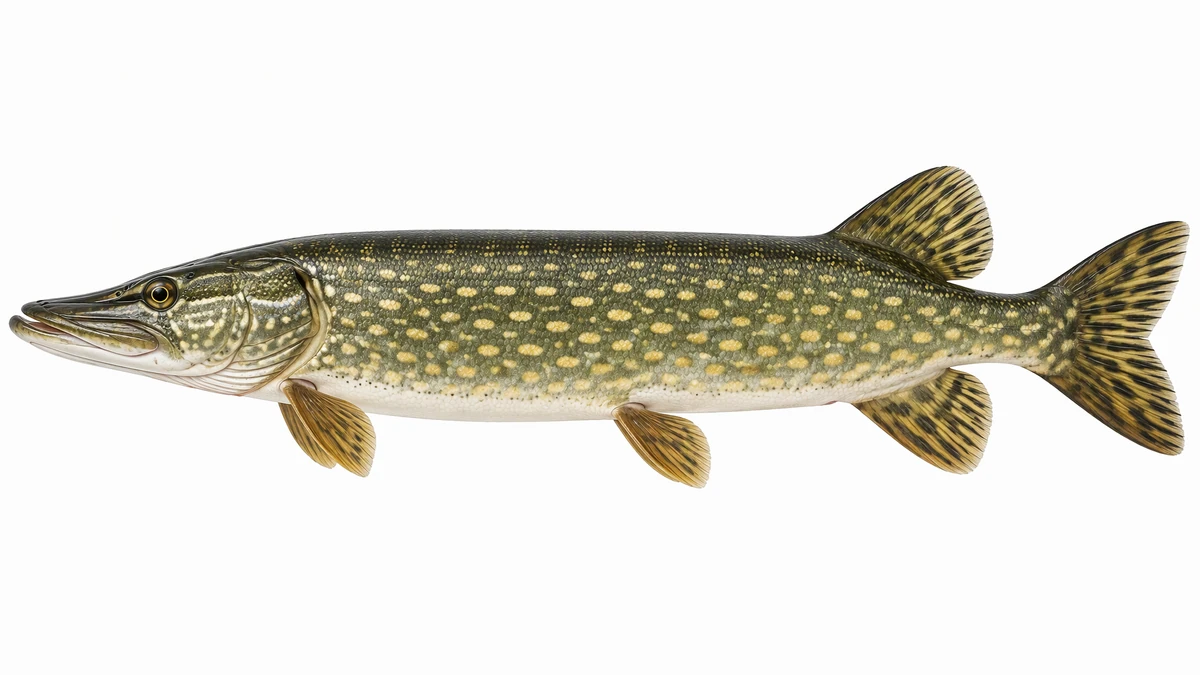
Few freshwater fish hit a lure like a northern pike. The "water wolf" will sit motionless in a weed bed for hours, then explode sideways on anything that drifts too close. Learning how to catch northern pike is less about finesse and more about solving two problems: the teeth, and the turf. Get a wire or titanium leader in front of your bait, fish the weeds at the right hour, and a pike is one of the more forgiving trophies a newer angler can chase. For identification, range, and biology, read the full Northern Pike species profile; here we focus on catching them.
Best Time to Catch Northern Pike
The best time to catch northern pike splits into two strong windows: the post-spawn spring period and the fall feeding binge. In between, summer fish are still catchable, but the timing and depth change.
Spring is prime. Pike spawn among the earliest of any freshwater fish, slipping into flooded marshes and shallow bays just days after ice-out, when water sits in the low-to-mid 40s°F. Right after spawning they feed hard in 2–6 feet of flooded grass, and cold, murky spring water lets them hunt all day rather than just at dawn and dusk.
Summer pushes them deeper and later. Once water climbs past the mid-70s°F, pike slide to weed edges and drop-offs in 8–20 feet and go sluggish by day. They still feed at dawn, dusk, and night, so hit the same weed edge early and late and fish deeper at midday.
Fall is the year's best window for big fish. Pike move shallow again to chase baitfish and feed heavily before winter. Winter keeps them catchable through the ice on weed flats and edges.
Feeding peaks in low light everywhere: dawn, dusk, overcast days, and, in clear lakes, after dark. Water around 50–72°F is their comfort zone. They tolerate near-freezing water, which is why they are an ice-fishing favorite.
Best Gear for Northern Pike
Pike gear is built around one reality: their teeth shred line. Everything else is secondary to a leader that survives the bite.
| Component | Pike-ready choice |
|---|---|
| Rod | 7 to 7 ft 6 in medium-heavy baitcasting rod |
| Reel | Baitcasting reel with a strong drag and a line capacity matched to 30–50 lb braid |
| Main line | 30–50 lb braid |
| Leader | 6–12 in steel or heavy titanium leader |
| Hooks | Strong 3/0–5/0 hooks, often on spoons and spinnerbaits |
| Extras | Long-nose pliers, jaw spreaders, hook cutters, a large rubber net |
Braid gives you the strength to set a heavy hook through a bony mouth and to pull a fish out of weeds. The leader is non-negotiable: a pike will slice through mono or fluorocarbon in a heartbeat. Heavy wire or titanium solves that, even if it costs a little lure action.
Because pike eat big prey, the rod needs enough backbone to cast 4–7 inch baits and to fight a fish that can top 40 inches. A rubber-mesh net protects the fish and your hands, and jaw spreaders make unhooking a thrashing pike far safer.
Best Bait for Northern Pike
The best bait for northern pike is big. These are ambush predators that can swallow prey about a third of their own body length, so undersized baits mostly catch small fish. Match the forage and size up.
Natural bait still works where it is legal. Large live or dead baitfish, and even big minnows under a float, catch pike. Some waters restrict baitfish use, so check local rules first.
Artificial lures are the main tool because they cover water and survive pike teeth.
- Spoons. A big wobbling spoon is a pike classic. Cast it over weed edges and reel it steadily, or let it flutter on the fall.
- Spinnerbaits. A large spinnerbait with big blades is a search bait that runs over grass and past cover without snagging everything.
- Jerkbaits and swimbaits. A 4–7 inch jerkbait or swimbait, worked slowly, imitates the perch and suckers pike hunt. Twitch-pause retrieves trigger reaction strikes.
- Topwater. In low light over shallow weeds, a noisy topwater draws violent, visible strikes.
Pike are not picky eaters — their diet runs from perch and suckers to frogs, crayfish, and even mice. That means flash, vibration, and size matter more than exact color. Bright and natural patterns both produce; bring a few and let the fish tell you.
Northern Pike Rigs
A pike rig has one job: present a big bait without losing it to the teeth. These setups cover almost everything.
Steel or titanium leader rig. This is the foundation. Tie 6–12 inches of steel or titanium leader between your braid and your lure. Clip, crimp, or tie according to the leader type, and check it after every fish for kinks. A frayed leader is a lost fish waiting to happen.
Quick-strike bait rig. For live or dead bait, a two-treble quick-strike harness lets a pike take the bait before you set the hook, which improves hookups on fish that grab and run. Fish it under a float or on a slip rig near weed edges.
Spinnerbait and spoon rig. These are fished straight on the leader with no extra hardware. Keep the connection simple and strong, and use a snap or loop knot that lets the lure swing freely.
Whatever the rig, keep the leader long enough that a pike cannot reach your braid with its teeth. Six inches is a minimum; go longer in heavy cover.
How to Catch Northern Pike, Step by Step
- Pick a weedy edge. Pike ambush from cover. Fish the outside edge of weed beds, lily pads, and submerged timber, working the 2–10 foot zone.
- Cast past the target and bring the bait through it. Land beyond the weed point or gap, then retrieve through the strike zone rather than dropping the lure on the fish.
- Slow down. A slow, steady retrieve with occasional twitches beats a fast burn. Pike are ambush hunters, not chasers.
- Cover water, then repeat good water. Search with a spinnerbait or spoon, then slow down with a jerkbait or swimbait where you get follows or strikes.
- Set the hook hard. A bony mouth needs a firm sweep or snap to drive home a heavy hook.
- Land it safely. Use a large net, then hold the pike by the head behind the gill covers with your fingers away from the mouth. Use pliers to remove hooks.
- Handle and release quickly. Support the body horizontally, keep it out of the water briefly, and revive it before release.
On pressured water, the follow is common and the strike is not. If a pike trails your lure to the boat, try a figure-eight at the rod tip before lifting out — that last-second turn often triggers the bite.
Where to Catch Northern Pike
Where to catch northern pike comes down to two words: cool and weedy. In the U.S., they are native to the northern tier — New England, New York, the Great Lakes states, the upper Midwest, the northern plains, the Rockies, parts of the Pacific Northwest, and Alaska. The southern edge of the native range runs roughly along the latitude of the Ohio and Missouri rivers, because most southern water is simply too warm.
Within that range, look for backwaters, bays, and marshy shorelines. Weed beds, lily pads, and submerged timber hold fish, and most pike live within a few hundred yards of a favorite weed bed. Fish hold in 2–10 feet near cover, with summer fish often on weed edges and drop-offs in 8–20 feet of cooler water.
A note on the West: a few populations there came from stocking or escapes and are not native. California's Lake Davis is the famous example, where pike were managed as invasive and even targeted for removal. In non-native waters, regulations may encourage keeping every fish, so check your state's rules before you go.
Northern Pike Regulations and Safety
Pike regulations follow two paths. In native waters, expect the usual length limits, bag limits, seasons, and license requirements. In non-native waters, there may be no size or possession limits, and keeping fish may even be encouraged. Regulations vary by state, so always check your local rules — as of 2025, these rules differ sharply from one state to the next, and some western waters treat pike as invasive.
The safety side matters more than with most freshwater fish. A pike is not venomous and will not attack a person, but its teeth are sharp enough to slice skin and line. Bites almost always happen when someone grabs a live fish around the head and slides a finger into the tooth zone. Hold a pike by the head behind the gill covers, keep your fingers clear of the mouth, and use pliers or jaw spreaders to remove hooks. Carry hook cutters for deep hooks, and wear glasses if you are new to handling toothy fish.
Common Mistakes and Northern Pike Fishing Tips
- Skipping the leader. The number one pike mistake. Mono and fluorocarbon lose to teeth. Use steel or titanium.
- Fishing too small. Big baits catch big pike. Size up from bass tackle.
- Retrieving too fast. Slow, steady, and deliberate draws more strikes than a fast burn.
- Ignoring the follow. If a pike trails to the boat, figure-eight the lure before lifting out.
- Fishing midday in summer heat. Go early and late or fish deeper weed edges.
- Grabbing a live pike wrong. Never reach around the head from the front. Hold it behind the gills.
- Not checking the leader. A kinked or frayed leader fails on the next fish. Inspect and replace.
- Keeping every big fish. Selective harvest protects the trophy fish that make a fishery special.
FAQ
What is the best time to catch northern pike? The post-spawn spring period and the fall feeding binge are strongest. Day to day, dawn, dusk, and overcast days beat bright midday, and summer fish feed best early and late.
What bait for northern pike works best? Big baits for big teeth: large spoons, spinnerbaits, and 4–7 inch jerkbaits or swimbaits worked slowly along weed edges, fished on a 6–12 inch steel or titanium leader.
What are the best northern pike fishing techniques for beginners? Start with a large spoon or spinnerbait on a steel leader. Cast over weed edges, retrieve slowly, and set the hook hard when a fish hits. Have a net and pliers ready.
Do northern pike bite in summer? They do, but the timing shifts. By day they hold on weed edges and deeper drop-offs; at dawn, dusk, and night they feed. Fish the same edge early and late and slow the retrieve.
Where can you catch northern pike? Cool, weedy lakes and slow rivers across the northern U.S. and Canada. Look for backwaters, bays, weed beds, lily pads, and submerged timber with bait nearby.
How big do northern pike get? Most run 24–36 inches and 3–10 pounds. A 40-inch fish around 15–20 pounds is a trophy, and the all-tackle world record is 55 pounds 1 ounce.
Learning how to catch northern pike is mostly about two things: a leader that survives the teeth and a slow bait in the weeds at the right hour. Solve those, and the water wolf will do the rest.
Related Articles
- How to Catch Walleye — the low-light target that shares northern lakes.
- Muskellunge — the pike's bigger cousin, and the fish most often confused with it.
- How to Catch Largemouth Bass — warm-water tactics for the same weed edges.
- Yellow Perch — a staple pike food and a fun target in its own right.
About the author and how this was tested
About the author
FishermanGuy
Bank, boat and kayak angler · fishing, crabbing and shrimping since 2021
I buy the gear, fish it for a season and write down what failed. No sponsored verdicts, no free-sample flattery. Every rig on this page has landed fish in water I can point at on a map.
How this was tested
- Every rig gets at least six trips on the same water before it is published.
- Gear is bought at retail. Free samples are labelled in the first paragraph.
- Dates show first publication and the last time the page was updated.