Field notes
How to Catch Muskellunge: Gear and Timing for a Giant
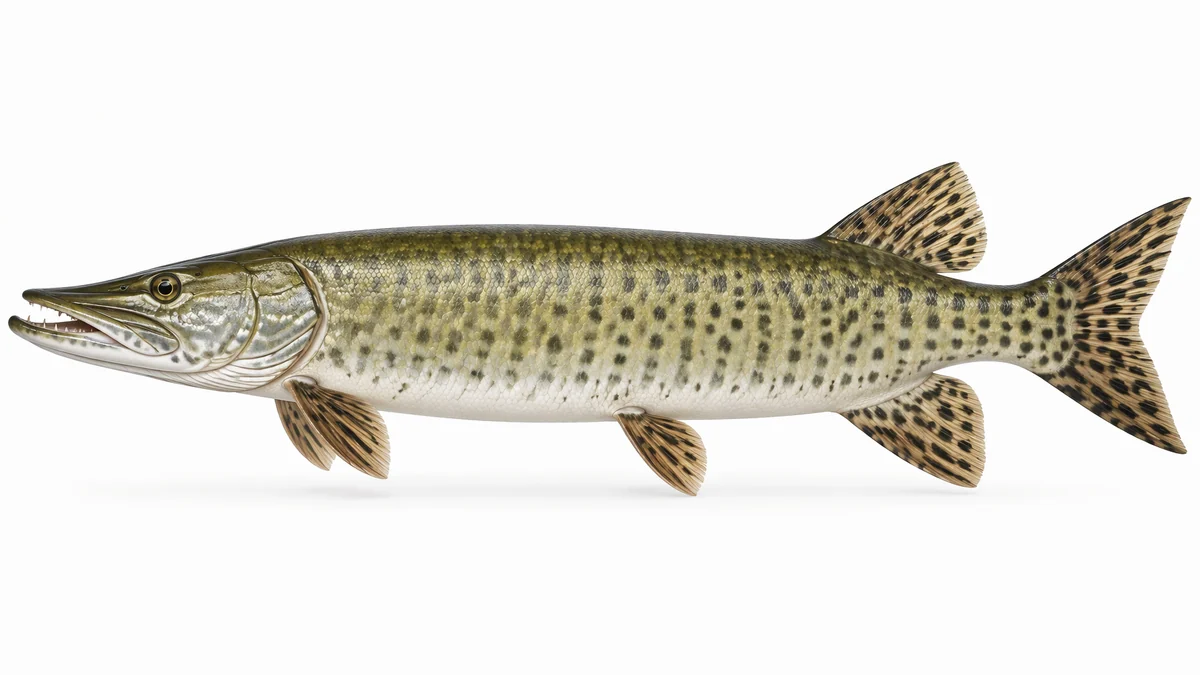
How to Catch Muskellunge
The muskellunge is the largest member of the pike family and one of the most prized freshwater predators in North America. Anglers call it the fish of ten thousand casts, and the nickname is earned: a muskie may follow a lure to the boat, refuse it, and vanish for the rest of the day. If you want to know how to catch muskellunge, you need to accept a low strike-to-cast ratio and fish the edges, low light, and big bait that give you a real chance. This guide covers timing, heavy gear, the best bait for muskellunge, rigs, technique, and the release rules that keep these fish around. Read the full Muskellunge species profile for identification and biology.
Best Time to Catch Muskellunge
Muskies are most active from about 59°F to 77°F (15–25°C), with a sweet spot around 65–72°F (18–22°C). Inside that window, water temperature shapes where fish sit and when they feed.
Late fall is the classic trophy window. As water cools, muskies move onto main-lake rock and weed flats and feed hard before winter. Fish are heavy and aggressive, and the crowds are gone. Early spring is the second prime stretch, when fish move into shallow, warming bays after the spawn and feed to recover. Summer is the hardest season. Fish often sit on deep weed edges and offshore structure during the day, then slide shallow at dawn, dusk, and after dark.
Low light drives the bite. Dawn, dusk, and night are prime, and many serious anglers fish under moonlight or during weather changes. Cloud cover and wind help. Bright, calm, high-sky days usually push fish deep or tight to cover, and follows without strikes become the norm. The best time to catch muskellunge is not a single hour; it is any low-light window around good cover in the right water temperature.
Best Gear for Muskellunge
Muskie tackle is heavy by design. These fish have bone-crushing jaws, sharp teeth, and a habit of rolling at the boat, so rods, line, and leaders must be built for punishment.
| Component | Muskellunge-ready choice |
|---|---|
| Rod | 8–9 ft heavy or extra-heavy casting rod |
| Reel | 400–500 size low-profile or round baitcaster with a strong drag |
| Main line | 65–80 lb braid |
| Leader | 12–18 in wire, or 100–130 lb heavy fluorocarbon |
| Terminal | Large treble hooks, strong split rings, quality swivels |
| Extras | Large rubber-mesh net, bolt cutters, jaw spreaders, hook cutters, wet mat |
The leader is not optional. A muskie's teeth will slice light line in a heartbeat, and a wire or heavy fluorocarbon leader of 12 to 18 inches protects the connection while still letting big baits run true. A large rubber-mesh net cradles the fish, and bolt cutters belong within reach: cutting a hook is sometimes the fastest, safest way to free a thrashing muskie.
Do not scale this gear down. Light tackle on a big muskie often ends with a lost fish, a broken rod, or an exhausted fish that does not survive release.
Best Bait for Muskellunge
What do muskellunge eat? Mostly fish, including cisco, whitefish, suckers, perch, walleye, and bass. Big fish also take frogs, ducks, muskrats, and small mammals, and a 40-inch muskie can swallow a fish a third of its own length. Match bait to that appetite, and think big.
- Bucktail spinners. Large bucktails are the classic muskie bait and a top producer around weed edges and rock.
- Glide baits. Big gliders draw follows and trigger reaction strikes with side-to-side action.
- Crankbaits. Large crankbaits cover water and shine along rock and timber edges.
- Rubber swimbaits. Oversized soft swimbaits mimic a big sucker or cisco and cast well in wind.
- Big topwater. Walkers and prop baits are deadly at dawn, dusk, and after dark over shallow cover.
- Live suckers. Live suckers are effective where legal, fished on a quick-strike rig around cover.
When anglers ask what bait for muskellunge works best, the honest answer is that the right bait is the one you can work confidently around cover in low light. Big, moving baits that stay in the strike zone get more follows than small ones. Keep hooks sharp and split rings strong, because a muskie's strike is violent.
Muskellunge Rigs for Big Baits
Muskie rigging is mostly about the leader and the connection, since the baits themselves are ready to tie.
Braid-to-leader rig. Spool 65–80 lb braid, then join it to a 12–18 inch wire or 100–130 lb fluorocarbon leader with a solid knot such as an Albright or a small swivel. Tie the bait to the leader with a heavy snap or a direct knot. This is the standard muskellunge rig and the base of every presentation.
Quick-strike live-bait rig. Where legal, a quick-strike rig holds a live sucker with two hooks that set when the fish takes. It boosts hook-up rates on finicky fish but demands careful handling and fast release.
Topwater rig. The same braid and leader setup, with a big walker or prop bait and a loop knot or snap for maximum action. Fish it over shallow weeds and rock at low light.
Inspect the leader and knots after every fish or snag. A nick in wire or a frayed fluorocarbon leader is a failure waiting to happen, and replacing it takes a minute.
How to Catch Muskellunge, Step by Step
- Pick the right water. Target cool, clean lakes and rivers with weed, wood, or rock cover and deep water nearby.
- Fish the edges. Work the line where weeds meet open water, where a rock ledge drops into depth, or where current slows behind structure.
- Time it for low light. Be on the water at dawn and dusk, and consider night fishing in summer.
- Make long casts. Muskies are wary. Cast well past the target and bring the bait through the strike zone.
- Work the bait with purpose. Use a steady retrieve with pauses, or a glide bait's side-to-side walk. Keep the bait in the water.
- Always figure-8 at the boat. End every cast with a sweeping figure-8. Many muskies follow to the boat and strike only on the turn.
- Set the hook hard, then keep the rod loaded. Drive the hooks home with a firm sweep and keep pressure on.
- Net, unhook, and release fast. Use a large rubber-mesh net, support the belly, and have cutters ready. Keep the fish in the water as much as possible.
Expect follows without strikes. That is normal muskie fishing, and the figure-8 is where many of those follows turn into fish. Patience and repetition matter more than any single lure.
Where to Catch Muskellunge
The native range of the muskellunge runs through the Great Lakes and the St. Lawrence River system, the upper Mississippi River drainage, and the Ohio River basin, and stocking has extended it well beyond that core. Wherever they live, muskies want cool, clean water and cover.
- Weed edges. The line where weed beds meet open water is a classic muskie highway.
- Drowned timber. Standing and fallen trees in reservoirs and lakes hold fish and bait.
- Rocky points and ledges. Rocky structure that drops into deep water concentrates muskies.
- Current seams in rivers. Boulders, bridge pilings, and fallen trees create the slack water muskies use to ambush prey.
- Shallow warming bays in spring. Post-spawn fish move into shallow, sun-warmed bays to feed.
In summer, focus on deep weed edges and offshore structure during the day and shallower cover at low light. In fall, work main-lake rock and weed flats. Water quality matters, too: muskies need oxygen and clean spawning habitat, and good muskie water is usually good coldwater fish water.
Muskellunge Regulations and Safety
Regulations are strict because muskies are slow to mature and unreliable spawners. Many waters use minimum lengths of 40 to 54 inches, bag limits of one fish, and strong catch-and-release expectations. Wisconsin uses a 40-inch minimum on most waters and 50 inches on some; Minnesota moved to a 54-inch minimum on most waters in recent years; Ontario sets zone-specific rules, with several zones using a 36-inch minimum. Stocking programs in many states depend on anglers releasing fish.
Check the current rules before you fish. The agency that manages your water is the source: the Wisconsin Department of Natural Resources, the Minnesota Department of Natural Resources, the Ontario Ministry of Natural Resources and Forestry, or the equivalent in your state. Last verified: November 2025.
Handling safety matters as much as the rules. A muskie's teeth can open a finger, and the gill rakers inside the gill cover are sharp enough to rake a hand. Hold fish with a firm jaw grip behind the gill cover and support the belly with the other hand. Do not hold a big fish vertically by the jaw alone; the internal organs are not built for that load. Keep the fish in the water while you unhook it when possible, use a large rubber-mesh net, and keep bolt cutters within reach.
Common Mistakes and Muskellunge Fishing Tips
- Light tackle. A big muskie will destroy light line and rods. Use heavy gear and a wire or heavy fluorocarbon leader.
- Skipping the figure-8. Many strikes come at the boat. Never end a cast without a figure-8.
- Fishing bright, calm midday. Muskies feed best in low light. Fish dawn, dusk, and night.
- Staying on one spot. Muskies are solitary and territorial. Cover water and hit many edges.
- Dull hooks. Replace hooks and sharpen points. A muskie's bony mouth needs sharp, strong hooks.
- Vertical jaw holds. Never hold a big fish straight up by the jaw. Support the belly.
- Long fights on light line. Landing a muskie fast protects the fish. Use gear that can control it.
- Keeping fish. Slow-growing muskies depend on release. Follow the rules and let the big ones go.
A few extra muskellunge fishing tips help over a long season. Downsize slightly after a cold front, when fish are lethargic. Speed up in warm water, when muskies are more willing to chase. And fish the windblown side of a point or weed edge, where bait stacks and low light hides the boat.
FAQ
What is the best time to catch muskellunge? Late fall and early spring, plus low-light periods in summer. Water around 65–72°F (18–22°C) is prime, and dawn, dusk, and night beat bright midday.
What bait for muskellunge works best? Large bucktails, glide baits, crankbaits, big rubber swimbaits, and oversized topwater. Live suckers work where legal. Big, moving baits fished around cover in low light get the most follows.
What are the best muskellunge fishing techniques? Fish the edges of weed, rock, and timber, make long casts, and work baits with pauses. Always figure-8 at the boat, set the hook hard, and release fish fast.
What is the best muskellunge rig? 65–80 lb braid joined to a 12–18 inch wire or 100–130 lb fluorocarbon leader, with a heavy snap and strong hooks. A rubber-mesh net and bolt cutters are part of the kit.
Where can you catch muskellunge? Cool, clean lakes and rivers with weed, wood, or rock cover and deep water nearby, across the Great Lakes, St. Lawrence, upper Mississippi, and Ohio basin, plus stocked waters elsewhere.
How big do muskellunge get? Typical adults are 30–40 inches and 8–20 pounds. Fish over 48 inches and 30 pounds are trophies. The IGFA all-tackle record is 67 pounds 8 ounces, caught in Wisconsin in 1949.
A muskellunge is not a fish you catch by accident. It is a fish you plan for, fish hard for, and usually release. Protect the water, follow the rules, and the next cast might be the one. That is how to catch muskellunge, and why the fish of ten thousand casts keeps pulling anglers back.
Related Articles
- How to Catch Bowfin — another ancient, hard-fighting predator of eastern North America.
- How to Catch Yellow Perch — a favorite forage fish in muskie lakes.
- How to Catch Pumpkinseed — a panfish that shares weedy northern water.
- Muskellunge species profile — identification, habitat, and biology.
- All species profiles
About the author and how this was tested
About the author
FishermanGuy
Bank, boat and kayak angler · fishing, crabbing and shrimping since 2021
I buy the gear, fish it for a season and write down what failed. No sponsored verdicts, no free-sample flattery. Every rig on this page has landed fish in water I can point at on a map.
How this was tested
- Every rig gets at least six trips on the same water before it is published.
- Gear is bought at retail. Free samples are labelled in the first paragraph.
- Dates show first publication and the last time the page was updated.