Field notes
How to Catch Longear Sunfish: Creek Tactics That Work
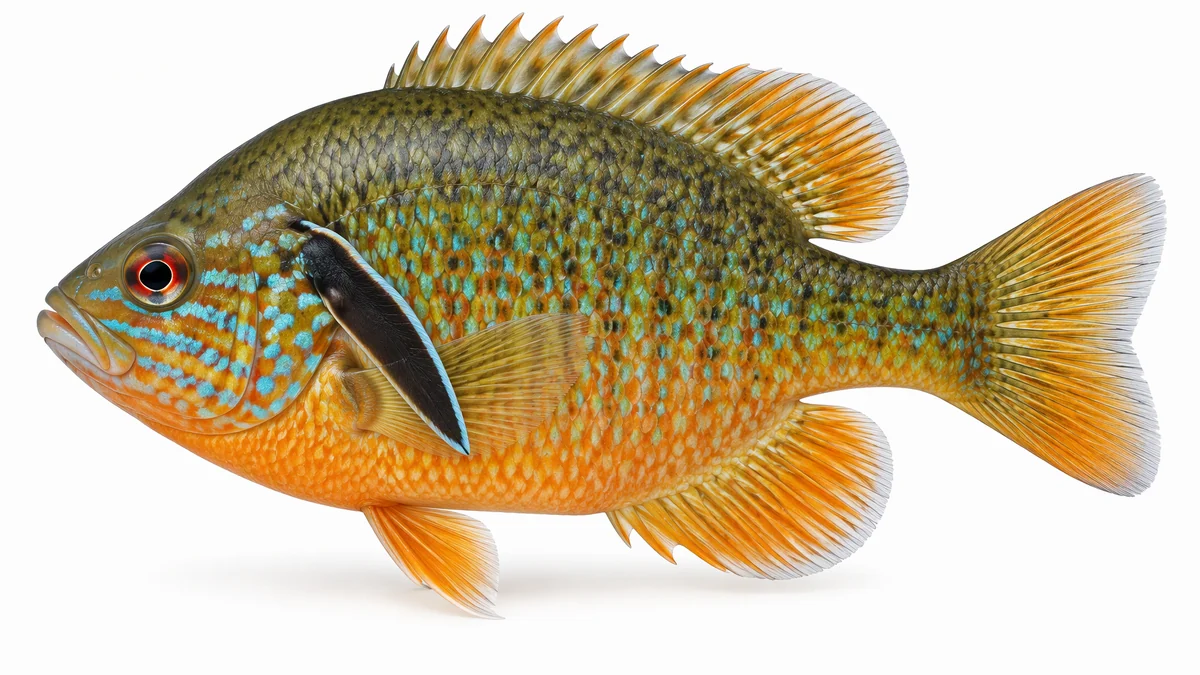
How to Catch Longear Sunfish
The longear sunfish is a small, brilliant native of clear creeks and rocky rivers, and it bites with more attitude than its size suggests. Its long black ear flap and blue wavy cheek lines make it one of the prettiest fish in the country, and it lives in some of the prettiest water. If you want to know how to catch longear sunfish, the answer is to wade quietly, cast small, and work the gravel pools and shaded banks where these fish hold. This guide covers timing, gear, the best bait for longear sunfish, rigs, technique, and location. Read the full Longear Sunfish species profile for identification and biology.
Best Time to Catch Longear Sunfish
Longear sunfish are warm-water fish that stay active through a long stretch of the year. They feed best when the water is between about 68°F and 82°F (20–28°C), which in most of their range means late spring through early fall. In cold water they become sluggish and hold in the deepest pools.
Late spring and early summer is the prime window. When water reaches about 68–75°F (20–24°C), longear spawn in shallow gravel. Males clear nests, often in loose colonies, and guard them aggressively, striking at almost anything that comes near. The breeding season is the best time to catch longear, the best time to see their brightest colors, and the best time to release fish quickly so nests are not abandoned.
Summer keeps fish in the same pools, feeding from morning through evening wherever shade falls on the water. Fall brings continued feeding as water cools, and fish stay catchable until temperatures drop into the low 50s. Winter pushes them into deeper holes, where they feed little and are hard to tempt.
Time of day is flexible. Longear feed most eagerly in the morning and evening, but in shaded creeks they take food throughout the day. An overcast day after summer rain can be excellent, because insects wash in and fish lose their caution.
Best Gear for Longear Sunfish
Longear are small, and light tackle turns a short fight into a good one. Their small mouths also demand small hooks, so delicate gear is not just fun, it is necessary.
| Component | Longear-ready choice |
|---|---|
| Rod | 4.5–6 ft ultralight spinning rod, or a 2–4 wt fly rod |
| Reel | 1000 size spinning reel |
| Main line | 2–4 lb monofilament, or a light leader on braid |
| Hook | Size 8 to 12 bait hook, or a small barbless hook |
| Float | Small slip float or a fixed tiny bobber |
| Extras | Split shot, forceps, small bait cup, wading shoes |
The key is line diameter. Clear, shallow creeks make longear line-shy, and 2 to 4 lb mono or a fine fly leader gets far more bites than heavier line. A soft-tipped ultralight rod protects a light tippet and lets you cast accurately into tight pockets behind rocks and logs.
Carry forceps and a small net. Longear have small mouths and can swallow a bait, and forceps let you remove a hook without damaging the fish. If you plan to release fish, pinch the barb or use barbless hooks from the start.
Best Bait for Longear Sunfish
Longear eat aquatic insects, small crustaceans, snails, and tiny fish. Their small mouth limits prey size, so they favor small items and take them hard. Match that with natural, bite-sized offerings.
- Worms. A small piece of nightcrawler or a red wiggler under a float is the classic bait for longear sunfish. Thread it so the point stays buried.
- Crickets. A live cricket on a size 8 hook is deadly in summer. Hook it through the collar so it kicks.
- Small jigs. A 1/64 oz tube jig or tiny grub imitates an insect or micro-minnow.
- Nymphs and dry flies. Small nymphs drifted through a pool, and tiny dry flies at dusk, are top producers for longear sunfish fly fishing.
- Small spinners. A 1/16 oz spinner or a tiny inline lure covers water fast and triggers strikes.
When anglers ask what bait for longear sunfish is best, the practical answer is a small piece of worm under a float drifted through a gravel-run. Flies and small jigs are refinements that often select bigger fish. Keep every offering small, because a bait that is too large simply will not fit a longear's mouth.
Longear Sunfish Rigs for Creeks and Pools
Three rigs handle nearly every creek situation, from a rocky riffle to a slow pool tail.
Float and split shot. Tie a size 8 to 12 hook to 2–4 lb line, pinch a small split shot eight to twelve inches above it, and clip a tiny float above that. Set the depth so the bait drifts just above the bottom or along a weed edge. This is the best all-around longear sunfish rig and the easiest for beginners.
Jig under a float. Replace the bait hook with a 1/64 oz jig and twitch it under a float as it drifts. The float shows the take, and the jig rides over snags better than a bare hook.
Fly rig. With a 2–4 wt rod, a short leader and a small nymph under a strike indicator covers water like a float rig. A single tiny dry fly on a fine tippet is the most fun of all in the evening rise.
Keep every rig light and simple. Heavy swivels and big bobbers spook fish in the clear, shallow water where longear live.
How to Catch Longear Sunfish, Step by Step
- Read the creek. Look for gravel riffles, rocky pools, undercut banks, and shade lines. Longear hold in slow pockets behind rocks and logs.
- Approach quietly. Wade slowly and keep a low profile. Fish in skinny water see you coming.
- Cast upstream when you can. Drift the bait naturally down through the pool tail, where insects collect.
- Set the float for the drift. Aim to keep the bait just above the bottom, ticking along the gravel.
- Let it drift, then twitch. If the float stalls, give it a small twitch to trigger a following fish.
- Set the hook with a quick lift. A short, firm sweep drives a small hook home without tearing a delicate mouth.
- Release fast. Longear are small and easy to over-handle. Keep them in the water, unhook with forceps, and return them quickly, especially in warm summer water.
The biggest mistake is fishing too fast and too heavy. Slow down, use a natural drift, and match the tiny size of the food longear actually eat.
Where to Catch Longear Sunfish
Longear sunfish live in moving water, not big lakes. They favor clear creeks and small rivers with gravel riffles, rocky pools, undercut banks, and beds of aquatic plants. Good water clarity helps them see food, and clean gravel is essential for spawning.
- Pool tails. Where a riffle dumps into a pool, insects drift down and longear wait in the current seam.
- Rock and log pockets. The slack water behind a boulder or a fallen limb is prime holding water.
- Undercut banks. Shaded, eroded banks give fish cover and a place to ambush drifting food.
- Gravel flats. In late spring, look for shallow nests in the gravel and fish the edges of the colony.
- Shade lines. Longear feed in the shadow of trees and brush even at midday.
Depth is shallow. Most fish sit in one to four feet of water, and spawning fish may be in less than a foot. In drought, they concentrate in remaining pools; in high water, they tuck against the edges and behind structure. If a pool holds clean gravel, shade, and insects, the fish are likely to be there year after year.
Longear Sunfish Regulations and Safety
Longear are usually managed as panfish. Many states set no minimum length and a generous daily bag, while others combine all sunfish under one limit. Some populations are sensitive to habitat loss and are protected or monitored, so local rules can be stricter than the statewide panfish limit. A fishing license is required on public water in most states.
Check the current regulations for your state and water before you keep fish, and consider releasing longear even where harvest is legal. The fish is slow-growing, short-lived, and dependent on clean gravel habitat that is easy to damage. The Missouri Department of Conservation (MDC) and the Tennessee Wildlife Resources Agency (TWRA) publish rules for waters in the heart of the longear's range; use the agency for the state you fish. Last verified: November 2025.
Longear are harmless. They have no venom and no cutting teeth, but they carry sharp dorsal, anal, and pelvic spines that can prick a hand. Handle fish with wet hands and a light grip, keep them in the water while unhooking when possible, and avoid squeezing. In warm summer water, a quick release matters more than a photo.
Common Mistakes and Longear Sunfish Tips
- Line too heavy. In clear creeks, 6 to 8 lb line shuts down bites. Use 2 to 4 lb.
- Hook too big. A size 4 hook will not fit a longear's mouth. Use size 8 to 12.
- Fishing too fast. Longear want a natural drift. Slow down and let the current work the bait.
- Spooking fish. Stomping up a shallow run sends fish for cover. Wade quietly and keep low.
- Ignoring the pool tail. The seam where a riffle enters a pool is often the best spot in the creek.
- Over-handling. Small fish dry out and stress fast. Wet hands and quick releases keep them healthy.
- Keeping too many. Longear are slow to reproduce in damaged habitat. Release most of what you catch.
A few extra longear sunfish fishing tips help on tough days. In clear water, cast from farther back and let the drift do the work. In the evening rise, a single tiny dry fly can outfish bait. And because longear defend nests hard in spring, a fish that strikes a lure near gravel is often a guarding male, so release it fast and move on.
FAQ
What is the best time to catch longear sunfish? Late spring through early fall, when water is 68–82°F. The spawn window around 68–75°F (20–24°C) is the easiest and most colorful stretch, with fish guarding shallow gravel nests.
What bait for longear sunfish works best? A small piece of worm under a float is the classic. Crickets, 1/64 oz jigs, small nymphs, and tiny spinners also work, and flies often catch the biggest fish.
What are the best longear sunfish fishing techniques? Drift a light float rig through pool tails, twitch a small jig under a bobber, or dead-drift a nymph along shade lines. Quiet approaches and natural drifts matter most.
What is the best longear sunfish rig for creeks? A float-and-split-shot rig with a size 8 to 12 hook and 2–4 lb line, set to drift just above the gravel. A small jig under a float is a close second.
Where can you catch longear sunfish? Clear creeks and small rivers with gravel riffles, rocky pools, undercut banks, and plants. Pool tails, rock pockets, and shade lines are the most reliable spots.
How big do longear sunfish get? Most adults are 3–6 inches and weigh a few ounces. A 7-inch fish is large, and the maximum is about 8 inches and 0.4 pound (0.2 kg).
Longear sunfish are a prize of clean creeks, not big lakes. Wade quietly, cast small, and release most of what you catch. That is how to catch longear sunfish, and why a handful of them over a gravel pool can make a whole afternoon.
Related Articles
- How to Catch Pumpkinseed — another colorful sunfish, with a red-edged ear flap.
- How to Catch Yellow Perch — a cool-water species for the same light tackle.
- How to Catch Bowfin — a tough native that shares slow backwaters.
- Longear Sunfish species profile — identification, habitat, and biology.
- All species profiles
About the author and how this was tested
About the author
FishermanGuy
Bank, boat and kayak angler · fishing, crabbing and shrimping since 2021
I buy the gear, fish it for a season and write down what failed. No sponsored verdicts, no free-sample flattery. Every rig on this page has landed fish in water I can point at on a map.
How this was tested
- Every rig gets at least six trips on the same water before it is published.
- Gear is bought at retail. Free samples are labelled in the first paragraph.
- Dates show first publication and the last time the page was updated.