Field notes
Live Bait vs Lures: When to Use Each
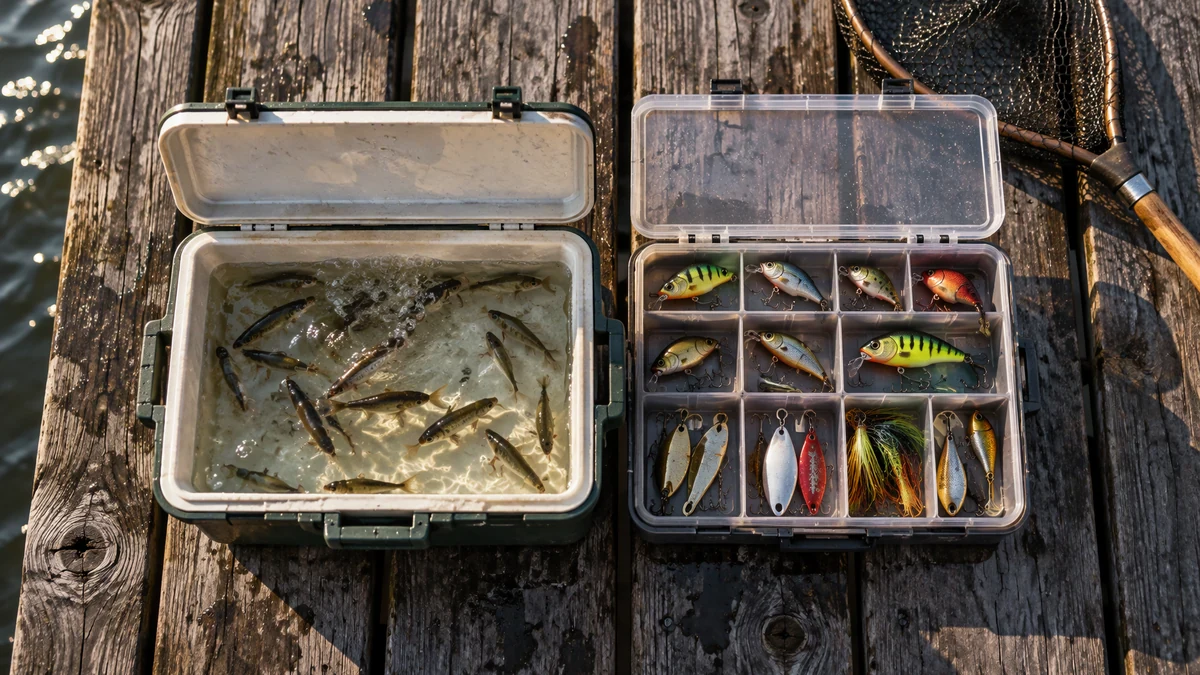
Live Bait vs Lures
Every angler eventually faces the same question at the tackle shop or the bait bucket: should I fish live bait or throw lures? The honest answer is that both catch fish, and the better choice depends on the fish, the water, the season, and what you want from the trip. Live bait appeals to a fish's senses in ways a lure cannot, while lures let you cover water, travel light, and release fish cleanly. Understanding the trade-off is more useful than picking a side. This guide explains how each option works, when each has a clear edge, how presentation changes the outcome, and which rules govern bait where you fish. Use it to make a deliberate choice instead of defaulting to habit.
The Core Difference
A live bait is real food. It smells, tastes, bleeds, and moves like the thing a fish evolved to eat. A fish that is cautious, cold, or pressured can inspect a bait and still decide to eat it because every cue says food.
A lure is an imitation. It relies on action, flash, vibration, profile, and color to trigger a reaction. It cannot match a live bait's scent or taste, but it can be cast farther, retrieved at different speeds, and worked through cover without being destroyed. A lure also keeps fishing after a missed strike — a bait often does not.
That difference shapes everything else. Live bait is a waiting game that rewards patience and precise placement. Lures are a searching game that rewards coverage and presentation. Neither is universally better; they solve different problems.
When Live Bait Has the Edge
Live bait tends to win in a few recurring situations.
Cold water and slow fish. When metabolism drops, fish are less willing to chase. A live minnow or worm that stays in front of a fish is harder to refuse than a lure that must be chased down. Ice fishing and late-fall walleye fishing are classic examples; the walleye guide leans heavily on live and cut bait for this reason.
Pressured or finicky fish. On heavily fished water, fish see the same lures all day. A natural bait can be the difference between interest and refusal, especially for trout in clear water and panfish around docks.
Catfish and bottom feeders. Channel catfish hunt largely by smell, and cut or live bait outperforms most artificials. See how to catch channel catfish for rigs built around natural bait.
Kids, beginners, and dinner trips. Live bait under a bobber is simple to rig and forgiving to fish. It is the fastest route to a first fish for a beginner, and it is effective when the goal is fillets rather than sport.
Live-lining for predators. In saltwater, free-lined live bait — shrimp, pinfish, mullet, menhaden — is a staple for redfish, striped bass, and other inshore predators. The inshore fishing basics guide covers how to present it.
When Lures Win
Lures have their own list of advantages.
Covering water. A crankbait, spinnerbait, or swimbait lets you probe a long bank, a weedline, or a flat in the time it takes to soak one bait. When fish are spread out, finding them matters more than finesse.
Active, aggressive fish. In warm water, schooling fish and feeding bass often crush moving lures. Reaction strikes are a lure's specialty, and topwater fishing is the purest expression of it.
Travel and convenience. Lures do not die, leak, or need a bait bucket. A small box of hard baits and soft plastics fits in a pocket and survives heat, cold, and a week in the truck.
Catch and release. Lures are usually easier on fish than deep-hooked bait, especially when fished with single hooks or when trebles are crushed. If release survival matters, lure choice and hook style give you more control. Our catch and release guide explains handling that pairs with either choice.
Rules and restrictions. Some waters restrict or ban live bait, particularly for trout and in areas with baitfish transport rules. In those places, lures are not just a preference; they are the legal option.
Presentation Matters More Than the Choice
A poorly presented live bait catches less than a well-fished lure, and the reverse is also true. Presentation decides more than the category.
With live bait, hook placement and timing are everything. Minnows are usually hooked through the lips or just under the dorsal fin so they swim naturally. Worms are threaded so the point is exposed but the bait stays on. When a fish takes, give it a moment to turn with the bait before setting the hook — striking too early pulls the bait away. Circle hooks can help by setting in the corner of the mouth, but they require a steady reel rather than a hard hookset.
With lures, match the hatch. Size, profile, and color should resemble the local forage. Retrieve speed should match the fish's mood: fast and erratic for active fish, slow and steady for cold or pressured ones. Keep the lure in contact with structure — a crankbait that deflects off cover or a jig that ticks bottom is fishing correctly.
For both, line and rod balance matter. A rod that is too stiff tears hooks out of soft mouths; line that is too heavy kills lure action and spooks clear-water fish. Learn one solid knot for attaching baits and lures; the fishing knots category has reliable options, and how to rig a rod and reel covers the terminal setup.
Bait Care and the Rules That Matter
Live bait only works if it stays alive and lively. Keep minnows cool, shaded, and aerated; change the water if it fouls; and avoid overcrowding the bucket. Worms should be kept cool and moist, not drowned. Shrimp and other saltwater baits need clean, aerated saltwater and should not sit in direct sun.
The rules around bait are stricter than many anglers expect, and they vary widely. Some states restrict the transport of live baitfish to slow the spread of disease and invasive species. Some require bait to be purchased from a certified dealer, or ban live bait entirely on certain waters. Dumping leftover bait into a lake or river can be illegal and can introduce species where they do not belong. Check your state or provincial regulations before you move bait between waters, and never release bait into water you did not catch it from.
Common Mistakes
- Fishing dead or sluggish bait. A limp minnow or cooked worm does not trigger strikes. Replace bait often.
- Bait that is too large. Big baits catch big fish, but they also scare off average ones. Match bait size to the fish you expect.
- Striking too early with live bait. Let the fish commit before you set the hook.
- Dragging lures at one speed. Vary the retrieve until you find what the fish want.
- Ignoring the hatch. A lure that matches local forage out-fishes a random one.
- Breaking bait transport rules. Moving live bait between waters can spread disease and is regulated for good reason.
FAQ
Is live bait always better than lures? No. Live bait excels with cautious, cold, or pressured fish and for beginners, but lures cover water and suit active fish better. Conditions decide.
Are lures more ethical than live bait? Not inherently. Both can be used responsibly or poorly. Lures often make release easier, while bait can deep-hook fish; hook choice and handling matter more than the category.
Can you use live bait in saltwater? Yes, in most places, and live shrimp, pinfish, and mullet are standard inshore baits. Check local rules on bait collection and transport.
How do I keep minnows alive? Use a cool, shaded, aerated container, avoid overcrowding, and change the water when it clouds. Do not let the bucket sit in direct sun.
Do circle hooks work with live bait? Yes. Circle hooks are designed for bait fishing and usually hook fish in the corner of the mouth, which helps release survival. Reel steadily instead of setting the hook hard.
For more on choosing and using tackle, browse the Baits & Lures category, then put the ideas to work on largemouth bass, bluegill, northern pike, or redfish.
About the author and how this was tested
About the author
FishermanGuy
Bank, boat and kayak angler · fishing, crabbing and shrimping since 2021
I buy the gear, fish it for a season and write down what failed. No sponsored verdicts, no free-sample flattery. Every rig on this page has landed fish in water I can point at on a map.
How this was tested
- Every rig gets at least six trips on the same water before it is published.
- Gear is bought at retail. Free samples are labelled in the first paragraph.
- Dates show first publication and the last time the page was updated.