Field notes
Inshore Fishing Basics
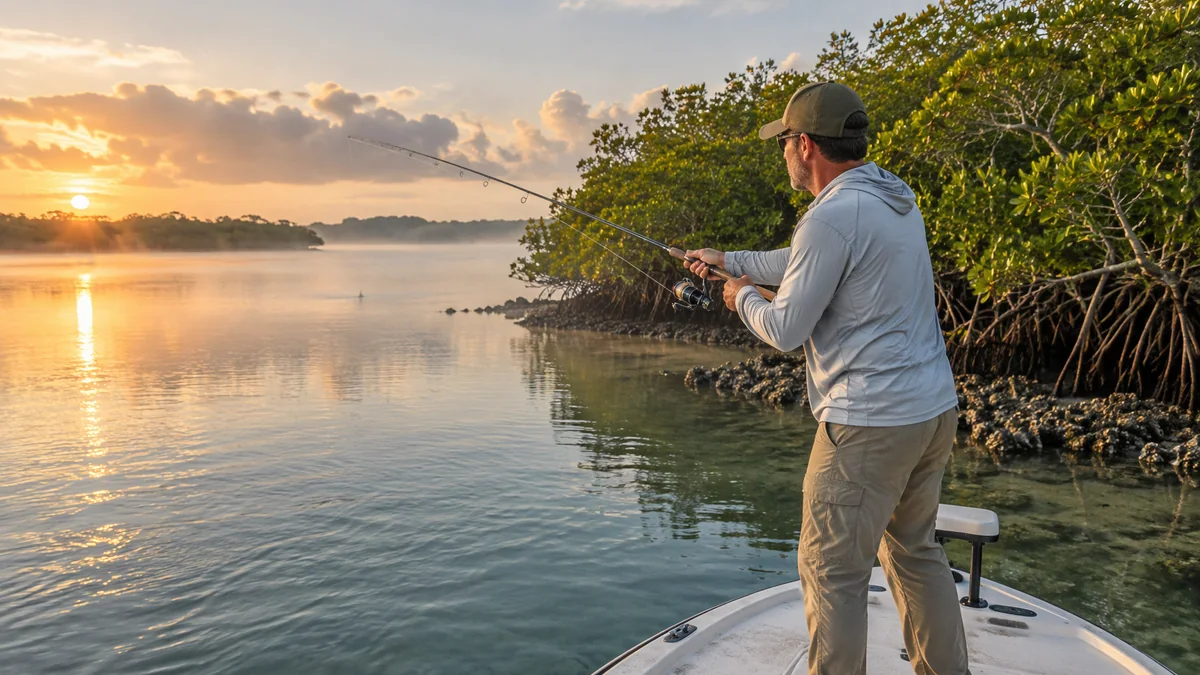
Inshore Fishing Basics
Inshore fishing is the saltwater you can reach without running far offshore: bays, estuaries, tidal creeks, grass flats, and the water around jetties and bridges. It is the most accessible branch of saltwater fishing, whether you fish from a boat, a kayak, a pier, or by wading. It is also the most tide-dependent. Current, depth, and structure change hour by hour, and fish move with them. The good news is that the same handful of patterns repeat in inshore water almost everywhere, so once you understand them, you can read a new bay quickly. This guide covers the gear, the tide, the structure, and the presentations that make up inshore fishing basics, and it points you to species-specific tactics where they help.
What Inshore Fishing Covers
The inshore zone is usually defined by depth and distance rather than a hard line: roughly the water inside the barrier islands and out to a few miles, where the bottom is still shallow enough to fish effectively. That includes:
- Bays and estuaries, where fresh water mixes with salt and nutrients feed the food chain.
- Tidal creeks and rivers, whose channels and oyster bars hold fish on moving water.
- Grass flats, shallow meadows of seagrass that shelter shrimp, crabs, and small fish.
- Jetties, bridges, docks, and pilings, hard structure that attracts bait and predators.
- The surf line and nearshore beaches, which border the inshore zone and share many of its patterns.
The species list depends on where you live. Along the Atlantic and Gulf coasts, common inshore targets include redfish, spotted seatrout, flounder, snook, sheepshead, and seasonal migrants like striped bass, bluefish, Spanish mackerel, and cobia. On the Pacific coast, surfperch and halibut fill similar roles. The techniques below apply across all of them, with local adjustments.
Gear for Inshore Waters
Inshore tackle is lighter than offshore gear but heavier than most freshwater setups, because salt, wind, and hard-fighting fish punish light line.
A 7- to 7-foot-6-inch medium-power spinning rod paired with a 2500 or 3000 size reel is the all-round inshore outfit. Spool it with 10 to 20 pound braid and add a 20 to 30 pound fluorocarbon leader for abrasion resistance around oysters, docks, and rocks. The braid gives casting distance and sensitivity; the leader gives toughness and low visibility.
Lure weights usually fall between about 1/4 and 3/4 ounce, which covers most shallow-water presentations and cuts through wind. A small selection of jigheads, soft plastics, topwater plugs, and metal spoons will catch nearly everything inshore. Add long-nose pliers, a lip grip or landing net, and a measuring device — slot limits are common and you will need to measure fish quickly.
Access shapes your gear more than anything. Waders let you reach flats and creek mouths; a kayak covers water quietly and cheaply; a bay boat adds range and comfort. From shore, focus on bridges, jetties, docks, and channel edges where fish concentrate naturally.
Fish the Tide, Not the Clock
If there is one rule that separates productive inshore anglers from frustrated ones, it is this: moving water matters more than the time on the clock.
Fish feed when current carries bait to them, and current is created by the tide. The strongest windows are usually the middle of a rising or falling tide, when water is moving steadily. Slack water — the pause at high and low tide — is often slow, because bait stops moving and predators lose their advantage. Many anglers plan their trip around the two hours before and after a tide change, then adjust for local quirks.
Incoming water usually brings cleaner, cooler water and pushes bait into creeks and onto flats. Outgoing water drains marshes and creeks, flushing shrimp and baitfish out through channels and passes, where predators wait. Which is better depends on the bay and the season, but both beat a dead tide.
Wind complicates things. A strong wind against the tide can stack water and muddy it; wind with the tide can speed the flow. Check a tide chart before you go, and watch how the water actually moves when you arrive — the chart predicts, the water decides. Pair the tide with light level using our guide to the best time of day to fish.
Read the Inshore Structure
Inshore fish concentrate on edges, just as freshwater fish do. The difference is that the edges move with the tide and are often underwater.
- Grass flats with potholes. Sandy holes in a seagrass meadow hold fish because they offer ambush cover next to open water. Work the edges of the holes and the grass line.
- Oyster bars and shell bottom. Hard structure in soft estuary bottom attracts crabs, bait, and the fish that eat them. Fish the current-facing side.
- Channel edges and drop-offs. When the tide drains a flat, fish slide into the adjacent channel. Fish the slope where shallow meets deep.
- Docks, pilings, and bridges. Shade, structure, and current all concentrate bait. Fish the shadow line and the up-current side.
- Jetties and inlet mouths. Moving water, rock, and bait make inlets prime spots, especially on a falling tide.
- Bait schools and birds. Diving birds and nervous bait mark feeding fish. Approach quietly and cast to the edges of the action.
How to read water explains the visual cues — color changes, current seams, and surface disturbance — that reveal these edges before you make a cast.
Presentations That Work
Inshore fish eat shrimp, crabs, and small baitfish, so most inshore lures imitate those. Three presentations cover a lot of water and a lot of species.
Jighead and soft plastic. A paddletail or shrimp imitation on a jighead is the workhorse. Cast it uptide, let it sink to the desired depth, and retrieve with a lift-and-drop or a steady swim. Keep it close to structure and let the current do some of the work.
Popping cork and shrimp. A popping cork with a soft plastic or live shrimp underneath is a classic for seatrout and redfish over grass. The cork's rattle and splash draw fish, and the bait hangs at a set depth below it. Pop, pause, and let the bait settle.
Topwater at dawn. Walking plugs and poppers draw explosive strikes from redfish, seatrout, snook, and striped bass in low light. Fish them over shallow flats and along grass edges, and resist the urge to set the hook the instant you see the splash — wait until you feel weight.
Live bait remains deadly inshore. Live shrimp, pinfish, and mullet free-lined or under a cork will out-fish lures on pressured fish and in dirty water. If you are deciding between natural bait and artificials, live bait vs lures breaks down when each has the edge. For species specifics, see redfish, summer flounder, striped bass, and cobia.
Common Inshore Mistakes
- Fishing dead water. If the tide has stopped and nothing is moving, the bite usually slows with it. Plan around moving water.
- Anchoring on a spot all day. Inshore fish shift with the tide. Cover water and revisit spots as the tide changes.
- Tackle that is too heavy. Inshore fish are often leader-shy in clear water. Downsize line and lures when the bite is tough.
- Ignoring the regulations. Slot limits, closed seasons, and gear rules are common and vary by state. Measure fish and know the rules before you keep anything.
- Handling fish badly. Dry hands, gill grabs, and long air exposure hurt release survival. Wet your hands, support the fish, and release quickly.
- Charging into a flat. Running hard over shallow water spooks fish and damages grass. Pole, drift, or troll in quietly.
FAQ
Do I need a boat for inshore fishing? No. Piers, bridges, jetties, and wadeable flats all produce fish. A boat or kayak adds range, but access to structure matters more than the boat itself.
What is the best tide for inshore fishing? Moving water is the key. The middle of a rising or falling tide is usually better than slack water, though local patterns vary. Watch how the water moves in your area and keep notes.
What is the best bait for inshore fishing? Live shrimp is the most universal inshore bait, followed by pinfish and mullet. Soft plastics on jigheads are the most versatile artificial.
Can you fish inshore at night? Yes, and some species feed heavily after dark around lights, bridges, and docks. Check local rules and carry proper lighting and safety gear.
How do I find fish in a new bay? Start with a chart, look for channel edges, oyster bars, and grass flats, and fish moving water. Watch for birds and bait, and ask at a local tackle shop for current patterns.
Browse more saltwater tactics in the Inshore & Bay category or the wider Saltwater Fishing section.
About the author and how this was tested
About the author
FishermanGuy
Bank, boat and kayak angler · fishing, crabbing and shrimping since 2021
I buy the gear, fish it for a season and write down what failed. No sponsored verdicts, no free-sample flattery. Every rig on this page has landed fish in water I can point at on a map.
How this was tested
- Every rig gets at least six trips on the same water before it is published.
- Gear is bought at retail. Free samples are labelled in the first paragraph.
- Dates show first publication and the last time the page was updated.