Field notes
Best Time of Day to Fish: Dawn, Dusk, Tides and Weather
Best Time of Day to Fish
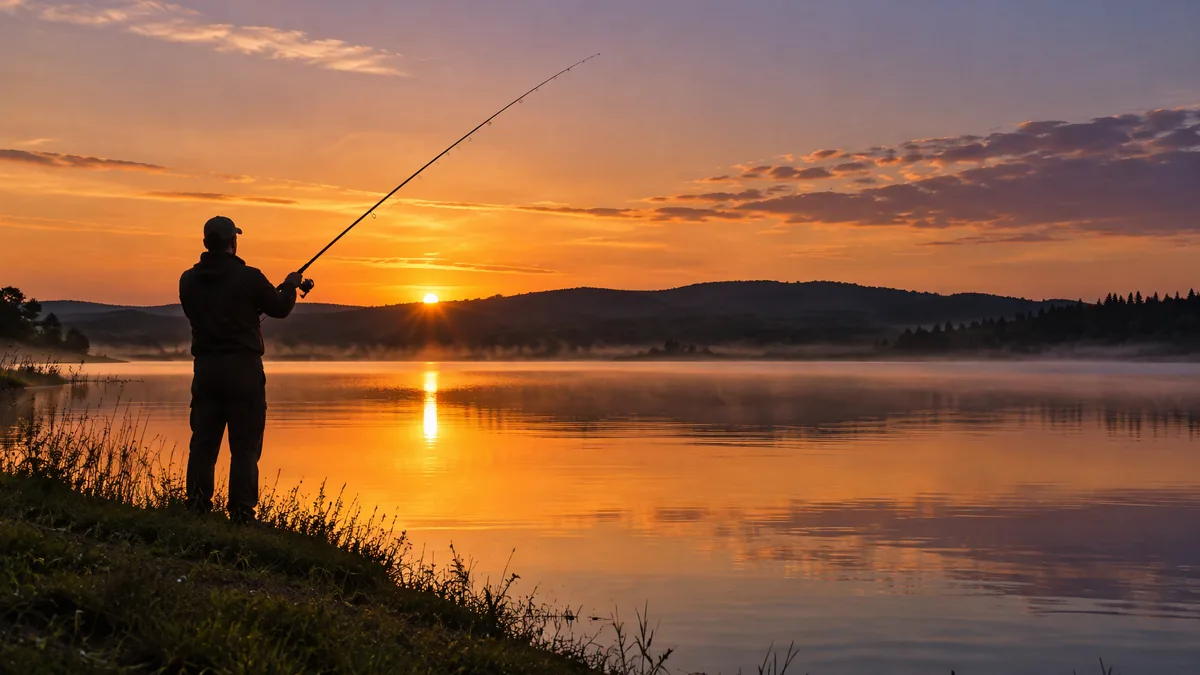
The best time of day to fish is early morning, right around sunrise, and again in the last hour or two of daylight. Those two windows produce more fish for more anglers than every other hour combined, and the reason is simple: low light makes predatory fish bold and makes their prey careless. The middle of a bright day can still produce, especially if you fish deep structure or shade, but it is the harder shift. This guide explains why dawn and dusk work, how tides reset the clock on the coast, how weather and barometric pressure change feeding, and how the seasons move the whole schedule. The last section gives you a simple plan you can follow on your next trip.
Why Low Light Makes Fish Feed
Fish do not have eyelids. On a bright, cloudless day, sunlight drives most predators into deep water, under weed mats, or into the shade of a dock or rock ledge. At dawn and dusk, light levels drop, the shallows cool slightly, and baitfish such as shad, minnows, and small sunfish move out of cover to feed. Game fish follow them.
Low light also hides the angler. A fish that spooks at a shadow or a flash of rod tip in full sun will often hold near the bank in the half hour before sunrise. This is why the same cast that gets ignored at noon can draw a strike before the sun clears the trees.
Cloud cover does the same job. A gray, overcast day can fish well from morning to evening because the light never gets harsh. A bright bluebird sky after a cold front usually does the opposite.
One more factor is traffic. Lakes are quiet at first light. By mid-morning, jet skis, wake boats, and swimmers push fish off the bank. On a busy weekend, the first two hours are not just the best bite; they are the only quiet water you will get.
| Time | What is happening | What to do |
|---|---|---|
| First light to about two hours after sunrise | Bait moves shallow, predators feed aggressively, water is calm and unpressured | Fish shallow cover, weed edges, and shaded banks; keep moving until you find fish |
| Late morning to mid-afternoon | Light is harsh, fish pull back to deeper water, shade, or thick cover | Slow down; fish deep structure, docks, weed mats, or current; expect fewer bites |
| Last two hours before dark | Fish move back toward the bank to feed before night | Return to shallow cover and points; topwater and moving baits work well in warm months |
| After dark | Big fish often feed in shallow water, especially in summer | Fish slowly and safely; use a headlamp, and stick to water you already know |
Tides: The Saltwater Clock
If you fish saltwater, the main clock is not sunrise and sunset. It is the tide. Tides are the twice-daily rise and fall of the sea caused by the pull of the moon and sun. The period between high and low water when the sea barely moves is called slack tide. The periods in between, when water is actually flowing, are called the flood (incoming) and the ebb (outgoing).
Fish feed when water moves. Moving water carries bait through inlets, around points, and over flats, and predators set up where the current concentrates food. Slack water is usually the slowest part of the tide. Many coastal anglers plan a trip around the first two hours of a moving tide rather than the exact moment of high or low water.
In many places the incoming tide is the stronger producer because it pushes clean water and bait into estuaries, but this is not universal. A local tide chart, available from the state agency, a harbor office, or a tide app, tells you when the water moves and how large the swing will be. Large swings move more water and usually fish better than small ones.
The combination to look for is simple: a moving tide that overlaps with dawn or dusk. When that happens, fish it. When both are against you, fish the tide anyway, but expect the window to be shorter.
Weather and Barometric Pressure
Barometric pressure is the weight of the air, and fish respond to changes in it even though the reasons are not fully understood. A stable or rising barometer usually means settled weather and steady feeding. A slowly falling barometer ahead of a front often turns fish on; many anglers get their best bite of the week in the hours before a storm arrives. After the front passes, pressure rises fast, skies clear, and feeding often shuts down for a day or two.
You do not need a barometer on the wall. A weather app with a pressure graph is enough. Look for a flat or gently rising line, and be cautious about the first bluebird day after a cold front.
Overcast skies, a light chop, and warm rain usually help. Wind matters too, because it pushes plankton and baitfish downwind; the windy bank is often the feeding bank, as long as it is safe to fish. Heavy rain that muddies the water can shut things down, and lightning means leave, no matter how good the bite is.
Water temperature is the slow version of the same idea. Fish are cold-blooded, and every species has a range where it feeds actively. That range, more than the calendar on your wall, is the real schedule.
How Season Moves the Window
Spring and fall are the easy seasons. Water sits in the range where most freshwater fish feed heavily, and you can catch fish at almost any hour. Spring is also when many species move shallow to spawn, which puts them within easy casting distance of the bank. Handle spawning fish gently and put them back quickly, following the steps in our catch and release guide.
Summer compresses the day. Heat pushes fish deep during the middle hours, and dawn, dusk, and night become the reliable windows. Largemouth bass, bluegill, and catfish all follow this pattern; our guide to how to catch largemouth bass covers summer locations in detail.
Winter reverses it. Fish are cold and slow, and the warmest part of the day, usually late morning to mid-afternoon, is the best chance. Deep, slow presentations matter more than hour-by-hour timing.
Trout follow water temperature rather than the clock. Rainbow trout feed best in water roughly in the mid-50s to mid-60s Fahrenheit, about 13 to 18°C, which often means dawn and dusk in summer and the middle of the day in winter. Tailwaters and spring creeks can fish all day because their temperature stays steady. See how to catch rainbow trout for the full picture.
Bluegill are more forgiving than either. They feed throughout the day in warm months, with the fastest action in the low light of morning and evening. If you want a beginner-friendly target that keeps the rod bent, read how to catch bluegill.
Common Timing Mistakes
- Arriving at 10 a.m. By then the morning window has closed, the sun is high, and boat traffic has started. Launch or walk in before sunrise when you can.
- Leaving at 9 a.m. The window does not end at sunrise. The first two hours of light are often the best part, so stay through them.
- Fishing the same hours all year. A 5 a.m. start in July is right; the same start in January is usually a waste.
- Ignoring pressure and tide. A gorgeous sunny Saturday after a cold front can be worse than a gray Wednesday before a storm.
- Staying too long in heat. Warm water holds less oxygen, and a fish fought to exhaustion in it may not survive even if it swims away. In hot weather, fish early, land fish fast, and release them in the water.
FAQ
Is sunrise or sunset better for fishing?
Both are strong. In summer, dawn usually wins because the water is coolest and boat traffic is lowest. In clear water or after a hot day, the last hour of light can be better because fish have had all day to settle. If you can only fish one, pick the one that overlaps with a moving tide or with the end of a weather front.
Can you catch fish in the middle of the day?
Yes. Fish still eat; they just move. Target shade lines, deep structure, weed edges, and current. Overcast days keep fish shallow all day. In winter, midday is often the best window of all.
Does the moon phase matter?
Moon phase affects tides, and tides drive saltwater feeding, so it matters indirectly on the coast. For most freshwater fishing, light, water temperature, and pressure matter more. Do not plan a trip around moon phase alone.
How long should a beginner fish?
Plan around the window instead of the whole day: two to three hours that include sunrise or sunset. A focused short trip beats an all-day session in poor light.
Do fish bite in the rain?
Often, yes. Light rain and overcast skies can improve the bite, especially in summer. Heavy rain that muddies the water usually hurts. Thunder and lightning mean get off the water immediately.
What is the single best time to plan a trip?
A morning in late spring or fall, arriving 30 minutes before sunrise, on a day with stable pressure and light cloud. On the coast, add a moving tide. That combination is as close to a sure thing as fishing offers.
New to the sport? Start with how to start fishing, learn to read the water, and browse the Getting Started guides before your first cast.
About the author and how this was tested
About the author
FishermanGuy
Bank, boat and kayak angler · fishing, crabbing and shrimping since 2021
I buy the gear, fish it for a season and write down what failed. No sponsored verdicts, no free-sample flattery. Every rig on this page has landed fish in water I can point at on a map.
How this was tested
- Every rig gets at least six trips on the same water before it is published.
- Gear is bought at retail. Free samples are labelled in the first paragraph.
- Dates show first publication and the last time the page was updated.