Field notes
How to Catch Giant Trevally: Poppers, Current and Power
How to Catch Giant Trevally
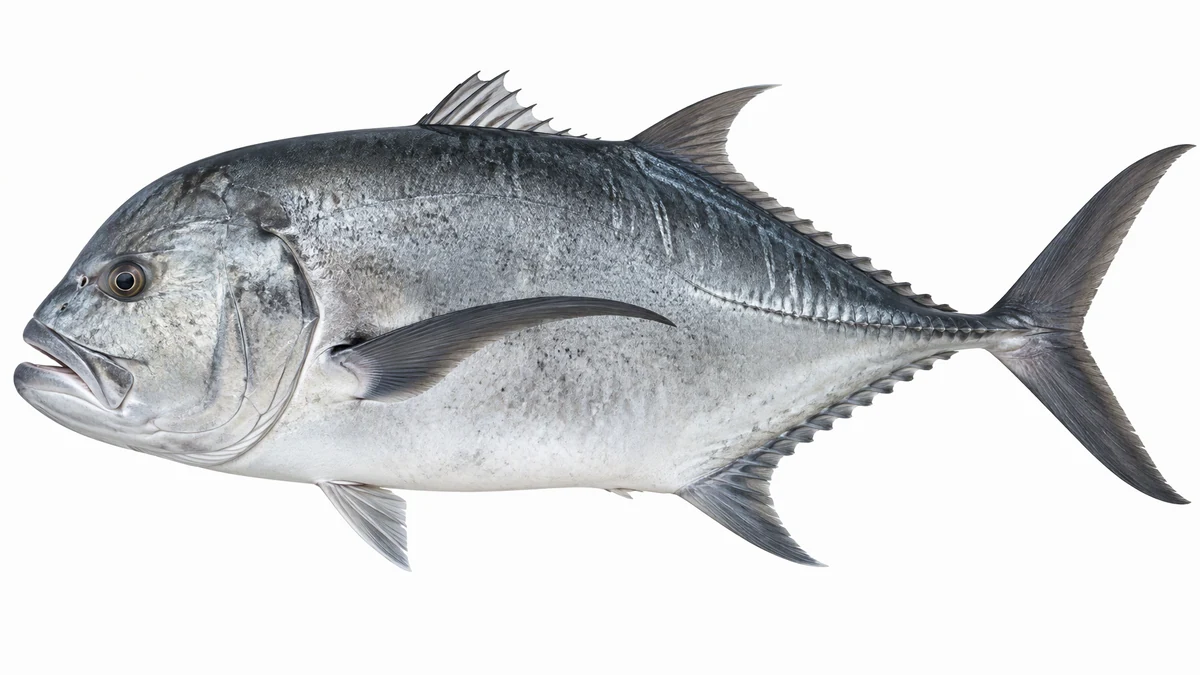
The giant trevally — GT to almost everyone who chases one — is the heavyweight champion of shallow tropical reefs. It has a steep forehead, a mouth like a bucket, and a first run that has broken more than a few anglers' hearts. Knowing how to catch giant trevally is really about three things: finding moving water, fishing it with tackle that can stop a freight train, and applying pressure from the very first second. Do it right and a surface popper disappears in a spray of white water. Do it wrong and a big fish cuts you off on the coral before you can blink. Read the full Giant Trevally species profile for identification, range and biology.
Best Time to Catch Giant Trevally
Giant trevally are warm-water fish, and the best time to catch giant trevally is when the water sits around 24 to 30°C (75–86°F) and the current is running. Temperature sets the season; tide and current set the day. GT are most active in warm months with strong tidal flow, and the fishing improves sharply whenever water is moving through a reef pass or along a drop-off.
The lunar cycle matters as much as anything. GT gather at reef passes and channels to spawn, often around the full and new moon, and those same aggregations are when big fish are most concentrated and most willing to eat a surface lure. Plan trips around the moon phases if you can.
Time of day is a useful edge. Dawn and dusk usually fish best, and low light beats flat midday glare. But GT feed whenever bait is pushed through a pass on a running tide, so do not sit out midday if the current is right. With visible current lines and birds working, fish it hard — that is when pack hunting happens.
Best Gear for Giant Trevally
GT gear is heavy because the fish is heavy and the fight is usually decided in the first few seconds against unforgiving structure. You want a stiff rod, a reel with a strong, smooth drag, and line and leader that can survive a run across coral.
| Component | Giant trevally-ready choice |
|---|---|
| Rod | 8–9 ft heavy spinning rod, fast action, big lifting power |
| Reel | 10000–20000 size spinning reel with a strong, smooth drag |
| Main line | 60–100 lb braid |
| Leader | 100–130 lb fluorocarbon |
| Hooks | Strong singles or assist hooks on lures; 5/0–7/0 circle or live-bait hooks |
| Lures | Big poppers, stickbaits, pencil lures |
| Extras | Landing net or gloved hand, long-nosed pliers, life jacket, polarised glasses |
The 60–100 lb braid is the backbone of the outfit. It casts a big popper a long way, transmits every head shake, and gives you the strength to lean on a fish. The 100–130 lb fluorocarbon leader is what stands between you and the reef: it takes the abrasion of coral and rock and gives a hard-charging GT something to fight against.
Do not economise on the reel drag. A GT's first run is fast and long, and a drag that stutters or a spool that binds will cost you the fish. Set the drag hard before you cast, and check it again after every fish.
Best Bait for Giant Trevally
On natural bait, the best bait for giant trevally is a live baitfish, a whole squid, or a fresh fish fillet fished near a reef edge or channel. A lively baitfish is deadly because a GT is built to chase and crush moving prey. A whole squid or a fresh fillet is tougher and stays on the hook through repeated casts, and it works well when fish are cruising rather than smashing bait on the surface.
Most anglers come for the lures, though, and the topwater list is short and proven:
- Poppers. The classic GT lure. Big cupped faces throw spray and call fish up from depth; the strike is the whole point.
- Stickbaits. Long, slim lures worked with a walk-the-dog action for fish that want something subtler than a popper.
- Pencil lures. Surface walkers that skate and zig-zag and trigger explosive reaction strikes.
- Large streamers and poppers on the fly. For fly anglers, big baitfish patterns and surface flies work, provided the tackle can turn a powerful fish away from the reef.
The retrieve sells any of these. Cast tight to the edge of the wash, then wind fast enough to make the lure look like fleeing prey. A GT is an opportunistic pack hunter, and a lure that runs away is exactly what it expects. When a fish boils behind the lure and misses, keep winding — a second strike often follows.
Giant Trevally Rigs
A giant trevally rig has one job: deliver a big lure or bait to the fish and hold it through a brutal first run. Three setups cover almost every situation.
Topwater popper rig (the standard).
- Join 60–100 lb braid to a 100–130 lb fluorocarbon leader with a slim, strong knot such as an FG knot, long enough to survive abrasion.
- Tie the leader to the popper with a loop knot or a heavy split ring, so the lure swings freely and works properly.
- Fit strong single hooks or assist hooks in place of, or alongside, the standard trebles.
- Cast beyond the wash and retrieve the popper with a hard, steady chug, keeping the rod tip down.
Stickbait rig. Same leader setup, but tie a walk-the-dog stickbait and work it with rhythmic rod-tip sweeps. This rig is the choice when fish are following but refusing a noisy popper.
Live-bait rig. For natural bait, use the 100–130 lb leader and a strong 5/0–7/0 circle or live-bait hook. Freeline a baitfish in the current, or fish it under a balloon or float so it stays in the strike zone near the reef edge. Keep the rod in hand and the drag set — a take can be instant and violent.
Keep every connection strong and simple. On a GT rig, a single weak knot or a worn leader is the only thing the fish needs.
How to Catch Giant Trevally, Step by Step
- Find current, structure and bait. Look for a reef pass with water pushing through, a drop-off edge, a channel, or birds and surface commotion over bait.
- Read the tide. Fish the moving tide, not the slack. Position so the current carries your lure naturally along the edge rather than away from it.
- Position uptide. On a boat, set up so you can cast across or downtide of the mark without running over the fish.
- Cast long and tight. Put the lure beyond the wash and bring it back through the strike zone, not short of it.
- Retrieve fast. Wind quickly with the rod tip low to make the lure look like fleeing prey.
- Set the hook hard. When the fish eats, drive the hook home and lean back immediately — do not admire the splash.
- Keep the rod low and the drag locked. Apply maximum pressure from the first second. A high rod gives a GT the slack to turn toward the reef.
- Turn it away from structure. Use side pressure and the locked drag to steer the fish into open water before it reaches coral.
- Land, revive and release. Support the fish horizontally, unhook it quickly with pliers, and hold it in the current until it kicks away — if you are releasing.
The first ten seconds decide most GT fights. The fish runs hard and straight for the reef, and every metre of slack brings a cut-off closer. Keep the pressure on, keep the rod low, and trust the tackle.
Where to Catch Giant Trevally
Giant trevally range across the tropical Indo-Pacific, from the east coast of Africa and the Red Sea through India, Southeast Asia, Indonesia, the Philippines and Japan, down through Australia and across the Pacific to Hawaii. In Hawaii it is called ulua, and it is a culturally important fish and a serious shore-casting target.
Within a reef system, look for the features that concentrate bait and give a hunter an edge:
- Reef passes and channels. Moving water funnels bait, and GT ambush in the wash.
- Drop-offs and reef edges. The change in depth holds fish and bait alike.
- Tidal flats on a rising tide. GT push shallow to hunt across the flats.
- Offshore rocks, wrecks and seamounts. Structure far from shore can hold big fish.
- Estuaries and mangroves for juveniles. Young GT use shallow coastal habitat as a nursery before moving out to the reef.
The common thread is current plus structure plus bait. Where those three meet, GT will be there — which is why reef passes on a moving tide are the classic mark.
Giant Trevally Regulations and Safety
Rules vary by country and by fishery. In Australia, Queensland, the Northern Territory and Western Australia each set bag limits and size rules for trevallies, and some areas restrict particular gears. In Hawaii, ulua fishing is regulated by the state, with size and bag limits. In destinations such as the Seychelles and the Maldives, catch-and-release is the norm for big GT, and many lodges and guides run strict release policies. As of 2025, check the current rules with the relevant national or state fisheries agency, and follow local guide advice. Last verified: November 2025.
One rule that is really a health warning: ciguatera. Large reef predators, including big GT, can accumulate ciguatoxins in their flesh, and eating a fish from a contaminated reef can cause a serious, long-lasting illness. The risk varies by location, and local advisories are the best guide. If you plan to keep one, check the local advice first.
Handling safety matters too. GT are not venomous, but a big fish with hooks in its mouth, thrashing on deck, can do real damage. The tail base is armoured with sharp scutes, and the gill covers are hard. Support the fish horizontally, never lift a big one by the jaw alone, use a wet towel or large net, and keep fingers clear of the mouth. On the water, wear a life jacket and never turn your back on the swell — GT fishing often happens on exposed, choppy reef edges.
Common Mistakes and Giant Trevally Tips
- Fishing too light. A GT will wreck light tackle on the reef. Use heavy braid, a heavy leader and a strong drag.
- Slow retrieves. A lazy lure looks wrong to a fish built to chase. Wind fast.
- High-sticking the rod. Lifting the rod high gives the fish slack to turn toward the coral. Keep it low and pull sideways.
- Fishing the slack tide. No current means little bait movement and fewer feeding fish. Wait for the water to move.
- Lifting a big fish by the jaw. You will hurt the fish and risk your hands. Support the body horizontally.
- Ignoring ciguatera advice. A big reef GT may not be safe to eat. Check local advisories before keeping one.
- Standing between a hooked fish and the reef. Position yourself so the fish runs away from structure, not into it.
A few giant trevally fishing tips that make a real difference: watch the birds and current lines rather than blind-casting, keep a second rod rigged, and carry spare leaders because coral chews them up. When a fish refuses a popper, switch to a stickbait and slow the action down — GT can be fussy even when they are aggressive.
FAQ
What is the best time to catch giant trevally? Warm months with strong current, ideally around the full and new moon when GT gather at reef passes. Fish the moving tide at dawn or dusk, and follow the bait.
What bait for giant trevally works best? A live baitfish, whole squid, or fresh fish fillet near a reef edge or channel. On lures, big poppers, stickbaits and pencil lures trigger the most explosive strikes.
What are the best giant trevally fishing techniques? Find current, structure and bait, cast beyond the wash, retrieve fast, and set the hook hard. Keep the rod low and apply maximum pressure from the first second to keep the fish off the reef.
How big do giant trevally get? Most fish caught are 40–80 cm and 2–15 kg. A fish over 1 m is a serious trophy, and the species can reach about 1.7 m and 80 kg. The IGFA all-tackle record is roughly 160 lb (72 kg).
Is giant trevally safe to eat? Large reef GT can carry ciguatoxins, so check local ciguatera advisories before keeping one. Many tropical destinations release big fish rather than eat them.
What is the difference between a giant trevally and a bluefin trevally? Giant trevally are larger, darker, heavier in the head, with dark fins. Bluefin trevally have electric-blue fins and speckles and are much smaller.
Related Articles
- How to Catch Giant Snakehead — the freshwater heavyweight of this pair, and a very different fight.
- How to Catch Mackerel — another fast pelagic predator of the same reef and blue-water edges.
- How to Catch Tarpon — a powerful inshore gamefish with a cult following among lure and fly anglers.
- How to Catch Sailfish — a very different tropical sportfish, but the same need for strong tackle and good boat work.
- How to Catch Cobia — a hard-fighting coastal species that shares the GT's taste for structure.
- Giant Trevally species profile — identification, habitat, diet and records.
- All species profiles
Giant trevally fishing is a test of water-reading, tackle and nerve. Find the current, fish the pass on a moving tide, and lean on the fish from the first second. Understand those three things and you understand how to catch giant trevally — and why a single surface strike can turn a good day into a story you tell for years.
About the author and how this was tested
About the author
FishermanGuy
Bank, boat and kayak angler · fishing, crabbing and shrimping since 2021
I buy the gear, fish it for a season and write down what failed. No sponsored verdicts, no free-sample flattery. Every rig on this page has landed fish in water I can point at on a map.
How this was tested
- Every rig gets at least six trips on the same water before it is published.
- Gear is bought at retail. Free samples are labelled in the first paragraph.
- Dates show first publication and the last time the page was updated.