Field notes
How to Catch Tarpon: Baits, Rigs & Jump Tactics
How to Catch Tarpon
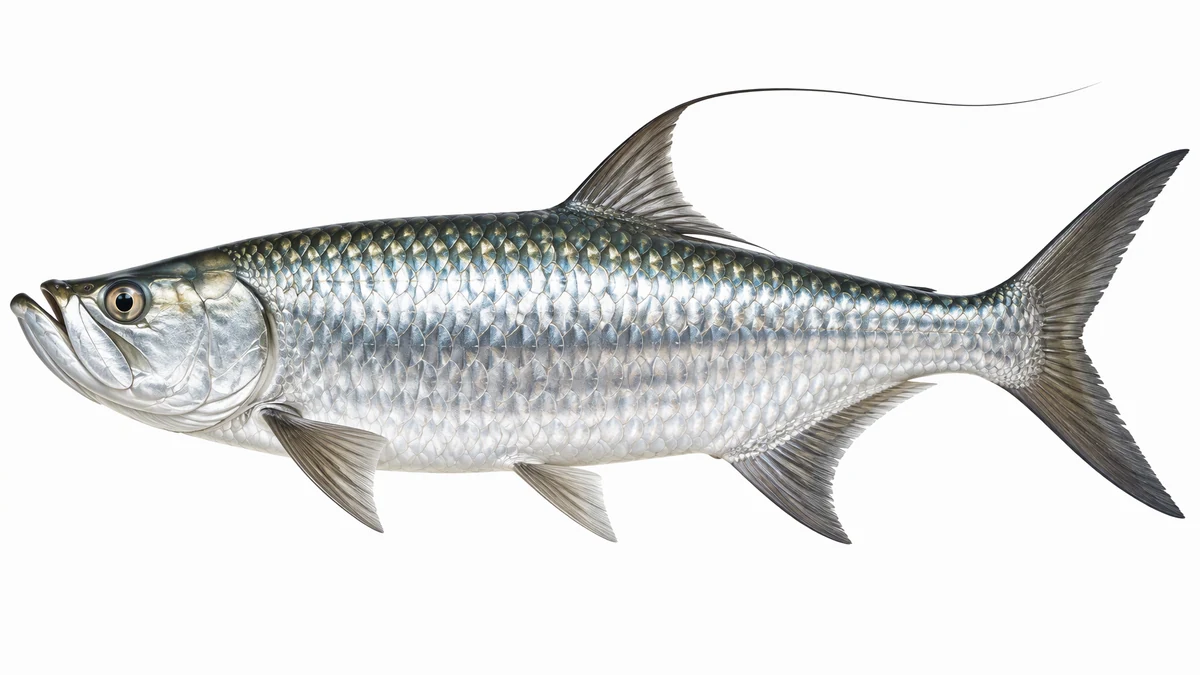
Learning how to catch tarpon is easy. Landing one is the hard part. The fish is big, silver and explosive, with a bony mouth that resists hooks and a habit of throwing itself into the air the moment it feels steel. A hundred-pound tarpon may jump eight or ten times and run a hundred yards between jumps. Anglers who fish for trout and expect the same hookset lose fish. Anglers who plan for the jump, bow to the fish and keep steady pressure land them. This guide covers the best time to catch tarpon, the tackle and bait that work, the rigs for passes and flats, and the Florida rules that make release the default. Read the full Tarpon species profile for identification, range and record history.
Best Time to Catch Tarpon
Tarpon are warm-water fish. They feed best from about 72°F to 86°F (22–30°C), and they go sluggish below 60°F. A hard cold snap can kill fish in shallow bays, which is why the fishery collapses north of Florida in winter.
Late spring and summer are the prime months for the big migratory fish. In Florida, the spawn peaks from May through July, tied to warm water and often to moon and tide. That is when the famous pass and beach fisheries light up, and when big fish move along the coast as far north as Georgia and the Carolinas. In fall, fish move back south, and some remain resident in South Florida and the Caribbean year-round.
Tide is the engine. Tarpon feed in moving water, and a strong tide through a pass concentrates bait and fish. In passes, fish the last of the incoming and the first of the outgoing, when current sweeps bait through the channel. On flats, a rising tide lets fish push shallow to hunt. At night, dock lights draw bait and tarpon feed under them.
Time of day matters less than water movement, but low light helps. Early morning and late evening are prime on the flats, because fish are less likely to see the line and more willing to eat. A calm, bright midday can still produce in a pass with good current. Watch for rolling fish; a tarpon that shows its back or tail is a fish you can target.
Best Gear for Tarpon
Tarpon gear is heavy by inshore standards, because the fish is heavy and the fight is long. The goal is to land or release a fish quickly, especially where sharks are thick.
| Component | Spinning / conventional | Fly |
|---|---|---|
| Rod | 7'–7'6" medium-heavy, 20–30 lb class | 10- to 12-weight, 9' |
| Reel | 6000–8000 spinning or conventional with a strong, smooth drag | Large-arbor fly reel with 200+ yards of backing |
| Main line | 20–30 lb braid or monofilament | Weight-forward floating or intermediate line |
| Leader | 60–80 lb fluorocarbon or mono | 60–80 lb fluorocarbon tippet |
| Hook | 5/0–7/0 circle hook for natural bait | 2/0–4/0 tarpon fly hook |
| Extras | Long-handled release tool, gloves, polarized glasses | Stripping basket, pliers, release tool |
A smooth drag with serious stopping power is the core of the outfit. Tarpon make long, fast runs, and a drag that sticks breaks 80-pound leader. Fill the reel with backing, set the drag by pulling line off by hand, and be ready to palm the spool. Circle hooks are required with natural bait in many Florida tarpon fisheries, and they do a better job of hooking a tarpon in the corner of the mouth than a J-hook.
Fly anglers need a 10- to 12-weight with a heavy leader and a big fly. A tarpon fly is not delicate; it is a large, sparse pattern designed to be seen and to hook a hard mouth. Carry a stripping basket, because line management on a boat deck is half the battle.
Best Bait for Tarpon
The best bait for tarpon is live bait, and the short list is mullet, pinfish and crab. Tarpon are opportunistic and will eat what is abundant, but those three cover most situations.
Live mullet is the classic. A 6- to 10-inch mullet fished in a pass or along a beach swims naturally and draws violent strikes. Hook it through the back or nose so it stays alive and works the current.
Pinfish and sardines are standard in Florida, especially around structure and in passes. A live pinfish under a float or on a fish-finder rig is a reliable presentation when tarpon are holding deep.
Crabs matter more than most anglers realize. During the annual crab spawn in the Florida Keys, big tarpon line up to eat pass crabs drifting on the tide. A live crab fished on a slow drift is one of the most effective and most famous tarpon presentations in North America.
Artificials work, especially when bait is restricted or when you are sight-fishing. Plugs, swimbaits and shrimp imitations cast well and cover water. On fly, large tarpon patterns in black, purple, red and white are standard.
Check the rules before you buy bait. Florida requires circle hooks with natural bait in many tarpon fisheries, and some areas restrict gear further. A perfect live-bait spread is useless if the regulations require artificials.
Tarpon Rigs
A tarpon rig has to do two jobs: deliver a natural bait and survive a hard, jumping fight. These four cover the main situations.
Fish-finder live-bait rig. Run a sliding sinker or egg weight on the main line, add a bead and a swivel, then tie 4–6 feet of 60–80 lb leader to a 5/0–7/0 circle hook. Hook a live mullet or pinfish through the back. The fish can swim while the weight holds bottom, and the circle hook finds the corner of the mouth.
Float rig for crabs and baitfish. A slip float with a 4- to 6-foot leader and a circle hook keeps a live crab or baitfish at a set depth and drifting with the tide. This is the standard pass-crab presentation in the Keys.
Fly rig. A 60–80 lb fluorocarbon tippet, a 2/0–4/0 tarpon fly and a floating or intermediate line. The leader is short and heavy by trout standards, because the goal is to turn a big fish, not to fool a wary one. Keep the fly sparse and the retrieve steady.
Casting plug rig. A 20–30 lb braid main line, a 60–80 lb leader and a large plug or swimbait. Cast across the current, retrieve with a steady wobble and be ready for a strike at the boat. Do not use a treble hook where single hooks are required.
How to Catch Tarpon, Step by Step
- Find moving water and bait. Passes, beach troughs, inlet edges and flats with tidal flow are the places to start. Look for rolling fish, bait showers and birds working the surface.
- Fish the tide, not the clock. The last of the incoming and the first of the outgoing are prime in passes. On flats, a rising tide lets fish push shallow.
- Approach quietly. Tarpon are spooky in clear, shallow water. Pole or drift within casting range, keep the motor off, and avoid dropping anything on the deck.
- Lead a cruising fish. Cast ahead of the fish, not at it, and let the bait or fly land softly. A tarpon that sees the presentation turn away is gone.
- Let the bait run. With live bait, give the fish line and let it eat before you engage the drag. With a circle hook, do not strike; just come tight and let the hook rotate into the corner of the mouth.
- Set the hook hard with artificials and flies. A tarpon's mouth is bony. Strip-strike or sweep the rod firmly, and be ready to strike again if the first one does not stick.
- Bow to the jump. When the fish leaves the water, drop the rod tip and give slack so the line cannot pull the hook. This is the single most important tarpon skill. Keep the rod low and the pressure steady.
- Fight low and finish fast. Do not high-stick the rod or try to bully a green fish. Use side pressure, keep the fish away from structure, and land or release it quickly, especially where sharks are present.
- Release properly. Keep the fish in the water, support the body horizontally and never hang it vertically by the jaw. Revive it head-first into the current until it kicks away.
Where to Catch Tarpon
Tarpon live in warm Atlantic coastal water, not the open ocean. On the western side they range from Nova Scotia and Bermuda south through Florida, the Gulf of Mexico and the Caribbean to Brazil. On the eastern side they occur from Senegal to Angola. West Africa produces the true giants.
- Florida Keys passes and beaches. The heart of the U.S. fishery, especially during the spring and summer crab spawn.
- Tampa Bay and Charlotte Harbor. Big bays with passes, beaches and mangrove shorelines.
- The Everglades and southwest Florida. Backcountry creeks, bays and Gulf beaches.
- Gulf passes and jetties. Moving water concentrates bait and fish.
- Dock lights at night. Tarpon feed under lights along channels and marinas.
- The Caribbean and Central America. Mexico, Belize and Cuba have strong fisheries with varying rules.
Juveniles live in mangrove creeks, salt marshes and low-oxygen backwaters, where their air-breathing swim bladder lets them survive water that would kill most fish. Those nursery habitats matter, even though they are not the glamorous flats.
Tarpon Regulations and Safety
Florida is the strictest jurisdiction and the one most anglers will fish. Tarpon have been catch-and-release only since 2013. With no harvest allowed, size and bag limits give way to release rules. Anglers may not harvest or possess a tarpon unless they hold a tarpon tag, which is issued for record purposes and requires a fee on top of the license. Even with a tag, handling and weigh-in rules are tight. The Florida Fish and Wildlife Conservation Commission (FWC) is the authority, and its rules change, so read them before you fish.
Other states manage tarpon differently. Alabama, Louisiana and Texas have their own rules, and some allow limited harvest. In the Caribbean and Central America, regulations vary widely and enforcement is uneven. Book with a local guide who knows the current law. As of 2025, circle hooks are required with natural bait in many Florida tarpon fisheries.
Safety is mostly about the fish and the water. A hundred-pound tarpon that launches into a boat can break tackle, bruise legs and knock a standing angler overboard. Keep loose gear low, stay seated during a close jump and never stand between a green fish and the gunwale. Do not put fingers in the mouth; use a long-handled release tool. Sharks are a real factor in some fisheries, and a long fight invites them, which is another reason to land or release fish quickly. Handle released fish horizontally, keep them in the water and revive them before release.
Common Mistakes and Tarpon Fishing Tips
- Trout hookset. A tarpon's mouth is bony. Set the hook hard and be ready to set again.
- Not bowing to the jump. The jump is where most fish are lost. Drop the rod tip and give slack.
- High-sticking the rod. It breaks rods and gives the fish leverage. Keep the rod low.
- Fighting too long. Sharks and exhaustion kill released fish. Pressure the fish and finish quickly.
- Hanging a fish by the jaw. It damages the fish. Support the body horizontally.
- Using a J-hook with natural bait. Circle hooks are required in many Florida fisheries and hook better.
- Ignoring the tide. Tarpon feed in moving water. A slack tide is a good time to eat lunch.
- Skipping the tag rules. Florida is catch-and-release only. Know the law before you book a trip.
Tarpon are not a fish you catch once and forget. The jump, the silver flash and the sheer size stay with people. Fish moving water, lead the fish, bow to the jump and release it with care. That is how to catch tarpon. For more inshore and cold-water tactics, read how to catch northern shrimp and how to catch chum salmon.
FAQ
What is the best time to catch tarpon? Late spring and summer, when water is 72–86°F, with the Florida spawn peaking May through July. Fish moving tides in passes and low light on the flats.
What bait for tarpon works best? Live mullet, pinfish and crabs. In the Florida Keys, pass crabs drifting on the tide are a famous presentation. Check whether circle hooks and bait are legal where you fish.
What is a good tarpon rig? A fish-finder rig with a 60–80 lb leader and a 5/0–7/0 circle hook for live bait, a float rig for crabs, and a 10- to 12-weight fly rod with an 80 lb tippet for flies.
How do you catch tarpon in a pass? Fish the last of the incoming and first of the outgoing tide, drift a live mullet or crab through the current, let the fish eat, then come tight without striking a circle hook.
How do you keep a tarpon from throwing the hook on a jump? Bow to the fish. Drop the rod tip and give slack as it leaves the water, then resume steady pressure when it lands.
How big do tarpon get? Most adults are 20–80 pounds. A 100-pound fish is a serious tarpon, and the IGFA all-tackle record is 286 pounds 9 ounces, caught off Pointe-Noire, Congo, in 2003.
Related Articles
- How to Catch Chinook Salmon — a big, hard-fighting fish of cold rivers.
- How to Catch Chum Salmon — an aggressive fall salmon with a similar bulldog fight.
- How to Catch Arctic Grayling — a light-tackle fish at the opposite climate extreme.
- How to Catch Northern Shrimp — a shrimp that feeds the food chain tarpon depend on.
- How to Catch Brown Trout — cold-water craft that sharpens any angler.
- Tarpon species profile — identification, range and the world-record story.
- All species profiles
About the author and how this was tested
About the author
FishermanGuy
Bank, boat and kayak angler · fishing, crabbing and shrimping since 2021
I buy the gear, fish it for a season and write down what failed. No sponsored verdicts, no free-sample flattery. Every rig on this page has landed fish in water I can point at on a map.
How this was tested
- Every rig gets at least six trips on the same water before it is published.
- Gear is bought at retail. Free samples are labelled in the first paragraph.
- Dates show first publication and the last time the page was updated.