Field notes
How to Catch Northern Shrimp: Traps, Bait & Rules
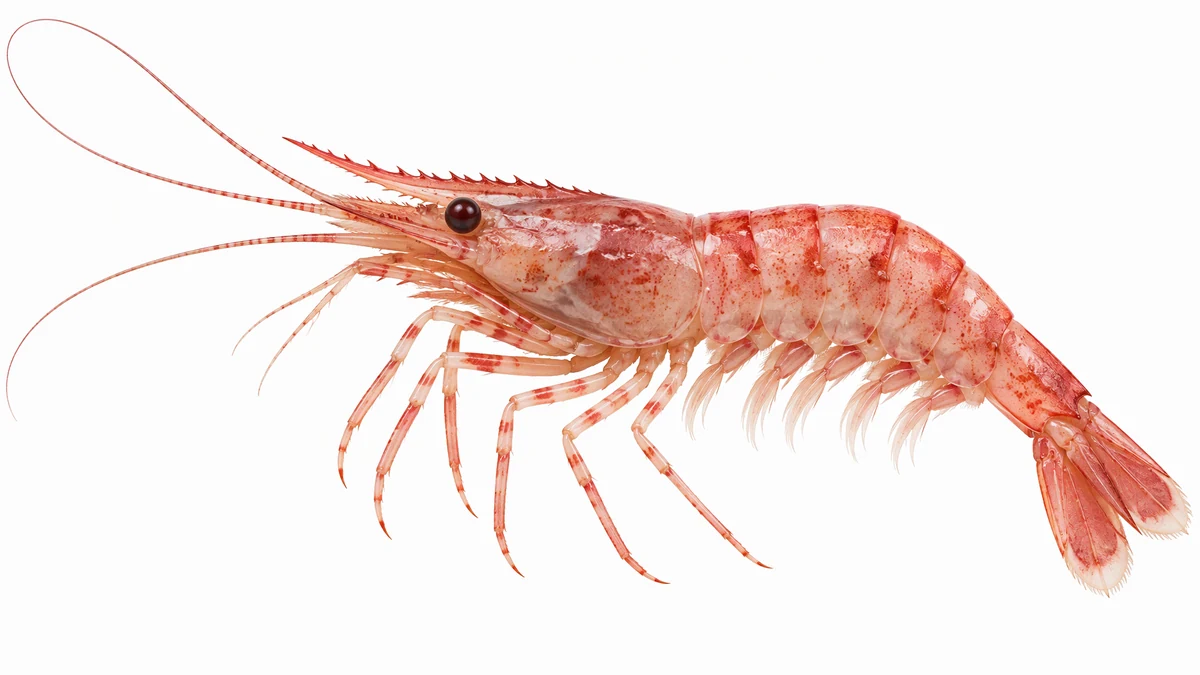
How to Catch Northern Shrimp
Learning how to catch northern shrimp starts with an honest answer: for most anglers in the United States, you cannot. The Gulf of Maine fishery has been closed for years, and northern shrimp are not a hook-and-line target anywhere. Where a season exists, the tools are traps, dip nets and trawls, not rods. That does not make the species irrelevant. Northern shrimp are among the most important forage animals in cold northern seas, they are a superb bait for cod, haddock and halibut, and they show up on sushi counters as amaebi. This guide covers the best time to catch northern shrimp, the gear and bait used where fishing is legal, the rigs, and the rules that decide whether you can fish at all. Read the full Northern Shrimp species profile for identification, range and biology.
Best Time to Catch Northern Shrimp
Northern shrimp live in deep, cold water, mostly 100 to 500 meters down, where temperatures stay between about 34°F and 45°F (1–7°C). They are not a shallow-water or surf-zone shrimp, and they do not care about the kinds of weather that move a trout stream. The season is set by biology and by fishery managers, not by an opening-day tradition.
In most northern fisheries, the productive period runs through winter and early spring, depending on the stock. Females carry fertilized eggs under the abdomen from late summer or fall through the winter, and larvae hatch in spring. That cycle shapes both the commercial season and the quality of the catch. Berried females are often protected or released, because they carry the next year's recruitment.
Shrimp also move up and down in the water column every day. They rise off the bottom at night to feed and settle back to the mud by day. That daily vertical migration matters if you are setting gear: a trap that fishes well at night may catch less in bright daylight, and sonar marks can appear and disappear as the shrimp move. Where a recreational season exists, check the local rules for open dates, depth limits and gear restrictions rather than assuming a calendar.
Best Gear for Northern Shrimp
This is not rod-and-reel fishing. The gear is commercial or small-scale trap gear, and the rules usually limit how much of it you can use.
| Component | What it is used for |
|---|---|
| Shrimp pot or trap | A baited cage with funnel entrances, set on the bottom |
| Groundline | A weighted rope that connects several pots |
| Buoy and line | Marks the set and lets you haul from the surface |
| Bait jar or mesh bag | Holds bait inside the pot so it disperses slowly |
| Dip net | Hand net for shrimp in shallow water where legal |
| Trawl | Commercial net towed over muddy bottom; not recreational gear |
| Cooler and ice | Keeps the catch cold and firm after the haul |
A shrimp pot is a framed cage with funnel-shaped entrances that let shrimp in and make it hard for them to leave. It is baited with oily fish or fish carcasses in a mesh bag, set on muddy bottom and marked with a buoy. Where recreational trapping is allowed, pots are usually fished on a groundline, with a limit on how many pots and how much rope you can run.
A dip net is simpler and is used in shallow water where shrimp come close enough to net, which is rare for northern shrimp. Commercial boats use trawls towed over mud, and the catch is sorted, cooked and frozen at sea or on shore. For anglers, the practical gear question is usually about bait: a bag of frozen northern shrimp is a tool for catching cod and halibut, not a target species.
Best Bait for Northern Shrimp
"Best bait for northern shrimp" has two meanings, and both are worth answering.
Bait to catch shrimp. Northern shrimp are opportunistic scavengers. They feed on plankton, krill, worms, fish eggs and organic debris, and they will come to a pot baited with oily fish. Herring, mackerel, menhaden and fish carcasses are standard. The bait needs to be fresh enough to smell but firm enough to stay in the bag; rotten bait fouls the water and attracts the wrong animals. A bait jar with small holes releases scent slowly and keeps the pot working through a tide.
Bait made from shrimp. This is the more useful answer for most readers. Whole or half northern shrimp is one of the best baits for cod, haddock, halibut and other cold-water bottom fish. Hook a whole shrimp through the body so it sits straight on the hook, or cut it in half for smaller fish. The scent and the natural shape are hard for a bottom feeder to refuse. Keep bait shrimp frozen until you use it, keep it cool on the boat, and do not refreeze it repeatedly; thawed and refrozen shrimp turn to mush and fall off the hook.
Artificial alternatives. Where bait is restricted, shrimp-shaped soft plastics, scented strips and small jigs can stand in. They are less effective than real shrimp in deep water, but they last longer and avoid the mess.
Check your state's rules before you carry shrimp as bait. Many states restrict the use or transport of raw shrimp, especially in fresh water, to slow the spread of disease and non-native species. Cooked shrimp are usually treated differently from live or raw bait.
Northern Shrimp Rigs
The rigs fall into two groups: gear for catching shrimp where it is legal, and rigs for fishing with shrimp as bait.
Shrimp pot on a groundline. Clip several pots to a weighted groundline, bait each pot with a mesh bag of oily fish, and set the line on muddy bottom with a buoy at each end. Space the pots so the line does not tangle, and mark the set clearly. Soak for a few hours to overnight, then haul hand over hand. This is the standard small-scale trap rig.
Single pot and buoy. For a short set, run one pot on a rope with a buoy, drop it on the mark and retrieve it by hand or with a hauler. This is the simplest legal setup where recreational trapping is allowed.
Dip net. A long-handled fine-mesh net swept through shallow water or under lights at night, where shrimp are accessible and the rules allow it. Northern shrimp rarely come shallow, so this is a minor method for the species.
Fish-finder bait rig. For cod and halibut, run a sliding sinker on the main line, a bead and a swivel, then a 3- to 5-foot leader to a 5/0–7/0 hook baited with a whole shrimp. Drop it to the bottom, keep the sinker on the mud and lift the bait just above it. This is the most practical "northern shrimp rig" for most anglers.
Shrimp on a jig. Thread a shrimp onto a leadhead jig for a compact presentation that casts well and sinks fast. Add a strip of squid or fish for extra scent.
How to Catch Northern Shrimp, Step by Step
- Check the law first. Confirm that a season exists, that recreational gear is allowed, and what the bag limit and depth rules are. In the U.S. Gulf of Maine, the answer has been no since 2014.
- Pick a muddy bottom. Northern shrimp live on soft mud and sandy mud, usually 100–500 meters down. Look for a flat, soft bottom away from rocky structure.
- Bait the pot. Fill a mesh bag or bait jar with oily fish and secure it inside the trap so it cannot float out.
- Set the gear. Run the groundline or single pot down on the mark, keep the rope clear of the prop, and set the buoy where you can find it in a tide.
- Soak and haul. Give the pot a few hours, preferably overnight, then haul steadily. Empty the catch into a cooler of ice or seawater.
- Sort and release. Separate the catch, and release berried females and undersized shrimp where the rules require it. Keep only what you will use.
- Keep it cold. Shrimp spoil fast. Chill the catch immediately and keep bait frozen until use.
- Clean up. Take all gear, rope and leftover bait home. Never dump bait water or shrimp into a waterbody.
If you are catching fish with shrimp instead, the steps are simpler: bait a whole shrimp on a bottom rig, drop it to the mud, keep the sinker in contact and wait for a heavy take.
Where to Catch Northern Shrimp
Northern shrimp are circumpolar. In the western Atlantic they run from the Gulf of Maine north through the Scotian Shelf, the Gulf of St. Lawrence, Newfoundland and Labrador, and around Greenland. In the eastern Atlantic they occur off Iceland, Svalbard, Norway and into the Barents Sea off Russia. In the North Pacific they are found in the Gulf of Alaska and the Bering Sea; Pacific populations are sometimes classified as a separate species, Pandalus eous, but the biology is nearly identical.
- Gulf of Maine. The southern edge of the western Atlantic range, and the fishery most Americans know. Closed under an ASMFC moratorium since 2014 and still closed as of late 2025.
- Gulf of St. Lawrence and Newfoundland. Canadian stocks managed by Fisheries and Oceans Canada, with commercial quotas.
- Barents Sea and Norwegian coast. A bilateral Norway–Russia quota and a Norwegian coastal fishery.
- Gulf of Alaska and the Bering Sea. Pacific northern shrimp, important as forage and as trawl catch.
For anglers, the realistic use of the species is as bait. A frozen bag of northern shrimp is standard kit on a cod or halibut trip.
Northern Shrimp Regulations and Safety
The regulations are the story here. In the United States, the Atlantic States Marine Fisheries Commission (ASMFC) manages northern shrimp in the Gulf of Maine. The fishery has been under a moratorium since 2014, driven by poor recruitment and warm water, and the closure has been extended year after year. As of late 2025 it remained closed. Check the ASMFC website before assuming any season exists.
In Canada, Fisheries and Oceans Canada sets quotas for stocks off Newfoundland, Labrador and in the Gulf of St. Lawrence. In Europe, Norway and Russia set a bilateral quota in the Barents Sea, and Norway manages its own coastal fishery. These are trawl fisheries, not recreational ones.
For anglers, the practical rules are about bait and transport. Many states restrict the use or transport of raw shrimp, especially in fresh water. Read your state's bait rules before you carry a bag of frozen shrimp to a lake, and never dump bait water or leftover shrimp into a waterbody.
Safety has two parts. First, food allergy. Shellfish allergy can be severe, and shrimp is one of the most common triggers. Anyone with a known allergy should not handle or eat them, and steam from a cooking pot can carry allergens. Second, spoilage. Shrimp spoil fast, and bait that has been thawed and refrozen smells of ammonia and fouls the water. Keep bait frozen until use, keep it cool on the boat and discard anything questionable. If you are hauling pots in cold water, watch for hypothermia and keep the boat stable.
Common Mistakes and Northern Shrimp Fishing Tips
- Assuming a season exists. The Gulf of Maine fishery is closed. Check ASMFC, DFO or your national agency before you plan a trip.
- Using rotten bait. It fouls the pot and attracts scavengers you do not want. Use fresh, oily fish.
- Over-soaking pots. Long soaks in warm water spoil the catch. Haul on a schedule and keep the catch cold.
- Refreezing bait shrimp. It turns to mush. Thaw only what you will use.
- Dumping bait water. It spreads disease and non-native species. Take it home.
- Ignoring state bait rules. Raw shrimp transport is restricted in many places, especially for fresh water.
- Handling the rostrum carelessly. The saw-toothed rostrum can prick a finger. Handle shrimp by the body.
- Forgetting the allergy risk. Shellfish allergy is serious. Warn guests and keep cooking steam away from anyone affected.
Northern shrimp are small, cold and easy to overlook, but they sit at the center of the northern food web. They feed cod and halibut, fill bait freezers and appear on sushi counters from Tokyo to Toronto. Knowing the species, and knowing when you cannot fish for it, is part of knowing how to catch northern shrimp. For the fish that eat them, read how to catch chinook salmon and how to catch tarpon.
FAQ
How do you catch northern shrimp? With baited pots, traps or dip nets where a season is open. Commercial boats use trawls. Northern shrimp are not a hook-and-line target, and the U.S. Gulf of Maine fishery is closed.
Can you still catch northern shrimp in the U.S.? No. The Gulf of Maine fishery has been under an ASMFC moratorium since 2014 and remained closed as of late 2025. Check current rules before planning anything.
What is the best bait for northern shrimp? For the pot, oily fish such as herring or mackerel in a mesh bag. As bait for cod and halibut, a whole or half northern shrimp hooked through the body is hard to beat.
What is a northern shrimp rig? For trapping, a baited pot on a groundline with a buoy. For fishing, a fish-finder rig with a sliding sinker and a whole shrimp on a 5/0–7/0 hook.
Where do northern shrimp live? On muddy bottom in the North Atlantic and North Pacific, mostly 100–500 meters deep, in water from about 34°F to 45°F.
How big do northern shrimp get? Most adults are 3–4.5 inches. Large females can reach about 6 to 6.5 inches, but those are old, slow-grown shrimp from cold northern stocks.
Related Articles
- How to Catch Chinook Salmon — a predator that feeds on shrimp and baitfish.
- How to Catch Chum Salmon — another cold-water species of the northern Pacific.
- How to Catch Arctic Grayling — a cold-water fish of the far north.
- How to Catch Tarpon — a warm-water giant that also eats shrimp and crabs.
- How to Catch Brown Trout — a cold-river fish with a very different tackle list.
- Northern Shrimp species profile — identification, range and the protandric life cycle.
- All species profiles
About the author and how this was tested
About the author
FishermanGuy
Bank, boat and kayak angler · fishing, crabbing and shrimping since 2021
I buy the gear, fish it for a season and write down what failed. No sponsored verdicts, no free-sample flattery. Every rig on this page has landed fish in water I can point at on a map.
How this was tested
- Every rig gets at least six trips on the same water before it is published.
- Gear is bought at retail. Free samples are labelled in the first paragraph.
- Dates show first publication and the last time the page was updated.