Field notes
How to Catch Mahi-Mahi: Trolling & Weed Line Tips
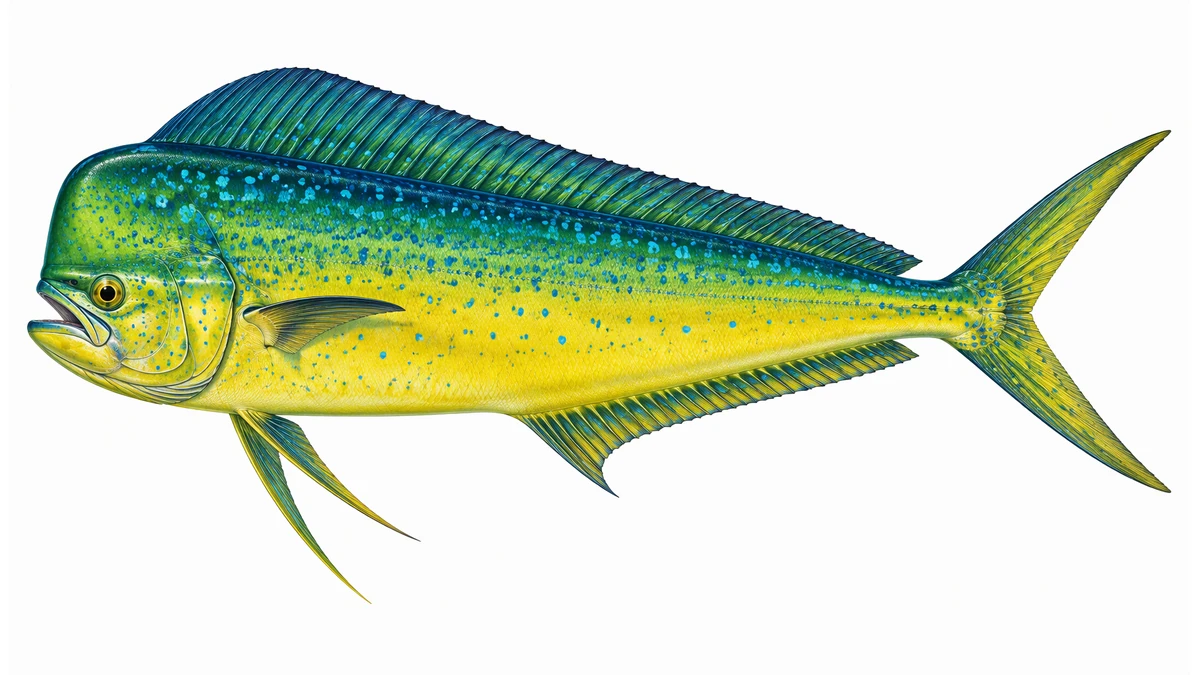
How to Catch Mahi-Mahi
Mahi-mahi are the offshore fish that almost want to be caught. They gather under anything that floats, they eat with abandon, and they turn every strike into a jumping, color-flashing show. Learning how to catch mahi-mahi is less about secret bait and more about finding the right piece of ocean — a weed line, a temperature break, a drifting pallet — and then presenting something that looks like a fleeing baitfish. For identification, range, and biology, read the full Mahi-Mahi species profile; here we focus on catching them.
Best Time to Catch Mahi-Mahi
The best time to catch mahi-mahi is late spring through fall in the Atlantic, with year-round action in the tropics. Mahi are warm-water fish, most active from roughly 68 to 86°F (20 to 30°C), and they follow warm currents as the seasons shift. In U.S. waters that means the Gulf Stream edges off Florida and the Carolinas firing from late spring into fall, and Hawaii producing fish year-round.
Time of day matters less than location, but early morning and late afternoon are strong because bait is most vulnerable then. Mahi feed hardest at dawn and dusk and will herd bait into tight balls, driving it to the surface. If you see birds working a patch of water, get there fast; diving birds usually mean bait pushed up, with mahi underneath.
Weather is a real factor offshore. A calm day lets you see weed lines and floating debris from a distance, which is half the search. Wind and current stack sargassum into defined lines, and those lines are where the fish live. Plan trips around stable weather and clean blue water rather than a calendar date, and the timing takes care of itself.
Best Gear for Mahi-Mahi
Mahi-mahi are fast and acrobatic, but they have soft mouths, so the gear has to balance casting distance with a drag smooth enough not to pull the hook. Twenty- to thirty-pound class spinning or conventional tackle is the standard, matched with a 40- to 60-pound leader.
| Component | Mahi-mahi-ready choice |
|---|---|
| Rod | 7 ft medium-heavy spinning or a 20–30 lb class conventional |
| Reel | 5000–8000 spinning reel or a 20–30 size conventional with a smooth drag |
| Main line | 30–40 lb braid |
| Leader | 40–60 lb fluorocarbon |
| Hooks | 5/0–7/0 circle hooks for live bait; heavy jig hooks for bucktails |
| Extras | Net, gloves, ice and a bleed bucket, polarized sunglasses, trolling lures |
The leader is the one place to be generous. Mahi have small, rasp-like teeth that can wear through light mono, and a 40- to 60-pound fluorocarbon leader survives the chafing of a thrashing fish against the line. A long-handled net matters too: mahi go crazy on deck, and a 30-pound fish with a hook in its mouth can throw blood, water, and gear across the cockpit.
For trolling, a spread of skirted lures, ballyhoo rigs, and small plugs covers water fast and finds fish. Once a school is located, stow the trolling gear and switch to casting tackle for the fun part.
Best Bait for Mahi-Mahi
The best bait for mahi-mahi is a live or fresh baitfish: pilchards, cigar minnows, ballyhoo, or squid. Mahi are not picky, and a hungry school will attack almost anything that looks like food.
Natural baits are the offshore standard:
- Live pilchards and cigar minnows. Free-lined or fished under a float around weed lines, these are the top live baits.
- Ballyhoo. Rigged behind a skirt, ballyhoo is the classic trolling bait and a proven mahi magnet.
- Squid. A fresh squid strip or whole squid on a circle hook works when baitfish are scarce.
- Cut bait. Chunking with cut bait and sardines holds a school near the boat and keeps fish feeding.
Artificial lures cover water and trigger reaction strikes:
- Skirted trolling lures. The search tool. Troll them at speed to find fish, then switch tactics.
- Bucktail jigs and soft plastics. Cast these at fish gathered on a weed line; they are more fun and often more effective than dragging lures past a school.
- Poppers and stickbaits. When mahi are up and aggressive, a surface lure draws violent, visible strikes.
The key is matching the size of the bait in the water. Mahi around a sargassum line are usually feeding on small baitfish and squid, so a smaller, lively presentation beats a giant lure. When big bulls are cruising the edge of a school, a bigger bait or lure gets their attention.
Mahi-Mahi Rigs
A mahi-mahi rig has to do one of two jobs: search water while trolling, or present a natural bait to a visible school. These setups cover both.
Skirted ballyhoo trolling rig. Run a rigged ballyhoo behind a skirted lure head on a 40- to 60-pound leader, with a short shank hook matched to the bait. Troll it in the spread at trolling speed to cover water. This is the standard search rig for mahi and the fastest way to find a school.
Weed-line pitch rig. For fish gathered on flotsam, tie a 5/0–7/0 circle hook to a 40- to 60-pound leader and free-line a live pilchard or cigar minnow. Cast it near the edge of the weed line and let it swim. A small float can keep the bait up where cruising fish see it.
Bucktail and soft-plastic rig. A 1/2- to 1-ounce jighead with a paddletail or a bucktail is the casting rig for visible fish. Cast past the school, let it sink a few feet, and retrieve fast with sharp twitches. Mahi chase and commit hard.
Popper rig. A surface popper on a stout leader is the most exciting setup when fish are up and feeding on top. Cast it into the commotion and work it with a rhythmic pop-and-pause.
Chunking is not a rig so much as a technique: toss cut bait and sardines over the side to hold a school near the boat, then fish live baits or jigs in the slick.
How to Catch Mahi-Mahi, Step by Step
- Find the structure. Look for sargassum weed lines, driftwood, buoys, lost cargo, and fish aggregating devices. Any floating object in blue water can hold a school. Temperature breaks and color changes are the other key — where green water meets blue is classic mahi ground.
- Troll to locate. Drag a spread of skirted lures and ballyhoo rigs along the weed line and temperature edges. Troll fast enough to cover water and trigger reaction strikes.
- Mark the school. The first hookup tells you where the fish are. Circle back and work that spot thoroughly; a weed line can hold dozens of fish.
- Stop and cast. Once fish are up, stow the trolling gear and cast live baits, bucktails, or poppers. Casting to visible fish is far more effective than dragging lures past them.
- Chunk to hold them. Toss cut bait over the side to keep the school near the boat while you fish.
- Play the fish smoothly. Mahi have soft mouths. A heavy drag pulls the hook, so use a smooth, moderate drag and let the rod do the work instead of winching.
- Ice it immediately. If you keep the fish, bleed it at once and get it on ice. Mahi spoil fast and the flesh goes soft in warm air.
That last step is not a footnote. Mahi are excellent eating, which is why so many are kept, and the difference between good and great fillets is how fast the fish went from the deck to the ice.
Where to Catch Mahi-Mahi
Where to catch mahi-mahi is mostly a question of finding flotsam and warm blue water. Mahi live in the warm surface layer of the open ocean, worldwide in tropical and subtropical seas: the Atlantic, Pacific, and Indian oceans, the Gulf of Mexico, the Caribbean, and the Gulf Stream. In the U.S. they are offshore staples from Florida to the Carolinas, and in Hawaii they are one of the most important pelagic species.
The fish associate with floating objects because bait collects there, and juveniles shelter under weed. Sargassum lines, driftwood, buoys, and purpose-built fish aggregating devices can hold a school in the middle of empty ocean. Find the floating thing, and you usually find the fish.
Mahi usually sit near the surface, in roughly the top 100 feet and often right at the top. Small fish gather in big groups around flotsam; big bulls are more often alone or in pairs cruising the edge. That size sorting matters: a school at a weed line may hold dozens of 5- to 15-pound fish, with a big bull working the perimeter.
Birds, current edges, temperature breaks, and color changes all concentrate bait, and bait concentrates mahi. Work every weed line and temperature edge you cross, and do not leave fish to find fish.
Mahi-Mahi Regulations and Safety
Mahi-mahi rules are split between federal and state waters, and they vary enough that you should confirm before you keep a fish.
In the Atlantic, dolphin (the fishery name for mahi) are managed under the Dolphin Wahoo Fishery Management Plan by the South Atlantic Fishery Management Council. There is generally no federal closed season for dolphin, but state rules on size and bag limits differ. Florida, for example, allows 10 mahi per person per day or 60 per vessel per day, whichever is less, and anglers should confirm the current size rule with the Florida Fish and Wildlife Conservation Commission. Hawaii and the Gulf states have their own rules. As of 2025, the safe move is to check your state agency's current limits before every trip.
On safety, mahi are not venomous and their teeth are small, but the deck is the hazard. A hooked mahi thrashes violently and can throw hooks, blood, and gear. Keep the cockpit clear, control the fish with a net or gaff, and stay out of the arc of a swinging lure. Multiple trolling lines mean a fish that crosses the spread can tangle several rods at once, so clear lines methodically.
Handling is about speed. Mahi are more delicate than tuna and their colors fade fast. If you plan to release a fish, do it quickly and keep it in the water. If you plan to keep it, bleed and ice it immediately. Some anglers also avoid keeping very large bulls to protect the spawning stock, though rules vary.
One naming note saves confusion on the dock: "dolphin" in old cookbooks and fishing reports means dolphinfish, not the marine mammal. Mahi-mahi is the market name used to avoid that confusion.
Common Mistakes and Mahi-Mahi Tips
- Trolling past a school. Once you find fish, stop and cast. Dragging lures through a visible school spooks fish and wastes the opportunity.
- Leaving fish to find fish. A weed line that produced one mahi usually holds more. Work it hard before moving on.
- Too-heavy drag. Soft mouths lose hooks under heavy pressure. Play the fish smoothly.
- Skipping the leader. Raspy teeth and thrashing wear light line. Use 40- to 60-pound leader.
- Ignoring the ice. Mahi spoil quickly. Bleed and ice immediately for good fillets.
- Not watching the birds. Working birds mark bait and mahi. They are free sonar.
- Assuming all floating debris is empty. Every pallet, buoy, and weed mat in blue water is worth a pass.
- Overlooking temperature breaks. Where green water meets blue is often where the fish are.
FAQ
What is the best time to catch mahi-mahi? Late spring through fall in the Atlantic and year-round in the tropics, when water sits in the 68–86°F range. Dawn and dusk are strong feeding windows.
What bait for mahi-mahi works best? Live pilchards and cigar minnows, fresh ballyhoo, and squid. Skirted trolling lures find fish; live baits and casting jigs catch them.
What is the best mahi-mahi rig? For trolling, a skirted ballyhoo on a 40- to 60-pound leader. For casting to a school, a free-lined live bait on a circle hook or a bucktail jig.
Can you catch mahi-mahi from shore? Rarely. Mahi are open-ocean fish that gather around floating structure and temperature breaks, so a boat is effectively required in most places.
How big do mahi-mahi get? Most caught fish are 10 to 30 pounds and 20 to 40 inches. A 40- to 60-pound bull is a trophy, and the species can exceed 80 pounds.
Do mahi-mahi have a closed season? There is generally no federal closed season in the Atlantic, but state limits and seasons vary. Check your state agency and the Dolphin Wahoo plan before keeping fish.
Learning how to catch mahi-mahi is about finding floating things and reading water color. Find the weed line, work the temperature break, cast into the school, and ice the fish fast — the mahi-mahi will handle the fireworks.
Related Articles
- How to Catch Cobia — another curious offshore visitor that comes right to the boat.
- How to Catch Yellowfin Tuna — the blue-water companion species on the same troll.
- How to Catch Bluefin Tuna — the heavyweight cousin with a very different rulebook.
- Blue Marlin — the billfish that patrols the same blue water and trolling spread.
- All species profiles
About the author and how this was tested
About the author
FishermanGuy
Bank, boat and kayak angler · fishing, crabbing and shrimping since 2021
I buy the gear, fish it for a season and write down what failed. No sponsored verdicts, no free-sample flattery. Every rig on this page has landed fish in water I can point at on a map.
How this was tested
- Every rig gets at least six trips on the same water before it is published.
- Gear is bought at retail. Free samples are labelled in the first paragraph.
- Dates show first publication and the last time the page was updated.