Field notes
How to Catch Bluefin Tuna: Gear, Baits & Rules
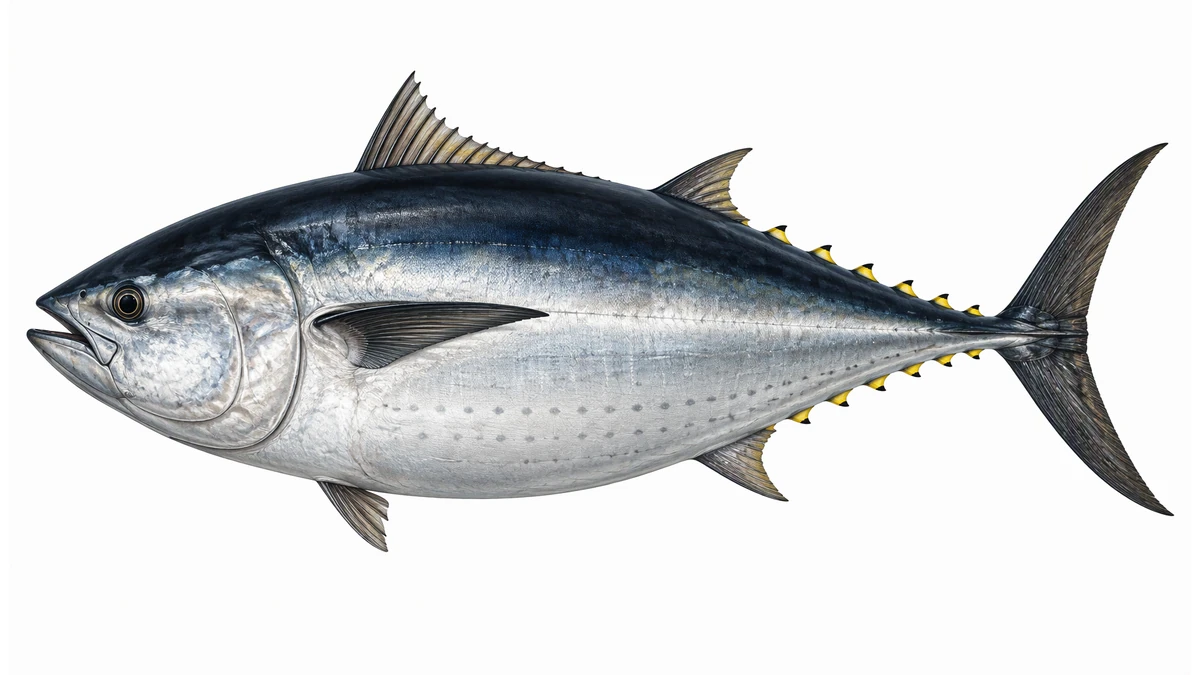
How to Catch Bluefin Tuna
The bluefin tuna is the biggest, fastest, and most tightly regulated tuna in the sea. A single fish can outweigh a grown man several times over, and a big one on the line is a physical event measured in hours, not minutes. Learning how to catch bluefin tuna is half fishing and half paperwork: you need heavy tackle, the right baits and tactics, and a working knowledge of the quota and size-class rules that decide whether you may keep a fish. For identification, range, and biology, read the full Bluefin Tuna species profile; this guide covers how to catch them legally and well.
Best Time to Catch Bluefin Tuna
The best time to catch bluefin tuna in the western Atlantic is late summer and fall, when fish feed heavily on bait schools along the shelf edges and coast from New England down to the Mid-Atlantic. In the Mediterranean, the prime window is spring and summer. Bluefin tolerate a wide temperature range — roughly 45 to 86°F (7 to 30°C) — because their warm-bodied physiology lets them stay active in water that would shut down other tunas.
That cold tolerance is why bluefin show up when and where other tunas don't. In cold months they can be found in genuinely chilly water, and in warm months they blitz bait on the surface, often with birds and whales joining the feast. The fish follow bait, and the bait follows seasonal currents.
Time of day matters around surface feeds. Dawn is prime, and if a blitz develops, it can happen any time the bait is pinned. On the chunk, though, bluefin will feed around the clock if the slick is working, which is why overnight and multi-day trips are common on the East Coast.
Spawning timing is separate from feeding timing. Western Atlantic bluefin spawn in the Gulf of Mexico from roughly April into June, and eastern fish spawn in the Mediterranean in June and July. Those spawning grounds and seasons carry their own protections, which is one more reason to know the rules before you fish.
Best Gear for Bluefin Tuna
Bluefin demand specialized heavy tackle. Fifty- to 130-pound class conventional gear, matched to the size of fish you expect, is the baseline.
| Component | Bluefin-ready choice |
|---|---|
| Rod | 5.5–6.5 ft heavy stand-up or chair rod, matched to line class |
| Reel | 50–130 class two-speed conventional with a strong, smooth drag |
| Main line | 80–130 lb braid or matched mono top shot |
| Leader | Short, strong fluorocarbon or mono, often 80–200 lb |
| Hooks | Heavy circle hooks for bait; heavy J hooks or trebles on some lures |
| Extras | Fighting chair or harness, gloves, flying gaff, bleed bucket, ice, permit paperwork |
The reel is where money is well spent. A large bluefin's initial run can empty a heavy reel, and the fight can last hours; a two-speed reel with a smooth, reliable drag and enough line capacity is essential.
Leaders are short and strong, often in the 80- to 200-pound range, because bluefin have abrasive mouths and the fish is fought at close range near the boat. Circle hooks are required in parts of the recreational fishery and are the standard for bait anyway, since they hook fish in the corner of the mouth and improve release survival.
On a giant, a fighting chair or a stand-up harness is not a luxury. Fish over 500 pounds have been fought for hours, and anglers have suffered heat exhaustion, back injuries, and heart strain in the process.
Best Bait for Bluefin Tuna
The best bait for bluefin tuna is a live mackerel, herring, or menhaden, or a fresh chunk of the same. Bluefin eat fish and squid taken by high-speed pursuit, and a big, natural-looking meal is exactly what they are hunting.
Natural baits are the core of bluefin fishing:
- Live mackerel and herring. The top live baits, fished on a circle hook from a kite, balloon, or slow drift.
- Live menhaden. A classic East Coast bait when bluefin are blitzing bunker schools.
- Fresh chunk bait. Chunked herring, mackerel, or menhaden drifted in a slick is deadly, especially on overnight trips.
- Squid. A whole squid is a reliable backup bait.
Artificial lures search water and trigger reaction strikes:
- Large skirted lures. Trolled at speed to cover water and find fish along temperature edges.
- Spreader bars. A spreader bar imitates a small school of bait and draws bluefin from a distance.
- Cedar plugs. A fast-running classic that triggers strikes on the troll.
- Poppers and stickbaits. When fish are up and crashing bait, casting a big surface lure is the most exciting option.
Chunking with cut bait and drifting is one of the most effective bluefin techniques on the East Coast. The slick pulls fish to the boat, and a hookbait drifted back in the chunk line gets eaten. Keep the chunks small and steady, and keep a baited rod ready at all times.
Bluefin Tuna Rigs
A bluefin rig has to survive a fish that can weigh as much as a small car. These setups cover the main approaches.
Chunking rig. Tie a heavy circle hook to a short, strong leader, and fish a fresh chunk drifted back in the slick with just enough weight to sink naturally. Some anglers use a sliding egg sinker to get the bait down in current. This is the standard East Coast chunking setup and the most productive way to catch a big bluefin at anchor or on the drift.
Live-bait kite or balloon rig. For live mackerel or herring, use a circle hook and a kite or balloon to keep the bait up and away from the boat, where a cruising bluefin will see it. This is the classic live-bait presentation for big fish.
Trolling spreader-bar rig. Run a spreader bar or large skirted lure on a heavy leader at trolling speed to cover water and find fish. Once a fish is hooked, clear the other lines fast — a big bluefin crossing the spread will tangle everything.
Popping rig. A heavy conventional rod with a big popper on a short, strong leader, for casting into surface feeds. Work the lure fast and be ready for a violent strike.
Whatever the rig, the theme is short, strong leaders and heavy circle hooks for bait.
How to Catch Bluefin Tuna, Step by Step
- Find the bait and the temperature structure. Look for bait schools, working birds, whales, and temperature edges along the shelf. Bluefin follow food, and surface blitzes are visible from a distance.
- Match the tactic to the situation. Troll large lures and spreader bars to find fish, then switch to live bait or chunking when fish are located.
- Set up the chunk line. Anchor or drift, start a steady slick of cut bait, and drift a hookbait back in the chunks. Patience is part of the technique; a good slick can take hours to work.
- Present the bait naturally. For live bait, keep it up on a kite or balloon. For chunks, let the bait sink naturally in the slick.
- Let the fish eat. Bluefin are cautious with big baits. Let the fish take the bait and load the rod before coming tight on a circle hook.
- Fight from a harness or chair. Keep the rod loaded, keep your hands off the spool, and let the boat chase the fish when you can. Rotate anglers if the fight runs long.
- Respect the green fish. A bluefin that has been fought to the surface may surge straight down when it sees the hull. Keep the leader short, wear gloves, and never wrap it around your hand.
- Handle for release or the box. If releasing, keep the fish in the water, support the body, and revive it alongside the boat before letting go. If keeping, bleed and chill it immediately and confirm it is legal.
That last point cuts both ways. A careless release can kill a fish that took years to mature, and a misidentified or illegal bluefin kept out of season is a serious violation. Verify size class and season before the fish comes aboard.
Where to Catch Bluefin Tuna
Where to catch bluefin tuna spans the entire North Atlantic and the Mediterranean. Atlantic bluefin have two well-known spawning grounds — the Gulf of Mexico, used by the western stock in spring, and the Mediterranean Sea, used by the eastern stock in early summer — and from those nurseries the fish fan out across an enormous range.
Western bluefin show up from Newfoundland and Nova Scotia down the U.S. coast to the Carolinas and occasionally farther south. Eastern bluefin range from Norway and Iceland south to the Canary Islands and the Strait of Gibraltar. Tagging studies have shown that the two stocks mix on shared feeding grounds in the central Atlantic, which complicates management: a fish caught off one country's coast may have been spawned in another.
Bluefin are pelagic and highly mobile, often hunting bait schools near the surface but fully capable of diving hundreds of feet. Look for shelf edges, temperature breaks, bait concentrations, and surface blitzes with birds and whales. In cold months they can be found in water that would shut down a yellowfin, so do not rule out chilly water.
Pacific bluefin live in the western and central North Pacific, spawning between Japan and the Philippines and ranging east to California and Mexico. Southern bluefin roam the Southern Ocean and spawn off the Indonesian archipelago.
Bluefin Tuna Regulations and Safety
Bluefin regulations are the hard part of the fishery, and they differ sharply by stock and by ocean. Get this wrong and a great trip becomes a citation.
The Atlantic fishery is regulated by ICCAT, the International Commission for the Conservation of Atlantic Tunas, which sets an annual total allowable catch and divides it among member countries, including the United States. In U.S. waters, NOAA Fisheries manages Atlantic bluefin under the highly migratory species program, with an HMS permit requirement, size classes (school, large school, small medium, large medium, and giant), per-vessel and per-person retention limits, and a closure protecting bluefin on the Gulf of Mexico spawning grounds. Catch-and-release is encouraged, and circle hooks are required in parts of the recreational fishery.
Pacific bluefin are managed separately by the Western and Central Pacific Fisheries Commission and the Inter-American Tropical Tuna Commission, and U.S. recreational rules cap the number a vessel may keep. Southern bluefin are managed by the Commission for the Conservation of Southern Bluefin Tuna and remain the most depleted of the three.
Conservation status has improved but is not a green light. The IUCN reclassified Atlantic bluefin as Least Concern globally in 2021 after recovery, driven by stricter catch limits and better enforcement, but the western Atlantic stock remains much smaller than the eastern stock and both are still managed under hard quotas. Southern bluefin remain listed as Endangered. As of 2025, read the current NOAA and ICCAT rules, know your size class, and never assume last year's rule still applies.
Safety is about scale, speed, and the length of the fight. Fish over 500 pounds have been fought for hours, and a green fish at the boat can surge straight down with enough force to break a gaff, bend a hook, or pull a person off balance. Handle the fish carefully even when releasing: keep it in the water, support the body, never lift a big bluefin by the gill plate or tail alone, and revive it alongside the boat. On the plate, bluefin spoil quickly and can develop histamine if mishandled, so bleed and chill immediately — the fat content means the flesh turns fast.
Common Mistakes and Bluefin Tuna Tips
- Fishing tackle that is too light. Bluefin are not school tuna. Use 50- to 130-pound class gear matched to the fish.
- Ignoring the rules. Size classes, quotas, and closures change. Confirm your permit, season, and size class before you fish.
- Guessing at identification. A misidentified bluefin kept out of season is a serious violation. Learn the short pectorals and short rear fins.
- A jerky or locked drag. The first run will break line or pull hooks. Set a smooth drag and leave it alone.
- Cutting the fight short. A green bluefin at the boat is dangerous. Take your time and keep the leader short.
- Skipping the ice. Bleed and chill immediately. Bluefin spoil fast.
- Poor release handling. Lactic acid builds fast. Keep the fish in the water, support it, and revive it properly.
- Fishing alone on a giant. A big bluefin needs a crew, a harness or chair, and a plan. Do not improvise.
FAQ
What is the best time to catch bluefin tuna? Late summer and fall in the western Atlantic, and spring and summer in the Mediterranean. Fish follow bait and temperature structure, and dawn is prime around surface feeds.
What bait for bluefin tuna works best? Live mackerel, herring, or menhaden, or fresh chunk bait drifted in a slick. Large skirted lures and spreader bars find fish; live bait and chunking catch them.
What is the best bluefin tuna rig? For chunking, a heavy circle hook on a short, strong leader with a fresh chunk drifted in the slick. For live bait, a circle hook under a kite or balloon.
Can you catch bluefin tuna from shore? No. Bluefin are large open-ocean fish that require a capable boat, heavy tackle, and a crew. This is a dedicated offshore fishery.
How big do bluefin tuna get? Atlantic bluefin commonly reach 500 pounds and can exceed 1,000, with the largest recorded fish approaching 1,500 pounds and around 10 feet or more.
Are bluefin tuna endangered? Atlantic bluefin were reclassified to Least Concern in 2021 after recovery, but they remain under strict quotas. Southern bluefin are still listed as Endangered.
Learning how to catch bluefin tuna is about respecting both the fish and the rules. Find the bait and the temperature structure, fish heavy gear with a smooth drag, handle every fish carefully, and know your size class before the fish comes aboard — the bluefin will test you and reward you in equal measure.
Related Articles
- How to Catch Yellowfin Tuna — the slender, warm-water tuna most often confused with bluefin.
- How to Catch Mahi-Mahi — a lighter offshore target for the same blue-water angler.
- How to Catch Cobia — an inshore warm-up before the offshore season.
- Bigeye Tuna — a deep-diving tuna with long pectorals and a big eye.
- All species profiles
About the author and how this was tested
About the author
FishermanGuy
Bank, boat and kayak angler · fishing, crabbing and shrimping since 2021
I buy the gear, fish it for a season and write down what failed. No sponsored verdicts, no free-sample flattery. Every rig on this page has landed fish in water I can point at on a map.
How this was tested
- Every rig gets at least six trips on the same water before it is published.
- Gear is bought at retail. Free samples are labelled in the first paragraph.
- Dates show first publication and the last time the page was updated.