Field notes
How to Catch Yellowfin Tuna: Live Bait & Trolling
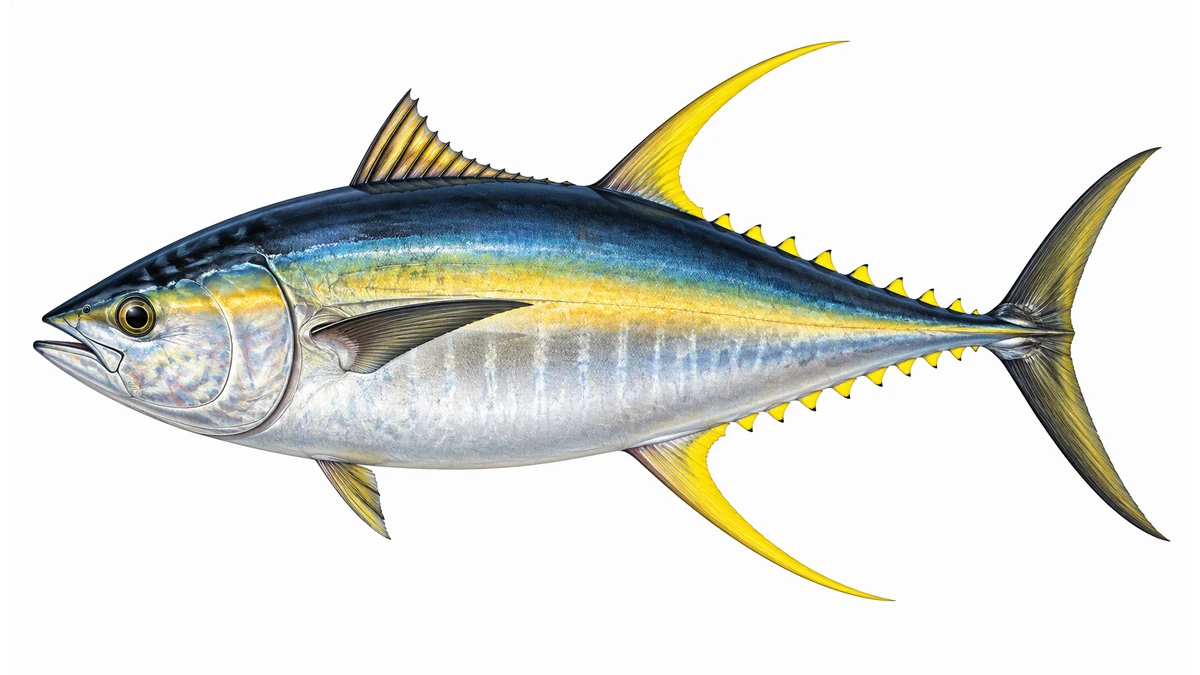
How to Catch Yellowfin Tuna
Yellowfin tuna are the offshore fish most anglers meet first, and for good reason. They are widespread, aggressive feeders, and built like missiles with a pair of absurdly long yellow fins that make them easy to name at the boat. A school of yellowfin smashing bait under diving birds is one of the great sights in saltwater fishing. Learning how to catch yellowfin tuna means finding warm blue water with bait, presenting something that looks like a fleeing sardine, and holding on through the first long run. For identification, range, and biology, read the full Yellowfin Tuna species profile; this guide is about catching them.
Best Time to Catch Yellowfin Tuna
The best time to catch yellowfin tuna is late spring through fall in U.S. waters, and year-round in the tropics and subtropics. Yellowfin track warm water, active from roughly 64 to 86°F (18 to 30°C) and best near 70 to 80°F (21 to 27°C). When the warm Gulf Stream water pushes inshore and the temperature breaks set up, the fish follow.
Time of day matters because yellowfin are visual hunters. They feed most actively at dawn and dusk, herding bait into tight balls before slashing through them. A calm morning with working birds is the classic yellowfin window; fish are up, bait is pinned, and the action is visible from a distance.
Weather and water color are the real forecast. Green water won't hold yellowfin; they want blue water, current edges, and temperature breaks. A flat, stable day after a blow often produces good weed lines and clean water, which is exactly when the fish concentrate. Watch sea surface temperature charts for breaks where cooler green water meets warm blue — those edges are where the offshore fleet finds fish.
Spawning runs year-round in tropical water with regional peaks in spring and summer, and growth is fast enough that yellowfin support heavy fishing pressure. For the angler, that means a long season rather than a narrow one.
Best Gear for Yellowfin Tuna
Yellowfin tuna are strong, fast, and relentless, so gear that works for inshore species will not survive the first run. School fish call for 30- to 80-pound class conventional tackle; giants demand heavier gear still.
| Component | Yellowfin-ready choice |
|---|---|
| Rod | 6–7 ft conventional stand-up rod matched to line class |
| Reel | 30–50 size two-speed conventional for school fish; 50–80 for giants |
| Main line | 50–80 lb braid or matched mono top shot |
| Leader | 40–100 lb fluorocarbon |
| Hooks | 5/0–7/0 circle hooks for live and dead bait; heavy J hooks where allowed |
| Extras | Harness, gloves, gaff or flying gaff, bleed bucket, ice, sea surface temperature charts |
A smooth, pre-set drag is the single most important piece of the setup. Yellowfin hit a trolled lure at speed and then peel line in long surges, and a jerky drag is how hooks pull and leaders break. Keep your hands off the spool and let the drag do the work.
The leader range from 40 to 100 pounds covers school fish to bigger models, and a fluorocarbon leader is worth the cost in clear blue water. Match the hook to the bait: a circle hook for live and dead bait improves hook placement, and a heavy J hook where the rules allow it is common for trolling.
For the fight itself, a harness takes the load off your arms and back during a long run. This is not a fish to muscle in with a high rod and a locked drag.
Best Bait for Yellowfin Tuna
The best bait for yellowfin tuna is a live baitfish — a sardine, pilchard, or blue runner — or a fresh dead bait fished on a circle hook. Yellowfin eat small pelagic fish and squid, and a lively bait that looks like a fleeing sardine is exactly what they are hunting.
Natural baits do the heavy lifting:
- Live sardines and pilchards. The top live baits. Free-lined or slow-trolled, they trigger the most aggressive strikes.
- Live blue runners. Bigger and tougher, these are excellent for larger fish.
- Fresh dead bait. A fresh sardine or mackerel on a circle hook works when live bait is hard to keep.
- Squid. A whole or strip squid is a reliable backup.
Artificial lures are the search and reaction tools:
- Skirted trolling lures. The standard way to cover water and find a school. Troll them at speed along temperature breaks and current edges.
- Cedar plugs. A classic tuna trolling lure that runs fast and triggers strikes.
- Poppers and stickbaits. When fish are up and crashing bait, casting a surface lure into the melee is the most exciting way to catch a yellowfin.
Chumming with cut bait and live sardines pulls fish to the boat and keeps them there. Once a school is located, casting live baits or poppers into the action is far more fun and often more effective than dragging lures past the fish.
Yellowfin Tuna Rigs
A yellowfin tuna rig has to do one of two things: run fast and far to find fish, or put a natural bait in front of a school that is already up. These setups cover both.
Skirted trolling rig. Run a skirted lure or a rigged cedar plug on a 40- to 100-pound leader behind the boat at trolling speed. The goal is coverage — troll along temperature breaks, current edges, and weed lines until a rod goes off. This is the search rig.
Live-bait circle-hook rig. Tie a 5/0–7/0 circle hook to a 40- to 80-pound fluorocarbon leader and nose-hook or back-hook a live sardine or pilchard. Free-line it behind the boat or slow-troll it. When the fish eats, let it load the rod before coming tight.
Pitch-bait rig. For fish that come to the boat on the chunk, keep a rod rigged with a circle hook and a live or fresh bait ready to pitch into the slick. This is how you convert chummed fish into hooked fish.
Popper rig. A stout conventional rod with a heavy popper on a 60- to 100-pound leader, for casting into surface feeds. Work it with a fast pop-and-splash to imitate a fleeing baitfish.
The through-line is a smooth drag and a leader long enough to survive the run. Set the drag before the fish eats, not during the fight.
How to Catch Yellowfin Tuna, Step by Step
- Find warm blue water. Look for temperature breaks, current edges, color changes, and weed lines. Green-to-blue edges are classic yellowfin ground.
- Watch the birds. Diving terns and working flocks mark bait pushed to the surface, with tuna underneath. Birds are free sonar offshore.
- Troll to locate. Drag a spread of skirted lures and cedar plugs at speed along the edges. Cover water until a rod goes off.
- Stop and cast. Once a school is located, stop trolling and cast live baits, poppers, or stickbaits into the action. This is the fun part and often the most productive.
- Chum to hold them. Toss cut bait and a few live sardines over the side to keep the school near the boat.
- Let it eat, then come tight. When a yellowfin takes a live bait, let it load the rod, then reel down and clear the line from the rail before the first run starts.
- Fight it from a harness. Keep the rod loaded, keep your hands off the spool, and let the boat chase the fish when you can.
- Bleed and ice immediately. Tuna flesh spoils fast. Bleed the fish at once and get it on ice to protect the meat.
That last step is not optional. Yellowfin are prized eating fish, and fast bleeding and chilling is the difference between good sashimi-grade flesh and soft, off-flavored fillets.
Where to Catch Yellowfin Tuna
Where to catch yellowfin tuna is about warm water and structure in the open ocean, roughly between 40 degrees north and 40 degrees south latitude. They are found across the Atlantic, Pacific, and Indian oceans and are absent or rare in the Mediterranean. In the western Atlantic they range from Massachusetts and Bermuda south through the Gulf of Mexico and the Caribbean to Brazil.
The fish track current edges, temperature breaks, seamounts, and floating structure. A break where 70-degree green water meets 78-degree blue water is classic yellowfin ground, and so is any weed line or drifting debris holding bait. In the Atlantic, the Gulf Stream edges off Florida and the Carolinas are prime; in the Pacific, Hawaii and the waters off Mexico produce big fish.
Yellowfin also associate with dolphins, whale sharks, and floating logs, and schools often mix with skipjack and bigeye. That association is why trolling under working birds is so effective: the birds mark a bait ball and the tuna are underneath it.
Small fish school right at the surface, often under birds or floating objects. Big adults can be far deeper, and many are caught on deep-drop jigs and on baits fished well below the boat. On calm days you may see the long sickle fins slicing the surface as fish cruise just under the skin of the sea — a giveaway worth chasing.
Yellowfin Tuna Regulations and Safety
Yellowfin rules depend on where you fish and which ocean you are in, so treat any number here as a snapshot to confirm.
In the United States, tunas in federal waters are managed by NOAA Fisheries under the highly migratory species (HMS) program, and most anglers need an HMS permit to target them, even on a private boat. There is generally no federal minimum size for yellowfin in the Atlantic recreational fishery, but state rules, bag limits, and reporting requirements vary and do change. In the eastern Pacific, closures and catch limits set through the Inter-American Tropical Tuna Commission affect when commercial and sport boats can fish.
Globally, yellowfin are managed by the regional tuna commissions — ICCAT in the Atlantic, IATTC in the eastern Pacific, WCPFC in the western Pacific, and IOTC in the Indian Ocean. The IUCN lists yellowfin as Least Concern worldwide, a far better position than the bluefin stocks, but the rules are not loose. As of 2025, check the current HMS and state regulations before you keep a fish.
Safety is mostly about the fight. A 100-pound yellowfin can peel line off a heavy reel in long, unstoppable surges, and careless anglers get hurt by a spinning handle, a rod butt in the ribs, or a leader that snaps under load. Keep your hands off the spool, brace the rod against your hip or a harness during the initial run, and let the drag work. At the boat, respect a green fish that may make one last vertical run — wear gloves, keep the leader short, and never wrap it around your hand.
There is one quieter risk: tuna flesh spoils fast and can develop scombrotoxin (histamine) if it is not chilled quickly. Bleed and ice the fish immediately. Large yellowfin from some tropical reefs can also carry ciguatera, so check local advisories where that is a known issue.
Common Mistakes and Yellowfin Tuna Tips
- Fishing green water. Yellowfin want blue water and temperature breaks. Read the charts before you run.
- Ignoring the birds. Working birds are the fastest way to find fish offshore. Keep binoculars handy.
- Locking the drag. A jerky or locked drag breaks line and pulls hooks. Set it smooth and pre-set.
- Hand on the spool. The first run will burn fingers. Keep hands clear.
- Trolling past a school. Once fish are up, stop and cast. Live bait and surface lures beat dragging lures.
- Skipping the ice. Bleed and chill immediately or ruin the meat.
- Too-light leader. Yellowfin have sharp vision and abrasive mouths. Use 40- to 100-pound fluorocarbon.
- Guessing at the rules. HMS permits, state limits, and closures change. Confirm before you fish.
FAQ
What is the best time to catch yellowfin tuna? Late spring through fall in U.S. waters and year-round in the tropics, when water sits in the 64–86°F range and ideally near 70–80°F. Dawn and dusk produce the best surface feeds.
What bait for yellowfin tuna works best? Live sardines, pilchards, or blue runners, or fresh dead bait on a circle hook. Skirted trolling lures find fish; live bait catches them.
What is the best yellowfin tuna rig? For searching, a skirted lure or cedar plug on a 40- to 100-pound leader. For catching, a live bait nose-hooked on a 5/0–7/0 circle hook with a 40- to 80-pound leader.
Can you catch yellowfin tuna from shore? Rarely. Yellowfin are open-ocean fish that follow bait schools and temperature breaks, so a boat is effectively required in nearly all places.
How big do yellowfin tuna get? Most rod-and-reel fish are 15 to 80 pounds and 30 to 60 inches fork length. A 150-pound fish is serious, anything over 200 pounds is a trophy, and the species can approach 400 pounds.
Do you need a permit for yellowfin tuna? In U.S. federal waters, most anglers need an HMS permit to target tunas, even on a private boat. State limits and reporting rules vary. Check NOAA and your state agency.
Learning how to catch yellowfin tuna is about warm blue water, working birds, and a smooth drag. Find the break, troll to locate the school, cast a live bait, and let the fish run — the yellowfin will do the rest.
Related Articles
- How to Catch Bluefin Tuna — the heavyweight cousin with an entirely different rulebook.
- How to Catch Mahi-Mahi — the colorful companion species on the same weed lines.
- How to Catch Cobia — inshore power for anglers working up from the bay.
- Bigeye Tuna — the deep-water look-alike, best told apart by fin length.
- All species profiles
About the author and how this was tested
About the author
FishermanGuy
Bank, boat and kayak angler · fishing, crabbing and shrimping since 2021
I buy the gear, fish it for a season and write down what failed. No sponsored verdicts, no free-sample flattery. Every rig on this page has landed fish in water I can point at on a map.
How this was tested
- Every rig gets at least six trips on the same water before it is published.
- Gear is bought at retail. Free samples are labelled in the first paragraph.
- Dates show first publication and the last time the page was updated.