Field notes
How to Catch Arctic Grayling: Flies, Rigs & Timing
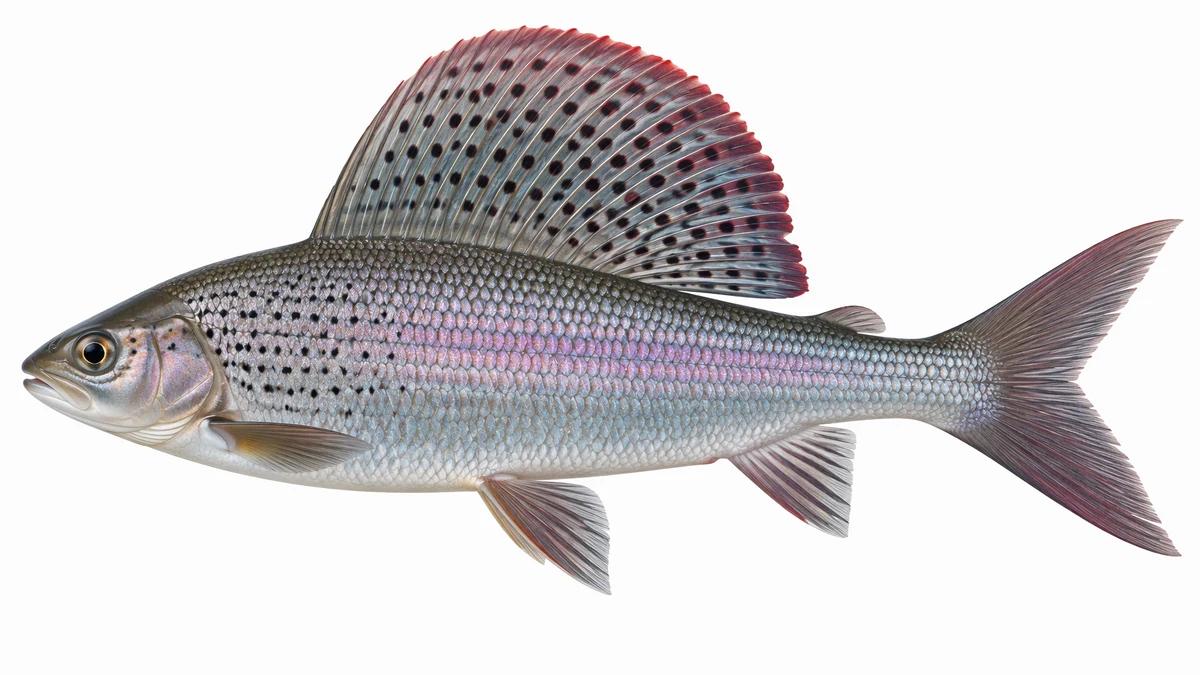
How to Catch Arctic Grayling
Learning how to catch arctic grayling is mostly a lesson in reading cold water. The fish is not large, rarely topping two pounds, and it is not especially wary by trout standards. What makes it special is where it lives and how it feeds: clean, cold, oxygen-rich rivers and lakes, with a habit of rising to the surface that makes dry-fly fishing feel easy. It is also fragile. Warm water and rough handling kill grayling quickly, so the best anglers are the ones who land fish fast and release them wet. This guide covers the best time to catch arctic grayling, the light tackle that suits them, the flies and rigs that work, and the rules that protect the last native populations in the lower 48. Read the full Arctic Grayling species profile for identification, range and the sail-fin anatomy.
Best Time to Catch Arctic Grayling
Grayling are built for cold water. They are active from roughly 43°F to 72°F (6–22°C), but they do best between about 45°F and 65°F. When a stream warms past the mid-60s, grayling seek springs, deep pools and shaded inflows, and they handle poorly. In the southern edge of their range, summer heat is the main limit on when and where you can fish.
Spring is prime. Grayling spawn from April into June, when water warms toward the mid-40s, moving upstream into small tributaries and gravel riffles. The weeks before and after the spawn are excellent, though fish on redds should be left alone. Late spring and early fall are the most comfortable windows for both fish and angler.
Summer fishing is a dawn-and-dusk game. Fish early, fish late, and look for cold inflows, spring creeks and deep pools where fish hold through the heat. In lakes, grayling cruise the shallows and inlets in spring and fall; in midsummer they move deeper or gather near cold water. Winter is a niche fishery. In rivers that stay open, slow presentations near deep holding water can work, but the fish are lethargic and the margins are thin.
Weather matters less than water temperature. An overcast day with a light ripple is ideal for dry flies, because the fish are less likely to see your leader. Bright, calm conditions push grayling down or make them selective. Watch for rising fish; a pod working the surface is the clearest sign that the fishing is on.
Best Gear for Arctic Grayling
Grayling tackle is light because the fish is small and the mouth is soft. Heavy gear hurts both the presentation and the fish.
| Component | River choice | Lake choice |
|---|---|---|
| Rod | 3- to 5-weight fly rod, 7'6"–9' | 4- to 5-weight fly rod, 9' |
| Reel | Simple click-and-pawl or disc drag | Same |
| Fly line | Weight-forward floating line | Floating line, plus a sink tip for deep water |
| Leader / tippet | 9–12 ft leader, 4X–6X tippet | Same, longer in clear water |
| Flies | Size 12–18 dries, nymphs and small streamers | Size 12–16 dries, nymphs, small streamers |
| Spinning option | 1/16–1/8 oz spinners on 4–6 lb line | 1/8 oz spinners and small spoons |
| Extras | Rubber net, forceps, polarized glasses | Same, plus a float tube or boat |
A 4- or 5-weight rod covers most situations, and a 3-weight is a joy on small creeks. Use a 9- to 12-foot leader tapered to 4X–6X, and go lighter in clear, slow water. Grayling have small, soft mouths, so a gentle hookset and a light tippet protect the fish and keep hooks from tearing out.
A rubber-mesh net is not optional. It keeps the fish in the water while you unhook it and reduces handling. Polarized glasses help you spot fish and read the drift, and forceps make quick work of small hooks. If you spin fish, a light rod with 4–6 lb line and small spinners or spoons is plenty.
Best Bait for Arctic Grayling
The best bait for arctic grayling is a small dry fly, and it is not close. Grayling are surface-oriented, and a well-drifted dry fly over a pool is the classic way to catch them.
Dry flies. A size 12–16 Adams, elk hair caddis, or small attractor pattern fished drag-free is the standard. Grayling rise readily, and the take is often a confident slurp rather than a subtle sip. In heavily fished water, go smaller and more natural.
Nymphs. When fish are not rising, a small pheasant tail, hare's ear or caddis pupa drifted below a strike indicator works. Grayling pick off nymphs in the current, and a dead-drift presentation is more important than the exact pattern.
Terrestrials. Ants, beetles and small grasshoppers are summer staples, especially along grassy banks and in lakes. A foam ant or beetle twitched on the surface can pull fish up from surprising depth.
Streamers and small fish imitations. Larger grayling eat small fish, and a small streamer or leech pattern swung through a pool can draw the biggest fish in the system.
Bait and lures. Where bait is legal, a small worm or a single salmon egg works. Small spinners and spoons catch fish, especially in lakes. Check the rules first, because many grayling waters, particularly in Montana, are fly or artificial-only.
Match the presentation to the water. In a slow glassy pool, use a long leader and a small fly. In a riffle, a slightly larger attractor is easier to track. In a lake, fishing the inlet or the drop-off with a slow retrieve beats blind casting.
Arctic Grayling Rigs
Grayling rigs are simple, and that is the point. The fish are eager, and a clean presentation beats a complicated one.
Dry-fly rig. A 9- to 12-foot leader tapered to 5X or 6X, with a size 12–16 dry fly. Cast upstream and slightly across, mend immediately, and let the fly drift drag-free over the lie. Watch the fly, not the line.
Dry-dropper rig. Tie a small nymph 12–18 inches below the dry fly. The dry acts as a strike indicator and still catches fish, while the nymph covers the fish holding just under the surface. This is the most versatile rig in grayling country.
Indicator nymph rig. A small yarn or foam indicator with a size 14–18 nymph below, set 2–4 feet deep depending on the water. Adjust the depth until the fly drifts at the fish's level.
Streamer rig. A sink-tip line or a weighted streamer on a floating line, swung through a pool and stripped slowly at the end. This is how to target the biggest grayling in a system.
Spinner rig. A 1/16–1/8 oz spinner on 4–6 lb line, cast across and retrieved slowly through pools and lake edges. Add a small swivel to control line twist.
Keep leaders long and knots small. In clear water, grayling can be leader-shy, and a heavy tippet or a bulky knot costs strikes.
How to Catch Arctic Grayling, Step by Step
- Find cold, clean water. Grayling hold in pools, riffles and current seams, often in schools. In lakes, check the inlet, the outlet and the shoreline drop-off.
- Watch for rises. A rising fish tells you where to cast and what stage of insect the fish are eating. Take a minute to observe before you make the first cast.
- Stay low and approach from downstream. Grayling are not as spooky as brown trout, but a shadow or a high rod tip still puts them down.
- Cast upstream and mend. Present the fly above the fish and let it drift down naturally. Mend immediately to keep the line off the current and the fly drag-free.
- Drift the fly through the lie. The most natural drift catches the most fish. If the fly drags, pick up and cast again rather than letting it swing.
- Set the hook gently. The mouth is small and soft. A smooth lift is enough; a hard strike tears the hook out or damages the fish.
- Land quickly. Use a rubber net, keep the fish in the water and unhook it with forceps. Do not play a grayling to exhaustion.
- Release wet and fast. Keep the fish in the net in the water, support it, and let it swim off. In warm water, skip the photo and release immediately.
Where to Catch Arctic Grayling
Arctic grayling live across the circumpolar north: Alaska, the Yukon and Northwest Territories, much of northern Canada, and across Siberia and northern Asia. In China, they occur in the Amur basin, including the Heilongjiang system. In the lower 48, native populations survive only in Montana, mainly in the Big Hole River basin.
- Cold rivers and streams. Look for gravel bottoms, good flow and clean, oxygen-rich water. Grayling hold in pools, riffles and seams.
- Spring creeks and cold inflows. These stay cold in summer and attract fish when the main river warms.
- Lakes and inlets. In spring and fall, grayling cruise the shallows and stream mouths. Fish the inlet and the drop-off.
- Small tributaries in spring. Spawning fish move upstream into gravel riffles. Leave active spawners alone.
- Montana's Big Hole basin. The last native lower-48 population, managed with strict rules.
Temperature sets the boundaries. Grayling need cold water, and they suffer when streams warm, silt up or lose shade. In the southern part of the range, that sensitivity makes them vulnerable to drought and a warming climate. In the north, the fishing is often remote, and the fish are abundant where the habitat is intact.
Arctic Grayling Regulations and Safety
A fishing license is required everywhere, and some jurisdictions add a stamp or special permit. Rules vary widely. Alaska and much of Canada manage grayling for sport and subsistence, with generous seasons, size limits and bag limits in many areas. Montana protects its native grayling, and the Big Hole and connected waters often have catch-and-release or artificial-lure-only rules. Check the Montana Fish, Wildlife and Parks regulations before you fish. As of 2025, do not assume a rule from one state or province applies to the next.
The agency that manages the water is the authority: the Alaska Department of Fish and Game, Fisheries and Oceans Canada, Montana Fish, Wildlife and Parks, or the relevant provincial or regional agency.
Safety has two halves. First, the fish. Grayling are sensitive to warm water and low oxygen, and they stress easily. Keep them in the water, use a wet hand or rubber net, and release them quickly. Avoid lifting a grayling by the jaw. Second, the place. Grayling water is often remote, cold and far from help. Weather changes fast, rivers run high with glacial silt, and bears are present across much of the range. Carry layers, tell someone your plan and follow local wildlife advice.
Common Mistakes and Arctic Grayling Fishing Tips
- Fishing warm water. Above the mid-60s, grayling are stressed and release poorly. Fish early, find cold inflows or target another species.
- Too heavy a tippet. In clear water, 3X spooks fish and tears soft mouths. Use 4X–6X.
- Letting the fly drag. A dragging dry fly looks wrong. Mend and recast rather than accept a bad drift.
- Striking too hard. The mouth is small and soft. A smooth lift sets the hook.
- Playing fish to exhaustion. Land grayling quickly. They do not have the reserves for a long fight.
- Dry hands and dry rocks. Wet your hands, use a rubber net and keep released fish in the water.
- Ignoring the rules. Montana's native waters are protected. Know before you go.
- Skipping the inlet in lakes. Grayling gather at stream mouths. Fish the inlet before you blind-cast the open water.
Grayling are a reward for fishing clean, cold places carefully. Watch for rises, drift a small fly naturally, set the hook softly and release the fish wet. That is how to catch arctic grayling. If you are planning a northern trip, pair this guide with how to catch chinook salmon for the big rivers and how to catch chum salmon for the fall runs.
FAQ
What is the best time to catch arctic grayling? Late spring through early fall, when water is about 45–65°F. Fish the spawning run in June, fish dawn and dusk in summer, and look for cold inflows when the main river warms.
What bait for arctic grayling works best? A small dry fly, such as an Adams or elk hair caddis, fished drag-free. Where bait is legal, a small worm or salmon egg works, and small spinners catch fish in lakes.
What is a good arctic grayling rig? A 9- to 12-foot leader tapered to 5X or 6X with a size 12–16 dry fly. A dry-dropper rig adds a small nymph below the dry and covers more of the water column.
How do you catch arctic grayling in a river? Cast upstream, mend immediately and drift a small fly drag-free through pools, riffles and seams. Stay low, set the hook gently and land the fish quickly.
Where do arctic grayling live? Across the circumpolar north: Alaska, northern Canada and Siberia. In the lower 48, native populations survive only in Montana's Big Hole River basin.
How big do arctic grayling get? Most adults are 8–15 inches. An 18-inch fish is large, and the biggest approach 5 pounds, though most weigh under 2 pounds.
Related Articles
- How to Catch Chinook Salmon — the biggest Pacific salmon, and a very different cold-water fight.
- How to Catch Chum Salmon — late-fall salmon that share northern water.
- How to Catch Northern Shrimp — a key forage item in cold northern seas.
- How to Catch Tarpon — a warm-water opposite to the grayling's cold rivers.
- How to Catch Brown Trout — trout tactics that translate directly to grayling water.
- Arctic Grayling species profile — identification, range and the sail-fin anatomy.
- All species profiles
About the author and how this was tested
About the author
FishermanGuy
Bank, boat and kayak angler · fishing, crabbing and shrimping since 2021
I buy the gear, fish it for a season and write down what failed. No sponsored verdicts, no free-sample flattery. Every rig on this page has landed fish in water I can point at on a map.
How this was tested
- Every rig gets at least six trips on the same water before it is published.
- Gear is bought at retail. Free samples are labelled in the first paragraph.
- Dates show first publication and the last time the page was updated.