Field notes
How to Catch Atlantic Cod: Gear, Bait and Rigs
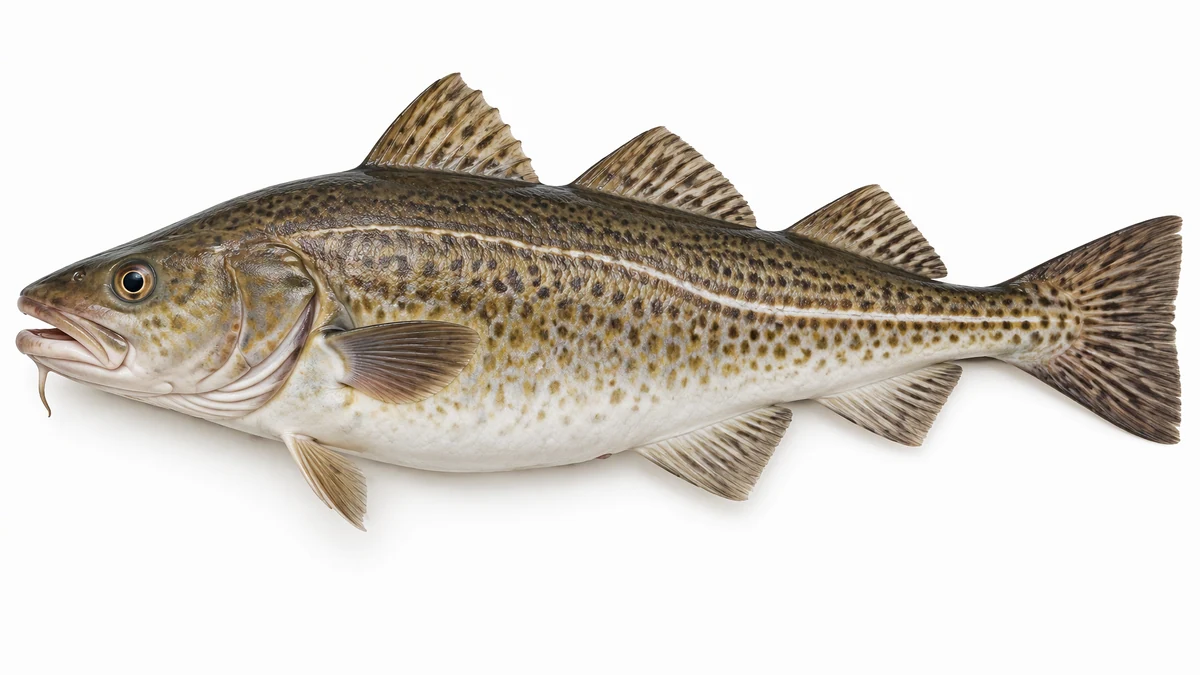
How to Catch Atlantic Cod
Atlantic cod is a fish with a history heavier than its bodyweight. It built ports, fed armies and then collapsed so completely off Newfoundland in 1992 that it became the standard warning about overfishing. For anglers, it remains one of the great bottom fights of the North Atlantic: a broad, heavy, big-headed fish that lives over wrecks, reefs and gravel banks and eats almost anything that bleeds. This guide explains how to catch Atlantic cod, from the winter spawning run to the drift over a wreck, along with the regulations that now shape every trip. Read the full Atlantic Cod species profile for identification, range and biology.
Best Time to Catch Atlantic Cod
Cod fishing splits into two very different seasons. In winter and early spring, mature fish gather to spawn, and the biggest specimens come within reach. In the northeast Atlantic, the Norwegian skrei run peaks off the Lofoten Islands in February and March, while many North Sea and UK fish spawn from January into April. In the western Atlantic, spawning runs through winter and spring.
The best time to catch Atlantic cod is low light: dawn, dusk and through the night. Cod feed heavily in dim conditions and use structure as an ambush line. On wrecks and reefs, the bite often switches on as the light fades, and a tide that is running hard but not ripping is better than slack water.
Autumn is the other strong window, when cod feed hard offshore before winter. Summer can be slower in shallow water, but fish still hold on deep wrecks and northern grounds. Water temperature sets the map: northern stocks are comfortable near freezing, roughly 2–10°C (35–50°F), while southern stocks sit at the warm edge of the range and are more sensitive to a warming sea.
Best Gear for Atlantic Cod
Cod tackle is heavy for a reason. A big fish in tide finds every snag, and a 30-pound cod on light gear is a lost rig and an exhausted fish. A 20- to 40-pound class boat rod is the practical starting point, with enough backbone to lift a fish away from wreckage.
| Component | Atlantic cod-ready choice |
|---|---|
| Rod | 6–7 ft boat rod, 20–40 lb class, fast tip and strong mid-section |
| Reel | Lever-drag or star-drag multiplier with 300+ yards capacity |
| Main line | 30–65 lb braid for depth, feel and abrasion resistance |
| Leader | 60–80 lb mono, or a heavy mono rubbing leader above the trace |
| Hook | 6/0 to 8/0 circle or heavy J-hook, depending on bait and rules |
| Terminal | 100–300 g pirk or lead; 150–400 g in strong tide |
| Extras | Rod holder, heavy grip, priest, cooler, spare traces |
Braid is the standard main line because it cuts current drag and telegraphs a bite in 100 feet of water. A long mono leader gives stretch and abrasion resistance at the business end. If you are drifting a wreck, carry plenty of spare traces; losing gear is part of the game.
On the artificial side, heavy pirks, large soft plastics on jig heads, metal spoons and shrimp flies all catch cod. A pirk is not just a lure; it is also the weight that gets your bait down. Many cod rigs combine the two, with a pirk on the bottom and a baited hook on a short trace above it.
Best Bait for Atlantic Cod
The best bait for Atlantic cod is fresh, smelly and durable. Squid, peeler crab, lugworm, mackerel strips and mussels all work from a boat or a shore mark. Cod hunt by scent as much as sight, and a bait that releases oil into the tide draws fish from a wide area.
- Squid. Tough, oily and easy to hook. A whole small squid or a strip of mantle is a reliable cod bait.
- Peeler crab. A premium bait in UK and Irish waters, especially in winter. Bind it to the hook with elastic.
- Lugworm. A big, juicy worm bait for shore and boat. Use several on a 6/0 hook.
- Mackerel strip. Fresh, bloody and effective. A flapper or a fillet strip works on wrecks.
- Mussels. A cluster of mussels stays on the hook and matches the food found on mussel beds.
- Cocktail baits. Squid and mackerel together, or crab and lugworm, give scent plus bulk.
Lures have their place. A heavy pirk jigged over a wreck triggers reaction bites, and big soft plastics work when cod are feeding on sandeels or herring. Shrimp flies catch fish on light gear, especially in Norway. When someone asks what bait for atlantic cod is best, the honest answer is: fresh natural bait for scent and staying power, artificials when fish are actively chasing baitfish.
Atlantic Cod Rigs
Two cod rigs cover most situations: a flowing trace for drifting, and a paternoster with a pirk for vertical fishing. Both are simple, and both are easy to rebuild on a moving boat.
Flowing trace (drift rig).
- Tie 30–65 lb braid to a heavy snap swivel.
- Add a 3–6 foot length of 60–80 lb mono as the hooklength.
- Slide a boom or a bead above the swivel to keep the lead away from the trace.
- Finish with a 6/0 to 8/0 hook and a big, fresh bait.
- Clip on a 100–300 g lead that just holds bottom as the boat drifts.
The flowing trace lets the bait move naturally in the tide, which is exactly what a cod expects. Keep the lead light enough to bump along the seabed without anchoring.
Paternoster with a pirk.
- Tie a strong three-way swivel to the main line.
- Add a short dropper to the pirk or lead, heavy enough for the depth and tide.
- Tie a 3–4 foot hooklength to the second eye and finish with a baited hook.
- Lower to the bottom, then lift the pirk a metre or two and work it in short, sharp lifts.
This is the classic Norwegian cod rig, and it does two jobs: it puts a flashing lure in front of the fish and a scented bait nearby. On a wreck, fish it vertically and keep contact with the bottom.
How to Catch Atlantic Cod, Step by Step
- Find structure. A wreck, reef, gravel bank, mussel bed or the edge of a sand patch. Cod sit where bait collects.
- Check the tide. Fish the hours around slack water or a steady run. A tide ripping through is hard to fish and often slow.
- Set up the drift. Note the wind and tide, then drift so the bait passes over the mark, not past it.
- Get down fast. Use enough lead to reach the bottom quickly and keep contact. In 100 feet of water, a slow fall wastes the drift.
- Work the bait. Lift the rod tip a metre, drop it back, and keep the lead ticking the seabed. Cod often take on the drop.
- Set the hook. A cod bite is usually a heavy thump or a rod that loads and stays loaded. Reel down and lift firmly rather than swinging.
- Fight it up. Pump the fish off the bottom, but keep steady pressure. A big cod will use its weight and the tide.
- Land and handle. Use a grip or support the belly. Watch the dorsal spines and gill covers.
- Measure and decide. Check the size limit before the fish goes in the cooler, and release big breeders if the rules require it.
From an anchored boat, fish uptide and let the scent trail work for you. From the shore in winter, fish deep water and rough ground after dark with a running ledger and a big bait. In both cases, low light and moving water beat a bright, calm midday.
Where to Catch Atlantic Cod
Where to catch Atlantic cod is mostly a question of depth, structure and cold water. The species ranges across the North Atlantic: from Greenland and the Canadian Maritimes, including the Grand Banks, down through the Gulf of Maine; and from the Barents Sea and Iceland through Norway, the North Sea, the Irish Sea and the Baltic.
- Wrecks. Metal structure holds baitfish and cod. Drift with a flowing trace and expect to lose gear.
- Reefs and rough ground. Rock and weed edges give cod an ambush line.
- Gravel banks. Sandeels and small fish gather over gravel, and cod follow.
- Mussel beds. A natural food source that holds fish through winter.
- Channel edges and tide lanes. Cod sit in the slack behind a bank and pick off food swept past.
Most fishing happens between 20 and 200 metres, though cod turn up shallower at night and deeper on some grounds. In summer, mature northeast Atlantic fish often move offshore and north; in winter they return toward spawning grounds. The western Atlantic stock stays closer to home but still shifts with temperature and bait.
Atlantic Cod Regulations and Safety
Cod is one of the most heavily managed fish in Europe, and the rules are the hard part of the trip. Under EU and UK rules, the minimum conservation reference size for Atlantic cod is generally 35 cm (about 14 inches) in the North Sea and many adjacent waters, but the Baltic, the Irish Sea and other areas have their own sizes, closures and bag limits.
ICES, the International Council for the Exploration of the Sea, has advised zero catches for several cod stocks in recent years, and authorities have responded with closed areas, reduced quotas and recreational restrictions. As of 2025, assume nothing. In England, the Marine Management Organisation (MMO) and CEFAS publish current sizes and closures; Marine Scotland covers Scottish waters; in Norway, the Directorate of Fisheries sets its own rules; in the EU, the relevant member state authority does the same. Check before you leave the house, not after you have a fish in the cooler. Last verified: November 2025.
Safety is about the conditions as much as the fish. Cod fishing often happens in winter, from small boats, in cold water. Wear a life jacket, check the forecast twice, and treat a capsize as a survival situation. On deck, the dorsal spines are stiff and the gill covers are sharp; wet your hands, support the belly, and use a grip on big fish. A knock on the head settles a fish quickly and protects both angler and catch.
Common Mistakes and Atlantic Cod Tips
- Fishing too light. A 20-pound cod in tide will find every snag. Use 20–40 lb class and heavy leader.
- Ignoring the drift. If the boat is not passing over the mark, you are fishing empty water.
- Too little lead. In deep water and tide, a slow fall means no contact and fewer bites.
- Striking at a thump. Cod often hook themselves against the lead. Reel down and lift.
- Fishing bright midday. Dawn, dusk and dark are better, especially in shallow water.
- Keeping fish without checking size. Cod rules change by area and year. Measure first.
- Rough handling. Dorsal spines and gill covers draw blood. Use wet hands and a grip.
- Skipping the forecast. Cold-water boat fishing is the real hazard, not the fish.
A few Atlantic cod fishing tips for tough days: downsize the bait when fish are pressured, but keep the scent strong; check the slack behind a bank rather than the front; and if the drift is too fast, anchor uptide and fish a running ledger. On wrecks, watch the sounder for fish sitting just off the structure, not only on it. Cod often suspend a few metres up, especially when baitfish are present.
FAQ
What is the best time to catch Atlantic cod? Winter and early spring for big spawning fish, and autumn offshore. Low light is best: dawn, dusk and night, on a steady tide.
What bait for atlantic cod works best? Squid, peeler crab, lugworm, mackerel strips and mussels. Use fresh, oily bait, and add a pirk or big soft plastic when cod are chasing baitfish.
What are the best atlantic cod fishing techniques? Drift wrecks and reefs with a flowing trace, or anchor uptide and fish a running ledger. Keep the lead on the bottom, work the bait in short lifts, and fish low light.
What is the best atlantic cod rig? A flowing trace for drifting, or a paternoster with a pirk for vertical fishing. Both use 60–80 lb leader and a 6/0–8/0 hook.
Where can you catch Atlantic cod? Wrecks, reefs, gravel banks and mussel beds in 20–200 m of cold North Atlantic water, from the Grand Banks and Gulf of Maine to Iceland, Norway, the North Sea and the Baltic.
How big do Atlantic cod get? Most rod-caught fish are 2–20 pounds. A 30-pound cod is a good fish, 50 pounds is a trophy, and the species maximum is about 96 kg (212 lb), according to FishBase.
Related Articles
- How to Catch Atlantic Herring — the forage fish that cod follow.
- How to Catch Turbot — another prized European bottom fish.
- How to Catch Lemon Shark — a warm-water shark for anglers chasing a very different fight.
- Atlantic Cod species profile — identification, range, diet and records.
- All species profiles
Atlantic cod is a fish of cold water and old rules. Learn the three dorsal fins and the chin barbel, respect the closures, and fish the structure where bait collects. Do that, and you earn one of the strongest bottom fights in the North Atlantic, plus a reminder of why the rules exist in the first place. That is how to catch Atlantic cod, and why the species still commands so much respect.
About the author and how this was tested
About the author
FishermanGuy
Bank, boat and kayak angler · fishing, crabbing and shrimping since 2021
I buy the gear, fish it for a season and write down what failed. No sponsored verdicts, no free-sample flattery. Every rig on this page has landed fish in water I can point at on a map.
How this was tested
- Every rig gets at least six trips on the same water before it is published.
- Gear is bought at retail. Free samples are labelled in the first paragraph.
- Dates show first publication and the last time the page was updated.