Field notes
How to Catch Tiger Shark: Night Reef Rigs & Tactics
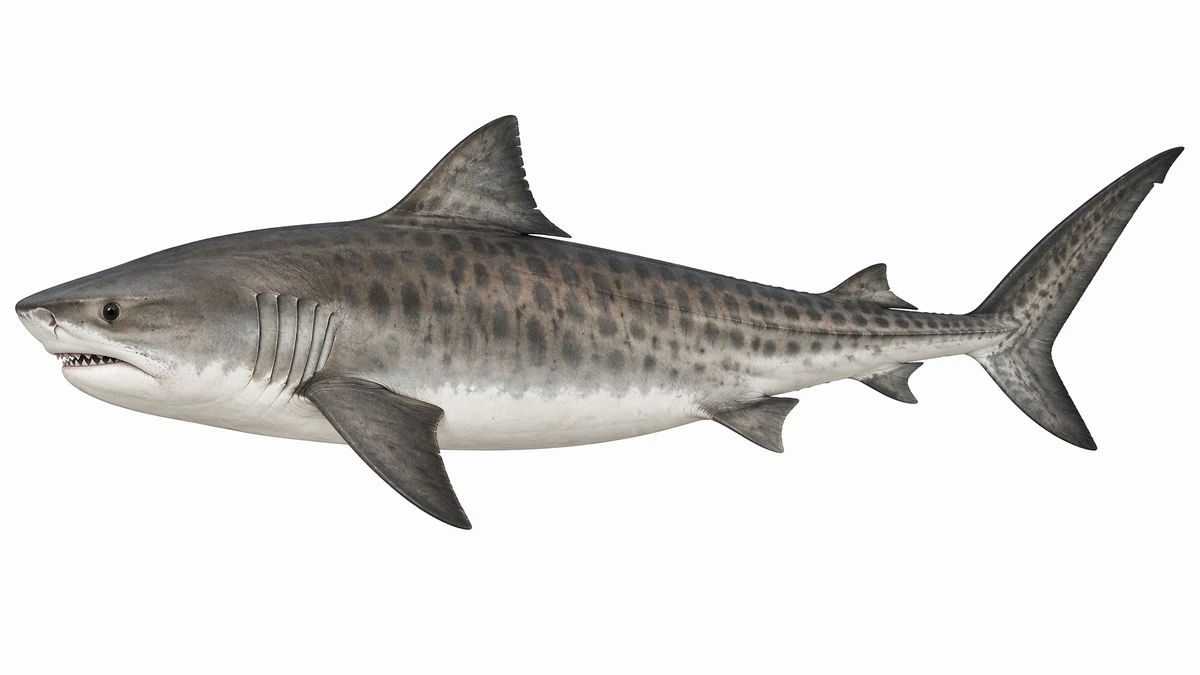
How to Catch Tiger Shark
Learning how to catch tiger shark is about preparing for a big, bold, night-hunting generalist that will test almost anything with its mouth. This is a broad-headed predator of reefs, channels, and drop-offs, fished with heavy tackle over a chum slick after dark, and it is almost always a release fish. For identification, teeth, and conservation status, read the full Tiger Shark species profile; this guide is about the fishing.
Best Time to Catch Tiger Shark
The best time to catch tiger shark is at night, during the warm months, in water above roughly 70°F (21°C). Tiger sharks are nocturnal hunters, most active at dusk and through the dark hours, often working shallow reefs and channels before cruising deeper water by day.
In subtropical latitudes, summer and fall put the fish in range and push them into higher latitudes as the sea warms. The seasonal window is set by water temperature, so watch sea-surface temperature and follow the warm water.
Tide matters as much as time. A moving tide that carries scent and bait to a reef edge, channel mouth, or drop-off concentrates sharks. Many anglers anchor or drift over a productive edge and let the chum slick and the current do the work. Stable, warm nights fish better than nights behind a passing front.
Best Gear for Tiger Shark
Tiger sharks are big, heavy, and stubborn, and a large one can weigh over 1,000 pounds. This is a job for the heaviest tackle you can comfortably fish, with a leader that survives teeth and structure.
| Component | Tiger shark-ready choice |
|---|---|
| Rod | Stand-up rod rated for 80–130 lb line |
| Reel | Large lever-drag reel with a powerful, smooth drag |
| Main line | 80–130 lb class mono or braid |
| Leader | Heavy wire or 400 lb mono leader |
| Hooks | Non-offset circle hooks, sized to the bait |
| Extras | Chum bag, long dehooker, bolt cutters, gloves |
The drag needs to be heavy enough to keep a hooked tiger out of the reef. Unlike a fast pelagic shark that runs, a tiger often bulldogs toward structure, and if it reaches the rocks or coral the fight is over. Set the drag strong and use heavy line to turn the fish.
Non-offset circle hooks are the standard for bait fishing. They catch in the corner of the jaw and make release far easier. Because tiger sharks are a release fish in most fisheries, carry a long dehooker and bolt cutters and have them ready before the first fish arrives.
Best Bait for Tiger Shark
The best bait for tiger shark is fresh, bloody, and big: a bonito flake, a tuna head, a whole mackerel, or a big chunk of jack, fished on a circle hook under a chum slick. The tiger is a scavenger as well as a predator, and a strong scent trail in warm water brings it in.
Natural bait.
- Bonito flake or whole bonito. Oily, bloody, and tough on the hook — a top tiger bait.
- Tuna heads and big chunks. Big, scent-heavy baits that hold up in current and appeal to large fish.
- Whole mackerel or a big jack chunk. Durable and full of oil, ideal on a heavy circle hook.
- What do tiger sharks eat? Fish, rays, sea turtles, sea snakes, dolphins, dugongs, seabirds, other sharks, crabs, lobsters, squid, carrion — and, famously, garbage. Match that open menu.
Lures. Tiger sharks are not a lure fishery in the usual sense. Bait and chum are far more effective, and a big fresh bait in a slick is the standard approach. The tiger's scavenging habit is exactly what makes a chum line work.
Chum is the engine. A steady slick of ground fish and oil pulls sharks upcurrent to the boat, where you present a bait naturally in the trail. Keep the fish interested and searching rather than stuffed.
Tiger Shark Rigs
A tiger shark rig is built around a heavy leader, a circle hook, and a drag strong enough to keep the fish off the bottom structure. These setups cover most fishing.
Heavy circle-hook reef rig. Run a heavy wire or 400 lb mono leader to a non-offset circle hook, and bait it with a bonito flake, tuna head, or big chunk of jack. Fish it near the bottom over a reef edge, channel, or drop-off, with the drag set heavy to turn the fish away from structure. This is the workhorse tiger rig.
Anchor-or-drift chum rig. Anchor or drift over a productive edge and lay a chum slick, then drift a fresh bait downcurrent in the trail on a heavy leader. This is the classic night pattern, and it is how most tiger sharks are hooked.
Shore-based surf rig. Anglers fishing from the beach use a heavy surf rod and a big bait, often deployed by kayak beyond the breakers, under the state rules that govern shore-based shark fishing. The leader is heavy, the hook is a large circle hook, and the fight from the sand is long and physical.
On every rig, use a non-offset circle hook, keep the leader short and controlled at the boat, and have the dehooker and cutters ready. Plan the release before the hookup — a tiger shark is not a fish to improvise with at the gunwale.
How to Catch Tiger Shark, Step by Step
- Pick the edge. Find a reef edge, channel, drop-off, or estuary mouth with moving water and bait. These are the seams tiger sharks patrol at night.
- Set up in the dark. Anchor or drift over the edge and hang a chum bag so the slick flows downcurrent through the area.
- Present the bait. Put a big fresh bait — bonito, tuna head, whole mackerel, or jack chunk — on a circle hook near the bottom in the slick, on a heavy leader.
- Wait for the take. A tiger often takes deliberately rather than screaming off. Let the fish load the rod, then come tight — do not strike hard on a circle hook.
- Turn it early. A hooked tiger will head for structure. Use strong drag and steady pressure to keep it off the reef from the first run.
- Settle in for a long fight. Expect a stubborn, heavy battle rather than a fast one. Pump and wind, and keep the line tight.
- Control the boat-side. Bring the fish alongside, not aboard. Keep the leader short and controlled, and keep your hands clear of the mouth.
- Release in the water. Use a long dehooker or cut the leader if the hook is deep. Never gaff a tiger you intend to release, never drag one onto a beach, and revive it alongside the hull until it swims off.
The handling is the highest-risk moment. A tiger shark near a hand or a leader can do serious damage with a single shake. Keep the fish in the water, keep your hands away from the mouth, and let the release tools do the work.
Where to Catch Tiger Shark
Tiger sharks live in warm water almost everywhere. They range through tropical and subtropical seas worldwide — the western and eastern Atlantic, the Indian Ocean, the Pacific, the Gulf of Mexico, and rarely the Mediterranean — around coral reefs, estuaries, harbors, and offshore banks.
Their habitat spans both shallow and deep water. They are common over reefs and sea grass beds in 10 to 100 feet, and they also move offshore and dive to roughly 1,000 feet (300 m). Warm water shapes the range; tiger sharks are most active in water above roughly 70°F (21°C), and their seasonal push into higher latitudes follows warming seas.
Tagging studies show both long-distance travel and strong site fidelity. Sharks tagged in Hawaii have crossed thousands of miles of open ocean, yet some populations return to the same reefs year after year. That fidelity makes local management possible — and local depletion dangerous. Look for reef edges, channels, drop-offs, and estuary mouths where bait and structure meet.
Tiger Shark Regulations and Safety
Tiger shark rules vary widely and change often, and the default is release. The species is listed as Near Threatened on the IUCN Red List, with fishing pressure, bycatch, and the fin trade as the main threats.
In U.S. Atlantic federal waters, tiger sharks are managed under NOAA's Highly Migratory Species rules, which set gear requirements, reporting obligations, and tight retention limits; finning is prohibited. State rules add more. As of 2024–2025, Florida requires a free shore-based shark fishing permit after an online course and restricts chumming and gear from beaches, while Hawaii has closed its state waters to shark fishing. Australia, South Africa, and many island nations limit or prohibit large-shark retention, and the Bahamas has protected all sharks since 2011. Check current NOAA, state, and local rules before every trip.
Safety deserves real attention. Tiger sharks are dangerous not because they hunt people but because they are large, curious, bold, and willing to test unfamiliar objects with their mouths. A tiger can be 14 feet long and weigh over 1,000 pounds, and it spends time in shallow reefs, channels, and harbors where people swim and dive. It is consistently ranked among the three sharks most often implicated in unprovoked bites on humans.
The precautions are practical. Do not swim at night in tiger shark country — this is a nocturnal hunter. Keep speared fish out of the water and away from your body, and avoid turtle cleaning stations, fish-cleaning docks, and any boat releasing chum. Do not corner a tiger against a reef, and do not try to touch one while diving.
Common Mistakes and Tiger Shark Fishing Tips
- Fishing in daylight. Tiger sharks are nocturnal. Fish the night and the hours around dusk.
- Too-light drag. A tiger heads for structure. Set the drag heavy enough to turn it off the reef.
- Weak leader. Serrated, notched teeth cut line. Run heavy wire or 400 lb mono.
- Striking a circle hook. Let the fish load the rod and come tight instead of swinging.
- Under-chumming or over-chumming. A steady slick draws fish; too much fills them.
- Gaffing or beaching a release fish. Keep the fish in the water and release it alongside the boat.
- Ignoring local closures. Hawaii and the Bahamas protect sharks; check the rules before you fish.
- Casual handling. A single shake near a hand is dangerous. Use a long dehooker and cutters.
FAQ
What is the best time to catch tiger shark? At night during the warm months, in water above roughly 70°F (21°C), on a moving tide over a reef edge, channel, or drop-off. Tiger sharks are nocturnal hunters.
What bait for tiger shark works best? A bonito flake, tuna head, whole mackerel, or big chunk of jack on a circle hook, fished near the bottom under a chum slick.
What are the best tiger shark fishing techniques? Anchor or drift over a reef edge at night with a chum slick, fish a big fresh bait on a heavy circle hook, set the drag strong to keep the fish off structure, and release it in the water.
Where can you catch tiger shark? Warm coastal and oceanic waters worldwide, from reefs and estuaries to open ocean, generally in water above about 70°F (21°C).
How big do tiger sharks get? Most adults are 10–14 feet and 400–1,000 pounds; the largest reach about 18 feet (5.5 m) and over 1,300 pounds (600 kg), though such fish are rare.
Can you keep a tiger shark? Retention is tightly limited or prohibited in many jurisdictions. Release unless local rules clearly allow otherwise.
Learning how to catch tiger shark comes down to fishing the night, chumming a reef edge, and turning a big fish away from structure — then letting a slow-growing predator go. Use heavy tackle, control the release, and fish only where it is legal.
Related Articles
- Tiger Shark species profile — identification, teeth, habitat, diet and record.
- How to Catch Bull Shark — the stocky, freshwater-tolerant member of the dangerous-shark trio.
- How to Catch Blue Shark — the slender offshore traveler of the open blue.
- How to Catch Shortfin Mako — the fastest shark in the sea.
- How to Catch Blue Marlin — the billfish benchmark of warm offshore water.
About the author and how this was tested
About the author
FishermanGuy
Bank, boat and kayak angler · fishing, crabbing and shrimping since 2021
I buy the gear, fish it for a season and write down what failed. No sponsored verdicts, no free-sample flattery. Every rig on this page has landed fish in water I can point at on a map.
How this was tested
- Every rig gets at least six trips on the same water before it is published.
- Gear is bought at retail. Free samples are labelled in the first paragraph.
- Dates show first publication and the last time the page was updated.