Field notes
How to Catch Blue Marlin: Tackle, Baits & Tactics
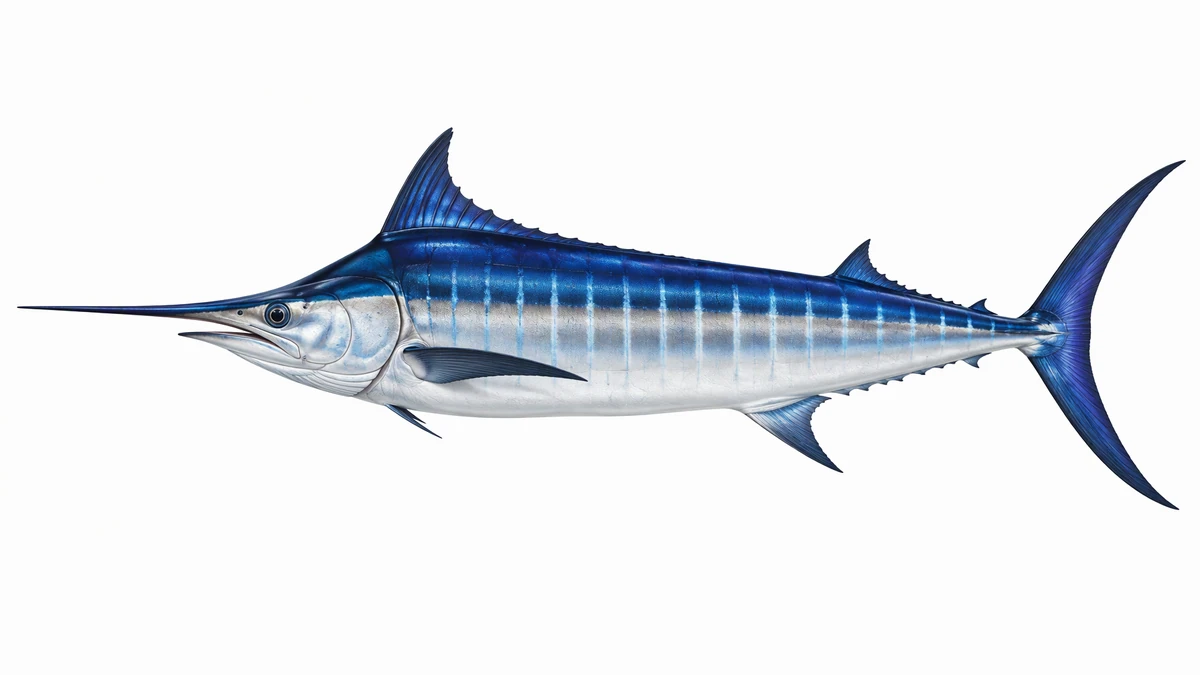
How to Catch Blue Marlin
Learning how to catch blue marlin is less about a single cast and more about building a system: read the water, run the right spread, raise a fish on a teaser, and get a bait in front of it at the one moment it will eat. It is a heavy-tackle, offshore game played on 50- to 130-pound class gear, usually in warm blue water far from land, and increasingly it ends in a release. For the biology, range, and identification, read the full Blue Marlin species profile; this guide is about the fishing.
Best Time to Catch Blue Marlin
The best time to catch blue marlin in the Atlantic is summer, when warm surface water and bait push fish along the current edges off the U.S. East Coast, the Gulf of Mexico, the Caribbean, and out toward the Azores. In the Pacific, the season follows the warm months region to region, from Mexico and Central America across to Hawaii and Japan.
Water temperature is the first filter. Blue marlin prefer roughly 75–86°F (24–30°C) at the surface, so find the warm side of a temperature break and fish it hard. Current lines, weed lines, and bait concentrations all tend to stack along those same edges, which is why a good sea-surface temperature chart does more for you than any lure.
Within a day, most crews favor the first hours after lines in and the last light of the afternoon, when bait is most vulnerable and marlin feed most aggressively. Stable weather feeds better than a passing front, though the buildup ahead of a change can fire the bite. Spawning happens in warm tropical and subtropical water during the warmer months, and those same warm zones hold the most fish.
Best Gear for Blue Marlin
Blue marlin are big, fast, and often fought for hours, so the gear is deliberately heavy. A fish that can weigh several hundred pounds and run hundreds of yards in its first surge will find every weak point in an outfit.
| Component | Blue marlin-ready choice |
|---|---|
| Rod | Stand-up or fighting-chair rod rated for 50–130 lb line |
| Reel | Large lever-drag reel, ideally two-speed, with a smooth, strong drag |
| Main line | 50–130 lb class mono, or hollow-core braid with a mono top shot |
| Leader | Heavy mono or wind-on leader stout enough to survive the bill and the boat |
| Hooks | Non-offset circle hooks for bait; heavy forged hooks on lures |
| Extras | Fighting chair or harness, teasers, release stick, dehooker, bolt cutters |
The reel's drag is the heart of the outfit. You need enough drag to pressure a big fish and stop it from emptying the spool, but it must stay smooth under load so the line does not part on a surge. Two-speed reels help you win line back when a fish is dogging deep. A fighting chair or a proper harness turns a battle of arms into a battle of legs and back, which matters when the fight runs long.
Circle hooks are now required in many bait fisheries and are simply better for release — they tend to lodge in the corner of the jaw instead of the gut. Carry a release stick, a long dehooker, and bolt cutters. A clean, fast release is a piece of gear, not an afterthought.
Best Bait for Blue Marlin
The best bait for blue marlin is what the fish already hunt: live skipjack and small tuna, plus large rigged baitfish and big skirted lures worked behind teasers. Marlin are ambush-and-pursuit predators that slash bait with the bill and then turn to swallow it.
Natural bait.
- Live skipjack or small tuna. Bridled and slow-trolled or pitched to a fish that has been teased to the boat, a live tuna is the gold standard.
- Rigged baitfish. Ballyhoo, mullet, and mackerel rigged to swim straight are trolled in the spread and skipped across the surface.
- What do blue marlin eat? Skipjack and yellowfin tuna, mahi-mahi, mackerel, small billfish, and squid. Match that menu and you are close.
Artificial lures.
- Skirted lures. Ilanders, plungers, and daisy chains run in the wake and create the commotion that pulls fish up.
- Teasers and dredges. Spreader bars and dredges fished below the surface raise fish without hooks, then the crew switches them to a pitch bait or a lure at the boat.
The teaser-and-switch is the core of modern marlin fishing. You raise the fish on something it cannot eat, then present a bait it can. That moment — the drop-back — is where most fish are won or lost.
Blue Marlin Rigs
A blue marlin rig is built around a heavy leader and a hook that will hold in a bony jaw while the fish jumps. These three setups cover most situations.
Live-bait circle-hook rig. Run a heavy mono leader to a non-offset circle hook sized to the bait, and bridle the bait through its nose or back with a rubber band or waxed thread so it swims naturally. Keep the hook exposed and the point clear. This is the standard for live skipjack and tuna.
Pitch-bait rig. A bridled bait on a short leader, kept ready in a live well or a bait tube, is dropped back to a fish that has shown on a teaser. The bait goes in the water already swimming, and you free-spool it back as the fish turns. No hard strike — let the fish load the rod.
Trolling-lure spread. Skirted lures on heavy leaders are positioned at different distances and positions in the wake — short and long riggers, flat lines, and a lure or two way back. Run a dredge or a spreader bar below to add flash and raise fish. Lure spreads cover water and find aggressive fish; baits close the deal.
On every rig, check the leader for nicks after each fish. A bill can roughen monofilament in a way that fails on the next run.
How to Catch Blue Marlin, Step by Step
- Find the right water. Look for a temperature break, a current edge, a weed line, or a bait concentration. Fish the warm, blue side where bait is stacked.
- Set the spread. Put teasers and dredges down, run lures and baits at staggered distances, and troll at a speed that keeps the baits swimming and the lures smoking.
- Watch the tease. A marlin will often rise on a teaser first, showing its bill and shoulders behind the bait. Call it early so the crew can react.
- Switch and pitch. Pull the teaser away and drop the pitch bait back into the fish's path, or feed it a lure. The bait goes in front of the fish, not on top of it.
- Let it eat. Free-spool and let the fish take the bait and turn. Resist the urge to strike — with a circle hook, the fish hooks itself as it comes tight.
- Come tight and set up. Reel down until the line comes taut, then lift into the fish. Get into the chair or harness before the first big run.
- Fight from the chair. Keep smooth, steady pressure, pump and wind, and never let slack into the line. A short fight is a healthy fish and a safe crew.
- Lead and release. At the boat, lead the fish by the leader or use a release stick, keep it in the water, and revive it alongside the hull until it kicks away.
The single most common error in the sequence is rushing the switch. Feed the fish properly, let it turn with the bait, and only then come tight. A marlin that feels resistance too early will drop the bait and leave.
Where to Catch Blue Marlin
Blue marlin live in the warm surface layer of the open ocean, generally 75–86°F, and they are highly migratory, following warm currents and bait. They range through the tropical and subtropical Atlantic, Pacific, and Indian oceans.
In the Atlantic, look from the U.S. East Coast and the Gulf of Mexico through the Caribbean and down to Brazil, and across to West Africa and the Azores. In the Pacific, the range runs from Mexico and Central America across to Hawaii and Japan and south through the islands.
Fish the edges, not the empty water. Current lines, temperature breaks, seamounts, drop-offs, floating debris, and weed lines all concentrate bait and the fish that follow it. Blue marlin are largely solitary — a boat usually raises one fish at a time, sometimes two — so good fisheries are measured in bites per day, not fish per hour. When you find the right edge, work it thoroughly before moving.
Blue Marlin Regulations and Safety
Blue marlin are a heavily managed, mostly release fishery, and the rules differ by ocean. In the Atlantic, the species is managed internationally by ICCAT and implemented in U.S. waters by NOAA Fisheries under the Highly Migratory Species program. As of 2024–2025, U.S. recreational rules include an HMS permit, a minimum size of roughly 99 inches lower jaw fork length for Atlantic blue marlin, a strict bag limit, mandatory reporting in some fisheries, and a prohibition on sale. Circle hooks are required in many bait fisheries. Pacific blue marlin are managed separately by regional fisheries bodies with their own size and retention rules. Always check the current ICCAT and NOAA measures — a rule from last season may not still apply.
Safety starts with the bill. A hooked marlin can drive a heavy, pointed bill through planking and people, and fish have jumped into cockpits and injured crews. Never stand in line with the bill, and never assume a tired fish is a safe fish.
The fight itself is a hazard. Long battles cause heat exhaustion, back injuries, and heart problems, so use a chair or harness, stay hydrated, and keep the drag smooth. For release, keep the fish in the water, lead it by the leader or a release stick, and never lift a large marlin by the bill for a photo. Large marlin also carry mercury like other big predators; public health agencies advise that pregnant women, nursing mothers, and young children avoid high-mercury fish.
Common Mistakes and Blue Marlin Fishing Tips
- Striking a circle hook. Do not swing like a bass angler. Let the fish load the rod and come tight.
- Fishing cold or featureless water. No temperature break, no current edge, no bait means no marlin. Find the edge first.
- Rushing the switch. Feeding a fish too fast or pulling the bait away early loses more fish than bad hooksets.
- Drag too light or too heavy. Too light and the spool empties; too heavy and the line parts on a jump. Set it smooth and let the fish run.
- Fighting too long. A short fight protects the fish you plan to release. Lean on it when you can.
- Lifting a fish by the bill. Support the body, keep it in the water, and release it properly.
- Misidentifying the fish. In the Indo-Pacific, check the pectoral fins to separate a blue from a black marlin before anyone decides what to do.
- No release plan. Decide who leads, who handles the camera, and who releases before the fish is at the boat.
FAQ
What is the best time to catch blue marlin? Summer in the Atlantic and the warm months in the Pacific, in water around 75–86°F. Within a day, fish the first hours of light and the last of the afternoon along current and temperature edges.
What bait for blue marlin works best? Live skipjack or small tuna, large rigged baitfish like ballyhoo and mackerel, and big skirted lures worked behind teasers. The teaser-and-switch to a pitch bait is the classic technique.
What are the best blue marlin fishing techniques? Troll a spread of lures and teasers to raise fish, then pitch a live or rigged bait to the one that shows. Use non-offset circle hooks, drop back properly, and let the fish hook itself.
Where can you catch blue marlin? In warm surface water of the Atlantic, Pacific, and Indian oceans, along current edges, temperature breaks, seamounts, and weed lines, from the U.S. East Coast and Caribbean to Hawaii and Japan.
How big do blue marlin get? Females commonly reach 300–600 pounds and can exceed 1,000; males rarely top 150–200 pounds. The IGFA all-tackle record is 1,402 pounds, caught off Brazil in 1992.
Do you keep blue marlin? Rarely. Most fisheries require or encourage release, sale is prohibited in the U.S. recreational fishery, and there are minimum sizes and strict bag limits.
Learning how to catch blue marlin comes down to finding warm blue water, running a spread that raises fish, and feeding one properly at the boat. Keep the tackle heavy, the drag smooth, and the release clean, and you give a once-in-a-lifetime fish the best possible ending.
Related Articles
- Blue Marlin species profile — identification, habitat, diet, size and records.
- How to Catch Shortfin Mako — the fast pelagic shark that shares marlin water.
- How to Catch Blue Shark — the ocean-crossing shark of the same offshore currents.
- How to Catch Bull Shark — the coastal heavyweight that tolerates fresh water.
- How to Catch Tiger Shark — the broad-headed generalist of warm reefs and channels.
About the author and how this was tested
About the author
FishermanGuy
Bank, boat and kayak angler · fishing, crabbing and shrimping since 2021
I buy the gear, fish it for a season and write down what failed. No sponsored verdicts, no free-sample flattery. Every rig on this page has landed fish in water I can point at on a map.
How this was tested
- Every rig gets at least six trips on the same water before it is published.
- Gear is bought at retail. Free samples are labelled in the first paragraph.
- Dates show first publication and the last time the page was updated.