Field notes
Giant Trevally: Identification, Habitat & Diet
Giant Trevally: Identification, Habitat & Diet
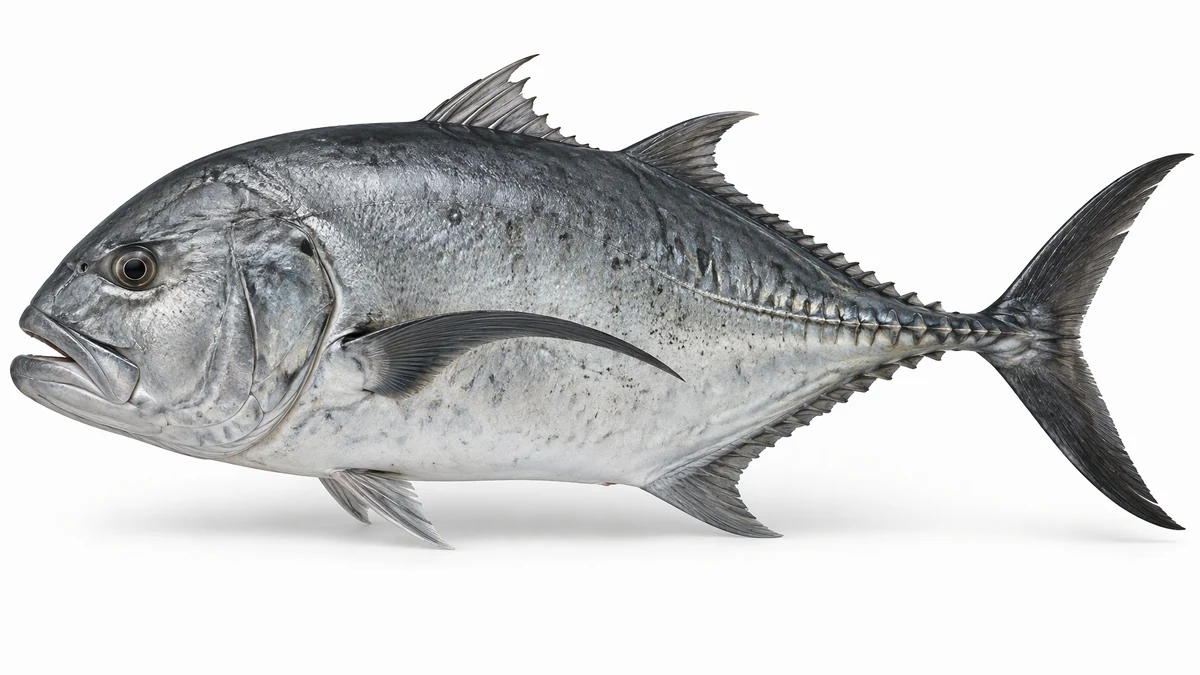
The giant trevally is the heavyweight champion of shallow tropical reefs. Known almost universally as GT, it is a broad-shouldered jack with a steep forehead, a mouth like a bucket, and a first run that has broken more than one angler's heart. It hunts in packs on reef flats and drop-offs, smashes poppers on the surface, and has been filmed leaping clear of the water to take seabirds in flight. This profile covers giant trevally identification, habitat, diet, size, the difference between giant and bluefin trevally, and how to catch one on lures, bait, and fly.
The species is Caranx ignobilis, and it ranges across the Indo-Pacific from East Africa to Hawaii. In Hawaii it is called ulua, and it is a culturally important fish and a serious shore-casting target. In the Seychelles, the Maldives, and the Coral Sea, it is the fish that made topwater GT fishing a global obsession.
Quick ID Card
| Field | Details |
|---|---|
| Scientific name | Caranx ignobilis |
| Common names | Giant trevally, GT, ulua, giant kingfish |
| Family | Carangidae (jacks and trevallies) |
| Typical size | 40–80 cm (16–31 in); 2–15 kg (4–33 lb) |
| Maximum size | About 1.7 m (5.6 ft) and 80 kg (176 lb) |
| Water type | Tropical reefs, atolls, drop-offs, channels, lagoons and flats |
| Active water temperature | Roughly 24–30°C (75–86°F) |
| Difficulty | Hard; powerful, tackle-testing and often caught in rough water |
| Best season | Warm months with strong current, especially around the full and new moon |
How to Identify a Giant Trevally
Giant trevally identification is built around the head, the body, and the fins. The fish has a deep, powerful body with a steep, almost blunt forehead and a large mouth that extends back toward the eye. The eye is large, the pectoral fins are long and sickle-shaped, and the tail is deeply forked. The tail base is armoured with a row of hard scutes, which is a classic jack feature and a reminder to keep your hands away from the wrist of the tail.
Colour changes with age and habitat. Small and medium fish are silvery-grey, with a darker back and a pale belly. Big adults can be almost black, especially on the back and head, and a large GT on a reef edge is often a dark, ominous shape rather than a bright silver fish. Juveniles sometimes show faint vertical bars, which fade with growth.
The mouth and forehead are the quickest way to separate a GT from other trevallies. A giant trevally looks heavy in the head, with a steep profile and a big jaw. The bluefin trevally, by contrast, is more streamlined and much more colourful.
Giant Trevally vs Bluefin Trevally
Giant trevally vs bluefin trevally is the comparison most reef anglers need. The bluefin trevally (Caranx melampygus) has electric-blue fins and blue speckles on the body, and it is a beautiful, aggressive fish in its own right. It is also smaller, with most fish under about 80 cm and a few kilograms, though exceptional specimens grow larger. The giant trevally is larger, darker, more heavy-headed, and its fins are usually dark rather than blue.
There are other trevallies, too: the bigeye trevally, the golden trevally, the brassy trevally, and the coachwhip trevally. Most are smaller and more silvery, with different fin shapes and body profiles. If a trevally has a steep forehead, a big mouth, dark fins, and a body that looks like it was built in a gym, it is probably a GT.
The name "GT" is used loosely in fishing circles, but it should be reserved for Caranx ignobilis. A 5 kg bluefin is a great fish; it is not a GT.
Is the Giant Trevally Dangerous?
Giant trevally are not venomous, but they are powerful enough to be dangerous on a boat. A big GT with a mouth full of treble hooks, thrashing on a deck, can do real damage to hands, shins, and rods. The scutes on the tail base are sharp, the gill covers are hard, and the fish is strong enough to pull a careless angler off balance.
Handle them with respect. Support the body horizontally, never lift a big fish by the jaw alone, and use a wet towel or a large landing net. Keep the fish in the water while you unhook it if you plan to release it. Use long-nosed pliers, crush the barbs on your lures if you can, and keep your fingers clear of the mouth.
The bigger hazard may be ciguatera. Large reef predators, including giant trevally, can accumulate ciguatoxins in their flesh, and eating a big GT from a contaminated reef can cause a serious and long-lasting illness. The risk varies by location, and local advisories are the best guide. In many tropical destinations, large GT are released rather than eaten, partly for conservation and partly for this reason. If you plan to keep one, check the local ciguatera advice first.
The ocean itself is the other risk. GT fishing often happens on exposed reef edges, in strong current, and in choppy water. Wear a life jacket, watch the swell, and never turn your back on the sea.
Where Do Giant Trevally Live?
Giant trevally habitat is the tropical Indo-Pacific, from the east coast of Africa and the Red Sea through India, Southeast Asia, Indonesia, the Philippines, Japan, Australia, and across the Pacific to Hawaii. The species is most associated with coral reefs, atolls, drop-offs, reef passes, channels, lagoons, and tidal flats. It is also found around offshore rocks, wrecks, and seamounts.
Within a reef system, GT use edges and current. They patrol the drop-off, ambush prey in the wash of a reef pass, and hunt across shallow flats on a rising tide. Juveniles are more coastal and often use estuaries, mangroves, and shallow bays as nursery habitat before moving out to the reef. That link between estuaries and reefs is one reason mangrove protection matters for the species.
Water temperature is a rough guide: GT are most active in warm water around 24–30°C, and they are more common in areas with strong tidal flow and good oxygen. They can be found from the surface down to deep reef slopes, but the classic fishing is shallow, fast, and visual.
Habits and Diet: What Do Giant Trevally Eat?
What do giant trevally eat? Fish, squid, crustaceans, and whatever else they can catch. GT are opportunistic predators with a broad diet, and they are famous for hunting in packs that herd baitfish against the surface or the reef edge. When a pack of GT starts smashing bait, the water turns white, and lures cast into the commotion rarely last long.
The bird hunting is the behavior that made GT famous. In places such as the Seychelles, giant trevally have been filmed and documented leaping from the water to grab juvenile terns and other seabirds resting on the surface. It is not a common behavior everywhere, but it is real, and it shows how high and how aggressively the fish will attack prey at the surface. The footage from Blue Planet II brought the behavior to a global audience.
When do giant trevally spawn? Spawning is tied to warm water and lunar cycles, and GT form aggregations at reef passes and channels, often around the full or new moon. The fish spawn in open water, and the eggs and larvae drift with the current. Juveniles settle in shallow coastal habitat, including estuaries and mangroves. GT grow slowly and can live for more than 20 years, which is why big fish are valuable as breeders and why many destinations now release them.
Size, Records and Regulations
How big do giant trevally get? Most fish caught by anglers are 40–80 cm and 2–15 kg. A fish over 1 m is a serious trophy, and the species can reach about 1.7 m and 80 kg. The IGFA all-tackle record is a fish of roughly 160 lb (72 kg); check the IGFA's current listing for the exact weight and line class.
The best bait for giant trevally is a live baitfish, a whole squid, or a fresh fish fillet fished near a reef edge or a channel. Live bait is deadly, but topwater lures are what most anglers come for. Big poppers, stickbaits, and pencil lures, retrieved with a steady, aggressive action, trigger explosive strikes. On the fly, large streamers and poppers work, provided the tackle can turn a powerful fish away from the reef.
How to catch giant trevally: find current, structure, and bait. Fish reef passes on a moving tide, cast lures tight to the edge of the wash, and retrieve fast enough to make the lure look like a fleeing fish. Use heavy spinning gear, 60–100 lb braid, and a 100–130 lb leader. Set the drag hard, keep the rod low, and apply maximum pressure early. A GT will try to cut you off on the reef, and the first ten seconds decide most fights.
Regulations vary by country and by fishery. In Australia, Queensland, the Northern Territory and Western Australia each set bag limits and size rules for trevallies, and some areas are closed to particular gears. In Hawaii, ulua fishing is regulated by the state, with size and bag limits for the species. In destinations such as the Seychelles and the Maldives, catch-and-release is the norm for big GT, and many lodges and guides operate strict release policies. Ciguatera advisories may also affect whether a fish can be kept. As of 2025, check the current rules with the relevant national or state fisheries agency, and follow local guide advice. Last verified: November 2025.
FAQ
How big do giant trevally get? Most are 40–80 cm and 2–15 kg. The species can reach about 1.7 m and 80 kg, and a fish over 1 m is a trophy.
What is the world record giant trevally? The IGFA all-tackle record is roughly 160 lb (72 kg). Check the IGFA listing for the current record and line-class details.
Where do giant trevally live? Across the tropical Indo-Pacific, from East Africa to Hawaii, on reefs, atolls, drop-offs, reef passes, lagoons, and flats. Juveniles use estuaries and mangroves.
What do giant trevally eat? Fish, squid, crustaceans, and sometimes seabirds. They hunt in packs and are famous for surface strikes.
Giant trevally vs bluefin trevally: what is the difference? Giant trevally are larger, darker, and heavier in the head, with dark fins. Bluefin trevally have electric-blue fins and speckles and are much smaller.
When do giant trevally spawn? They aggregate at reef passes and channels, often around the full or new moon, and spawn in open water. Juveniles settle in shallow coastal habitat.
What is the best bait for giant trevally? A live baitfish or fresh fish bait near a reef edge. Big poppers, stickbaits, and streamers are the classic artificial choices.
How do you catch giant trevally? Fish reef passes on a moving tide with heavy tackle, cast tight to the wash, retrieve fast, and apply maximum pressure from the first run.
Related Articles
- Mackerel — another fast pelagic predator of the same reef and blue-water edges.
- Sailfish — a very different tropical sportfish, but the same need for strong tackle and good boat work.
- Tarpon — a powerful inshore gamefish with a cult following among lure and fly anglers.
- All species profiles
The giant trevally is a fish of current, coral, and raw power. Learn the steep forehead and dark fins, fish the reef passes on a moving tide, and use tackle that can stop a freight train. Release the big ones, watch the ciguatera advice, and you will understand why GT fishing has become a global obsession.
Ready to catch one? Read our step-by-step guide: How to Catch Giant Trevally.
About the author and how this was tested
About the author
FishermanGuy
Bank, boat and kayak angler · fishing, crabbing and shrimping since 2021
I buy the gear, fish it for a season and write down what failed. No sponsored verdicts, no free-sample flattery. Every rig on this page has landed fish in water I can point at on a map.
How this was tested
- Every rig gets at least six trips on the same water before it is published.
- Gear is bought at retail. Free samples are labelled in the first paragraph.
- Dates show first publication and the last time the page was updated.