Field notes
How to Catch Sailfish: Teasers, Ballyhoo & Release
How to Catch Sailfish
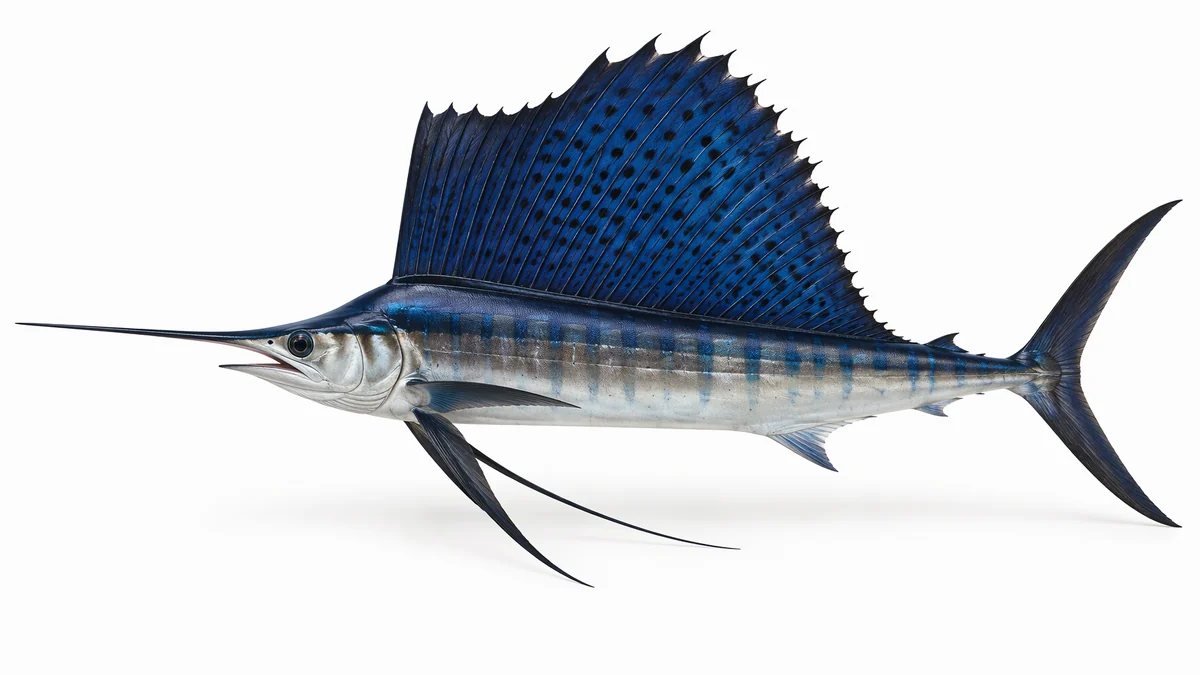
The sailfish is the flashiest fish in the billfish family, and one of the fastest animals in the ocean. It raises a huge, spotted dorsal fin like a boat sail, streaks across the surface in bursts that shred line off a reel, and cartwheels through the air when hooked. Few saltwater sights match a sailfish lit up in cobalt and silver, tail-walking behind a boat. Learning how to catch sailfish is about finding warm, clean water where bait is concentrated, then raising fish with teasers and presenting a bait they cannot refuse. For identification, range, and biology, read the full Sailfish species profile; here we focus on catching and releasing them.
Best Time to Catch Sailfish
The best time to catch sailfish is the warmer months, when the fish gather in warm surface water along current edges and bait concentrations. In the Atlantic, the season generally runs from late spring through summer and into fall, and spawning tends to peak in water around 75 to 80°F. In the Pacific, the warm months define the season in most areas.
Sailfish are comfort-driven. They favor water warmer than about 70°F, and they show up along temperature breaks, color changes, weed lines, and current rips where bait collects. A calm, warm day with a clean current edge and birds working bait is the classic setup. When the current is right and the bait is stacked, the fishing can be spectacular; when the water turns cold or dirty, the fish vanish.
Within a day, early morning is often best, especially as the sun comes up and bait becomes visible near the surface. But sailfish can be raised at any hour when the conditions are right, and a hot midday bite along a weed line is common in the tropics. Watch the current and the bait, and be ready — sailfish appear fast and disappear just as quickly.
Best Gear for Sailfish
Sailfish are not heavy, but they are violent, so the tackle needs to be smooth and reliable rather than brute-strong. A 20- to 30-pound class conventional outfit handles most fish.
| Component | Sailfish-ready choice |
|---|---|
| Rod | 6 ft 6 in to 7 ft medium-heavy conventional |
| Reel | 20- to 30-pound class conventional with a smooth, strong drag |
| Main line | 30- to 50-pound braid or mono |
| Leader | 40- to 80-pound fluorocarbon |
| Hooks | Sharp circle hooks for bait; singles on lures |
| Extras | Teasers, a pitch rod, gloves, a dehooker, a release flag |
A smooth drag is the single most important feature. Sailfish make short, violent runs, and a jerky or under-set drag either breaks line or pulls hooks. Set the drag properly before the strike and let the fish run against pressure rather than locking down.
Teasers do a lot of the work. Dredges and spreader bars raise fish from a distance, and a pitch bait or a switch to a fly finishes the job. Many sailfish boats run a spread of teasers with a pitch rod rigged and ready, so the angler can drop a bait back the moment a fish shows. A sharp circle hook reduces gut-hooking, and gloves and a dehooker make release faster and safer.
Best Bait for Sailfish
The best bait for sailfish is a rigged ballyhoo, a small skipjack or tuna, or a live baitfish drifted or slow-trolled through the zone. Sailfish feed on small, fast, schooling prey, and a bait that looks alive is what triggers a strike.
Natural bait is the foundation of most sailfish fishing.
- Rigged ballyhoo. A halfbeak rigged to swim straight and skip on the surface is the classic sailfish bait in the Atlantic. It matches the flying fish and ballyhoo the fish naturally eat.
- Live baitfish. A live sardine, anchovy, or small blue runner drifted or slow-trolled is deadly, especially when pitched to a raised fish.
- Small skipjack or tuna. A small tuna bait draws bigger sailfish and is a staple in places like Guatemala.
- Squid. Squid is a useful bait when the fish are feeding on it and other bait is scarce.
Artificial presentations raise and catch fish too.
- Trolled skirted lures. Small skirts and jets catch sailfish, especially when run in a spread with teasers.
- Dredges and teasers. These do not hook fish directly; they raise them, and then a bait or a fly is pitched.
- Flies. Sailfish are a favorite fly-rod target in places like Guatemala and Mexico, where fish can be teased close and cast to.
Teasers are the secret to consistent sailfish action. They create the illusion of a bait school and pull fish into range, where a pitched bait or a well-placed fly can finish the job.
Sailfish Rigs
A sailfish rig is built around raising a fish and then presenting a bait cleanly. These cover the main setups.
Rigged-ballyhoo trolling rig. Rig a ballyhoo with a pin and a chin-weight so it swims straight and skips on the surface, then run it behind a skirt or naked on a fluorocarbon leader. This is the standard Atlantic sailfish bait, and it can be trolled or pitched.
Live-bait pitch rig. A circle hook on a fluorocarbon leader, with a live baitfish ready on a pitch rod. When a teaser raises a fish, drop the bait back and let it swim. This is the most exciting and effective way to catch sailfish on bait.
Teaser-and-switch rig. Run a spread of teasers — dredges, spreader bars, or hookless lures — to raise fish, then pull the teaser away and present a bait or a fly where the fish last saw it. This is how most high-volume sailfish boats operate.
Fly rig. A large streamer fly on a strong leader, cast to a teased fish. The hook is usually a single, and the fight is on light tackle. It is a specialist game, but sailfish are among the most accessible billfish on a fly.
Set your drag before the strike, keep your leaders fresh, and have a dehooker and gloves ready. Sailfish release is the norm, so the rig should make a fast, clean release easy.
How to Catch Sailfish, Step by Step
- Find the right water. Look for warm, clean blue water, a current edge, a color change, a weed line, or birds working bait. Sailfish are where the bait is.
- Set the spread. Run teasers and a couple of baits or lures at different distances. The goal is to raise fish and keep them interested.
- Watch the teasers. A sailfish will often show on a teaser before it takes a bait. Be ready to pitch the moment a fish appears.
- Pitch the bait. When a fish rises, drop a live bait or a rigged ballyhoo back and let it swim naturally. Do not over-present; let the fish commit.
- Let it eat. Give the fish a moment to take the bait, then come tight with a smooth sweep. On a circle hook, do not swing hard.
- Fight with the boat. Sailfish are fast and aerial. Keep the drag smooth, chase the fish with the boat to take pressure off the leader, and keep your hands clear of a spinning spool.
- Release it right. Keep the fish in the water, use a dehooker or cut the leader close, and revive it alongside the boat before letting go. Support the body horizontally if you lift it for a photo, and keep it out of the water only for a few seconds.
The best sailfish anglers are patient and quick at the same time. They wait for the fish to commit, then present the bait cleanly and let the fish do the rest. The strike is a blur; the release is the reward.
Where to Catch Sailfish
Where to catch sailfish is the warm surface layer of the open ocean, in the Atlantic, Pacific, and Indian oceans. They are tropical and subtropical fish, generally found in water warmer than about 70°F, and they are highly mobile, following bait and current edges rather than holding on structure.
In the Atlantic, the species ranges from the U.S. East Coast and Gulf of Mexico down through the Caribbean to Brazil, and across to West Africa. In the Pacific, they occur from Mexico and Central America across to Asia and Australia. They are usually a surface-to-upper-water fish, though they will dive when chasing bait or escaping pressure.
Sailfish are not strictly offshore. They often appear over reefs, shelf edges, and current rips within reach of smaller boats, which is part of why they are so popular. Work the temperature breaks, color changes, weed lines, and current edges where bait concentrates. When you find bait and birds stacked on a clean edge, stay with it and make repeated passes rather than running off in search of another.
Sailfish Regulations and Safety
Sailfish regulations vary widely by country and state, and they are getting stricter. In the U.S. Atlantic, billfish are managed under the Highly Migratory Species program, which requires an HMS permit for recreational vessels targeting them. Sale of sailfish is prohibited in the recreational fishery, and several states — Florida most notably — require release of sailfish. The International Commission for the Conservation of Atlantic Tunas sets the international framework for Atlantic billfish, and NOAA Fisheries implements it domestically. Rules on gear, permits, and retention change, so check the current NOAA and state regulations before you fish.
On safety, sailfish are not venomous and have no cutting teeth worth worrying about — their mouths are lined with small, rasp-like teeth. The danger is the bill and the speed. A hooked sailfish jumps, slashes, and sometimes comes into the boat, and that long, pointed bill can open a serious wound. Keep your face and hands clear of the bill, wear gloves when you handle the leader, and never lift a sailfish by the bill alone. If you bring one aboard for a photo, support the body horizontally and keep the fish out of the water for only a few seconds.
The other risk is line burn and tackle failure. Sailfish are not heavy, but they are violent. A screaming drag, a loose shirt, or an ungloved hand near a spinning spool is a recipe for a burn or a cut. Set the drag properly before the strike and keep the boat moving toward the fish to take pressure off the leader. Sailfish are excellent on the table, but in most of the sport fishery they are released. Treat a sailfish as a release fish unless local rules and your own plans say otherwise.
Common Mistakes and Sailfish Tips
- Over-presenting the bait. When a fish rises, let the bait swim naturally. Overworking it spooks the fish.
- Swinging hard on a circle hook. Let the fish load the rod and come tight. A hard hookset pulls circle hooks.
- Setting the drag too tight. Sailfish make violent short runs. A smooth, properly set drag is essential.
- Ignoring the teasers. Teasers raise fish. Watch them closely and be ready to pitch.
- Handling the bill carelessly. The bill is dangerous. Keep it away from faces and hands, and control the fish first.
- Keeping a fish you should release. In many places, sailfish must be released. Know the rules before you go.
- Skipping the revive. A released sailfish needs to be revived alongside the boat before it swims off.
- Fishing dirty or cold water. Sailfish want warm, clean blue water. If the water is wrong, move.
FAQ
What is the best time to catch sailfish? The warmer months, when fish gather in warm surface water along current edges. In the Atlantic, late spring through fall; early morning is often best, though fish can be raised any time.
What bait for sailfish works best? A rigged ballyhoo, a live baitfish, or a small skipjack or tuna, pitched or slow-trolled. Teasers raise fish, and a fly works in specialist fisheries.
What are the best sailfish fishing techniques for beginners? Run a spread of teasers to raise fish, then pitch a live bait or rigged ballyhoo and let it swim. Keep the drag smooth and plan to release.
Can you catch sailfish from shore? No. Sailfish are open-ocean fish that require a boat, though they often appear within reach of smaller boats along current edges.
How big do sailfish get? Most are 40 to 130 pounds with a 6- to 8-foot body. Fish over 150 pounds are large, and the biggest certified fish reach the low 200s.
Learning how to catch sailfish is about finding warm, clean water, raising fish with teasers, and presenting a bait cleanly. Learn the sail, learn the rules, and plan on letting most of them go — the jump is the point, and a released sailfish lives to put on the show again.
Related Articles
- How to Catch Swordfish — a deep-water billfish with a flat, sword-like bill.
- How to Catch Skipjack Tuna — a favorite bait and bycatch around sailfish water.
- How to Catch Albacore Tuna — a fast pelagic fish found along similar current edges.
- Blue Marlin — the heavyweight cousin with a short, stiff dorsal fin.
- Mahi-Mahi — a warm-water surface fish often found near the same weed lines.
About the author and how this was tested
About the author
FishermanGuy
Bank, boat and kayak angler · fishing, crabbing and shrimping since 2021
I buy the gear, fish it for a season and write down what failed. No sponsored verdicts, no free-sample flattery. Every rig on this page has landed fish in water I can point at on a map.
How this was tested
- Every rig gets at least six trips on the same water before it is published.
- Gear is bought at retail. Free samples are labelled in the first paragraph.
- Dates show first publication and the last time the page was updated.