Field notes
How to Catch Skipjack Tuna: Light Tackle, Fast Action
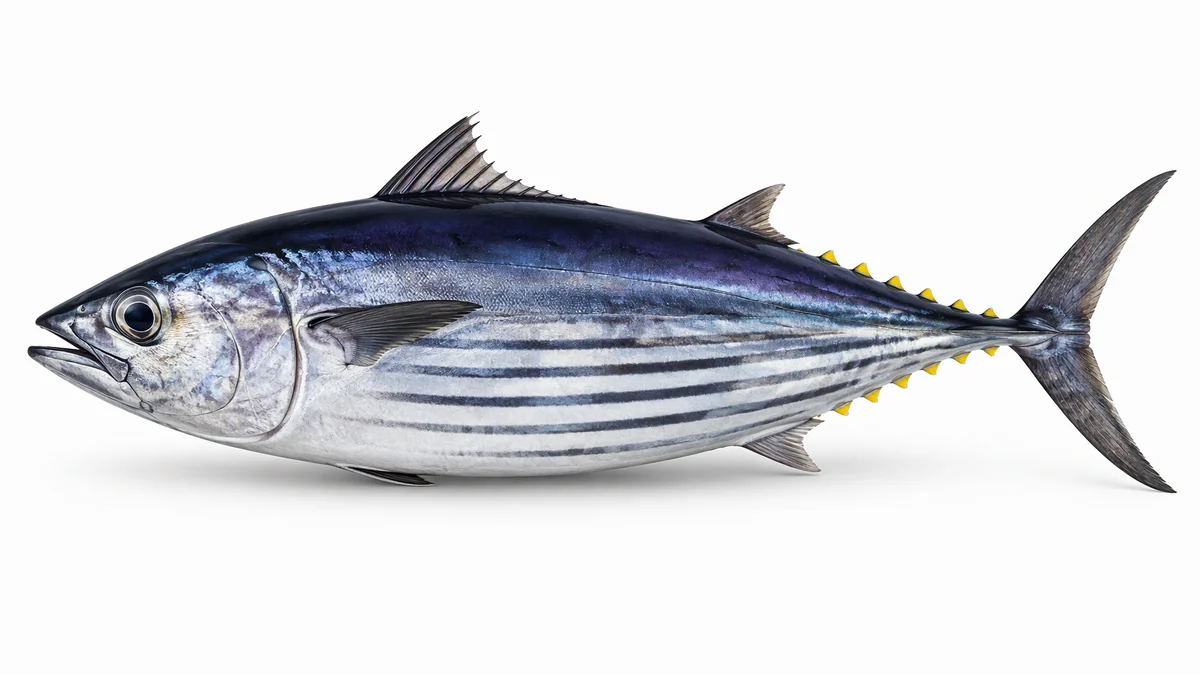
How to Catch Skipjack Tuna
The skipjack tuna is the most abundant tuna in the ocean and the one most people eat without ever seeing it whole. It is the striped, fast-growing fish behind most canned light tuna and a large share of the world's katsuobushi, and in Hawaii it is a favorite of surface-fishing anglers under the name aku. It is smaller than its famous cousins, but pound for pound it may be the most fun tuna to catch: quick, acrobatic, and willing to smash a surface lure. Learning how to catch skipjack tuna is mostly about finding the birds and bait, then fishing light and fast. For identification, range, and biology, read the full Skipjack Tuna species profile; here we focus on catching them.
Best Time to Catch Skipjack Tuna
The best time to catch skipjack tuna is whenever the surface schools are up and feeding, which in the tropics means essentially year-round. Skipjack are warm-water fish that gather in huge numbers near the top of the water column, often under working birds or around floating objects. When you find a school that is slashing bait, timing barely matters — you will get bit.
In warm temperate seas, summer and fall bring skipjack into range, and that is when the fishery is most consistent. Water temperature is a useful guide: skipjack are comfortable from roughly 64 to 86°F, and they rarely range far into cold water.
Within a day, early morning and late afternoon are often the best windows, when bait is pushed toward the surface and birds are actively hunting. But skipjack are opportunists, and a school that is up at noon will feed at noon. Watch the birds, the foam, and the nervous water, and fish the signs rather than the clock.
One more timing note: skipjack spawn year-round in the tropics, mature at about one year old, and rarely live beyond seven or eight years. That fast life cycle is why the stock stays healthy under heavy fishing, and why you can fish for them without the guilt that comes with a long-lived bluefin.
Best Gear for Skipjack Tuna
Skipjack are small, but they are fast and acrobatic, and light tackle is the whole point. A 10- to 30-pound class spinning or conventional outfit is plenty for most fish and makes a 5-pound skipjack feel like a much bigger one.
| Component | Skipjack-ready choice |
|---|---|
| Rod | 7 ft medium spinning or light conventional rod |
| Reel | 3000–5000 size spinning reel or a light conventional |
| Main line | 15- to 30-pound braid |
| Leader | 20- to 40-pound fluorocarbon |
| Hooks | Small circle or J hooks; single hooks on lures where possible |
| Extras | Poppers, stickbaits, small metal jigs, trolled feathers, ice |
Braid gives you casting distance and a direct connection, and it lets you rip a small popper back through a school with authority. A fluorocarbon leader adds a little abrasion resistance and, more importantly, hides the line from fish with good eyesight. In clear water, a lighter leader gets more bites.
The fun part of skipjack fishing is that you do not need heavy gear. A medium spinning rod with a small surface lure is enough to turn a boiling school into the best light-tackle action in saltwater. Keep a pair of pliers and a pair of glasses handy — a hooked skipjack can throw a small hook or a lure back toward the boat.
Best Bait for Skipjack Tuna
The best bait for skipjack tuna is a live anchovy or sardine, or a small strip of fresh fish. Skipjack are aggressive and not picky, but they respond best to something that looks alive and moves fast.
Natural bait works when you are on a school and want to keep it around.
- Live anchovies and sardines. A live bait on a small circle hook, fly-lined into the chum, is deadly when the school is up.
- Fresh fish strips. A small strip of fresh fish on a hook works when live bait is scarce and gives off scent in the chum line.
- Chunks. Cut bait tossed behind the boat keeps fish interested and pulls them into casting range.
Artificial lures are where skipjack fishing shines.
- Small poppers. A popper ripped across the surface draws explosive strikes from skipjack. This is the classic light-tackle game.
- Stickbaits. Walk-the-dog style surface lures trigger reaction bites from fish chasing bait.
- Metal jigs. Small casting jigs sink fast and catch fish that are feeding below the surface boil.
- Trolled feathers. Small feathers and skirts cover water and find schools, especially when you are running between bird piles.
Skipjack have good eyesight and can be leader-shy in clear water, so natural presentations and lighter leaders get more bites. When the school is really up, though, they will hit almost anything that moves.
Skipjack Tuna Rigs
A skipjack tuna rig is simple, because the fish do most of the work. These cover surface casting and bait fishing.
Popper rig. Tie a small popper to a short fluorocarbon leader with a loop knot for maximum action. Cast into the boil, let it sit for a beat, then rip it back in short, sharp pops. The strike usually comes on the pause or the first rip.
Live-bait fly-line rig. A small circle hook on a fluorocarbon leader, with a live anchovy or sardine and no weight, lets the bait swim naturally in the chum. This is the setup for when the school is up and you want a sure hookup.
Metal-jig rig. Tie a small casting jig to a short leader and fish it fast — rip it up, let it flutter, and rip again. It sinks quickly and catches fish that are feeding below the surface action.
Trolling feather rig. For searching, run small feathers or skirts behind the boat on a modest leader. This is not subtle, but it finds fish quickly when you are running between bird piles.
Keep leaders short and simple. Skipjack are not leader-shy enough to need elaborate rigs, and a clean, unobstructed presentation casts better and hooks more fish.
How to Catch Skipjack Tuna, Step by Step
- Find the birds. Working terns, boobies, and other seabirds are the best skipjack sign. Head for the flock and watch for the boil underneath.
- Look for the foam. A school slashing bait turns the surface white. Approach quietly and stay outside the boil so you do not spook the fish.
- Cast into the action. Put a popper or a jig past the edge of the boil and work it back through the fish. Accuracy beats distance here.
- Rip the lure. Skipjack react to speed. Short, sharp pops and fast retrieves trigger strikes better than slow, subtle presentations.
- Switch to bait if needed. If the fish get fussy, stop the boat, start a chum line, and fly-line live baits into the school.
- Fight light and fast. Use the rod to turn the fish and let the drag work. Skipjack are acrobatic and will jump, so keep a little slack in reserve.
- Bleed and ice immediately. Skipjack have dark, strong flesh that spoils fast. Bleed each fish right away and get it on ice.
The whole game is mobility. Find the birds, make a few casts, and when the school sounds, run to the next flock. Skipjack fishing is a series of bursts, and the best anglers keep moving to stay on fish.
Where to Catch Skipjack Tuna
Where to catch skipjack tuna is the warm surface water of the tropical and subtropical oceans, worldwide. They are found across the Atlantic, Pacific, and Indian oceans, and they reach into warm temperate seas in summer. They are the most widely distributed and most abundant of the tunas.
Skipjack are surface-oriented. They school in huge numbers near the top of the water column, often around current edges, temperature fronts, seamounts, and floating objects. They associate heavily with birds, dolphins, whales, and drifting logs, and they are the classic fish found under a flock of working terns. In the eastern Pacific, skipjack are famous for schooling beneath dolphins.
In the Atlantic they occur from New England south through the Gulf of Mexico and the Caribbean to Brazil; in the Pacific they range from Japan and Hawaii to Mexico and beyond. They mostly stay in the upper 100 to 300 feet, though they can dive deeper when chasing bait or escaping pressure.
Look for structure and signs: current edges, color changes, floating debris, and bird activity. A drifting log or a temperature break that holds bait is a skipjack magnet. When you find one school, there are usually more nearby, so work the area before running off.
Skipjack Tuna Regulations and Safety
Skipjack are lightly regulated compared with bluefin and bigeye, because the stock is productive and the fish are short-lived. In U.S. Atlantic waters they are managed under the highly migratory species program, and an HMS permit may be required to target them in federal waters, but there is generally no minimum size and no restrictive bag limit. Pacific and Indian Ocean stocks are managed by the regional tuna commissions, and the main management concerns are not the skipjack stock itself but bycatch — especially dolphins, sharks, and juvenile tunas taken alongside skipjack. Check current rules with NOAA Fisheries and your state before you fish.
The IUCN lists skipjack as Least Concern worldwide. It is the healthiest of the major tuna stocks and the reason canned light tuna remains widely available. How a skipjack is caught matters as much as how many are caught, so follow bycatch rules closely.
On safety, skipjack are not dangerous to people. They have no venom, no stingers, and only small teeth. They are small enough that most anglers handle them by hand, and a 5-pound skipjack is not going to pull anyone overboard. The real risks are minor and practical: a hooked skipjack can throw a small hook or a lure back at the boat, so wear glasses if you are casting near other people, and watch for stiff tails and fins that can scratch.
The bigger issue is the meat. Skipjack have dark, strong-tasting flesh that spoils very quickly in warm air. Bleed each fish immediately and get it on ice. If you plan to eat it fresh, treat it like any tuna: chill it fast, keep it cold, and do not let it sit. Poorly handled skipjack can develop histamine and cause scombroid poisoning, and skipjack are among the species most often linked to that problem in the tropics.
Common Mistakes and Skipjack Tuna Tips
- Chasing the wrong birds. Not every flock is over fish. Look for birds that are diving and working, not just sitting.
- Spooking the school. Running straight into a boil scatters the fish. Approach quietly and cast from the edge.
- Retrieving too slowly. Skipjack want speed. A slow lure gets ignored; a fast, erratic one gets crushed.
- Overgearing. Heavy tackle kills the fun and the bite. Stay light.
- Not bleeding the fish. Skipjack spoil fast. Bleed and ice immediately or lose the meat.
- Staying too long on a dead school. When the fish sound, move to the next flock. Mobility is the game.
- Ignoring bycatch rules. How you fish matters. Follow the rules that protect dolphins, sharks, and juvenile tunas.
- Assuming a small tuna is a yellowfin. Check the belly stripes: four to six dark bars mean skipjack, not yellowfin.
FAQ
What is the best time to catch skipjack tuna? Whenever surface schools are up and feeding, which in the tropics is year-round. Early morning and late afternoon are often best, and summer and fall are the strong months in warm temperate seas.
What bait for skipjack tuna works best? Live anchovies and sardines on a small circle hook, with small strips of fresh fish as a backup. Small poppers, stickbaits, and metal jigs cover water and trigger reaction strikes.
What are the best skipjack tuna fishing techniques for beginners? Find working birds, cast a small popper or jig into the boil, and rip it back fast. If the fish get fussy, stop and fly-line live bait in a chum line.
Can you catch skipjack tuna from shore? Occasionally from piers and breakwalls when schools push close, but nearly all skipjack fishing is done from boats around surface schools.
How big do skipjack tuna get? Most are 2 to 10 pounds. A 20-pound fish is big, and the species can reach about 3.5 feet and roughly 70 pounds.
Learning how to catch skipjack tuna is mostly about finding the birds and fishing light and fast. Cast into the boil, rip a small lure through the school, and bleed your catch without delay. The skipjack is the workhorse of the tuna world, and a morning spent chasing them is one of the most purely fun days in saltwater.
Related Articles
- How to Catch Bigeye Tuna — the deep-diving tuna with the big eye.
- How to Catch Albacore Tuna — the long-finned white-meat tuna of the canning trade.
- How to Catch Sailfish — a surface billfish that often feeds on the same bait.
- Yellowfin Tuna — the larger, warm-water tuna that schools with skipjack.
- Bluefin Tuna — the giant of the family, under strict quotas.
About the author and how this was tested
About the author
FishermanGuy
Bank, boat and kayak angler · fishing, crabbing and shrimping since 2021
I buy the gear, fish it for a season and write down what failed. No sponsored verdicts, no free-sample flattery. Every rig on this page has landed fish in water I can point at on a map.
How this was tested
- Every rig gets at least six trips on the same water before it is published.
- Gear is bought at retail. Free samples are labelled in the first paragraph.
- Dates show first publication and the last time the page was updated.