Field notes
How to Catch Striped Bass: Baits, Rigs & Timing
How to Catch Striped Bass
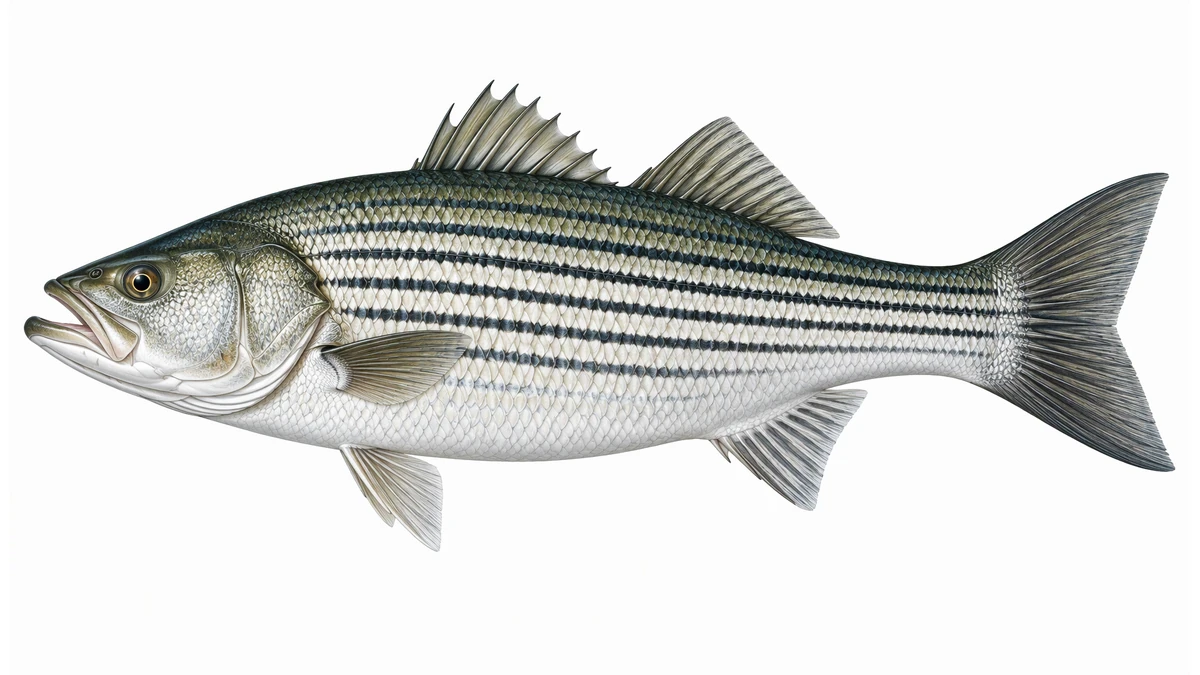
Few fish are as tied to a coastline as the striped bass. Seven or eight hard black stripes, a silver body, a taste for menhaden, and a spring and fall migration that fills beaches, inlets, and rivers with fish and anglers. Learning how to catch striped bass comes down to reading water temperature, finding bait and current, and knowing the slot limits that decide what you may keep. For identification, range, and biology, read the full Striped Bass species profile; this guide covers the catching.
Best Time to Catch Striped Bass
The best time to catch striped bass is the spring spawning run and the fall migration. In spring, fish push into rivers when the water warms to roughly 55 to 68°F, and that run turns the Chesapeake, Hudson, Delaware, and Roanoke systems into highways of big fish. In fall, fish migrate back down the coast, and surf and inlet anglers get some of the best blitz fishing of the year.
Water temperature drives everything. Stripers are active from about 50 to 77°F (10 to 25°C), and they feed best in the 55 to 68°F range. That is why spring and fall are prime and midsummer is tougher. In summer, fish go deep to find cooler water and feed at night or in low light. In winter, they crowd into deep holes in rivers and bays.
Within a day, low light is the striper angler's friend. Dawn, dusk, and night around bridge lights and inlet rips are classic windows. In the surf, an incoming tide with white water and bait pinned against the beach concentrates fish and makes them careless.
The migration timing shifts with the weather, so watch water temperature rather than the calendar. A cold spring pushes the run later; a warm one starts it early. Fish the conditions, not the date.
Best Gear for Striped Bass
Striped bass gear splits into two worlds: boat and bay tackle for live bait and jigging, and long surf rods for casting plugs and bait off the beach. Most anglers start with 15- to 30-pound class spinning or conventional tackle, with a 30- to 50-pound leader for fishing around structure.
| Component | Striped bass-ready choice |
|---|---|
| Rod | 7–7.5 ft medium-heavy boat rod; 10–11 ft surf rod on the beach |
| Reel | 4000–6000 spinning for boats; 5000–8000 for surf |
| Main line | 20–30 lb braid |
| Leader | 30–50 lb fluorocarbon or mono |
| Hooks | 5/0–7/0 circle hooks for bait; jig hooks and trebles for plugs |
| Extras | Pliers, lip grip, headlamp, measuring board, waders and a PFD in the surf |
The leader matters around bridge pilings, jetties, and rock piles, where a big fish will rub line on anything hard. Circle hooks are the standard for natural bait, especially when release rules apply, because they hook fish in the corner of the mouth instead of the gut.
For surf, a 10- to 11-foot rod with a 5000- to 8000-size reel handles both plugs and bait and gives you the casting distance to reach fish beyond the bar. A headlamp, a measuring board, and a PFD are not accessories on the rocks; they are part of the safety kit.
Best Bait for Striped Bass
The best bait for striped bass depends on the water, but live menhaden — bunker, as most anglers call it — is the gold standard. It is the classic forage along the Atlantic coast, and a live bunker in a current is about as good as striper bait gets.
Natural baits cover most situations:
- Live menhaden. The top bait. Fished live in a current or around structure, it is hard to beat for big fish.
- Live eels. Tough and lively, eels are deadly at night around bridge lights and rocks.
- Live herring. A cold-water favorite, especially in New England rivers and bays.
- Chunked bunker. Fresh chunks on the bottom draw fish by scent and are the surf angler's staple.
- Bloodworms and fresh clams. Reliable baits when fish are keyed on the bottom in bays and inlets.
Artificial lures cover water and shine when fish are chasing bait:
- Poppers and swimming plugs. Surface and shallow-running plugs are the classic night and dawn lures.
- Bucktail jigs and soft swimbaits. Jigs work deep structure and rips, especially in summer.
- Spoons and diamond jigs. Metal gets down fast in current and triggers reaction strikes.
- Fly patterns. Clouser Minnows and Deceivers for fly anglers working the same water.
Match the bait in the water. When fish are blitzing small bait, a smaller plug or fly outfishes a big bait. When big fish are on bunker, a big live bait or a large swimming plug is the right call.
Striped Bass Rigs
A striped bass rig puts bait where fish feed — in current, on the bottom, or tight to structure. These setups cover the main situations.
Fish-finder rig. Slide an egg sinker onto your braid, add a bead and a swivel, then tie a 30- to 50-pound leader to a 6/0–7/0 circle hook. The sliding weight holds bottom while a fish can take line without feeling it. This is the standard rig for chunked bunker, bloodworms, and clams in the surf and in inlets.
Live-line rig. For live menhaden or herring, use a circle hook through the back or nose with little or no weight, and let the bait swim in the current. A small float or a balloon can keep the bait up in the strike zone. This is the classic big-fish boat rig around bridge pilings and rip lines.
Surf plugging rig. A braid main line with a short 30- to 50-pound leader, a snap for quick lure changes, and a swimming plug or popper. Cast beyond the bar and retrieve across the trough where fish feed.
Jigging rig. A bucktail or soft swimbait on a jighead, fished vertically over deep structure or cast into a rip. This is the summer pattern when fish hold deep in cooler water.
If your state allows trolling umbrella rigs or tube rigs, they cover water effectively, but check the rules first — some fisheries restrict them.
How to Catch Striped Bass, Step by Step
- Find the bait. Stripers follow food. Look for birds working, bait sprayed at the surface, or bunker schools dimpling the water. No bait usually means no fish.
- Read the current. Fish the edges of rips, inlet mouths, and bridge pilings where current sweeps bait past ambush points. Striper fishing techniques are mostly current-reading.
- Pick the season's pattern. In spring, fish the spawning rivers and the beaches where fish push bait. In fall, follow the migration along the coast and work inlets and rips.
- Present naturally. Live-line baits in the current, or cast plugs and jigs across the flow and retrieve with the tide. Match the size of the baitfish you see.
- Work low light hard. Dawn, dusk, and night are prime. Cast plugs and swimbaits around bridge lights and rock piles after dark.
- Set the hook and control the fish. With circle hooks, let the fish load the rod and come tight. With plugs and jigs, set firmly, then keep the fish out of the rocks with steady side pressure.
- Measure before you keep. Check the fish against your state's slot on a measuring board, and release anything outside it carefully, especially big females.
In summer, when fish go deep, slow down and jig deep structure or fish live bait on the bottom. In winter, find the deep holes in rivers and bays where fish stack up, and fish patiently with bait.
Where to Catch Striped Bass
Where to catch striped bass follows the fish's range: the Atlantic coast of North America, from the St. Lawrence River and Gulf of St. Lawrence in Canada south to the St. Johns River in Florida and the northern Gulf of Mexico. The center of the population is the Chesapeake Bay, followed by the Hudson, Delaware, and Roanoke river systems.
Stripers are anadromous, meaning they live in salt water and spawn in fresh or brackish water. Most fish summer along the coast and in estuaries, then move into rivers in spring to spawn. Some populations are landlocked in reservoirs and live entirely in fresh water, which is why striped bass turn up far from the ocean.
Look for structure and current: inlet mouths, bridge pilings, jetties, rock piles, rips, and the surf troughs where bait collects. In spring, the spawning rivers and the beaches near their mouths hold fish. In fall, inlets and coastal points intercept the migration.
Depth depends on temperature. In spring and fall, fish are shallow and aggressive, often chasing bait into the surf and up rivers. In summer, they hold deep in cooler water. In winter, they crowd into deep holes. Fish the depth where the temperature suits them, and the fish will be there.
Striped bass have also been introduced outside their native range. They were stocked on the Pacific coast, where San Francisco Bay and the Sacramento-San Joaquin Delta hold a well-known population, and in reservoirs across the South and West, including Lake Texoma and Santee-Cooper.
Striped Bass Regulations and Safety
Striped bass regulations are the most important part of striper fishing, and they have tightened repeatedly as stock assessments come in. The Atlantic States Marine Fisheries Commission (ASMFC) coordinates management along the coast, and each state sets seasons, size slots, and bag limits within that framework.
As of 2025, the Atlantic ocean recreational fishery allows one striped bass per day inside a slot limit, while Chesapeake Bay and some state waters use a smaller slot. The exact size window has changed more than once in recent years, so check the ASMFC website and your state agency before you fish:
- Maryland: the Department of Natural Resources (DNR) posts the current Chesapeake rules.
- Virginia: the Virginia Marine Resources Commission (VMRC).
- New York: the Department of Environmental Conservation (DEC).
- Massachusetts: the Division of Marine Fisheries (DMF).
Some fisheries are catch-and-release only, and some rivers have spring closures to protect spawning fish. Big fish are usually old females, which is why large-fish harvest is tightly regulated. If you plan to keep a fish, know the slot, the bag limit, and whether a bonus tag or reporting requirement applies.
Safety deserves its own paragraph. Striped bass have a sharp spine on the gill cover and spiny dorsal fins, so slide a hand under the belly and support the fish instead of jamming fingers under the gill plate. Surf and jetty fishing adds real risk: rocks are slippery, waves arrive without warning, and night fishing puts boats and anglers in the dark. Wear a PFD on the rocks, use a headlamp, and never turn your back on the ocean.
Cold water is the quiet hazard. A fall or winter angler who goes into 45°F water has minutes, not hours. Dress for immersion, carry a knife, and fish with a partner when you can. The fish is not the danger; the water is.
Common Mistakes and Striped Bass Tips
- Fishing without bait around. No bunker, no birds, no fish. Find the food first.
- Ignoring the current. Stripers ambush on current edges. Fish the rip, not the slack.
- Swinging on a circle hook. Let the fish load the rod and come tight instead of setting like a bass angler.
- Too-light leader around structure. Bridge pilings and rocks cut line. Use 30- to 50-pound leader.
- Fishing midday in summer. Summer fish go deep and feed at night. Adjust your clock.
- Keeping the big breeders. Large females carry the spawn. Release them and protect the run.
- Skipping the rules. Slot limits and closures change. Check ASMFC and your state agency every season.
- Fishing the rocks without a PFD. The surf and jetties are dangerous at night. Dress and gear for safety.
FAQ
What is the best time to catch striped bass? Spring and fall. The spring spawning run fires when rivers reach roughly 55–68°F, and the fall migration pushes fish down the coast. Dawn, dusk, and night are best within a day.
What bait for striped bass works best? Live menhaden (bunker) is the top bait, followed by live eels and herring. Chunked bunker, bloodworms, and fresh clams cover the bottom. Poppers, swimbaits, bucktails, and spoons handle the artificial side.
What is the best striped bass rig? A fish-finder rig with an egg sinker and a 6/0–7/0 circle hook for bait, or a live-line rig with a circle hook and little or no weight for live bunker in a current.
Can you catch striped bass from shore? Yes. Surf and jetty anglers catch stripers on plugs, chunk bait, and eels, especially during the fall migration and at night.
How big do striped bass get? Most caught fish are 5 to 20 pounds and 24 to 36 inches. A 30- to 50-pound fish is a trophy, and the species can exceed 70 pounds.
What is the striped bass slot limit? It varies by state and has changed recently. As of 2025, the Atlantic recreational fishery allows one fish per day inside a slot, with smaller slots in Chesapeake Bay and some state waters. Check ASMFC and your state agency.
Learning how to catch striped bass is about following bait, current, and temperature — and respecting the slot limits that keep the runs alive. Fish the migration, fish the dark, and the stripes will keep rewarding you.
Related Articles
- How to Catch Cobia — the Mid-Atlantic's other big spring migrant.
- How to Catch Redfish — an inshore slot-limit fish with a similar tide-driven pattern.
- How to Catch Summer Flounder — another inlet and channel target on the same coast.
- Tarpon — the Atlantic's other iconic inshore game fish.
- All species profiles
About the author and how this was tested
About the author
FishermanGuy
Bank, boat and kayak angler · fishing, crabbing and shrimping since 2021
I buy the gear, fish it for a season and write down what failed. No sponsored verdicts, no free-sample flattery. Every rig on this page has landed fish in water I can point at on a map.
How this was tested
- Every rig gets at least six trips on the same water before it is published.
- Gear is bought at retail. Free samples are labelled in the first paragraph.
- Dates show first publication and the last time the page was updated.