Field notes
Catch and Release: How to Release Fish Safely
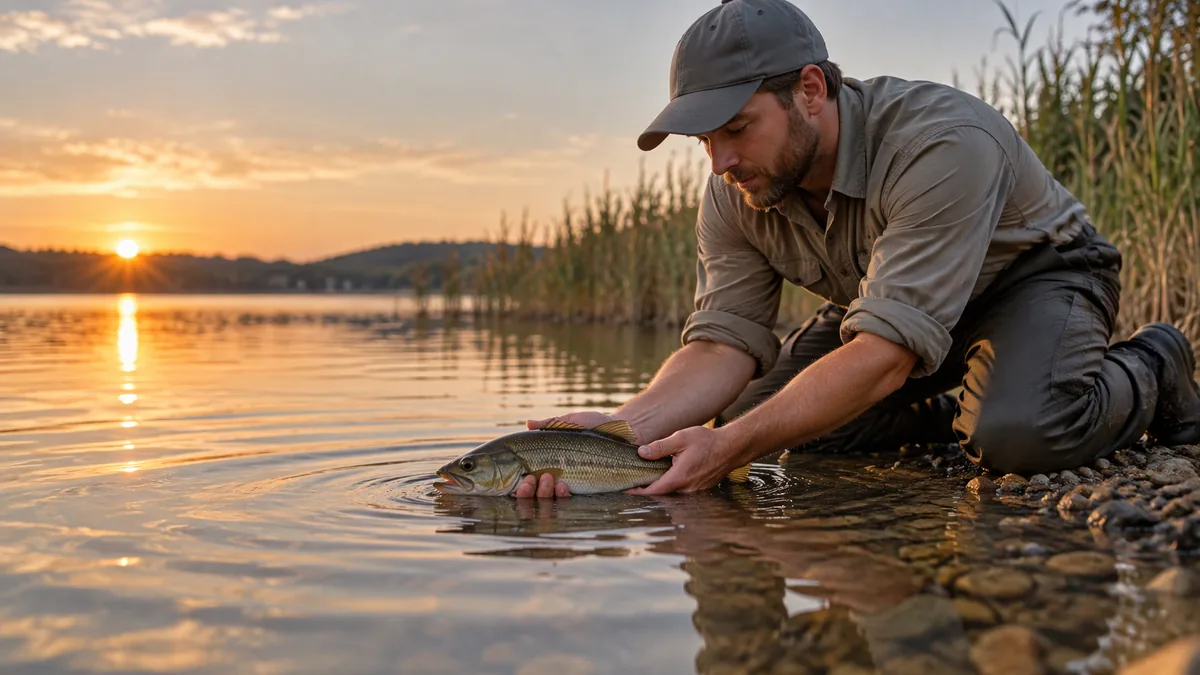
Catch and Release: How to Release Fish Safely
Catch and release sounds simple: catch the fish, take the hook out, put it back. In practice, the difference between a fish that swims away and a fish that dies a day later comes down to a few details. Dry hands, a long fight, a hook torn out of the throat, or thirty seconds on a hot boat deck can all turn a released fish into a dead one. This guide walks through the gear, the landing, the unhooking, and the revival steps that give a released fish the best chance. It also covers the situations where release is the wrong choice, and the handling mistakes that beginners make most often.
Why Catch and Release Matters
Catch and release is a management tool and a personal choice. Many waters have size limits, slot limits, or catch-and-release seasons that depend on anglers returning fish unharmed. Even where harvest is legal, releasing big fish protects the genetics that produce big fish, and releasing spawning fish protects future year classes.
Studies of hooking mortality vary by species, water temperature, hook type, and handling, but the pattern is consistent: fish that are landed quickly, kept in the water, handled with wet hands, and released without being dropped survive at much higher rates than fish that are exhausted and dry-handled. The goal is not perfection. It is stacking the odds in the fish's favor.
Catch and release is also not in conflict with keeping a meal. Selective harvest, taking a few fish within the rules and releasing the rest, is a responsible middle ground.
Gear That Makes Release Easier
The release starts before the cast. A few pieces of gear make the process faster and less damaging:
- Barbless hooks. Pinch the barb flat with pliers before fishing, or buy barbless hooks. They penetrate easily and back out with far less tearing, which matters most on lips and jaws.
- Circle hooks for bait fishing. Circle hooks tend to catch the corner of the mouth instead of the gut, which makes release cleaner and reduces deep hooking.
- Single hooks instead of trebles where the lure allows it. One hook is easier to remove than three.
- A rubber or knotless mesh net. It supports the fish, protects the slime coat, and keeps the fish in the water while you get tools ready.
- Long-nose pliers and side cutters. Pliers remove hooks; cutters let you cut a hook or line when removal would do more harm.
- Wet hands, no towel. A dry hand or a towel strips the protective slime layer. Wet your hands before touching a fish, or keep the fish in the net and use pliers.
Line strength is part of the toolkit too. Tackle that is too light forces a long fight, and a long fight builds up lactic acid that the fish may not recover from. Match the rod, line, and leader to the fish you expect, so you can land it in reasonable time without horsing it.
Landing and Unhooking a Fish
A fish that is landed and unhooked in under a minute has a far better chance than one that is played, photographed, and fumbled. Keep the fish in the water whenever possible and work through the steps below in order.
Play and Land the Fish Quickly
Fight the fish with steady rod pressure and let the drag do its job. A fish that is turned quickly and brought to the net in a short time has a much better chance than one circled for several minutes. That does not mean winching it in; it means applying pressure, keeping the rod bent, and not giving line back unnecessarily.
Bring the fish to the net headfirst. Scoop it so the fish swims into the mesh rather than chasing it around the surface. Once it is in the net, keep the net in the water. If you are bank fishing, kneel and keep the net submerged while you prepare pliers.
Do not lift a large fish vertically by the lower jaw. Holding a heavy bass or pike straight up by the jaw can injure the jaw and internal organs. Support the belly with one hand and hold the jaw or wrist of the tail with the other, keeping the fish horizontal and close to the water. For fish too big to handle safely, leave them in the net in the water and unhook them there.
Remove the Hook: Step by Step
Work quickly and keep the fish in the water whenever possible. A simple sequence works for most lip-hooked fish:
- Wet your hands and wet the net.
- Leave the fish in the net, in the water, and grip it gently behind the head or by the lower jaw if it is a bass.
- Hold the hook by the bend with pliers and back it out in the reverse of the direction it went in.
- For barbless hooks, a small twist while backing out usually frees the hook.
- If the hook is deep, in the gills, or in the gut, do not dig for it. Cut the line as close to the hook as you can and leave the hook in place. Hooked fish often survive with a hook left in, while torn gills usually do not.
Do not squeeze the fish's body or press on the belly. The gill area is fragile and bleeds heavily if damaged. If a hook is caught in the net, untangle the net first instead of pulling the fish against it. And wear glasses or sunglasses; hooks and pliers slip, and an eye is not worth the risk.
Reviving and Releasing
A fish that has been fought hard needs help before it can swim off. Hold it upright in the water, supporting the belly, with its head pointed into the current if there is one. If there is no current, move the fish slowly in a figure-eight pattern so water flows over the gills. Keep your hands open and let the fish tell you when it is ready.
Release the fish when it can hold itself upright and kick away strongly. Do not toss or drop it from a height, and do not release it into warm, shallow water if a cooler, deeper spot is nearby. If you are on a high dock or bridge, lower the fish in a net rather than dropping it.
If a fish will not revive after a reasonable effort, the honest choice is usually to keep it if it is legal to do so. Returning a fish that will die serves no purpose. Never move a fish from one water body to another, and never dump leftover baitfish into a lake or river; that spreads disease and invasive species.
When Not to Release a Fish
Release is not always the right call. Consider keeping the fish, within the rules, when:
- The water is very warm. Warm water holds less oxygen, and summer heat makes recovery harder. If the fish is exhausted and the water is in the high 70s Fahrenheit or above, it may be better as a legal harvest than as a release that fails.
- The fish is deeply hooked and bleeding heavily. A gut-hooked fish that is bleeding from the gills has a poor chance. If it is legal to keep, that is often the more responsible outcome.
- The fish is an invasive species. Do not release live invasive fish back into the water. Follow local rules for dispatch and disposal.
- You plan to eat it. Harvest within the regulations is not a failure of conservation. Keeping a few fish for a meal is part of the tradition.
There is also a case where release is mandatory: protected species and fish outside the legal slot or season must go back, even if they are injured. Follow the rules, document the release if required, and report unusual mortalities to the agency.
Common Mistakes
- Dry hands and towels. They strip the slime coat and invite infection.
- Holding big fish vertically by the jaw. Support the belly and keep the fish horizontal.
- A long fight on light tackle. Land fish quickly with tackle matched to the species.
- A long photo session. Keep the fish out of the water for seconds, not minutes, and have the camera ready before you lift it.
- Throwing the fish back. A tossed fish hits the water hard and may not recover. Release it gently and revive it first.
- Cutting the line every time. Cut the line only when the hook is deep or dangerous to remove; a lip hook should come out cleanly.
- Releasing into the wrong water. Never move fish or bait between water bodies.
FAQ
Does catch and release kill fish?
Some released fish die, even with good handling. Mortality is lowest when fish are landed quickly, kept in the water, handled with wet hands, and released in cool water. Deep hooking, warm water, and long fights raise the risk.
Should I use barbless hooks?
Barbless hooks make release faster and cause less tissue damage. You may lose a few more fish during the fight, but many anglers consider that a fair trade. Pinching the barb on a standard hook takes a second.
What should I do if the hook is in the gills?
Do not pull it out. Cut the line close to the hook and release the fish. Gills bleed easily, and tearing them is usually fatal.
How long can a fish stay out of the water?
Keep it to seconds. Have the camera and tools ready before you lift the fish, wet your hands, support the body, and put it back. On a hot, sunny day, even a short time out of water is stressful.
Is it OK to keep fish sometimes?
Yes. Keeping fish within the rules is legal and part of the sport. Selective harvest, releasing large fish and keeping a few smaller ones, is a reasonable approach on many waters.
Do fish feel pain?
Fish have nerves and respond to injury, and handling causes stress and tissue damage regardless of how the experience is described. The practical answer is the same: handle fish quickly, gently, and with wet hands.
For the fish you plan to target, read how to catch bluegill and how to catch rainbow trout. Both guides include handling notes for beginners. Check your license and regulations before you fish, start with how to start fishing if you are new, and browse the rest of our Getting Started guides for the basics.
About the author and how this was tested
About the author
FishermanGuy
Bank, boat and kayak angler · fishing, crabbing and shrimping since 2021
I buy the gear, fish it for a season and write down what failed. No sponsored verdicts, no free-sample flattery. Every rig on this page has landed fish in water I can point at on a map.
How this was tested
- Every rig gets at least six trips on the same water before it is published.
- Gear is bought at retail. Free samples are labelled in the first paragraph.
- Dates show first publication and the last time the page was updated.