Field notes
Ice Fishing Basics for Beginners
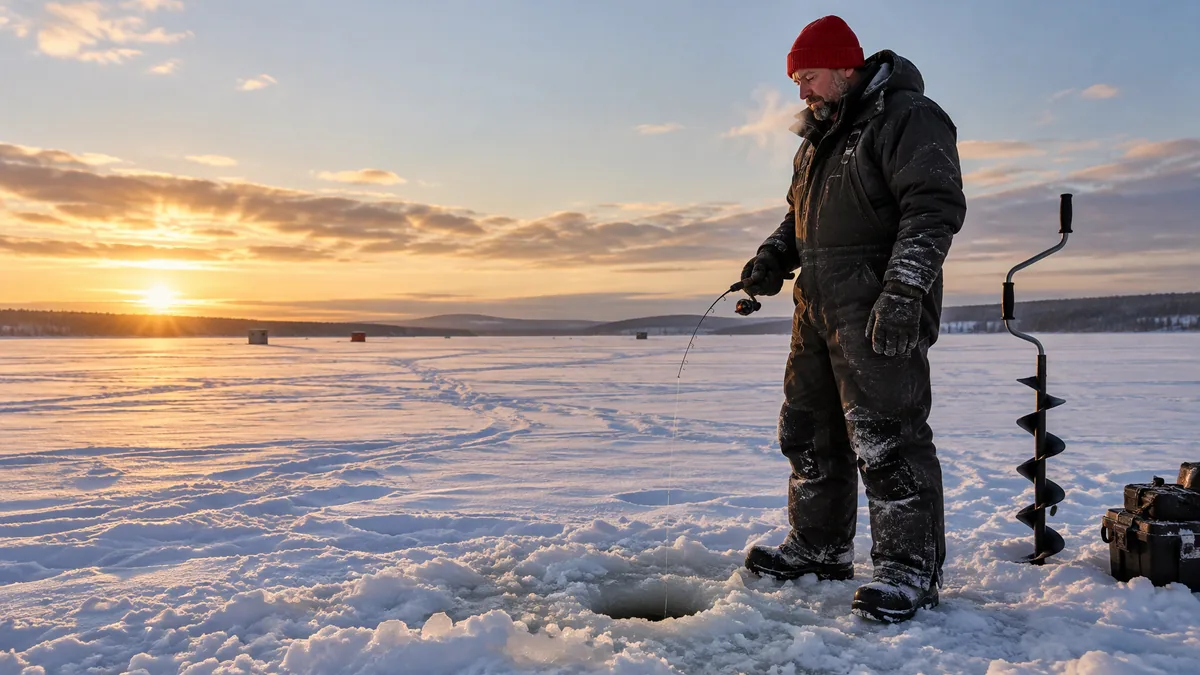
Ice Fishing Basics
Ice fishing looks like the simplest form of fishing: cut a hole, drop a line, wait. In practice, the anglers who catch fish are the ones who understand the ice, the lake beneath it, and the slow, small presentations that winter fish want. Get those three things right and hard-water fishing becomes one of the most productive ways to fish all year. Get them wrong and you spend a cold day staring at a motionless rod. This guide covers the basics in the order that matters — safety first, then gear, then finding fish, then the two techniques that catch most of them. It assumes freshwater lakes and ponds that freeze over, and it points you to local rules wherever they decide the details.
Safety Comes Before the First Hole
No ice is completely safe. Thickness varies across a single lake, and it changes with temperature, snow cover, wind, and moving water. Treat any ice you have not personally checked as suspect.
Many fish and wildlife agencies use roughly four inches of clear, solid ice as a minimum for a person on foot, but that is a general guideline, not a guarantee. White or slushy ice is weaker than clear ice of the same thickness. Current thins ice near inlets, outlets, and bridge pilings, and springs and pressure ridges can leave open water or thin spots in the middle of an otherwise solid lake. Always check the current guidance from your state or provincial agency before you walk out.
Go with a buddy, carry a spud bar to test ice ahead of you, and wear ice picks on a cord around your neck so you can pull yourself out if you go through. A throw rope and a flotation suit add another layer of insurance. Tell someone where you are going and when you expect to return. Early and late in the season, when ice is forming or rotting, stay off unless you have local knowledge and the agency says it is safe.
The Basic Ice Fishing Setup
Ice fishing gear is compact because you are fishing straight down through a small hole.
A typical rod is short — roughly 24 to 36 inches — with a light power and a sensitive tip so you can see or feel a subtle take. Pair it with a small spinning reel or an inline ice reel spooled with 2 to 6 pound line. Light monofilament is forgiving in cold weather; braid is more sensitive but can freeze, so many anglers use a short fluorocarbon leader at the business end.
You need a way through the ice. A hand auger in the 5 to 8 inch range is enough for most panfish and walleye fishing; gas or electric augers save effort when ice gets thick. Add a skimmer to clear slush from the hole, a sled to haul gear, a bucket to sit on, and warm, waterproof boots. A shelter is optional but extends your day in wind and cold; if you use a heater inside one, ventilate it properly to avoid carbon monoxide.
Electronics are optional but genuinely useful. A flasher or sonar unit shows your jig, the bottom, and fish rising to it, which shortens the learning curve a lot. For bait, waxworms and spikes are standard for panfish, and small minnows work for walleye, perch, pike, and lake trout. Tie your jigs with a reliable knot; the fishing knots category has options that hold up in cold, slippery line.
Find Fish Under the Ice
Fish do not spread evenly under the ice. They group on structure, just as they do in open water, and finding that structure is most of the battle.
Start with a lake map. Look for weed edges, points, drop-offs, humps, and creek channels. Different species use different depths. Bluegill and crappie often hold near weeds in shallower water; walleye relate to deeper edges and channel bends; lake trout roam deep structure; northern pike sit along weed edges and flats. Match your starting depth to the species you are after, then adjust.
The ice fishing advantage is mobility. Drill a line of holes across a contour — say, from shallow weeds out to deeper water — and check each one with your flasher. If you mark fish, stay and work them. If a hole is empty after a few minutes of jigging, move to the next. Anglers who catch fish drill a lot of holes; anglers who sit in one spot all day usually do not.
Watch how fish behave on the flasher. A fish that rises off the bottom to inspect your bait is interested, so slow down and hold the jig still. A fish that ignores it means you should change depth, bait, or color rather than keep doing the same thing. If you are learning a new lake, the lake fishing guide covers the structure basics that apply year-round.
Jigging: The Core Technique
Most ice fishing is jigging: working a small lure up and down under the hole.
Start with a small jig or a jigging spoon, roughly 1/32 to 1/8 ounce, tipped with a waxworm, a spike, or a minnow head. Drop it to the bottom, then reel up until it hangs a foot or so above the lake floor. Snap the rod tip sharply, let the lure flutter down, and pause. The pause is where most strikes happen; a lure that never stops moving looks wrong to a cold, slow fish.
Vary the cadence until you find what the fish want. Sometimes a sharp snap and a long pause works; other times a subtle quiver or a slow lift draws a bite. If fish follow but will not commit, downsize the lure, slow down, or switch bait color. When a fish appears on the flasher, stop jiggling and let the bait hang still — many winter fish take a motionless bait more readily than a moving one.
Many anglers fish two rods: one they jig actively and one set in a holder as a deadstick. The deadstick usually carries a small jig or a plain hook with a minnow under a spring bobber, which shows the lightest bite. Using a second rod is a big advantage, but check how many lines your state allows before you set it up.
Tip-Ups and Set Lines
A tip-up is a device that holds a baited line under the ice and pops a flag when a fish takes. It lets you cover water away from where you are sitting and is the standard method for pike, walleye, and lake trout.
Set the bait — usually a minnow — a foot or two off the bottom, or higher if fish are suspended. Place tip-ups along weed edges, drop-offs, and the mouths of bays where predators patrol. When a flag goes up, walk to it, check that line is moving, and set the hook with a firm sweep rather than a violent jerk.
Tip-up fishing is regulated closely. Many waters limit the number of lines you can fish, require your name on the gear, or require you to stay within sight of it. Some species have closed seasons even when ice is present. Confirm the local rules before you set gear, and never leave tip-ups fishing unattended where regulations require attendance.
Common Ice Fishing Mistakes
- Trusting the ice without checking. Clear ice, current, springs, and pressure ridges all change the risk. Test as you go and follow agency guidance.
- Fishing tackle that is too heavy. Winter fish are slow and often small-minded. Light line and small baits get more bites.
- Sitting in one hole. If there are no marks after a short effort, drill and move. Mobility is the whole advantage of ice fishing.
- Jigging nonstop. Constant motion can spook fish. Snap, pause, and let the bait settle.
- Ignoring line limits and seasons. Rod limits, tip-up rules, and closed seasons are enforced. Read the regulations before you go.
- Dressing for the drive, not the day. Standing on ice is colder than walking to the car. Layers, boots, and gloves decide how long you can stay.
- Handling fish poorly. Do not let fish freeze solid on the ice if you plan to release them, and keep harvested fish cool and clean.
FAQ
How thick should ice be for ice fishing? There is no universal safe number. Many agencies suggest about four inches of clear ice for a person on foot, but thickness varies across a lake and with ice quality. Check your local agency's guidance and test the ice yourself.
What is the best bait for ice fishing? Waxworms and spikes are the standard for panfish, while small minnows work for walleye, perch, pike, and lake trout. Match bait size to the fish you expect.
Do I need an ice shanty? No. A shelter makes windy, cold days more comfortable and can extend your trip, but plenty of anglers fish without one in decent weather.
Can you ice fish at night? Yes, and some species feed well after dark, but check local rules and never fish unfamiliar ice in the dark. Safety comes first.
Is ice fishing expensive to start? A basic rod, reel, hand auger, sled, and small selection of jigs are modest. Electronics and a shelter are nice upgrades but not required to catch fish.
Start with bluegill or crappie to learn the jigging rhythm, then move up to walleye and northern pike. More hard-water content lives in the Ice Fishing category.
About the author and how this was tested
About the author
FishermanGuy
Bank, boat and kayak angler · fishing, crabbing and shrimping since 2021
I buy the gear, fish it for a season and write down what failed. No sponsored verdicts, no free-sample flattery. Every rig on this page has landed fish in water I can point at on a map.
How this was tested
- Every rig gets at least six trips on the same water before it is published.
- Gear is bought at retail. Free samples are labelled in the first paragraph.
- Dates show first publication and the last time the page was updated.