Field notes
How to Choose a Fishing Rod
How to Choose a Fishing Rod
How to choose a fishing rod comes down to matching the rod to what you actually do on the water. A rod that feels good in the store can still be wrong for your fishing if it cannot cast your lures, handle your fish, or survive your water. There is no single best rod — only the best rod for a job: the species you chase, the water you fish, the baits you throw, and how you fish them. Understand a few specifications — power, action, length, and line weight — and the selection stops being a guessing game. This guide explains what those numbers mean, how reel type and rod design pair up, and how to check a rod before you buy, so you end up with a rod that earns its place in the boat or on the bank.
Match the Rod to the Fish and the Water
Before you look at a single rod, answer four questions. Each one narrows the field.
First, what are you fishing for, and how big do they run? Panfish and stocked trout call for light, sensitive rods; largemouth bass in heavy cover want more backbone; and big saltwater or offshore fish demand heavy tackle. Second, what water will you fish? A small creek, a weedy lake, a windy reservoir, and an open beach each reward a different length and power. Third, what will you throw? Tiny jigs and finesse plastics need a light, fast rod; big crankbaits, spinnerbaits, and heavy baits need a heavier rod rated for that weight. Fourth, how will you fish — casting from shore, flipping from a boat, trolling, or drifting bait?
Answer those and you have a target. A rod built for finesse bass is a poor choice for surf casting, and a heavy flipping stick is overkill for bluegill. Match the tool to the job and the rest of the specs make sense. Species guides like largemouth bass and redfish illustrate how target fish shape gear choices.
Understand Power, Action, and Length
Three specifications do most of the work, and anglers confuse them constantly. Learn them and you can read any rod's label.
Power is the rod's strength — how much force it takes to load and how much backbone it has to fight a fish. It runs from ultralight to heavy. More power means heavier lures, bigger fish, and more lifting strength in cover; less power means lighter lures and more feel with small fish.
Action describes where and how fast the rod bends. A fast-action rod flexes mostly near the tip, which gives quick hooksets and good sensitivity and suits single-hook lures and jigging. A moderate-action rod bends farther down the blank, which is forgiving, loads easily, and keeps treble-hooked fish pinned. A slow-action rod bends deep and evenly — a favorite for live bait and big, steady pressure.
Length trades distance and leverage against accuracy and portability. A longer rod casts farther, holds more line off the water, and gives you more leverage, which helps on windy open water and the beach. A shorter rod is more accurate in tight quarters like docks, creeks, and kayaks. Six to seven feet covers most freshwater fishing; surf and trolling rods run much longer.
Pair the Rod With the Right Reel Type
Rods are built for a specific reel type, and mixing them up causes trouble. The reel seats and guide layout tell you which is which.
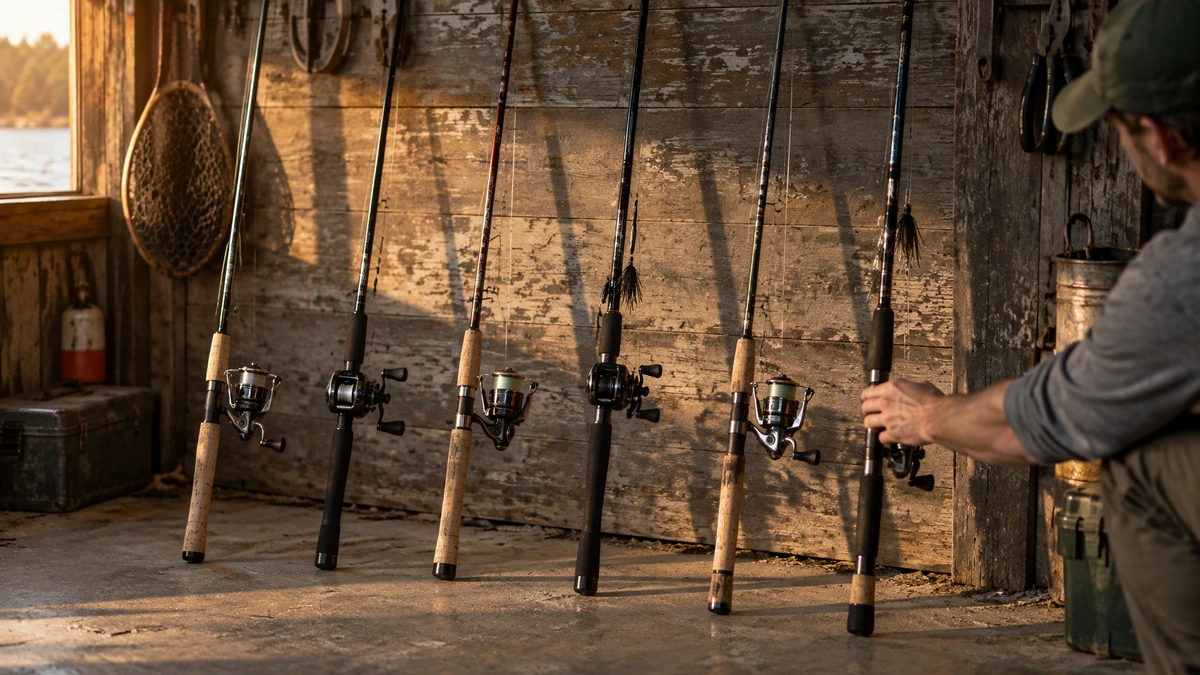
Spinning rods have guides that hang underneath the blank, with a large first guide to manage the line peeling off a spinning spool. The reel mounts below the rod. Spinning is the most versatile and forgiving setup for beginners and covers everything from panfish to light saltwater.
Baitcasting rods carry the reel on top and usually have a trigger grip and smaller guides. They excel at accuracy and power with heavier lures, but they demand thumb control and are less forgiving to learn on.
Spincast rods are simple push-button setups, ideal for kids and casual anglers. Specialty rods — surf, ice, trolling, and fly — are built for one job and are worth buying only when that job is your focus.
For a first rod, a medium-power spinning outfit is hard to beat. Learn to cast it cleanly with how to cast a fishing rod and set it up with how to rig a rod and reel.
Check Line Weight, Materials, and Components
The numbers printed on the blank — line weight and lure weight — are a contract. Stay within them. A rod rated for 6-to-12 pound line and 1/8-to-3/8 ounce lures will cast poorly and risk breakage if you load it with heavy braid and a big lure. Match your line and lure to the rod's rating, not the other way around.
Materials shape feel and price. Graphite rods are light and sensitive, which helps you feel subtle bites and bottom, but the best graphite can be brittle if abused. Fiberglass is heavier and less sensitive but tough, forgiving, and inexpensive — good for crankbaits, big treble lures, and rough handling. Composites blend the two to balance sensitivity and durability.
Also inspect the components: guides should be aligned and their inserts intact (a cracked insert shreds line), the reel seat should lock a reel firmly, and the handle — cork or EVA foam — should feel comfortable in your hand. These details decide how a rod holds up over seasons.
Set a Budget and Inspect Before You Buy
You do not need a premium rod to catch fish. Inexpensive rods have improved a great deal, and a modest outfit will land plenty of fish while you learn what you like. Mid-range rods buy better components and lighter blanks, and premium rods are for anglers chasing the last bit of sensitivity and refinement. Decide your budget, then buy the best rod within it rather than stretching for a name.
Handle the rod before you pay. Flex it gently against a soft surface and look for a smooth, even curve with no flat spots or creaks. Sight down the blank to confirm the guides line up straight. Check that the tip and the ferrules (on multi-piece rods) are sound, and spin the reel seat to feel for grit. Balance matters too — mount a reel of similar size and see whether the combo feels tip-heavy or neutral. Confirm the warranty and return policy, especially on graphite. Fishing for beginners gear rounds out the rest of a sensible first setup.
Common Mistakes
- Buying by brand or price alone. A famous name in the wrong power is still the wrong rod. Match the specs to your fishing.
- Power that does not fit the fish. Too light and you cannot control or land fish in cover; too heavy and you lose feel and casting ease with small lures.
- Ignoring the line and lure rating. Overloading a rod is the fastest way to break a tip or cast badly.
- Wrong length for the water. A long surf rod is clumsy in a kayak; a short creek rod cannot reach open water.
- Mismatched reel type. A baitcaster on a spinning rod fishes poorly. Buy the rod built for your reel.
- Skipping the feel test. Buying without flexing the rod or checking the guides invites disappointment after the first trip.
FAQ
What is the best fishing rod for a beginner? A medium-power, fast-action spinning rod around six to seven feet is the most versatile first choice. It handles common freshwater species, casts a wide range of lure weights, and is easy to learn on.
What does rod action mean? Action describes where the rod bends and how quickly it returns. Fast action bends near the tip for sensitivity and quick hooksets; moderate and slow actions bend deeper for forgiveness and even pressure.
Can one rod do everything? A medium-power rod comes closest to an all-rounder, but it is a compromise. Specialized fishing rewards specialized rods once you know your targets.
What is the difference between a spinning and a baitcasting rod? Mainly the reel seat and guide placement. Spinning rods hang the reel underneath with large guides; baitcasting rods mount the reel on top with a trigger grip and smaller guides.
How much should I spend on a fishing rod? Enough to get sound components and a blank that suits your fishing, but no more than you need to start. Inexpensive to mid-range rods catch plenty of fish; upgrade once you know your preferences.
To put a new rod to work, read how to fish a lake for a place to start, then browse the Rods & Reels category for related gear guides.
About the author and how this was tested
About the author
FishermanGuy
Bank, boat and kayak angler · fishing, crabbing and shrimping since 2021
I buy the gear, fish it for a season and write down what failed. No sponsored verdicts, no free-sample flattery. Every rig on this page has landed fish in water I can point at on a map.
How this was tested
- Every rig gets at least six trips on the same water before it is published.
- Gear is bought at retail. Free samples are labelled in the first paragraph.
- Dates show first publication and the last time the page was updated.