Field notes
Fishing for Beginners: Essential Gear Checklist
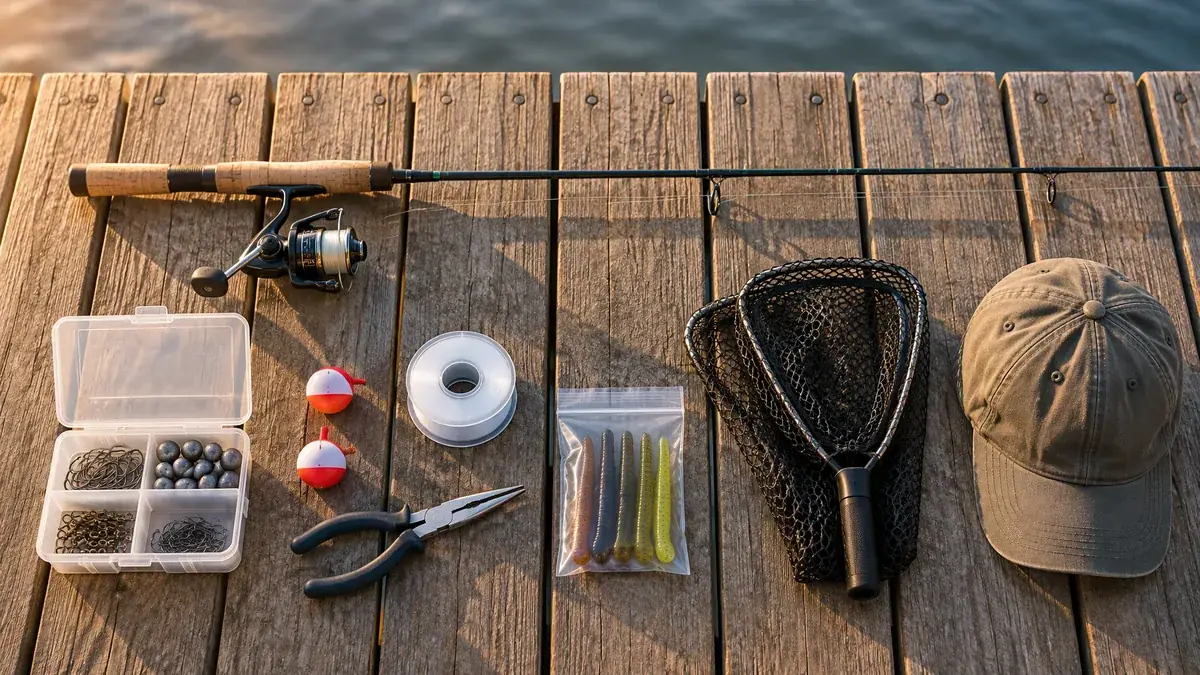
Fishing for Beginners: Essential Gear Checklist
Fishing for beginners is often sold as a shopping problem. Walk through any outdoor store and the shelves suggest you need a different rod for every fish and a lure in every color. You do not. The anglers who catch the most fish started with a handful of well-chosen items and learned to use them well.
This checklist cuts through the noise. It covers the gear that actually earns its place in a beginner's setup: a rod, a reel, the right line, a few terminal pieces, some bait, and the small tools that prevent a ruined trip. Each section links to deeper guides, and everything here fits under the gear and tackle category.
The Rod, Reel, and Line: Your Foundation
Most of your budget should go here. A smooth reel and a balanced rod make casting easier and landing fish more reliable. If you are brand new, start with a spinning outfit — the reel hangs under the rod and the line peels off a fixed spool, which is the most forgiving design to learn.
- Rod: Look for a 6 to 7 foot spinning rod with medium-light or medium power. "Power" describes how much force it takes to bend the rod; medium-light suits panfish and small bass. "Action" describes where it bends — a fast action bends mostly near the tip and helps with hooksets.
- Reel: A 2500-size spinning reel is the standard all-rounder. It holds enough line for most freshwater fishing and stays comfortable in the hand.
- Line: Fill the reel with 8 to 10 pound monofilament, a stretchy, inexpensive nylon line that is forgiving of beginner mistakes. The "pound-test" rating is the line's approximate breaking strength. Spool it close to the spool lip without overflowing.
A push-button spincast combo is an even simpler option, especially for kids or anyone who wants the shortest possible learning curve. Browse more options in the rods and reels category, and see the full setup steps in how to rig a rod and reel.
Terminal Tackle: Hooks, Weights, Bobbers, and Swivels
"Terminal tackle" simply means the small hardware you tie onto the end of your line. You do not need much, but you need the right pieces.
- Hooks: Carry a few sizes. Small hooks (roughly size 6 to 10) suit bluegill and other panfish; larger hooks (around 1/0 to 3/0) suit bass. Circle hooks are worth learning because they tend to hook fish in the corner of the mouth and reduce deep hooking, which matters for catch and release.
- Weights (sinkers): Small split shot — tiny lead or tungsten balls that pinch onto the line — let you sink bait to where fish feed. Egg sinkers slide on the line for bottom fishing.
- Bobbers (floats): A clip-on bobber suspends your bait at a set depth and signals a bite when it dips or races away. This is the easiest way for a beginner to fish bait.
- Swivels: These small connectors join your main line to a leader and cut down line twist. A snap swivel also lets you change lures in seconds.
Aim for a small assortment, not a warehouse. One compartment box with a few hooks, split shot, bobbers, and swivels covers most beginner trips.
Bait and Lures for Beginners
You have two paths: live bait or artificial lures. Both catch fish; they just ask different things of you.
Live bait is the beginner's friend. Nightcrawlers and earthworms work on almost everything, and they are the fastest route to bluegill, catfish, and bass. Crickets and small minnows are also effective. Bait rewards patience more than technique — cast it out, let it sit, and watch the bobber.
Lures are artificial baits that imitate fish, insects, or other prey. Start with two or three proven designs:
- An inline spinner, which has a rotating blade that flashes and vibrates.
- A small crankbait, which dives and wobbles when retrieved.
- A soft plastic grub rigged on a lightweight jighead, a versatile combination for bass and panfish.
Resist the urge to buy dozens of colors. Fish respond to action and presentation far more than to shade. The baits and lures category has more on choosing and using them.
The Small Extras That Save Your Trip
These inexpensive items rarely make a highlight reel, but they prevent the problems that end a trip early.
- Line clippers or nail clippers for trimming knots.
- Needle-nose pliers for gripping hooks and bending barbs.
- A hook remover to free hooks safely, especially from toothy fish.
- A small towel to dry your hands and grip fish.
- Sunglasses and a hat — eye protection is not optional when hooks fly.
- Sunscreen and water, because a long day in the sun drains you fast.
- A basic first-aid kit, since hooks find skin.
- A landing net once you target bass or trout; it makes releasing fish easier.
- A tackle bag or box to keep everything organized.
Pack once, and keep the kit ready so a fishing trip takes minutes to start.
Budget Guide: $50, $100, and $200 Setups
You can begin fishing at almost any budget. The numbers below are rough ranges, not rules.
Around $50. A basic rod-and-reel combo (spinning or spincast), a small starter pack of hooks, split shot, bobbers, a couple of lures, and clippers. This is enough to catch panfish and small bass all season.
Around $100. A better-balanced combo, a slightly wider tackle selection, a landing net, a small tackle box, spare line, and a few more lures. This is the sweet spot for most beginners.
Around $200. A noticeably nicer rod and reel, a fuller lure box, quality pliers, a good net, and a proper tackle bag. You are buying durability and smoothness now, not more bites.
The best advice is to spend on the rod, reel, and fresh line first. Gimmicks and giant lure collections come last, if at all.
The Beginner's Checklist
Before your first trip, confirm you have:
- [ ] Rod and reel, spooled with fresh line
- [ ] Small assortment of hooks, split shot, bobbers, swivels
- [ ] Bait (worms) or two or three lures
- [ ] Line clippers, pliers, hook remover
- [ ] Net, towel, sunglasses, hat, water
- [ ] Valid fishing license
Common Gear Mistakes
- Buying too much at once. A crowded tackle box makes choices harder, not easier.
- Using line that is too heavy. Thick line spooks fish and casts poorly; match line to the fish, not to your hopes.
- Fishing old, brittle line. Line weakens with age and sun; replace it, especially on a used reel.
- Skipping a net and pliers. Without them, landing and releasing fish is clumsy and slow.
- Oversized hooks. A hook too big for the target fish causes missed bites.
- No eye protection. Sunglasses are safety gear on the water.
Frequently Asked Questions
Do I need a net? For small panfish you can manage without one. For bass and trout, a net makes landing and releasing far easier and is worth the small cost.
Is a baitcasting reel good for a beginner? Usually no. Baitcasters demand thumb control and can backlash badly. Start with spinning or spincast, then move up later — see how to cast a fishing rod.
Do I need waders? Not if you fish from shore, a dock, or a pier. Waders matter once you want to wade rivers or stand in the surf.
Can I use freshwater gear in saltwater? Lightly, and only if you rinse everything with fresh water afterward. Salt corrodes reels fast, and saltwater fish often demand heavier tackle.
How much line should I put on the reel? Fill it close to the spool lip without letting line spill off the edge. Too little line slows your casts; too much causes tangles.
Still deciding where to begin? Read how to start fishing for the step-by-step path from gear to first fish.
About the author and how this was tested
About the author
FishermanGuy
Bank, boat and kayak angler · fishing, crabbing and shrimping since 2021
I buy the gear, fish it for a season and write down what failed. No sponsored verdicts, no free-sample flattery. Every rig on this page has landed fish in water I can point at on a map.
How this was tested
- Every rig gets at least six trips on the same water before it is published.
- Gear is bought at retail. Free samples are labelled in the first paragraph.
- Dates show first publication and the last time the page was updated.