Field notes
How to Cast a Fishing Rod
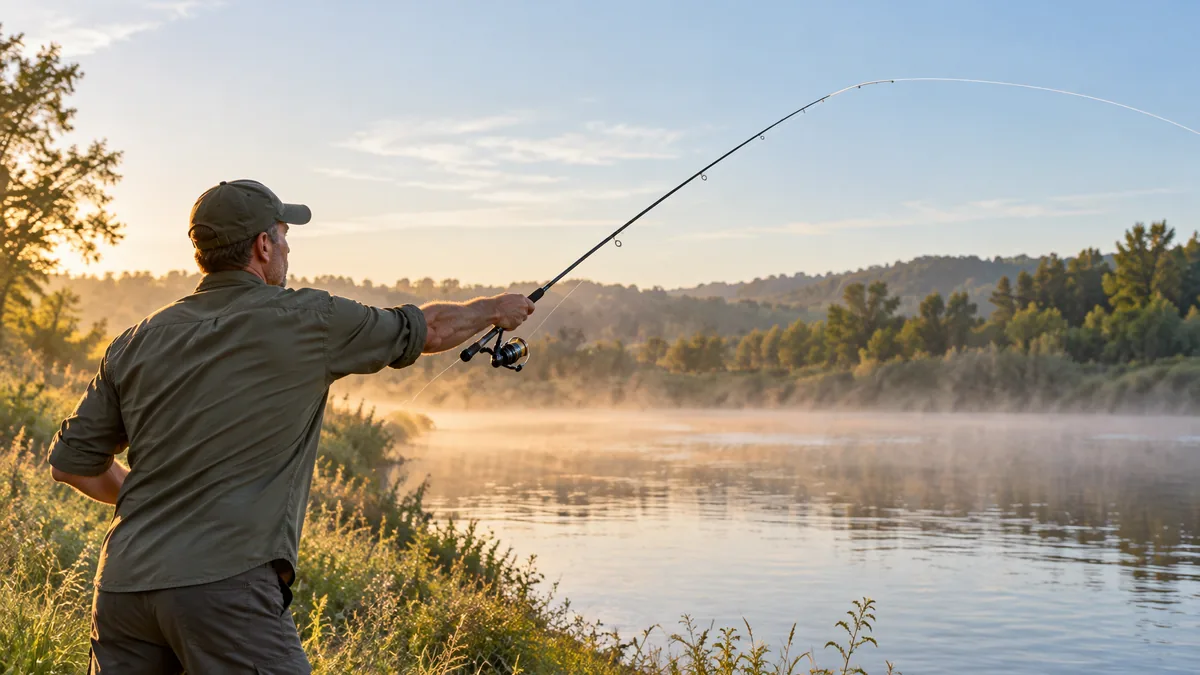
How to Cast a Fishing Rod
The first cast is where a lot of beginners lose confidence. The bait flies sideways, the line tangles into a nest, or the whole thing lands in a heap at your feet. None of that means you are bad at fishing. Casting is a physical skill, and like any physical skill it improves with a clear motion and a bit of practice.
This guide shows you how to cast a fishing rod on the three most common reel types, then gives you drills to build accuracy. The single most important idea runs through all of it: casting is about smoothness, not strength. A relaxed, controlled swing sends bait farther and straighter than a hard throw ever will. Before you start, make sure your outfit is set up — see how to rig a rod and reel if you have not yet.
Know Your Reel Before You Cast
Each reel type releases line differently, and that difference shapes the cast. Learn which one you have before practicing.
- Spincast reels sit on top of the rod with a push button at the back. Press the button, and the line waits to fly. They are the easiest reels to cast and a great first choice for kids and adults alike.
- Spinning reels hang under the rod. You open a wire arm called the bail with your finger, hold the line, and let it slip off on the cast. This is the most versatile design for freshwater beginners.
- Baitcasting reels also sit on top but use a free-spinning spool that you control with your thumb. They offer great accuracy and power once mastered, but they punish bad timing with tangles.
If you are still choosing gear, the rods and reels category and the beginner gear checklist will help. For casting, start with the reel you own and master one motion.
Spincast: The Simplest Cast to Learn
The spincast reel is the most forgiving place to start. Practice with a small weight and no hook until the motion feels natural, and always check that no one is behind you.
- Grip the rod with the reel on top. Rest your thumb on the push button at the back of the reel.
- Press the button and keep your thumb there so the line stays put.
- Raise the rod to about the 10 or 11 o'clock position, letting the bait hang a short distance below the tip.
- Swing forward smoothly to about the 1 or 2 o'clock position. Do not snap the rod; let it load and unload.
- Release the button with your thumb as the rod passes forward. The bait launches.
- Stop the spool by pressing the button again just before the bait lands, so it settles gently.
The push button does most of the work. If the bait plops short, you released late; if it flies high and stalls, you released early.
Spinning: The All-Around Cast
The spinning cast adds one element: your index finger holds the line against the rod while you open the bail. The rest is the same smooth arc.
- Hold the rod with the reel hanging underneath. Hook the line with your index finger against the rod grip.
- Flip the bail open with your free hand. The line is now held only by your finger.
- Raise the rod to about 10 o'clock and let the bait swing back behind you.
- Swing forward in one smooth motion to roughly 1 or 2 o'clock.
- Straighten your index finger as the rod comes forward to release the line. Let it peel off the spool.
- Close the bail by hand after the bait lands, then reel. Closing it by cranking the handle invites line twist.
Watch the bait travel and stop it with a light touch of your finger if it is heading for a snag. Accuracy comes from the same repeatable arc, not from aiming harder.
Baitcasting: The Advanced Cast
Baitcasters are not the reel to learn on, but they are worth understanding. The spool spins freely during the cast, and your thumb acts as the brake. If the spool keeps spinning after the bait slows, the line overruns into a tangle called a backlash, often nicknamed a bird's nest.
The basics:
- Set the reel's brake or tension so a lure falls slowly when you press the thumb bar and stops when it hits the ground.
- Press the thumb bar and keep your thumb lightly on the spool.
- Make the same smooth 10-to-2 swing.
- Feather the spool with your thumb as the bait flies, then press down to stop it as the bait lands.
Start with short, easy lobs. Baitcasting rewards patience; trying to bomb a long cast on day one is how backlashes happen.
Practice Drills for Accuracy and Distance
You can learn to cast without water. Tie on a practice plug — a rubber or plastic weight with no hook — and head to a park or a big backyard.
- The clock drill: Picture a clock face overhead. Cast from 10 o'clock to 2 o'clock, over and over, until the arc is automatic.
- Target practice: Place a bucket or hoop at a comfortable distance and try to land the plug beside it, not on it. Start close, then step back.
- Distance ladder: Make five casts at a short range, then five a little farther, and so on. Notice how little extra effort real distance requires.
- Blind-cast check: Before every practice cast, glance behind you. On the water this habit prevents hooks from finding people and trees.
Twenty focused minutes of practice beats a whole afternoon of frustrated casting on the water.
Fix the Most Common Casting Problems
- Backlash (bird's nest): Slow down, increase the brake setting, and keep light thumb pressure on the spool throughout the cast. Do not try to cast harder to fix it.
- Line twist on a spinning reel: Close the bail by hand instead of cranking the handle, and avoid reeling against a slipping drag.
- Short casts: Check that the reel is full enough, the lure weight matches the rod, and you are not releasing too late. Smoothness adds distance more than force.
- Bait snagging on the cast: Release a touch earlier and aim slightly higher; let the rod do the lifting.
- Hooks near hands: Practice with a plug and no hook first, and wear sunglasses for eye protection.
Frequently Asked Questions
How far should a beginner cast? Twenty to thirty yards is plenty for most pond, lake, and shore fishing. Accuracy near cover matters more than raw distance.
Do I need to cast far to catch fish? Rarely. Many fish feed close to shore, docks, and weed edges. Learning to place a bait quietly in the right spot beats casting to the far bank.
Which reel is easiest to cast? Spincast, by a wide margin. Spinning is the best long-term all-rounder, and baitcasting is best learned after you are comfortable with the basics.
Can I practice casting without water? Yes. Use a hookless practice plug in a park or yard and run through the same motion you will use on the water.
Why does my line snap during a cast? Usually old or damaged line, a poorly tied knot, or too much force. Replace worn line and retie your knot before blaming your technique.
Once casting feels natural, the next step is putting it to work. Read how to start fishing for the full beginner path, or jump to how to catch largemouth bass to target a fish that makes casting worthwhile.
About the author and how this was tested
About the author
FishermanGuy
Bank, boat and kayak angler · fishing, crabbing and shrimping since 2021
I buy the gear, fish it for a season and write down what failed. No sponsored verdicts, no free-sample flattery. Every rig on this page has landed fish in water I can point at on a map.
How this was tested
- Every rig gets at least six trips on the same water before it is published.
- Gear is bought at retail. Free samples are labelled in the first paragraph.
- Dates show first publication and the last time the page was updated.