Field notes
How to Fish a River
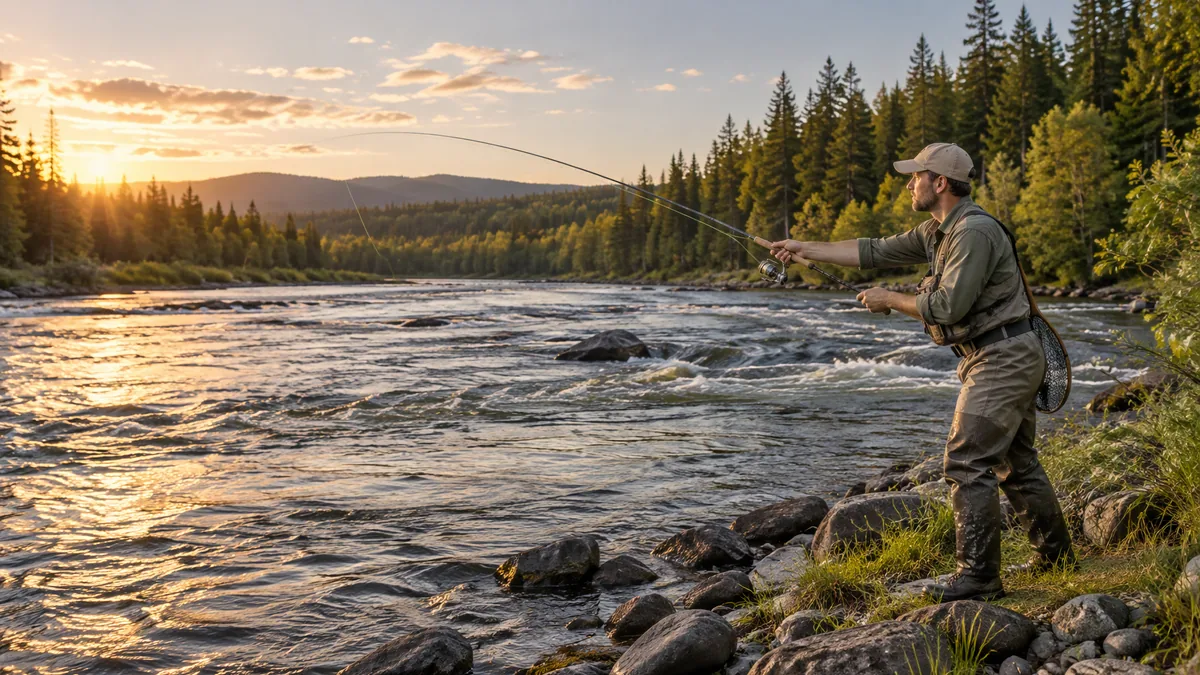
How to Fish a River
A river is not a lake with a current. The water is always moving, and everything in it — bait, cover, and the fish themselves — is arranged around that flow. Learning how to fish a river means learning to read that flow and let it work for you. Cast upstream and the river carries your bait down in a natural drift; put it in the wrong spot and the same current drags your line out of the strike zone before a fish ever sees it. The good news is that rivers are predictable. The same handful of features — pools, riffles, eddies, and seams — repeat in almost every river, and once you can spot them you can find fish almost anywhere. This guide covers how to read moving water, where fish hold, and how to present a bait naturally in current.
Read the Current Before You Cast
Current is the whole puzzle. Fish in a river are not spread evenly; they sit where the water gives them food without forcing them to fight the flow. Your job is to find those places before you make a cast.
The first thing to notice is the seam — the visible line where fast water meets slow water. It often shows up as a slick, glassy band beside a riffle, or a foam line trailing off a rock. Seams matter because bait gets funneled along them, and predators hold just inside the slow side, facing upstream, waiting for food to arrive. A long, straight stretch with a faint foam line down one side is worth a dozen casts into the middle of the flow.
Next, learn the basic river pattern. Water speeds up over shallow, rocky ground (a riffle), then dumps into a deeper, slower pool. Between them is a run, where the current is steady. Riffles are high-oxygen feeding zones, pools are holding water, and runs are travel lanes. A river is a repeating chain of riffle, run, and pool, so reading one stretch tells you what to expect in the next.
Watch how the surface behaves. Any object that breaks the flow — a boulder, a bridge piling, a fallen tree — creates a cushion of calm, swirling water behind it called an eddy. Eddies are rest stops: fish tuck into them to conserve energy and dart out into the current to feed. How to read water goes deeper on these surface cues, and the skills transfer directly to rivers.
Where Fish Hold in a River
Once you can see the current, you can predict where a river's fish will be. They sit in slower water next to faster water, facing upstream.
- Pools. The deep, slow water below a riffle is the classic holding spot. Fish rest here and feed on whatever the riffle delivers. Fish the head of the pool where the riffle dumps in, and the tail where it shallows out.
- Riffles and pocket water. Fast, broken water over rocks holds feeding fish, especially trout. The oxygen is high and the fish are aggressive, but the strikes come fast, so keep your drifts short and precise.
- Eddies behind boulders and structure. The calm pocket behind any current-breaker is prime holding water. Fish the seam at the edge of the eddy, not its dead center.
- Undercut banks. Where the current has carved the bank out from under itself, fish hide in the shadow and dash out for food. Cast tight to the bank and let the bait drift along it.
- Log jams and root balls. Wood in the water is cover and a current break in one package. Work the downstream edge and the pockets around it.
- Seams and current tongues. Where two currents meet, bait concentrates along the line. Fish sit on the slow side of the seam and pick off food drifting past.
Fish in a river hold facing into the current, so they see food coming from upstream. That single fact shapes everything below.
Drift Baits Naturally With the Current
The dead drift is the foundation of river fishing. Instead of casting out and reeling in, you cast upstream (or up and across) and let the current carry the bait down at the same speed as the flow. A bait that drifts naturally looks like food; a bait dragged against the current by a tight line looks like a warning.
To get a natural drift, use just enough weight to reach the strike zone without dragging. Too little and the bait skips along the surface; too much and it snags and stalls. Adjust weight to the depth and speed of the water in front of you.
Line control makes or breaks the drift. As your line crosses fast water to reach slower water, the current bows it downstream and pulls the bait off course. You fix that with a mend — a quick flip of the rod that lays a curve of line upstream so the current has slack to eat before it starts dragging the bait. Mending is the difference between a drift that looks alive and one that looks towed behind a boat.
For floating presentations, a float or strike indicator does two jobs: it holds the bait at a set depth and it telegraphs the take. Set the bait a little above the bottom and let it travel through the run. For bottom presentations, a sliding sinker or split shot lets the bait bounce along the riverbed while the weight anchors the rig. Either way, watch the line, not just the float — many river bites show as a sudden stop, a twitch, or the line going slack. Set the hook when the drift changes in a way that current alone cannot explain.
Tackle for Moving Water
River tackle is about control and feel more than raw power. A medium-light to medium spinning rod in the 6-to-7-foot range is the versatile starting point, long enough to mend line and short enough to cast accurately around cover. Pair it with a smooth 2000-to-3000 series spinning reel.
Line choice depends on clarity and technique. Braid adds sensitivity, and its thin diameter cuts current and reaches deeper. Add a fluorocarbon leader for abrasion resistance and low visibility around rocks and wood; in clear, pressured water, straight fluorocarbon can out-fish braid.
Lures that work in current include inline spinners, which track straight and flash, and soft plastics on jigheads, which you can hop along the bottom or swim through seams. Crankbaits and minnow-style plugs cover runs and pool edges. For live bait, worms, minnows, and grubs drifted naturally are hard to beat, and live bait vs lures breaks down when each has the edge. Match bait and hook size to the current — a bait that tumbles out of control catches fewer fish than a small one that drifts cleanly.
If you are still assembling gear, how to cast a fishing rod will tighten up your accuracy, which matters more in a river than on open water.
Adjust to Water Level and Season
A river changes with rain, snowmelt, dam releases, and the calendar, and so does the fishing. Ignoring water level is one of the most common ways to waste a trip.
High, muddy water pushes fish tight to the bank and into slow eddies, because the main current is too strong and too dirty to feed in. When the river is up and colored, fish close to shore, in the slack water behind structure, and use bigger, darker, more visible baits so fish can find them in low clarity. Low, clear water does the opposite: fish get spooky and slide into deeper pools and shaded pocket water, and you need to downsize line and bait and make longer, softer casts.
Season sets the pattern on top of that. In spring, warming water and higher flows pull fish toward riffles and spawning gravel. In summer, low, clear water pushes fish deep or into oxygenated riffles, and the bite is best early and late. In fall, cooling water and dropping levels concentrate fish in deeper holding water as they feed hard before winter. Best time of day to fish explains how light and weather shift the window.
If a dam releases water upstream, the level can rise fast and without warning. Know the release schedule, watch for a rising, dirty edge, and never wade a tailwater without an exit route.
Common Mistakes
- Fishing the middle of the river. The most productive water is almost always the edge — a seam, a bank, a current break. Fish the margins before the center.
- Casting downstream. River fish face upstream. Cast upstream or across so your bait comes toward them naturally instead of chasing them.
- Never mending the line. A tight, bowed line drags your bait out of the zone. Learn to mend, and your drift will look alive.
- Too much weight. Enough weight to reach the zone is plenty. Overweighted rigs snag, stall, and lose their natural action.
- Standing in the spot you should be fishing. Wading right into a pool spooks fish. Fish the near water first, then wade upstream as you go.
- Ignoring the regulations. Seasons, size limits, bait restrictions, and catch-and-release rules vary by water and change often. Check the current rules for your river before you fish.
FAQ
What is the best bait for river fishing? There is no universal answer, but live bait — worms, minnows, and grubs drifted naturally — is the most reliable across species. For artificials, inline spinners and soft plastics cover most river situations.
Can you fish a river without a boat? Yes, and wading or bank fishing is how most anglers fish rivers. Focus on access with structure: bridge pilings, riffles, pool heads, and undercut banks you can reach from shore.
How do I know where the fish are in a river? Look for the edge between fast and slow water. Fish hold in the slower water beside a current seam, facing upstream. Pools, eddies, and current breaks behind structure are the highest-percentage spots.
Do I need special line for river fishing? Not necessarily, but thin, sensitive line helps you feel a drift and reach deeper water. Braid with a fluorocarbon leader is a strong all-around choice around rocks and wood.
From here, target a species that suits your river. Rivers are smallmouth water in much of North America — see how to catch smallmouth bass — and cold, fast rivers are trout country: brown trout and rainbow trout are the classic targets. For bigger fish, try walleye in deeper pools, striped bass in tidal rivers, or chinook salmon on their spawning runs. Browse the rest in the Rivers & Streams category.
About the author and how this was tested
About the author
FishermanGuy
Bank, boat and kayak angler · fishing, crabbing and shrimping since 2021
I buy the gear, fish it for a season and write down what failed. No sponsored verdicts, no free-sample flattery. Every rig on this page has landed fish in water I can point at on a map.
How this was tested
- Every rig gets at least six trips on the same water before it is published.
- Gear is bought at retail. Free samples are labelled in the first paragraph.
- Dates show first publication and the last time the page was updated.