Field notes
Offshore Fishing Basics
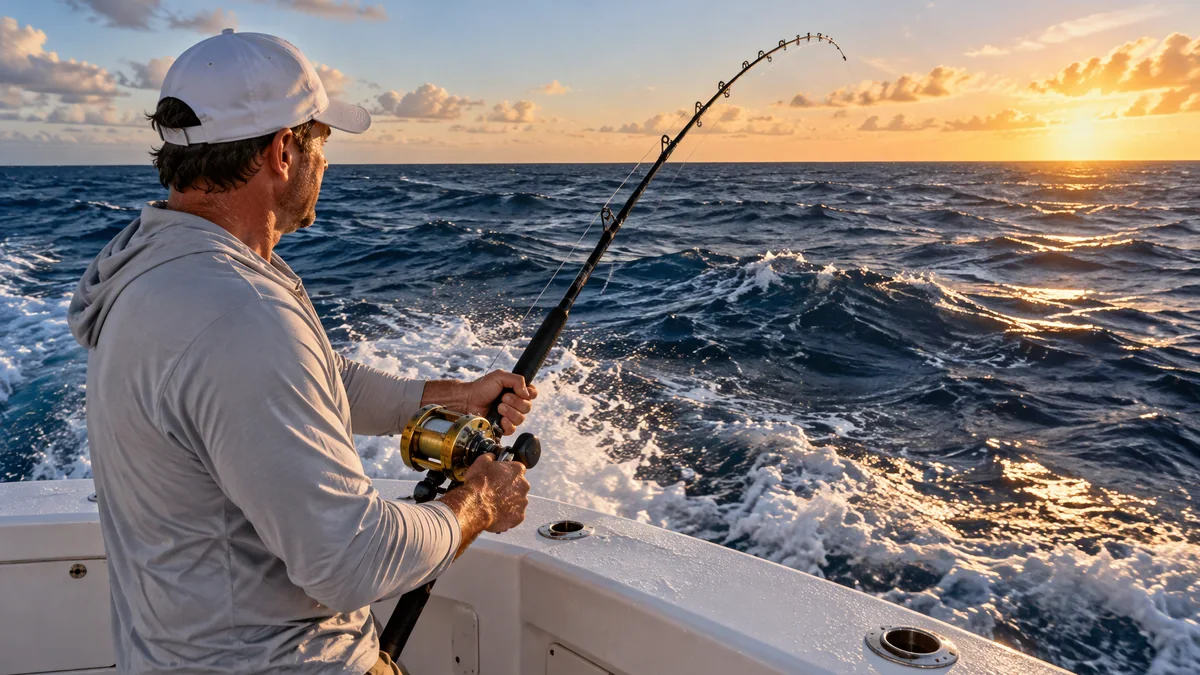
Offshore Fishing Basics
Offshore fishing basics start with a change of scale. Inshore, you can often see the water you are fishing and read it from the boat or the bank. Offshore, you run miles out over deep, open ocean to chase fish that follow temperature, current, bait, and structure you have to locate with electronics and experience. The rewards are big — tuna, mahi, marlin, snapper, and more — but the demands are real: a capable boat, heavy tackle, weather sense, and a healthy respect for safety. This guide covers what a newcomer needs before the first offshore run: how to prepare the boat and gear, how to find fish on open water, and how trolling and bottom fishing work. Get these fundamentals right and the rest is time on the water.
Boat, Weather, and Safety First
Offshore fishing is a small-boat trip into a big environment, and the water does not forgive mistakes. Before any fish, you need a boat that can handle open ocean and a plan for staying safe.
The boat should be seaworthy, with the range to run out and back and the power to handle rough water — twin outboards are preferred offshore so a single engine failure does not strand you. Carry a VHF radio, an EPIRB or personal locator beacon, life jackets for everyone, a first aid kit, tools, spare parts, and a sea anchor or drogue. Keep a working bilge pump and enough anchor and line to hold in deep water.
Weather decides the trip. Check a marine forecast — not a land forecast — for wind, wave height, and swell period, and treat a small craft advisory as a hard no. Short, steep wind waves are worse than a long, gentle swell of the same height. File a float plan so someone ashore knows where you are going and when you expect to be back, and follow the fuel rule: a third out, a third back, a third in reserve. If you are brand new, the smartest move is a charter or a party boat first, so you can learn the water and the techniques without owning the boat.
Gear and Tackle for Offshore
Offshore tackle is heavier than anything you use inshore, because the fish are bigger, the water is deeper, and the fights are longer.
Conventional reels paired with stout rods are the standard. Match the outfit to your target: lighter conventional gear in the 20-to-30 pound class handles mahi and smaller tuna; 50-to-80 pound class gear is the workhorse for bigger tuna, wahoo, and bottom fish; and true big-game tackle in the 80-to-130 pound range is for marlin and large sharks. Load reels with braid backing and a monofilament or fluorocarbon topshot, and finish with a heavy fluorocarbon leader.
Terminal tackle is built for strength: circle hooks for bait fishing, heavy swivels, crimps instead of knots on the heaviest leaders, and skirts, plugs, and spoons for trolling. Add the handling gear that big fish demand — a gaff or flying gaff, a tag stick if you release billfish, and a fighting belt or harness so you can put real pressure on a fish without wrecking your back. If you are moving up from lighter fishing, inshore fishing basics shows how the saltwater approach scales, and live bait vs lures applies offshore just as it does close to home.
Find the Fish on Open Water
Open ocean looks empty, but offshore fish gather along invisible edges. Learning to find those edges is the heart of offshore fishing.
Temperature breaks are the first thing to chase. Satellite sea-surface temperature charts show where warm and cool water meet, and those boundaries — often marked by a color change or a rip line on the water — concentrate bait and the predators that follow it. Current edges and rips work the same way, stacking plankton and bait along the seam.
Floating structure is gold. Weed lines, sargassum mats, and debris collect bait and shade, and mahi in particular hold tight to them. Diving birds are a giveaway — terns, boobies, and frigatebirds working the surface mark bait being pushed up by predators below. Watch for porpoise and tuna birds, and keep an eye on the sounder for bait balls and fish holding under the boat.
Bottom structure matters for the reef and wreck side of offshore fishing: ledges, humps, and wrecks rise off the flat bottom and hold snapper, grouper, amberjack, and cobia. Mark these on the chart and with the sounder, then fish them vertically. Once you find a productive temperature break, weed line, or piece of bottom, work it thoroughly before moving on. The mahi-mahi guide and yellowfin tuna guide break down those two offshore favorites.
Trolling Basics
Trolling is the standard way to cover open water and find active fish. You pull lures or baits behind a moving boat, and the spread of offerings at different distances and depths imitates a school of bait.
Set a spread: lines close to the boat and far back, high on the outriggers and low off the rod tips, so your baits cover different lanes and depths. Skirted trolling lures, cedar plugs, diving plugs, and spoons all have a place, and rigged ballyhoo is a classic bait for billfish and tuna. Speed depends on the target — a steady trolling speed for tuna, mahi, and wahoo, and slower presentations for marlin.
Keep the boat moving in gentle zigzags and watch the spread constantly. Turns and speed changes make lures rise, fall, and dart, which triggers strikes. When a fish hits, note which line and how far back, drop back if the fish is not hooked, clear the other lines, and fight the fish from a harness if it is big. Trolling is also a search tool: once a pattern produces, repeat the depth and speed that worked.
Bottom Fishing Reefs and Wrecks
When you find structure on the bottom, vertical fishing takes over. Anchor upcurrent of a wreck or reef, or drift over it if the current is strong, and drop baits straight down to the fish holding on the structure.
A simple bottom rig — a heavy sinker on a fish-finder or knocker setup, with a circle hook on a short leader — presents bait right on the structure. Vertical jigs worked with a sharp lift and drop trigger reaction strikes from amberjack and grouper. Cut bait and live bait both work, and cobia often cruise above the structure looking for an easy meal. In deep water, an electric reel saves your arms, and a descending device lets you return fish safely when they come up with barotrauma from the pressure change. Check the red snapper guide and cobia guide for the rigs and tactics that put fish in the box.
Common Mistakes
- Pushing the weather. The ocean is not the place to prove a point. A rough forecast or a rising sea means turning back, not pressing on.
- Underestimating fuel and range. Running out of fuel offshore is a life-threatening emergency, not an inconvenience. Follow the thirds rule.
- Tackle that is too light. Big offshore fish destroy gear meant for inshore. Match your outfit to the fish you expect.
- No communication plan. A working VHF, a beacon, and a float plan are non-negotiable safety equipment.
- Fighting big fish without support. A harness and belt protect your body and let you land fish that would otherwise beat you.
- Ignoring the regulations. Offshore seasons, size limits, permits, and billfish release rules are specific and change. Know them before you keep anything.
FAQ
Do I need my own boat to fish offshore? No. Charters and party boats run offshore trips and are the best way for a beginner to learn the water, the techniques, and the safety routines before committing to a boat.
What is a good first offshore target? Mahi, king mackerel, and smaller tuna are forgiving, plentiful in season, and good eating. They teach trolling and fish-fighting without demanding the heaviest gear.
How far offshore do you have to go? It depends on where you live and the season. Some fisheries are a few miles out; others require a run to the Gulf Stream or similar blue water. Local knowledge and temperature charts point the way.
What line do I need for offshore fishing? Match line class to the target — lighter conventional gear for mahi and small tuna, heavier 50-to-80 pound class for big tuna and bottom fish, and big-game tackle for marlin. The leader should be heavy and abrasion-resistant.
For the wider saltwater picture, browse the Offshore & Reef category or the Saltwater Fishing section.
About the author and how this was tested
About the author
FishermanGuy
Bank, boat and kayak angler · fishing, crabbing and shrimping since 2021
I buy the gear, fish it for a season and write down what failed. No sponsored verdicts, no free-sample flattery. Every rig on this page has landed fish in water I can point at on a map.
How this was tested
- Every rig gets at least six trips on the same water before it is published.
- Gear is bought at retail. Free samples are labelled in the first paragraph.
- Dates show first publication and the last time the page was updated.