Field notes
Surf Fishing for Beginners
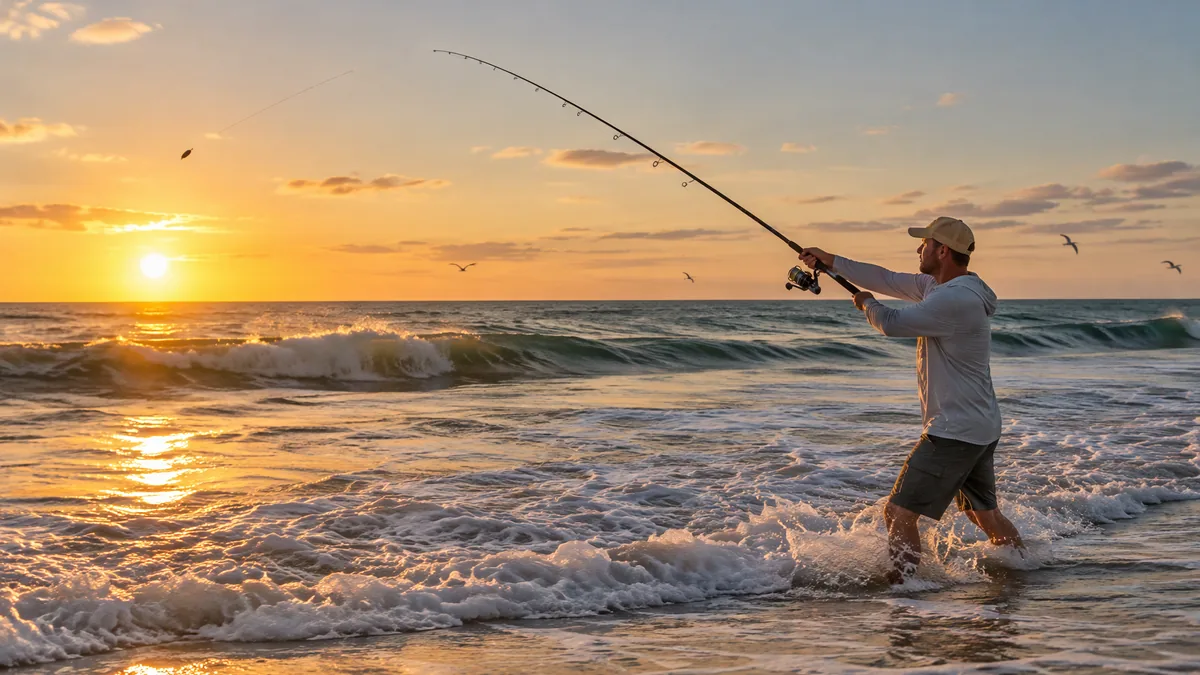
Surf Fishing for Beginners
Surf fishing for beginners looks simple from the beach: cast into the ocean, wait, and reel in a fish. The reality is more interesting. The surf is a moving environment of waves, tides, and shifting sandbars, and the fish arrange themselves around those features in ways you can learn to predict. The good news is that you do not need a boat, an expensive outfit, or years of experience to catch fish from the sand. A long rod, a simple rig, and a basic understanding of where fish feed in the wash will put you on fish. This guide covers the gear, the beach reading, the rigs, and the timing that turn surf fishing for beginners from a gamble into a plan.
Gear That Fits the Surf
Surf tackle is built around two problems: reaching fish that may be a long cast away, and holding bait on the bottom while waves and current try to push it around.
A spinning rod in the 9-to-12-foot range is the standard. The length gives you casting distance and keeps your line up out of the breaking waves. Pair it with a 4000-to-6000 size spinning reel that holds plenty of line and has a smooth, strong drag. Fill it with 20-to-30 pound braid for distance and sensitivity, then add a 30-to-40 pound fluorocarbon or monofilament shock leader — a heavier length of line at the end that absorbs the strain of casting and fighting fish in the wash.
The rest of the kit matters as much as the rod. A sand spike holds your rod while you wait, and a long one suited to your typical surf is worth the space. Bring a bait knife, long-nose pliers, a fish gripper or lip grip, a bucket for bait, and a headlamp for dawn, dusk, and night trips. In cold water, waders let you stand in the wash and cast past the first bar; in warm water, many anglers fish in shorts and booties. If you are building a first outfit from scratch, fishing for beginners gear covers the essentials, and inshore fishing basics explains the saltwater gear that overlaps with the surf.
Read the Beach and the Tide
The single biggest edge in surf fishing is learning to read the beach. Most beginners cast into featureless water and wonder why nothing happens. Fish in the surf concentrate around structure just as they do anywhere else, and the structure is written in the waves.
Look for sandbars and the deeper water between them. A sandbar shows up as a line of white breakers; the darker, calmer water between two bars is a trough, or gut, where bait collects and fish feed. A cut is a channel through a bar where water drains — it often shows as a calm, darker lane in an otherwise breaking line, and it is a highway for fish moving in and out. Points of sand that stick out into deeper water, and the edges of jetties and inlet mouths, are also high-percentage spots.
Color tells you depth. Darker water is usually deeper; lighter, greener water over a shallow bar is where waves break. Watch where the birds work and where bait ripples the surface. Then fish the edges — the slope from a bar down into a trough, the mouth of a cut, the current seam beside a jetty.
Tide works with all of this. Moving water is what drives feeding, so the middle of a rising or falling tide usually beats slack water, when little is moving. Incoming water often brings cleaner water and pushes bait onto the beach; outgoing water drains the troughs and pulls bait out through the cuts. Pair the tide with light level using our guide to the best time of day to fish, since dawn and dusk are prime on any tide.
Simple Rigs for Beginners
You can catch surf fish with two rigs. Learn these before adding anything else.
The fish-finder rig is the workhorse. A sliding sinker rides on your main line above a swivel, and a length of leader runs from the swivel to your hook. When a fish picks up the bait, the line slides through the sinker and the fish feels little resistance — hence the name. It casts well, holds bottom, and lets a hooked fish run. Use a pyramid sinker in calm surf and a sputnik or frog-tongue style in stronger current to dig in and hold.
The high-low rig carries two hooks on short dropper loops above a sinker. It doubles your odds and presents bait at two heights in the water column, which suits species that feed just off the bottom. It is a favorite for smaller fish like whiting and croaker.
Match the sinker to conditions: enough weight to hold bottom without being so heavy it kills your cast. Hook size should match your bait and target — small, sharp hooks for whiting and panfish, larger for redfish and striped bass. Keep your leaders simple and check them for abrasion after every fish, because sand and structure rough up line fast.
Bait and Lures That Work
Fresh, natural bait is the most reliable choice in the surf. Cut bait — chunks of mullet, menhaden, or mackerel — stays on the hook through repeated casts and bleeds scent into the current. Shrimp, either fresh or frozen, is a universal bait that nearly everything eats. Sand fleas dug from the wash are deadly for species that grub along the beach, and bloodworms and squid strips round out a basic bait selection.
Artificials shine when fish are actively feeding. Metal spoons and bucktail jigs cast far and imitate baitfish; soft plastics on jigheads work around structure and in the wash; and topwater plugs draw violent strikes at dawn and dusk. Live bait vs lures breaks down when each has the edge — in dirty, rough water, natural bait usually wins.
Match the bait to what you are chasing. For redfish and striped bass, cut bait and swimbaits around structure are strong. For whiting and other small surf species, small hooks with shrimp or fish strips fished on the bottom keep rods bending. The redfish guide, whiting guide, and summer flounder guide each cover species-specific surf tactics.
Cast, Set the Rod, and Wait
Surf casting rewards a smooth, deliberate motion, not brute force. A long rod loads and unloads like a spring; let it do the work. Use an overhead cast from about ten o'clock to two o'clock, and aim for a spot rather than maximum distance. Accuracy near a cut or the edge of a bar catches more fish than a bomb into open water. How to cast a fishing rod covers the mechanics in detail.
Once the bait is out, set the rod in the sand spike at roughly a forty-five degree angle, pointing toward your rig with the line just tight enough to show a bite. Keep the line reasonably taut so you can see and feel takes, and watch the rod tip — a sharp tap, a slow load-up, or the line going slack all signal a fish.
When a fish takes, do not strike like you are setting a hook in freshwater. Reel down until the line comes tight and the weight of the fish is on the rod, then lean back or sweep the rod to drive the hook home. Keep pressure on and let the drag and the waves help you land the fish. Above all, keep your rod out of the breakers so a wave does not shove it over while you wait.
Common Mistakes
- Fishing featureless water. Cast to a bar edge, a trough, or a cut. The fish are on the structure, not in the middle of nowhere.
- Too little sinker weight. If your rig washes back to shore, you are not fishing the spot you picked. Add weight until it holds.
- Standing where the fish are. Wading straight into the wash spooks fish in the shallows. Fish the near water first, then move out.
- Ignoring the tide. A dead tide fishes poorly. Plan around moving water.
- Dry hands and bad releases. Wet your hands before handling fish and release quickly to improve survival. On the beach, respect bag limits and size rules, which vary widely by state.
- Skipping safety. The ocean is powerful. Watch for rip currents, never turn your back on the surf, fish with a companion when you can, and mind the tide if you wade onto bars that flood.
FAQ
Do I need a special rod for surf fishing? A long spinning rod, roughly 9 to 12 feet, is the standard, but you can start with a heavy freshwater outfit and short casts. A proper surf rod mainly buys you distance and line control.
What is the best bait for surf fishing? Fresh cut bait and shrimp are the most reliable all-around choices. For active fish, metal spoons and swimbaits catch well, especially near structure.
Can you surf fish at high tide? Yes, but the best windows are usually the moving stages of the tide. High tide can push fish close to shore; low tide exposes bars and troughs you can then read and fish on the next push.
How do I keep bait on the hook when casting? Use a tough cut bait, thread it securely, and consider a bait elastic or a small piece of thread to bind it. Match sinker weight to conditions so the rig does not tumble on the cast.
When is the best time to surf fish? Dawn and dusk are strong, and so is any period of moving water. Combine the two — fish a rising or falling tide at first or last light — for your best odds.
To go deeper, browse the Surf & Pier category or the wider Saltwater Fishing section. If you want to fish saltwater from a boat instead of the beach, inshore fishing basics picks up where the surf leaves off.
About the author and how this was tested
About the author
FishermanGuy
Bank, boat and kayak angler · fishing, crabbing and shrimping since 2021
I buy the gear, fish it for a season and write down what failed. No sponsored verdicts, no free-sample flattery. Every rig on this page has landed fish in water I can point at on a map.
How this was tested
- Every rig gets at least six trips on the same water before it is published.
- Gear is bought at retail. Free samples are labelled in the first paragraph.
- Dates show first publication and the last time the page was updated.