Field notes
How to Tie a Texas Rig
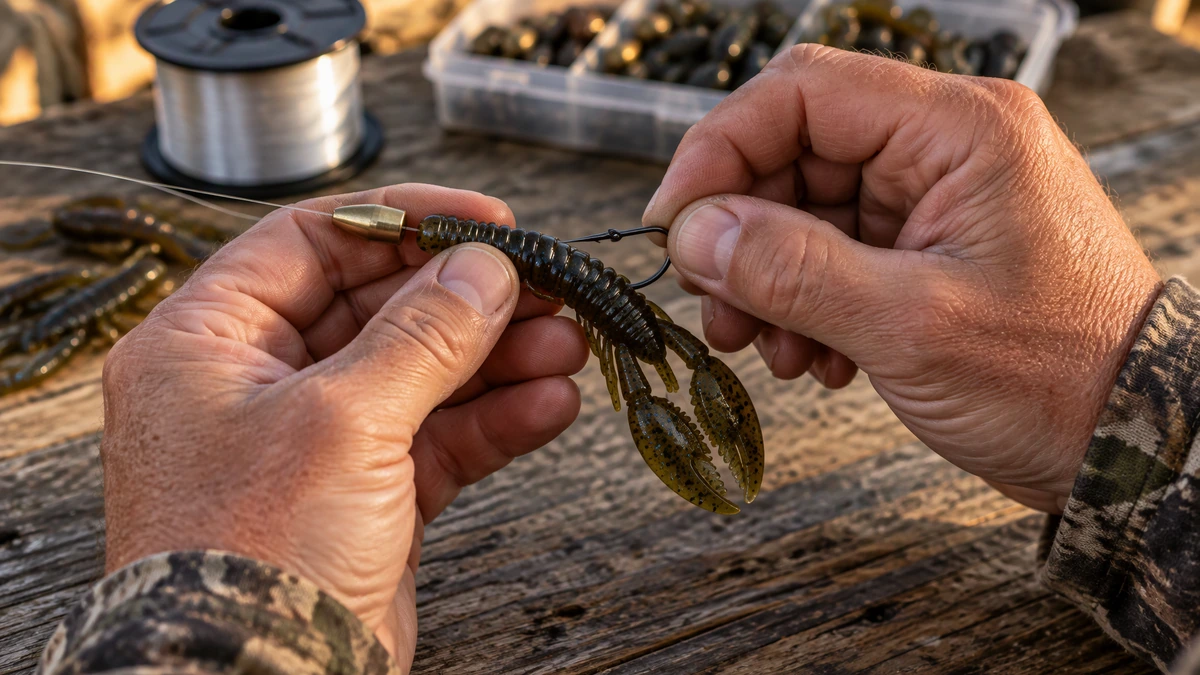
How to Tie a Texas Rig
The Texas rig is the workhorse soft-plastic setup for bass and one of the first rigs every angler should learn. It combines a worm hook, a soft plastic, and usually a bullet weight into a weedless presentation that slides through grass, wood, and rock without snagging. Tying a Texas rig takes only a few minutes and two simple skills: a knot to attach the hook to your line, and a threading method that rigs the bait so the hook point is protected. Once you can tie it, you can fish almost any shallow cover with confidence. This guide walks through the parts you need, how to tie the hook, how to rig the plastic so it runs straight, and how to fish the rig so the bait does the work.
What a Texas Rig Is and When to Use It
A Texas rig is a weedless presentation built from three parts: a hook, a soft plastic bait, and a sliding bullet-shaped weight above the hook. The hook is threaded through the nose of the bait and the point is tucked just under the plastic's skin. That buried point is what makes the rig weedless — it slides over grass, limbs, and rocks instead of catching on them.
The rig shines in cover. Docks, laydowns, weed lines, lily pads, and brush piles are all Texas-rig water, because the bait can go where treble-hooked lures cannot. It is also a slow, finesse-friendly presentation: a soft plastic worked along the bottom looks like a worm, craw, or baitfish nosing through the environment, and bass will eat it when they ignore faster lures. Because it is so versatile and inexpensive, it is one of the most productive rigs for largemouth bass and works equally well for smallmouth bass around rock and wood.
Gear and Components You Need
Keep the components simple. You need a hook, a plastic, and a weight, plus your line and rod.
- Hook: An offset-shank worm hook, ideally an extra-wide-gap (EWG) hook, sized to the bait. A 3/0 to 5/0 hook covers most standard worms and creature baits. The offset bend helps the bait sit straight and keeps the point aligned.
- Soft plastic: Worms, creature baits, craws, and lizards all work. Match the hook size to the bait's length and thickness.
- Bullet weight: A cone-shaped slip sinker that rides above the hook. Weight depends on depth, wind, and cover — light for shallow, slow fishing, heavier for deep water or current. Tungsten weights are smaller for the same weight, which helps the rig slip through cover.
- Optional extras: A bobber stop or a toothpick to peg the weight against the bait, and a small glass bead for a little click as the weight slides.
Use line that matches the cover. Fluorocarbon handles abrasion around wood and rock; braid gives strength and sensitivity in heavy grass. A medium-heavy rod with a fast tip is the classic Texas-rig tool. If you are still building your outfit, how to choose a fishing rod covers power and action.
Step 1: Tie the Hook to Your Line
A strong, simple knot is all you need, and the Palomar is the best choice for a worm hook. It is quick, it holds well in both braid and fluorocarbon, and it seats cleanly against the hook eye.
- Double about six inches of line and pass the loop through the hook eye.
- Tie a loose overhand knot with the doubled line, leaving the hook hanging from the loop.
- Pass the loop over the entire hook, so it clears the point and the bend.
- Wet the knot, then pull the standing line and the tag end to tighten it, sliding the knot down to the eye.
- Trim the tag close.
If you prefer a different knot, an improved clinch or a San Diego jam knot also work well on a worm hook. Whichever you use, wet it before tightening so the line does not burn itself, and test it with a firm pull. The fishing knots category has more options if you want to compare.
Step 2: Rig the Soft Plastic Weedless
This is the step that makes a Texas rig a Texas rig. The goal is a bait that hangs straight on the hook with the point buried just below the surface of the plastic.
- Hold the bait by the body and push the hook point into the center of the nose, then out through the bottom of the bait about a quarter inch back.
- Pull the hook through until the knot and hook eye sit snug against the nose of the bait.
- Rotate the bait so the hook shank runs straight along its back, and measure where the bend of the hook meets the plastic.
- Push the point back into the body at that spot and bring it out through the top or side of the bait.
- Lay the point back into the plastic so it is barely skin-hooked — buried just enough to be weedless, but ready to drive home on the hookset.
Check that the bait is straight. If it is crooked or twisted on the shank, it will spin and roll instead of tracking true, and bass are far less likely to eat it. Take a second to straighten it before you cast.
Step 3: Add the Weight and Fish It
Slide the bullet weight onto your line above the hook, pointed end toward the hook. Left free, it slides up the line when a fish picks up the bait, so the fish feels little weight — the classic Texas-rig action. In heavy cover, or when you want the weight tight to the bait for flipping and pitching, peg it in place with a bobber stop or a piece of toothpick.
Fish the rig slowly and on the bottom. Cast to cover, let the bait sink on a semi-tight line, and watch the line where it enters the water for the telltale tick of a bite. Work the bait with lifts of the rod tip followed by controlled drops, letting it fall on slack line, or drag it along the bottom. Most Texas-rig bites come on the fall, so pay attention as the bait drops. When you feel weight or the line moves off, reel down until the line is tight and set the hook firmly to drive the point through the plastic and into the fish.
Common Mistakes
- Hook point buried too deep or not enough. Too deep and you miss hooksets; too shallow and the rig snags. Skin-hook it just under the surface.
- A crooked bait. If the plastic is not straight on the shank, it spins and kills the action. Straighten it before every cast.
- Wrong hook size. A hook too small for the bait will not gap past the plastic; too large and the bait tears apart. Match the hook to the bait.
- Weight that does not suit the water. Too light and you cannot feel the bottom in deep water or wind; too heavy and the bait loses its slow, natural fall.
- Not re-rigging after a fish. A bass often slides the plastic down the hook. Check and reset the bait after every fish.
- A soft hookset on slack line. The point has to punch through plastic. Reel tight first, then set hard.
FAQ
What size hook for a Texas rig? Match the hook to the bait. A 3/0 to 5/0 extra-wide-gap worm hook covers most standard worms and creature baits. The hook should be wide enough to gap past the plastic on the hookset.
Can you fish a Texas rig without a weight? Yes. A weightless Texas rig is a great shallow-water and slow-fall presentation. Add the bullet weight when you need to reach deeper water, punch through cover, or fish in wind and current.
What is the best knot for a Texas rig? The Palomar knot is the easiest strong choice and works well in braid and fluorocarbon. An improved clinch or San Diego jam knot are good alternatives.
What baits work on a Texas rig? Worms, creature baits, craws, and lizards are the classics. Soft plastics with a straight body rig most easily and track best through cover.
The Texas rig pairs naturally with a slow, bottom-focused approach. Learn how to fish a lake to find the cover worth fishing, and browse the Rigs & Terminal Tackle category for related setups.
About the author and how this was tested
About the author
FishermanGuy
Bank, boat and kayak angler · fishing, crabbing and shrimping since 2021
I buy the gear, fish it for a season and write down what failed. No sponsored verdicts, no free-sample flattery. Every rig on this page has landed fish in water I can point at on a map.
How this was tested
- Every rig gets at least six trips on the same water before it is published.
- Gear is bought at retail. Free samples are labelled in the first paragraph.
- Dates show first publication and the last time the page was updated.