Field notes
Crawfishing Basics
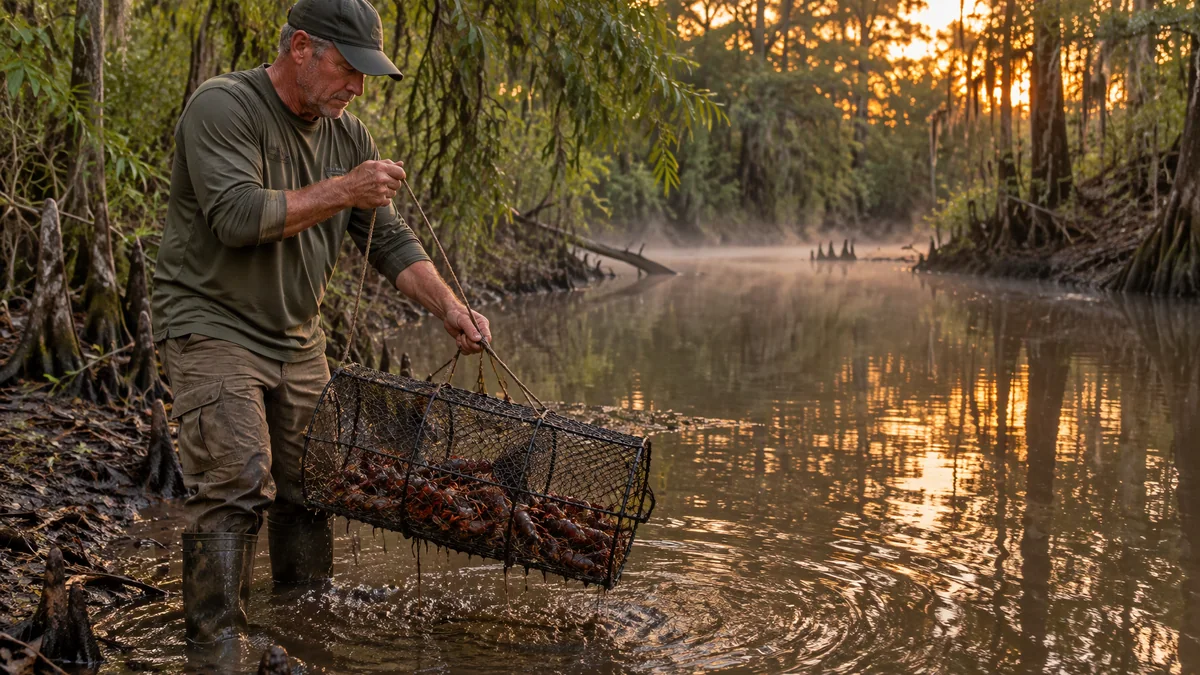
Crawfishing Basics
Crawfishing basics come down to three things: find slow, shallow water with mud, cover, and something to eat; put bait where crawfish can smell it; and give them time to find it. Crawfish — also called crayfish or crawdads depending on where you live — live in ponds, ditches, creeks, and backwaters across most of the country. They are easy to catch with cheap gear, which makes crawfishing one of the most accessible ways to put food on the table or collect bait. The catch is that rules on species, seasons, and moving live crawfish vary widely, and a few of those rules exist to stop the spread of invasive populations.
What Crawfishing Is and Where It Works
Crawfish are small freshwater crustaceans that look like miniature lobsters. They eat almost anything organic — plant matter, insects, dead fish, and detritus — and they thrive where the bottom is soft and the water is slow.
Good crawfishing water usually has:
- Mud or silt bottoms where crawfish burrow and hide.
- Cover such as rocks, logs, weed beds, and undercut banks.
- Slow current or none at all. Ponds, ditches, oxbows, and creek pools beat fast riffles.
- Reliable food and clean-ish water. Avoid spots downstream of heavy pesticide runoff, industrial discharge, or obvious pollution; crawfish concentrate contaminants.
The most commonly targeted species in the southern United States is the red swamp crawfish, a native of the Gulf region that has been introduced widely. In parts of the country where it is not native, it can be invasive. That matters later, when it is time to decide what to do with your catch. The red swamp crawfish profile covers identification and range.
The Gear: Traps, Nets, and Buckets
You do not need much to start. Most crawfishing is done with one of four tools:
- Minnow-style traps — wire or mesh cylinders with funnel openings. Cheap, widely available, and effective in ponds and ditches.
- Crawfish traps — larger wire traps with multiple funnels and a bait compartment. They hold more and are easier to empty.
- Seines — a long net with floats on top and weights on the bottom, pulled through shallow water to herd crawfish into the bag.
- Dip nets and buckets — for hand fishing and for scooping crawfish you find under rocks or in vegetation.
Add heavy gloves, a cooler or bucket with damp vegetation or a wet towel, and a marker float or tag for each trap. Traps left unmarked are hard to find and easy for someone else to claim. The principles are the same as any pot fishery; crab trap basics explains setting and marking traps in more detail.
Bait and Trap Placement
Crawfish are scavengers with a strong sense of smell. Almost any oily, fishy bait works:
- Fish heads and frames
- Chicken necks or backs
- Canned mackerel or sardines
- Bacon ends
- Dry dog or cat food
Put bait in a container with holes so it releases scent slowly and does not fall apart immediately. A bait box clipped inside the trap keeps crawfish from eating and leaving.
Placement matters more than bait choice. Set traps:
- In shallow water, roughly a foot to a few feet deep, near cover.
- Along edges where mud meets weeds, rocks, or a ditch bank.
- Out of strong current, which rolls traps and carries scent away.
- In shade during hot weather, since crawfish move shallower at night and deeper in bright sun.
Soak traps overnight, roughly 12 to 24 hours. Longer soaks in warm water can drown or spoil the catch, and trapped crawfish may eat each other. Check early the first time and adjust. If a trap comes up empty after a full night in good-looking water, move it rather than adding more bait.
Hand Fishing and Seining
Traps are not the only way. In creeks and shallow ponds, hand fishing is simple and immediate.
Walk slowly upstream and look for crawfish under rocks, in leaf packs, and along undercut banks. Lift a rock and hold a dip net just downstream; the current carries the crawfish into the net as it flees. At night, a headlamp makes their eyes reflect, and crawfish are often more active in the open.
Seining works in shallow, even-bottomed runs and ditch sections. Stretch the seine across the flow or vegetation, then walk it toward the bank, keeping the bottom edge on the ground. Crawfish trapped against the mesh can be picked out by hand. Two people make it far easier than one.
Both methods are selective: you see what you catch and can release undersized or unwanted animals immediately. That is useful in waters where species identification matters. The how to catch shrimp guide covers similar net-and-trap methods in salt water.
When and Where to Go
Crawfish are most active in warm water. Spring through early fall is prime in most places, with the best action once water temperatures climb and crawfish move out of winter burrows. Rain can trigger movement, especially in ditches and creek backwaters that connect to ponds.
Time of day is flexible. Traps fish around the clock, so overnight sets do the work. Hand fishing and seining are easier in daylight, while night fishing with a headlamp can produce more active crawfish in shallow water.
Access is the limiting factor. Many agricultural ditches and small ponds are on private land, and permission is required. Public creeks, wildlife management areas, and national forests often allow crawfishing but may have specific seasons or gear restrictions. Check before you set a trap, and never assume a ditch beside a road is public water.
Rules, Invasive Species, and Handling
This is the part that matters most, and the part most beginners skip.
- Licensing and seasons vary. Some states require a fishing license to take crawfish; others require a special permit or have no closed season. Age exemptions and gear rules differ too. Start with do you need a fishing license, then confirm with your state agency.
- Never move live crawfish between waters. Red swamp crawfish and other species have become invasive far outside their native range. Transporting live crawfish for stocking or bait can establish populations that damage habitat and native species. In many states it is illegal. Use local bait or approved dead bait, and do not dump leftover live crawfish into a different water body.
- Do not release unwanted catch into another water. Return it to the water it came from, or dispose of it responsibly according to local rules.
- Handle and store the catch properly. Keep crawfish cool and damp, not submerged in stagnant water. Dead crawfish spoil quickly and should be discarded, not eaten.
- Avoid polluted water. Crawfish accumulate contaminants. Skip water near heavy agriculture, industry, or storm runoff.
If you plan to keep crawfish for a meal, purge and cook them promptly, and follow local advice on consumption from polluted waters.
Common Mistakes
- Setting traps in current. Moving water rolls traps and spreads scent away. Look for slack edges.
- Fishing too deep or too shallow. Most crawfish are in shallow cover, not the middle of a deep pond.
- Pulling traps too soon. Overnight is usually the minimum soak. Give scent time to work.
- Keeping dead crawfish. They spoil fast. Sort the catch and chill what you keep.
- Moving live crawfish to new water. This is the mistake with the longest consequences. Keep them where they came from.
- Ignoring private property. Ditches and ponds are often private. Ask first.
- Fishing polluted water. Crawfish concentrate what is in the water. Choose clean sources.
FAQ
How long should crawfish traps soak? Overnight, roughly 12 to 24 hours, is typical. In warm water, check sooner to prevent spoilage and cannibalism in the trap.
What is the best bait for crawfish? Oily fish — fish heads, canned mackerel, sardines — and chicken necks work well. The exact bait matters less than placing the trap near cover in slow water.
Do you need a license to catch crawfish? It depends on the state and whether the water is public. Some states require a fishing license, others a permit or none. Check your state agency's rules before setting traps.
Can you catch crawfish in any creek? Many creeks hold crawfish, but access, pollution, and species rules vary. Public water with clean, slow sections and rocky or muddy cover is the best bet.
How do you keep crawfish alive after catching them? Keep them cool, damp, and shaded in a cooler with wet burlap or vegetation. Do not leave them in a bucket of stagnant water, and do not transport them to another water body.
Crawfishing rewards patience and local knowledge more than expensive gear. Once you learn a few ditches and ponds, a handful of traps and an overnight soak will keep you supplied. Browse the Crabbing & Shrimping category for related traps and techniques, and the red swamp crawfish guide for a species-specific approach.
About the author and how this was tested
About the author
FishermanGuy
Bank, boat and kayak angler · fishing, crabbing and shrimping since 2021
I buy the gear, fish it for a season and write down what failed. No sponsored verdicts, no free-sample flattery. Every rig on this page has landed fish in water I can point at on a map.
How this was tested
- Every rig gets at least six trips on the same water before it is published.
- Gear is bought at retail. Free samples are labelled in the first paragraph.
- Dates show first publication and the last time the page was updated.