Field notes
How to Catch Shrimp
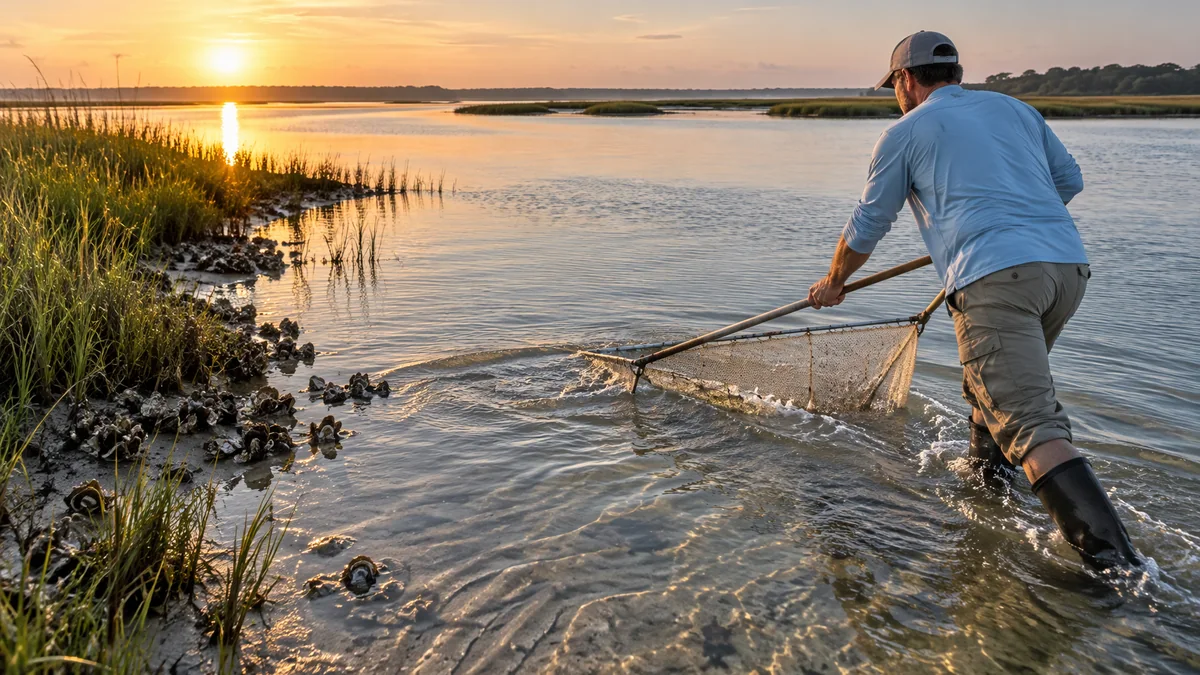
How to Catch Shrimp
Shrimp are bait, dinner, and a sign of a healthy estuary all at once. Learning how to catch shrimp opens up a food source that most anglers walk past — the same shrimp that cost good money at a bait shop can be netted from a dock, a beach, or a pass with a cast net and a little know-how. Recreational shrimping ranges from a kid with a dip net under a dock light to a serious cast-netter working a fall run in a pass. The methods share the same foundation: find where shrimp concentrate, attract them with bait or light, and use the right net. This guide covers the core techniques, the gear, the timing, and the rules that vary from state to state.
Know the Shrimp and the Season
The shrimp most recreational anglers catch in U.S. coastal waters are white, brown, and pink shrimp, and their seasons differ. Brown shrimp often run in spring and early summer; white shrimp are the classic fall run in the Gulf and South Atlantic. Exact timing shifts with water temperature, rainfall, and latitude, so local knowledge beats any calendar.
Shrimp move with the tide and the moon. An outgoing tide at night, especially around a dark moon, is a classic combination for netting shrimp in passes and channels, because shrimp and other bait flush out of the marsh and estuaries. Shrimp are also drawn to light, which is the basis for night shrimping.
Watch the water temperature. Shrimp become active as water warms in spring, and the fall run often follows the first cool fronts that push them out of the estuaries. Local shrimpers track the run closely; a tackle shop or a state fisheries report will tell you when it starts.
Cast Netting: The Core Skill
The cast net is the most versatile recreational shrimp tool. It is a cone of mesh with weights around the bottom edge, thrown so it opens into a circle and sinks over the shrimp.
Net choice. A typical recreational cast net is roughly four to eight feet in radius, with mesh sized for the shrimp you expect — around three-eighths to half an inch is common. A larger net covers more water but is harder to throw, especially in wind. Start smaller and learn to throw well before sizing up.
Throwing. Practice on grass before you go. The goal is a full, open circle, not a bundle. Most styles use a coil or figure-eight motion to load the net, then a sweeping release that lets the weights carry the mesh open. It takes repetition; a few sessions on the lawn make a real difference.
Fishing the net. Work baited areas and likely travel lanes. Let the net sink fully before you pull, and pull steadily so the weights close the bottom. Empty the catch into a bucket and sort quickly, returning bycatch alive.
Bait and Chumming
Shrimp are scavengers, and scent brings them in. Commercial shrimp bait — often a fish meal or menhaden-based product — is mixed with clay or mud to form balls that sink and release scent. Drop bait balls upcurrent of where you plan to throw, let the scent plume develop, then cast into the slick.
Improvised bait works too. Canned mackerel, crushed fish, and fish meal mixed with mud are common substitutes. The idea is a steady scent trail that pulls shrimp into netting range and holds them there.
Chumming is most effective when the water is moving. Bait on a slack tide can sit without drawing much; bait with current spreads a scent line that shrimp follow. Set your bait, give it time, and watch for shrimp flicking or gathering near the bottom.
Night Shrimping With Lights
Shrimp are drawn to light, and night shrimping uses that instinct. A bright light — a floating light, a lantern hung over the water, or a light on a dock — pulls shrimp and baitfish into the glow, where a dip net or a cast net can reach them.
Set the light and give it time. Shrimp do not appear instantly; the light needs to attract plankton and bait, and the shrimp follow. Work the edges of the light where shrimp gather, and use a long-handled dip net or a cast net sized to the space.
Night shrimping is often best on dark nights with moving water. A bright full moon can spread fish and shrimp out and make them harder to concentrate. Check local rules on lights and hours, which vary by state.
Traps, Seines, and Other Gear
Cast nets and dip nets are the most common recreational tools, but other gear has its place.
Shrimp traps — funnel or pillow traps baited with fish meal — can be set and checked, similar to crab traps. They are less efficient than a cast net for volume but easy for beginners and shore-bound anglers.
Seines can be hauled along a beach or shallow flat to catch shrimp and bait, but they are heavily regulated in many states. Check the rules on length, mesh, and where seining is allowed before you buy one.
Trawls are mostly commercial gear. Recreational trawling, where allowed, is tightly regulated and not a beginner's method.
Whatever the gear, the principle is the same: concentrate shrimp with bait, light, or current, then capture them. Match the tool to the setting — a cast net for open water and passes, a dip net for lights and docks, a trap for a set-and-check approach.
Where Shrimp Show Up
Shrimp concentrate in predictable places. Passes and inlets where estuaries exchange water with the Gulf or ocean are prime, especially on an outgoing tide. Channel edges and drops hold shrimp moving with the current. Beach fronts and the mouths of bays can produce during the fall run. Grass edges and marsh drains hold shrimp flushing out of the marsh. Docks and piers with lights draw them at night.
Find the current and the bait, and shrimp are usually nearby. A pass with a strong outgoing tide and a light on the jetty is about as good as it gets. Where you cannot use a boat, a dock, a bridge, or a beach access with a light and moving water can still produce plenty.
Rules, Handling, and Common Mistakes
Shrimping is regulated at the state level, and the rules matter. Expect licensing requirements, seasons, bag limits, gear restrictions on net size and mesh, and closures in some areas. Some states require a separate shrimp permit; others include shrimping under a saltwater license. Read your state's rules before your first trip, and check whether the area you plan to fish is open.
Handle the catch well. Shrimp spoil fast, so chill them immediately in an ice slurry and keep them cold. For bait, many anglers keep shrimp alive in aerated water or preserve them with salt or freezing. Sort bycatch quickly and release it alive.
Common mistakes include:
- Fishing slack tide. Moving water concentrates shrimp and spreads bait scent. Time the tide.
- Wrong mesh size. Mesh too large lets shrimp escape; too small catches everything and is hard to clear.
- Stale or poorly placed bait. Fresh bait upcurrent of the netting area draws more shrimp.
- No light at night. Shrimp follow light. A dark set with no light is a missed opportunity.
- Overloading the net. A net packed with shrimp and debris is hard to pull and may tear.
- Ignoring the rules. Gear limits, seasons, and closures are enforced. Know them before you go.
- Letting the catch warm up. Shrimp chilled within minutes taste far better than shrimp left in a bucket.
FAQ
What is the best way to catch shrimp? A cast net over a baited area is the most productive recreational method for volume. For beginners or dock fishing, a dip net under a light at night is simpler and still effective.
Can you catch shrimp without a boat? Yes. Docks, piers, bridges, beaches, and pass jetties all produce shrimp, especially at night with a light and moving water. A boat expands access but is not required.
What bait attracts shrimp? Fish meal or menhaden-based shrimp bait mixed with clay, plus improvised options like canned mackerel or crushed fish. Scent is the key, and current spreads it.
When is shrimp season? It varies by state and species. Brown shrimp often run in spring and early summer, and white shrimp in fall, but exact seasons shift with water temperature and local rules. Check your state agency.
Do you need a license to catch shrimp? In most states, yes — either a saltwater license that covers shrimping or a separate shrimp permit. Requirements and gear rules vary, so confirm before you set gear.
Shrimping is one of the most accessible ways to put food on the table from public water, and the skills transfer straight to bait collection. Learn the cast net, follow the tide, and respect the rules. For related pursuits, see how to catch blue crabs, crab trap basics, and the species guides for whiteleg shrimp, northern shrimp, and giant tiger prawn, or browse the Crabbing & Shrimping category.
About the author and how this was tested
About the author
FishermanGuy
Bank, boat and kayak angler · fishing, crabbing and shrimping since 2021
I buy the gear, fish it for a season and write down what failed. No sponsored verdicts, no free-sample flattery. Every rig on this page has landed fish in water I can point at on a map.
How this was tested
- Every rig gets at least six trips on the same water before it is published.
- Gear is bought at retail. Free samples are labelled in the first paragraph.
- Dates show first publication and the last time the page was updated.