Field notes
How to Catch Giant Tiger Prawn: Nets, Lights & Tides
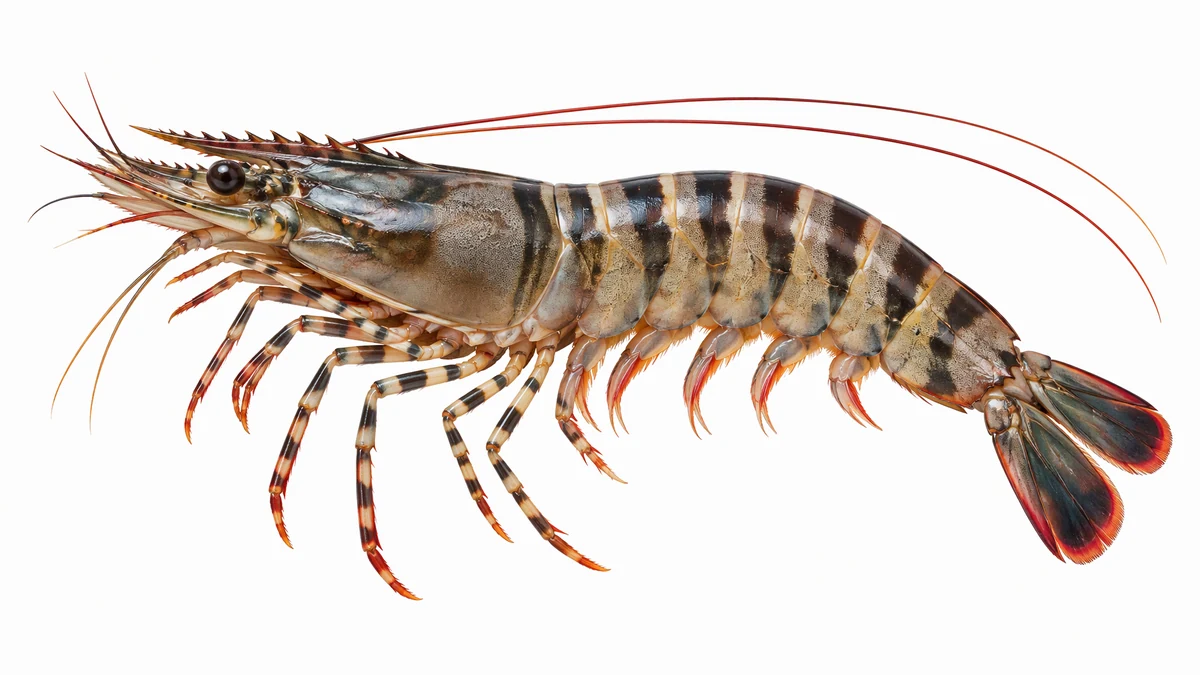
How to Catch Giant Tiger Prawn
The giant tiger prawn is the biggest penaeid prawn in the Indo-Pacific, and for a recreational fisher it is a net target, not a rod target. No hook, no lure, no cast-and-retrieve. You work an estuary at night with a cast net or dip net, a light, and a tide, and you take the prawns that come through. Commercial boats trawl the same species offshore on a completely different scale. Learning how to catch giant tiger prawn is mostly about reading the tide and throwing a net that opens flat. Read the full Giant Tiger Prawn species profile for identification and biology; this guide covers the catching.
Best Time to Catch Giant Tiger Prawn
The best time to catch giant tiger prawn is the warm season, at night, on a falling tide. Those three factors matter more than any piece of gear.
The prawn is most active in water of roughly 25 to 32°C, so the warm months are the season across northern Australia and the rest of its Indo-Pacific range. In the southern part of its range, catches fall away in winter; in the tropics, the warm season brings the strongest spawning and recruitment, and the fishery is timed around that cycle.
Night is when prawns move. They bury in mud and sand by day and come out to feed in the dark, which is why a cast net at 10 pm beats the same net at 10 am. A dark night with little moon is generally better than a bright one, because prawns are less shy and the light you use does more work.
Tide is the third piece. Prawns use moving water, and a falling tide draining a mangrove flat or creek funnels them past points, drains and channel edges. Slack water is slow. Fish the first half of the fall, before the tide gets too low to work, and follow the flow as it drops.
Weather matters less than in a boat fishery, but fresh water after heavy rain can push prawns out of a creek mouth and dirty the water. A run of dry, settled weather usually fishes best.
Best Gear for Giant Tiger Prawn
The gear list is short: a net, a light, and something to keep the catch cold.
| Gear | What it does |
|---|---|
| Cast net | The main tool: a fine-mesh net thrown so it opens flat over prawns |
| Dip net | A fine-mesh scoop for drains, passes and channel edges where prawns funnel past |
| Headlamp | Hands-free light for throwing, sorting and walking the bank |
| Underwater or floating light | Draws plankton, which draws prawns, especially off a boat or jetty |
| Bucket or cooler with ice | Prawns spoil fast; chill them immediately |
| Gloves | The rostrum and antennal spines are sharp |
| Boots and a polarised torch | Mud, shells, and in the north, things that bite |
Net rules are the first thing to check, because they vary by state. Queensland, the Northern Territory and Western Australia all set cast net specifications, closed areas and gear limits, and recreational trawling is not permitted. Buy a net that matches your state's rules, then learn to throw it properly. A net that lands in a crumpled heap catches nothing; a net that opens into a flat circle over a lit patch of water catches everything under it.
Mesh size matters. Fine mesh holds small prawns and reduces gilling, and a net with a decent lead line sinks fast enough to trap prawns before they flick away. Practice on grass before you go near the water.
Best Bait for Giant Tiger Prawn
There is no hook bait for prawns. The "bait" is chum, and the point of it is to concentrate prawns where you can reach them with a net.
The classic estuarine chum is a fine fish-meal mix. Fish meal, a little flour to bind it, and water make a paste you can throw as balls or patties. Some netters add canned fish or fish oil for extra scent. Toss a few handfuls into a drain or along a channel edge, let the scent spread, and cast into the slick.
Why it works: prawns are omnivorous scavengers that hunt by smell and touch at night. A scent cloud mimics a food source, and prawns gather to pick through it. Add a light above the chummed spot and you concentrate the plankton first, then the prawns that follow it.
You can fish without chum. A lit jetty or a moored boat with a deck light often holds prawns on its own, because the light has been attracting plankton all evening. But where there is no permanent light, a bag of fish meal and a floating lamp turn an empty drain into a target.
Keep chum fresh and re-apply it when the action slows. Old, sour chum still works, but fresh fish smell pulls prawns faster.
Giant Tiger Prawn Rigs
A prawn "rig" is the combination of net, light and chum that you actually fish. Three setups cover most nights.
The lit cast-net rig. Anchor or stand beside a jetty light, bridge light or a floating lamp, and position yourself on the edge of the glow rather than in the middle of it. Throw so the net opens from the dark edge into the lit water, over the prawns that have gathered at the boundary. Let the net sink to the bottom, then pull the horn line steadily to purse it closed before you lift. Lifting early lets prawns escape under the lead line.
The chum-and-light rig. Where there is no permanent light, make one. Toss fish-meal patties into 3 to 8 feet of water, hang a lamp or submersible light over the spot, and give it 15 to 20 minutes. Then cast into the glow. Re-chum when prawns thin out.
The dip-net rig. In a narrow drain or a pass with current, skip the cast net. Stand at the edge with a fine-mesh dip net and a headlamp, and scoop prawns as they funnel past on the falling tide. In tight water a steady scoop beats a hard throw.
The best netters run all three in one night: a lit cast-net spot on the main flat, a chummed drain nearby, and a dip net for the moment the tide stacks prawns against a bank.
How to Catch Giant Tiger Prawn, Step by Step
- Check the state rules. Net specifications, closed areas, seasonal closures and possession limits all apply. Confirm before you leave home.
- Pick a dark night and a falling tide. Warm water, little moon, and a tide that is draining a flat or creek.
- Set your light. Stand outside the bright ring, where prawns gather at the edge, or hang a lamp over a chummed spot.
- Chum if needed. Fish-meal patties into 3 to 8 feet of water, then wait 15 to 20 minutes.
- Load the net clean. Coil it over your arm, check for tangles, and make sure the horn line runs free.
- Throw a flat circle. Aim to open the net over the prawns, sinking fast and landing flat.
- Sink, then purse. Let the lead line reach the bottom, then pull the horn line steadily so the net closes before you lift.
- Sort and ice immediately. Pick out the tiger prawns, release undersized or egg-bearing prawns where required, and get the catch on ice at once.
Where to Catch Giant Tiger Prawn
Giant tiger prawn live across the tropical Indo-West Pacific, from East Africa and the Red Sea through Southeast Asia to northern Australia and southern Japan. In Australia the recreational fishery is concentrated in Queensland, the Northern Territory and northern Western Australia.
The habitat shifts with age. Adults live offshore over muddy and sandy seabed, mostly in about 10 to 50 metres, where they burrow by day and emerge at night. Juveniles need estuaries: postlarvae drift into mangrove creeks and tidal rivers, grow through the brackish zone, and move offshore as subadults. That is why estuarine netting works at all.
For a netter, the targets are mangrove creek mouths, drains, channel edges, mud banks and the points where a flat drains into deeper water. Prawns funnel through these pinch points on a falling tide. Work the edges of the flow rather than the dead centre, and move with the tide as it drops.
A cast net in a north Australian creek does not sort its catch. You will take banana prawns, tiger prawns and whatever else is in the drain, so learn the tiger's bold bands and serrated rostrum to pick your keepers.
Giant Tiger Prawn Regulations and Safety
Prawn rules are set by jurisdiction and change often. As of 2025, Australia's Northern Prawn Fishery is a limited-entry trawl fishery managed by the Australian Fisheries Management Authority, with seasonal closures and bycatch reduction and turtle excluder devices required. Recreational fishers in Queensland, the Northern Territory and Western Australia generally take prawns with cast nets or dip nets under gear rules; recreational trawling is not permitted, and some states regulate net specifications and closed areas rather than a minimum size.
Check the current rules with AFMA for the Commonwealth fishery, the Queensland Department of Agriculture and Fisheries, NT Fisheries, or the WA Department of Primary Industries and Regional Development. In Asia, national and provincial agencies set licences, closed seasons and gear limits.
Safety starts with the animal. A giant tiger prawn is not venomous, but the serrated rostrum and antennal spines can puncture a hand, and a live prawn flicks its tail fan with surprising force. Handle it by the body with the head pointed away, and wear gloves when sorting a net full of them.
Food safety is the bigger risk. Prawns spoil fast and can carry Vibrio bacteria that multiply in warm conditions. Keep them on ice from the moment they leave the net, cook them until the flesh is opaque and pearly, and keep raw and cooked batches apart. People with shellfish allergies should treat prawns as a serious allergen.
In northern Australia, estuary nights add one more hazard: crocodiles. Do not wade drains or stand at the water's edge in croc country, especially at night. Fish from a bank, a jetty or a boat, and keep away from the waterline.
Common Mistakes and Giant Tiger Prawn Fishing Tips
- Throwing a wet, tangled net. A net that does not open flat catches nothing. Coil it clean and practice before you fish.
- Lifting too early. Let the lead line sink, then purse. Lifting early lets prawns escape underneath.
- Fishing the bright centre. Stand at the edge of the light where prawns gather, not in the middle of the glow.
- Ignoring the tide. Moving water concentrates prawns. Slack water is a waste of a night.
- Fishing a full moon. Bright nights are usually slower. Pick the dark of the moon.
- No ice. Prawns degrade within hours. Chill them immediately.
- Sorting bare-handed. The rostrum and spines draw blood. Wear gloves.
- Skipping the net rules. State specifications and closed areas are enforced. Check before you buy or throw.
FAQ
What is the best time to catch giant tiger prawn? The warm months, at night, on a falling tide in water around 25 to 32°C. Dark nights with little moon usually out-fish bright ones.
What bait for giant tiger prawn works best? There is no hook bait. Use fish-meal chum to concentrate prawns, plus a light to hold them, then take them with a cast or dip net.
What are the best giant tiger prawn fishing techniques? A lit cast-net rig fished from the edge of the glow, a chum-and-light spot in open water, and a dip net in a narrow drain on the falling tide.
Where can you catch giant tiger prawns recreationally? In estuaries and mangrove creeks of northern Australia and the wider Indo-Pacific, using cast nets or dip nets under state gear rules. Adults live offshore in 10 to 50 metres.
Do you need a licence to catch prawns in Australia? It depends on the state and the gear. Check with the relevant state fisheries agency; recreational trawling is not permitted anywhere.
How big do giant tiger prawns get? Females reach about 33 to 35 cm and 300 to 500 g; males stay smaller. Most market prawns are 20 to 30 cm.
Related Articles
- How to Catch Mud Crab — the mangrove-dwelling crab that shares these estuaries.
- Mud Crab — the species profile behind that fishery.
- How to Catch Ornate Rock Lobster — another high-value crustacean from the same tropical coast.
- How to Catch Whiteleg Shrimp — cast-netting a smaller shrimp in the Gulf of Mexico.
- How to Catch Northern Shrimp — a cold-water shrimp fishery with very different rules.
Learning how to catch giant tiger prawn is a night game: warm water, a falling tide, a light and a net that opens flat. Chum the drain, work the edge of the glow, sink the net before you purse it, and get the catch on ice. Do that within the net and closure rules, and a few hours on a dark estuary can fill a bucket with the biggest prawn in the Indo-Pacific.
About the author and how this was tested
About the author
FishermanGuy
Bank, boat and kayak angler · fishing, crabbing and shrimping since 2021
I buy the gear, fish it for a season and write down what failed. No sponsored verdicts, no free-sample flattery. Every rig on this page has landed fish in water I can point at on a map.
How this was tested
- Every rig gets at least six trips on the same water before it is published.
- Gear is bought at retail. Free samples are labelled in the first paragraph.
- Dates show first publication and the last time the page was updated.