Field notes
How to Catch Mud Crab: Pots, Bait & Tide Craft
How to Catch Mud Crab
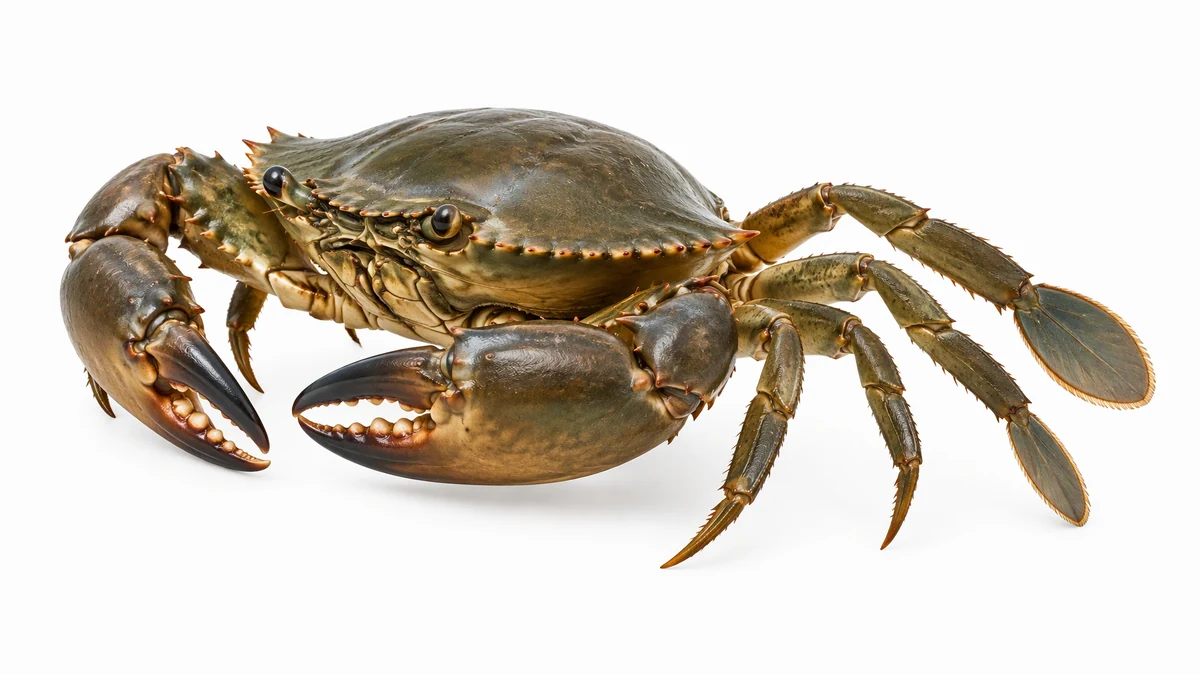
The mud crab is the heavy, bad-tempered king of the mangrove flat, and catching one is a mix of patience and nerve. It lives in burrows and creek snags, hunts on the falling tide, and grows to a size that makes a big male a serious animal in a bucket. Learning how to catch mud crab means learning the estuary as much as the crab: where the drains run, when the tide drops, and which pot or net you can legally use. Read the full Mud Crab species profile for identification and biology; this guide covers the catching.
Best Time to Catch Mud Crab
The best time to catch mud crab is the warm months, at night, on a falling tide. The crab is most active in water of roughly 20 to 32°C, so summer and the shoulder seasons are the productive window across northern and eastern Australia.
The daily pattern is reliable. Mud crabs sit in burrows or under mangrove roots by day, often with only the eyes and antennae showing, and come out after dark to hunt on the falling tide. The best window is the first few hours of the drop, when the water leaves the flats and the crabs follow the food into the creeks and drains. Slack water is slow; the last of the run-out is often best.
Moon phase divides opinion, but a dark night usually helps the scoop-net and sight-fishing methods, while pots fish through any moon. What matters more is a tide low enough to expose the drains and a night without too much wind, which chops up the shallows and makes crabs shy.
Rain changes things. Fresh water after heavy rain pushes crabs toward creek mouths and can dirty the water, slowing the pot scent trail. A settled, dry spell fishes better. And because the season varies with latitude, from the Northern Territory to northern New South Wales, local advice beats any national calendar.
Best Gear for Mud Crab
Mud crab gear is built around two jobs: trapping in creeks and scooping on low tide.
| Gear | What it does |
|---|---|
| Crab pot or trap | Baited trap set in a creek or drain, with escape gaps where required |
| Pot rope and float | Marks the pot and lets you haul it on a rising tide |
| Scoop net | Long-handled fine-mesh net for taking crabs on a low tide |
| Headlamp | Hands-free light for night scooping and pot checks |
| Gloves | The claws can take a finger |
| Measuring gauge | Checks carapace width against the state minimum |
| Bucket or esky | Keeps the catch cool and contained |
| Boots | Mud, shells, barnacles and broken glass |
Pot design rules differ by state. Escape gaps are mandatory in some jurisdictions to let undersized crabs out, and some trap types are banned. Check which pots are legal before you buy, and mark your gear as required.
A scoop net needs a long handle and a fine mesh, because a mud crab is strong enough to climb out of a short net. The classic setup is a headlamp, a scoop, and a bucket, working the drains as the tide drops.
Best Bait for Mud Crab
The best bait for mud crab is fresh fish, and plenty of it. Fish frames, whole mullet, fish heads and chicken frames are the standard baits. Mud crabs are opportunistic predators and scavengers, and a strong oily scent pulls them through muddy water.
Whole or halved fish is the potter's choice because it stays on the bait tie and keeps working through a tide. Fish frames from a cleaning table are excellent and cheap. Chicken frames are popular and tough. Some fishers use catfish or eel, which are tough and oily, but check local rules on using freshwater fish as bait.
Presentation matters in a pot. Tie the bait in so crabs have to work at it, and use a bait box if the pot has one, so crabs cannot drag the bait out through the mesh. Fresh bait outperforms old bait, especially in warm water where scent breaks down fast.
For scooping, you are not baiting at all. You are sight-fishing: walking the drains on a low tide with a light, looking for crabs moving or sitting in the shallows. The bait is only for pots.
Mud Crab Rigs
A mud crab rig is either a pot setup or a hand setup. These three cover most of the fishing.
The pot rig. A legal crab pot on a length of rope with a float, set in a creek, drain or against a mangrove bank. Bait it heavily, set it so it sits flat on the bottom, and soak it over a tide or overnight. This is the most productive method and the one that works without a low tide.
The scoop rig. A long-handled scoop net, a headlamp and a bucket, worked on a falling or low tide. Move quietly along the drain edges, shine the light ahead, and scoop crabs before they reach deep water. It is active, physical and very effective on the right tide.
The burrow rig. A baited hook or "crab hook" worked at the mouth of a burrow, or a hand grab from behind where it is safe and legal. This is the oldest method and the most dangerous. Never put a bare hand into a burrow you cannot see into, and check that your state allows it.
Whichever rig you use, the key is the tide. A pot that fishes through the night catches the crabs moving on the drop; a scoop works the window when the water is low enough to walk.
How to Catch Mud Crab, Step by Step
- Check the state rules. Size limit, female rules, pot type, escape gaps, bag limit and permits differ between Queensland, the Northern Territory and Western Australia.
- Pick a creek with structure. Mangrove roots, snags, drains and mud banks hold crabs. Look for a system that drains hard on the low tide.
- Bait the pot heavily. Fish frames or whole fish, tied in so crabs work for it.
- Set on the edge of the flow. Place pots in creeks and drains where crabs travel, not in dead water.
- Soak over a tide. Four to six hours is a minimum; overnight is normal.
- Haul carefully. Bring the pot up steady, have the bucket ready, and watch the claws.
- Measure and sex every crab. Carapace width against the local minimum, and return females where required.
- Keep them cool and contained. A mud crab can climb out of an open bucket. Use a lidded container and keep it shaded.
Where to Catch Mud Crab
Mud crab live across the tropical and subtropical Indo-West Pacific, from South Africa and East Africa through India and Southeast Asia to southern Japan, the Philippines, Indonesia, Papua New Guinea and Australia. In Australia they are fished in the Northern Territory, Queensland and northern Western Australia, with smaller populations in northern New South Wales.
The habitat is the estuary: mangrove creeks, tidal mudflats, saltmarsh edges and the mouths of coastal rivers. They dig burrows in soft mud, often among mangrove roots, and tolerate a wide range of salinity, which lets them push well upstream into brackish water. Clear the mangroves and the crab population follows, so healthy mangrove is the best sign of good ground.
Adults are mostly intertidal to shallow subtidal. They can survive long periods out of water, which is why live mud crabs are sold far from the coast. Look for creek junctions, snags, drain mouths, and any bank with deep mud and mangrove roots. On a low tide, the drains and the edges of the flats are where scooping pays.
Mud Crab Regulations and Safety
Mud crab rules are set by state and are enforced. As of 2025, Queensland has a minimum of about 150 mm carapace width, protects female mud crabs outright, and sets a possession limit. The Northern Territory has a minimum of about 130 mm, a small bag limit, and requires egg-bearing females to be released. Western Australia's minimum is around 150 mm, with a bag limit and protection for egg-bearing females. Treat these as a guide, not a licence.
Check the current rules with the Queensland Department of Agriculture and Fisheries, NT Fisheries, or the WA Department of Primary Industries and Regional Development before you set a pot. Pot design, escape gaps, closed areas and permits all affect where and how you can fish, and traditional and cultural fishing rights are recognised separately.
Safety is serious with this species. The claws can break a shell and draw blood, and a big male can take a finger. Grip from behind, holding the rear of the carapace with the claws facing away, and wear a thick glove. Hand-fishing in burrows adds risk from sharp shells, barnacles and broken glass hidden in the mud. Work with a partner, wear enclosed footwear, and never reach into a burrow you cannot see into.
Mud crabs live in estuarine mud and can carry Vibrio bacteria, so keep them cool and cook them thoroughly. In northern Australia, crocodiles share these creeks. Do not wade drains at night in croc country, and keep away from the water's edge.
Common Mistakes and Mud Crab Fishing Tips
- Not knowing the female rule. Queensland protects females outright; other states protect egg-bearing ones. Check the abdomen before you keep a crab.
- Measuring by eye. Use a gauge across the carapace. A big-looking crab is often short.
- Setting in dead water. Crabs travel the creeks and drains. Fish the edges of the flow.
- Light bait. Mud crabs are scent hunters in muddy water. Use fresh fish and plenty of it.
- Ignoring pot rules. Escape gaps and legal trap types are enforced. Check before you buy.
- Grabbing from the front. The claws work. Grip from behind and wear gloves.
- Using an open bucket. A mud crab climbs. Use a lid.
- Wading in croc country. Fish from the bank and keep clear of the water at night.
FAQ
What is the best time to catch mud crab? Warm months, at night, on a falling tide, in water around 20 to 32°C. The first hours of the drop and the low-tide drains are the best windows.
What bait for mud crab works best? Fresh fish: frames, whole mullet, fish heads and chicken frames, tied into the pot so crabs work for it.
What are the best mud crab fishing techniques? A baited pot soaked over a tide, a long-handled scoop net on a low tide with a headlamp, and a crab hook at a burrow mouth where legal.
Can you keep female mud crabs? In Queensland, no. In the Northern Territory and Western Australia, egg-bearing females must be released. Check the state rules.
How big must a mud crab be? About 150 mm carapace width in Queensland and Western Australia, and about 130 mm in the Northern Territory. Confirm current rules before you fish.
Where do you set mud crab pots? In mangrove creeks, drains and creek junctions where crabs travel on the tide. Set the pot flat, bait it heavily, and soak it over a tide.
Related Articles
- How to Catch Giant Tiger Prawn — the big prawn that shares these mangrove estuaries.
- Giant Tiger Prawn — the species profile behind that fishery.
- How to Catch Ornate Rock Lobster — a high-value crustacean from the same tropical coast.
- How to Catch Blue Crab — a lighter, faster crab and a good first pot.
- How to Catch Red Swamp Crawfish — another trap fishery built around warm water and scent.
Learning how to catch mud crab is about mud, tide and nerve. Set a well-baited pot where the creek drains, scoop the shallows on a low tide, measure every crab, and respect the female rules that differ from state to state. Do that, and the mud crab remains one of the great eating crabs of the Indo-Pacific, and a fine reason to spend a night on the falling tide.
About the author and how this was tested
About the author
FishermanGuy
Bank, boat and kayak angler · fishing, crabbing and shrimping since 2021
I buy the gear, fish it for a season and write down what failed. No sponsored verdicts, no free-sample flattery. Every rig on this page has landed fish in water I can point at on a map.
How this was tested
- Every rig gets at least six trips on the same water before it is published.
- Gear is bought at retail. Free samples are labelled in the first paragraph.
- Dates show first publication and the last time the page was updated.