Field notes
How to Catch Golden Perch: Yabbies, Snags & Timing
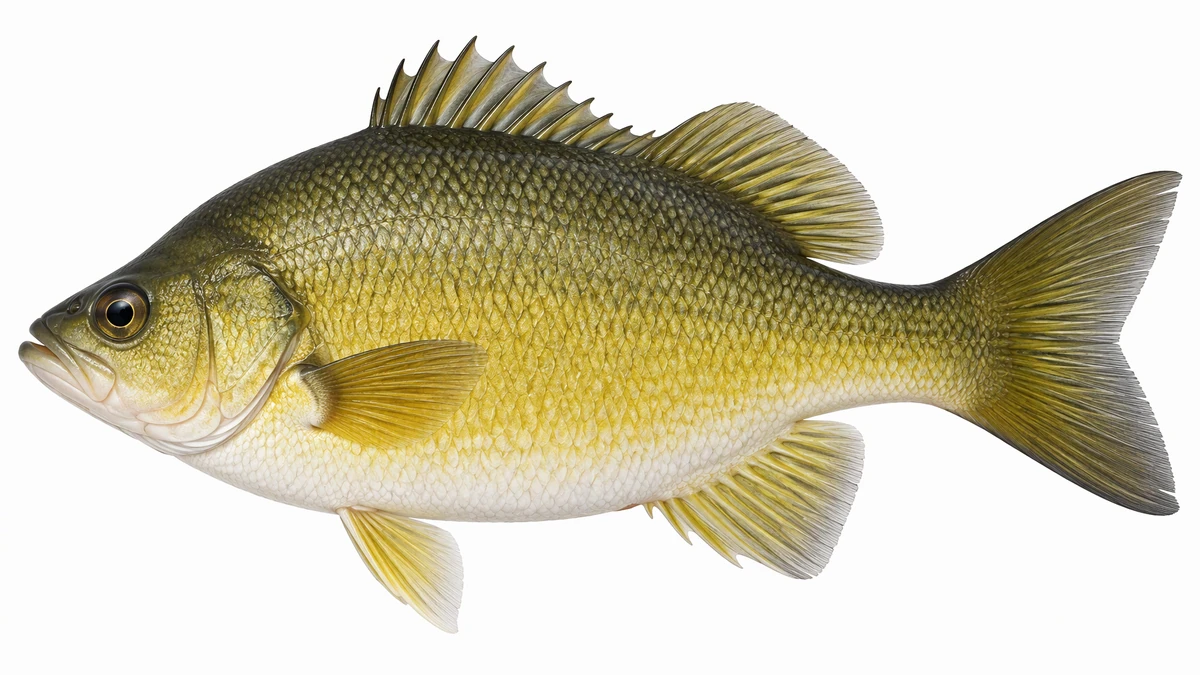
How to Catch Golden Perch
Learning how to catch golden perch is mostly about learning to fish slowly and close to cover. The golden perch — yellowbelly to almost everyone who fishes for it — is a deep-bodied native of Australia's Murray-Darling Basin, and it spends its life around timber, rock ledges and deep holes. It has a small mouth, a big attitude, and a habit of taking a bait with a solid thump rather than a tap. It is also widely stocked, so these fish turn up in dams and rivers well beyond their natural range. For identification, biology and how it differs from Murray cod, read the full Golden Perch species profile; this guide is about catching one.
Best Time to Catch Golden Perch
The best time to catch golden perch is the warm months. These fish are most active when the water is warm, and they are far more willing in spring, summer and autumn than in the cold of winter.
Season is the main driver. The species tolerates a wide range, roughly 10 to 30°C (50–86°F), but the best fishing comes as the water warms in spring and stays warm through autumn. Spawning happens in spring and summer when water climbs above roughly 20°C, and the fish are active and feeding around that time. Winter slows everything down, though fish can still be caught in deeper holes.
Time of day matters, but less than for some species. Golden perch feed through the day, with strong windows at dawn, dusk and into the night. Summer night fishing can be excellent, especially in impoundments where surface lures work after dark. Fish the low-light edges of the day for the best odds.
Conditions tie to flow and clarity. Rising water after rain, and flow pulses in regulated rivers, can switch the fish on. Golden perch tolerate turbid water and low light, so a bit of colour is no problem — in fact, they often feed more confidently in it. Stable, warming water with some flow is close to ideal.
Best Gear for Golden Perch
Golden perch gear is medium-weight, built to turn a strong fish away from structure before it wraps you around a snag.
| Component | Golden perch-ready choice |
|---|---|
| Rod | Medium spinning or baitcasting rod with enough backbone to turn a fish from cover |
| Reel | Smooth-drag reel with capacity for 10–20 lb braid |
| Main line | 10–20 lb braid |
| Leader | Abrasion-resistant leader, fluorocarbon or heavy mono |
| Hooks | Strong hooks sized for yabbies, shrimp or lures |
| Extras | Landing net, long-nose pliers, torch for night fishing, life jacket |
Braid gives you sensitivity to feel a soft take and the strength to pull a fish out of timber. The leader has to resist abrasion against snags and rock, so fluorocarbon or a heavy mono leader pays off around cover. The rod needs real backbone — not to overpower the fish, but to keep its head up and stop it diving back into the snags where it lives.
Golden perch do not require heavy tackle, but they punish lazy tackle around structure. A net makes landing easier, long-nose pliers speed up unhooking, and a torch and life jacket are essential if you fish the banks at night, which is when some of the best fishing happens.
Best Bait for Golden Perch
The best bait for golden perch is a live or fresh yabby. In the Murray-Darling Basin, yabbies are the classic bait, and for good reason — they are a natural part of the fish's diet.
Natural bait. A live or fresh yabby fished close to timber or down a deep bank is hard to beat. Shrimp and worms also work, and big fish will take bigger prey. Fish the bait near cover and let it sit — golden perch pick food off the bottom and around structure, so a bait presented in the right place does the work.
Artificial lures are increasingly popular and very effective. Spinnerbaits, lipless crankbaits, small to medium deep divers and soft plastics all catch fish, especially when worked slowly around snags. The key is a slow, deliberate retrieve that keeps the lure in the strike zone near cover. Surface lures can work at night in summer, particularly in impoundments.
Match the bait and lure to the water and the season. In turbid rivers, scent and vibration matter, which favors bait and rattling lures. In clearer impoundments, natural presentations and slow soft plastics do well. Bring yabbies and a handful of lures, and let the fish's mood on the day decide.
Golden Perch Rigs
A golden perch rig has to do one thing well: present a bait or lure close to cover and hold the fish when it bites. These setups cover bait and lures.
Yabby bait rig. Run a running sinker above a swivel, then a leader to a strong hook baited with a yabby. The running sinker lets the bait sit on or near the bottom while a fish can take line without feeling the weight. Fish it close to timber, rock ledges and deep banks.
Spinnerbait and crankbait rig. Tie your braid to an abrasion-resistant leader and attach the lure with a strong snap or loop. Work it slowly around snags, bumping structure to trigger a reaction. The leader protects against abrasion when a fish runs for cover.
Soft-plastic rig. For a finesse approach, rig a soft plastic on a strong hook or jighead and work it slowly down deep banks and around timber. Keep the leader heavy enough to handle snags, and be ready to apply pressure fast when a fish takes.
Whatever the rig, check the leader after every fish and every snag contact. Abrasion is the enemy around structure, and a frayed leader loses the fish of the trip.
How to Catch Golden Perch, Step by Step
- Find structure and depth. Golden perch hold in deep pools, around sunken timber and snags, undercut banks, rock ledges and the tail-outs below weirs. Fish those places, not open water.
- Fish the warm months. Spring through autumn, when the water is warm and flows rise, is the productive window.
- Present close to cover. Cast tight to a snag or rock ledge and let the bait or lure get into the strike zone rather than dropping it short.
- Slow down. A slow, deliberate retrieve with the occasional pause beats a fast burn. These are ambush and roaming feeders, not chasers.
- Work bait patiently. Let a yabby or shrimp sit near structure. Golden perch pick food off the bottom and around cover, so patience pays.
- Apply pressure early. When a fish takes, keep its head up and turn it away from cover before it wraps you around a snag.
- Land with a net. Measure the fish, and release it if the rules require it.
- Handle with care. Support the body horizontally, avoid squeezing the belly, and release quickly if you are not keeping the fish.
The take is often a solid weight rather than a sharp tap, and the fight is a series of short, powerful runs. Stay in contact, apply pressure early, and keep the fish out of the timber — that is where golden perch are won and lost.
Where to Catch Golden Perch
Where to catch golden perch starts with the Murray-Darling Basin, one of Australia's great river systems. The species is native to the Murray, Darling, Murrumbidgee, Lachlan, Macquarie, Gwydir, Namoi and connected rivers, and to the Lake Eyre Basin in central Australia. It has been stocked widely in impoundments and rivers in New South Wales, Victoria, Queensland and South Australia, so the current range is broader than the natural one.
Within a river, golden perch are fish of cover and depth. They hold in deep pools, around sunken timber and snags, undercut banks, rock ledges and the tail-outs below weirs. In lakes and reservoirs they relate to timber, rocky points and the edges of deep water. They tolerate turbid water and low light, and they are more active in warm water than in winter.
Movement is part of the species' biology. Golden perch are known to travel long distances, and tagging studies have recorded fish moving hundreds of kilometres, with some individuals travelling more than 1,000 km. Dams, weirs and flow regulation have interrupted many of those movements, which is one reason environmental flows and fishways matter so much in the basin. Fish the structure in front of you, but remember these are mobile fish that can turn up almost anywhere in a connected system.
Golden Perch Regulations and Safety
Golden perch rules vary by state and by water, and they are enforced. Minimum sizes of around 30 cm and daily bag limits in the range of 2–10 fish are typical, but the details differ between New South Wales, Victoria, Queensland and South Australia, and some waters have special rules or closed seasons. Stocked impoundments can carry their own conditions. As of 2025, check the current rules with the relevant agency: NSW Department of Primary Industries, the Victorian Fisheries Authority, Queensland's Department of Agriculture and Fisheries, or Primary Industries and Regions South Australia.
The safety side is mostly about ordinary fish handling and the environment. Golden perch are not venomous and not aggressive toward people, but the sharp gill covers, spiny dorsal fin and treble hooks can cut a hand or drive a hook into a finger. Use a net, wet your hands, and support the fish horizontally.
The bigger risks are environmental. Golden perch fishing often happens at night, on riverbanks with steep, muddy edges, and in rivers that can rise fast after rain. Wear a life jacket near deep water, carry a torch, and never wade a flooded river. In impoundments, submerged and standing timber are hazards for boats as well as fish-holding structure.
Common Mistakes and Golden Perch Fishing Tips
- Fishing open water. Golden perch live around structure. Fish the snags, ledges and deep holes, not the middle of the river.
- Retrieving too fast. Slow, deliberate presentations beat fast retrieves. These fish are ambush and roaming feeders.
- Using light leaders near timber. Abrasion kills rigs around snags. Use a tough leader and retie after contact.
- Letting a fish reach cover. Apply pressure early and keep its head up, or it wraps you and is gone.
- Ignoring the warm months. Spring through autumn is when the fish are active. Winter is tough.
- Not fishing the night. Some of the best summer fishing, especially in impoundments, happens after dark.
- Squeezing the belly. Support the fish horizontally and avoid pressure on the gut.
- Keeping big fish. Golden perch can live more than 20 years, and big fish are worth more in the water. Release the trophies.
FAQ
What is the best time to catch golden perch? Spring through autumn, when the water is warm and flows rise. Day to day, dawn, dusk and night are strong, and summer night fishing in impoundments can be excellent.
What bait for golden perch works best? A live or fresh yabby fished near timber is the classic. Shrimp and worms also work, and spinnerbaits, crankbaits and soft plastics catch fish when worked slowly around snags.
What are the best golden perch fishing techniques? Fish deep pools and snags, present the bait or lure close to cover, work it slowly, and apply pressure early to keep the fish out of the timber.
How big do golden perch get? Most are 30–50 cm and 1–3 kg. A 55–60 cm fish is a good one anywhere, a fish over 5 kg is a trophy today, and the species can reach about 75 cm.
Where do golden perch live? In the Murray-Darling Basin and Lake Eyre Basin, plus stocked rivers and impoundments across southern and eastern Australia, mostly around deep pools and timber.
What are the size and bag limits for golden perch? Minimum sizes of around 30 cm and daily bag limits in the range of 2–10 fish are typical, but they differ between states and waters. Check the current rules with your state agency.
Learning how to catch golden perch comes down to structure, patience and timing: fish the snags and deep pools in the warm months, present bait or a slow lure close to cover, and apply pressure early. Do that, respect the bag limits, and you have met one of the most Australian fish in the river.
Related Articles
- How to Catch Nile Perch — a heavyweight African predator and a very different challenge.
- How to Catch Arapaima — South America's air-breathing giant.
- How to Catch Tigerfish — Africa's fast-water, toothy characin.
- How to Catch Piranha — light-tackle action for a sharp-toothed characin.
- Read the full Golden Perch species profile
About the author and how this was tested
About the author
FishermanGuy
Bank, boat and kayak angler · fishing, crabbing and shrimping since 2021
I buy the gear, fish it for a season and write down what failed. No sponsored verdicts, no free-sample flattery. Every rig on this page has landed fish in water I can point at on a map.
How this was tested
- Every rig gets at least six trips on the same water before it is published.
- Gear is bought at retail. Free samples are labelled in the first paragraph.
- Dates show first publication and the last time the page was updated.