Field notes
Golden Perch: Identification, Habitat & Diet
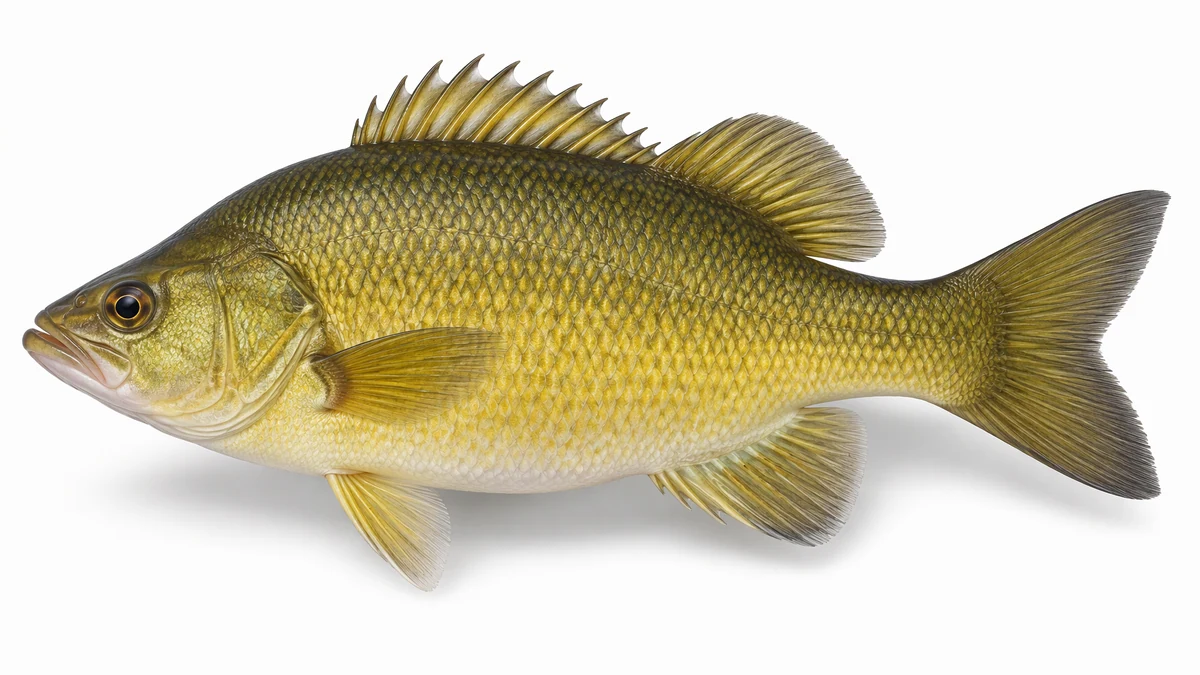
Golden Perch: Identification, Habitat & Diet
The golden perch is one of the most popular freshwater fish in Australia, and one of the most misunderstood by visitors. It is a native temperate perch of the Murray-Darling Basin, not a European perch, and it is known almost everywhere by its nickname: yellowbelly. The fish is deep-bodied, golden-olive, and armed with a small mouth and a large attitude. It lives in slow, turbid rivers and reservoirs, holds around timber and deep holes, and takes baits and lures with a solid, satisfying thump. This profile covers golden perch identification, habitat, diet, size, how it differs from Murray cod, and how to catch yellowbelly legally and responsibly.
Golden perch are also a stocked fish. Hatchery-reared fingerlings are released into dams and rivers across several states, which supports popular fisheries far beyond the species' natural range. That makes the golden perch both a wild river fish and a put-and-take sportfish, and it means the rules around it are worth knowing before you wet a line.
Quick ID Card
| Field | Details |
|---|---|
| Scientific name | Macquaria ambigua |
| Common names | Golden perch, yellowbelly, callop, golden carp |
| Family | Percichthyidae (temperate perches) |
| Typical size | 30–50 cm (12–20 in); 1–3 kg (2–7 lb) |
| Maximum size | About 75 cm (30 in); historical reports of fish in the 20 kg class, though fish over 5 kg are rare today |
| Water type | Warm, often turbid lowland rivers, lakes and reservoirs |
| Active water temperature | Roughly 10–30°C (50–86°F), with the best fishing in warm months |
| Difficulty | Moderate; structure-oriented and a strong fighter |
| Best season | Spring to autumn, especially when water warms and flows rise |
How to Identify a Golden Perch
Golden perch identification is mostly about shape and colour. The body is deep and somewhat compressed, with a steep forehead, a small head, and a small mouth that sits at the front of the face. The eye is large. The dorsal fin has spiny rays at the front and soft rays at the rear, and the tail is forked. The scales are small and the overall look is neat, rounded, and powerful.
Colour varies with water and light. The back is olive-green to bronze, the flanks are golden-yellow to pale gold, and the belly is white. Some fish are almost silver in clear water, while fish from turbid rivers can be darker and more bronze. There are no vertical bars and no spots. That plain golden body is the easiest way to separate a golden perch from a European perch, which has dark vertical stripes, red lower fins, and a different head shape.
The mouth is the second check. A golden perch has a small mouth, while a Murray cod has a huge one that reaches back past the eye. If you catch a golden, deep-bodied fish with a small mouth and no markings, you are probably holding a yellowbelly.
Golden Perch vs Murray Cod and Silver Perch
Golden perch vs Murray cod is a comparison every inland angler needs. Murray cod are much larger, with a broad, rounded head, a huge mouth, and a mottled green-and-gold pattern. Golden perch are smaller, with a small mouth and a plain golden body. A big cod can weigh more than 50 kg; a big golden perch is a 3–5 kg fish. The two species often live in the same water, so learn the head and mouth first.
Silver perch (Bidyanus bidyanus) is the other common confusion. Silver perch are more silvery-grey, with a smaller mouth, a more pointed head, and a slightly different body shape. They are also a threatened species in parts of the Murray-Darling Basin, so if there is any doubt, release the fish. Golden perch have a warmer golden colour and a slightly deeper body, and their mouth is larger relative to the head than a silver perch's.
The European perch (Perca fluviatilis) is a different fish entirely, despite the shared name. It has five to nine dark vertical bars, red pelvic and anal fins, and a spiny dorsal fin, and it is not native to Australia. The North American yellow perch is different again. In Australia, "yellowbelly" means golden perch.
Is the Golden Perch Dangerous?
Golden perch are not venomous and they are not aggressive toward people. The hazards are ordinary fish-handling problems: sharp gill covers, spiny dorsal fins, and treble hooks. A golden perch thrashing on a hot boat deck can cut a hand or drive a hook into a finger, so use a net, wet your hands, and support the fish horizontally.
The bigger risks are environmental. Golden perch fishing often happens at night, on riverbanks with steep, muddy edges, and in rivers that can rise fast after rain. Wear a life jacket near deep water, carry a torch, and never wade a flooded river. In impoundments, submerged timber and standing timber are hazards for boats as well as fish-holding structure.
Handle the fish properly and the golden perch is a robust customer. Keep it in the water while you unhook it, avoid squeezing the belly, and release it quickly if you are not keeping it. Big yellowbelly are old fish, and they are worth more in the water than on a plate.
Where Do Golden Perch Live?
Golden perch habitat is the slow, warm, often turbid water of the Murray-Darling Basin, one of Australia's great river systems. The species is native to the Murray, Darling, Murrumbidgee, Lachlan, Macquarie, Gwydir, Namoi and connected rivers, and to the Lake Eyre Basin in central Australia. It has also been stocked widely in impoundments and rivers in New South Wales, Victoria, Queensland and South Australia, so the current range is broader than the natural one.
Within a river, golden perch are fish of cover and depth. They hold in deep pools, around sunken timber and snags, undercut banks, rock ledges, and the tail-outs below weirs. They also live in lakes and reservoirs, where they relate to timber, rocky points, and the edges of deep water. They tolerate turbid water and low light, and they are more active in warm water than in winter.
Movement is part of the species' biology. Golden perch are known to travel long distances, and tagging studies have recorded fish moving hundreds of kilometres, with some individuals travelling more than 1,000 km. Dams, weirs and flow regulation have interrupted many of those movements, which is one reason environmental flows and fishways matter so much in the basin.
Habits and Diet: What Do Golden Perch Eat?
What do golden perch eat? They are opportunistic carnivores. The diet includes yabbies (freshwater crayfish), shrimp, small fish, frogs, aquatic insects, and worms. Big fish take bigger prey, including small crayfish and fish, but golden perch are not fussy. They feed around structure, pick food off the bottom, and will rise to take a bait or lure that passes above them.
The hunting style is a mix of ambush and roaming. A golden perch will sit near a snag or a rock ledge and wait, but it will also move along a deep pool edge looking for food. That is why baits fished close to cover work, and why lures that bump structure get hit. The take is often a solid weight rather than a sharp tap, and the fight is a series of short, powerful runs.
When do golden perch spawn? Spawning happens in spring and summer, when water temperatures rise above roughly 20°C and flows increase. The fish need rising water, and in regulated rivers a flow pulse or a flood is often the trigger. Females release large numbers of eggs into the water column, and the eggs and larvae drift downstream. There is no nest and no parental care. In the Murray-Darling Basin, golden perch can live for more than 20 years, which is why protecting big fish matters.
Size, Records and Regulations
How big do golden perch get? Most fish caught by anglers are 30–50 cm and 1–3 kg. A 55–60 cm fish is a good one anywhere, and a fish over 5 kg is a trophy in most waters today. Historical reports mention golden perch in the 20 kg class, but fish of that size are not part of the modern fishery. The species can reach about 75 cm.
The best bait for golden perch is a live or fresh yabby, a shrimp, or a worm, fished close to timber or down a deep bank. Yabbies are the classic bait in the Murray-Darling Basin. On the artificial side, spinnerbaits, lipless crankbaits, small to medium deep divers, and soft plastics all catch fish, especially when worked slowly around snags. Surface lures can work at night in summer, particularly in impoundments.
How to catch golden perch: fish structure, fish slowly, and fish the warm months. Cast close to a snag or a rock ledge, let the lure or bait sink, and work it with patience. Use a rod with enough backbone to turn a fish away from cover, 10–20 lb braid, and a leader that can handle abrasion. When a fish takes, apply pressure early and keep its head up. Land it with a net, measure it, and release it if the rules require it.
Regulations vary by state and by water, and they are enforced. Minimum sizes of around 30 cm and daily bag limits in the range of 2–10 fish are typical, but the details differ between New South Wales, Victoria, Queensland and South Australia, and some waters have special rules or closed seasons. Golden perch are also stocked in many impoundments, and stocking arrangements can carry their own conditions. As of 2025, check the current rules with the relevant agency: NSW Department of Primary Industries, the Victorian Fisheries Authority, Queensland's Department of Agriculture and Fisheries, or Primary Industries and Regions South Australia. Last verified: November 2025.
FAQ
How big do golden perch get? Most are 30–50 cm and 1–3 kg. A 60 cm fish is a trophy, the species can reach about 75 cm, and historical reports mention much larger fish.
What is the world record golden perch? Records are poorly documented compared with cod. Historical reports mention fish in the 20 kg class, but modern fish over 5 kg are rare. Check state records for current verified marks.
Where do golden perch live? In the Murray-Darling Basin and Lake Eyre Basin, plus stocked rivers and impoundments across southern and eastern Australia, mostly around deep pools and timber.
What do golden perch eat? Yabbies, shrimp, small fish, frogs, insects, and worms. They are opportunistic carnivores.
Golden perch vs Murray cod: what is the difference? Golden perch are smaller, golden, and have a small mouth. Murray cod are much larger, mottled green and gold, with a huge mouth that reaches past the eye.
When do golden perch spawn? In spring and summer, when water warms above about 20°C and flows rise. Eggs drift downstream and there is no parental care.
What is the best bait for golden perch? A yabby, shrimp, or worm fished near timber. Spinnerbaits, crankbaits, and soft plastics also work.
How do you catch golden perch? Fish deep pools and snags slowly in warm months, use a leader that resists abrasion, and apply pressure early to keep fish out of cover.
Related Articles
- Murray Cod — Australia's largest freshwater fish and the golden perch's famous neighbour.
- Perch — the European perch, a different fish with vertical bars and red fins.
- Yellow Perch — the North American yellow perch, another fish with a confusing name.
- All species profiles
The golden perch is a fish of golden light, deep holes, and timber. Learn the small mouth and plain body, fish the snags in the warm months, and respect the bag limits. Catch a yellowbelly on a yabby or a spinnerbait and you have met one of the most Australian fish in the river.
Ready to catch one? Read our step-by-step guide: How to Catch Golden Perch.
About the author and how this was tested
About the author
FishermanGuy
Bank, boat and kayak angler · fishing, crabbing and shrimping since 2021
I buy the gear, fish it for a season and write down what failed. No sponsored verdicts, no free-sample flattery. Every rig on this page has landed fish in water I can point at on a map.
How this was tested
- Every rig gets at least six trips on the same water before it is published.
- Gear is bought at retail. Free samples are labelled in the first paragraph.
- Dates show first publication and the last time the page was updated.