Field notes
How to Catch Piranha: Wire Trace, Bait & Safe Handling
How to Catch Piranha
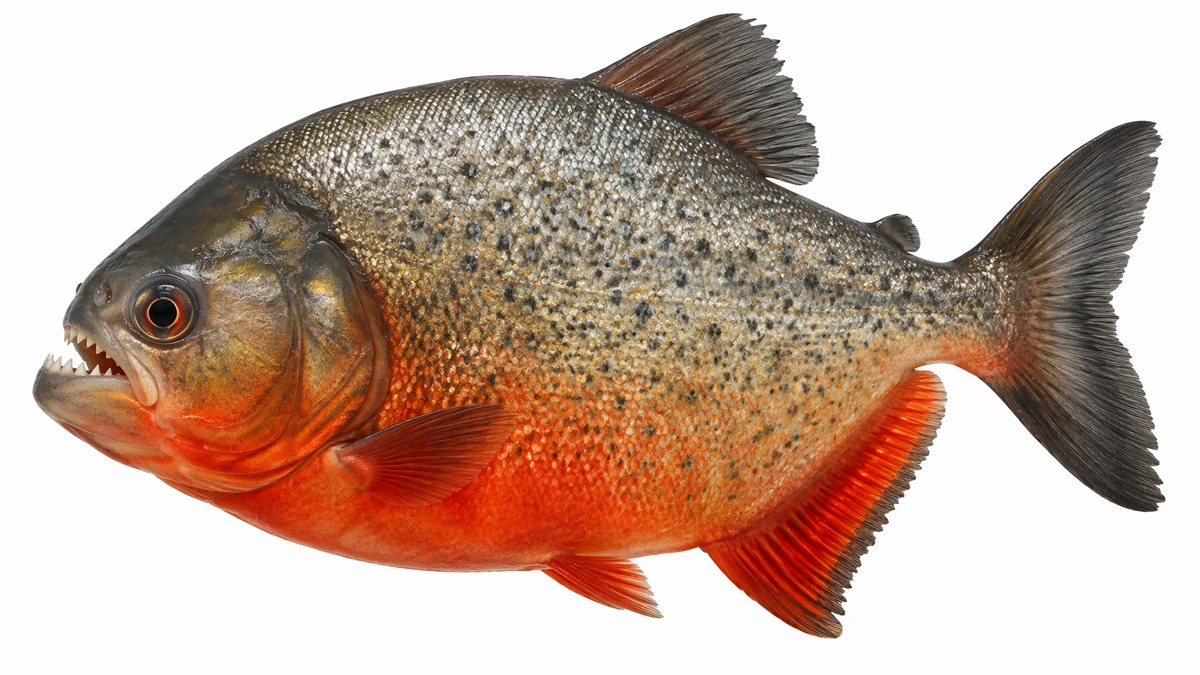
Learning how to catch piranha is easier than the movies would have you believe — the hard part is getting your hook back without losing a finger. The red-bellied piranha is a small, deep-bodied fish with a powerful jaw and a mouth full of triangular blades, and it is far more catchable than its reputation suggests. It also fights well above its weight, which is why it has become a favorite light-tackle target on Amazon and Pantanal trips. For identification, biology and the truth about piranha attacks, read the full Piranha species profile; this guide covers catching and handling them safely.
Best Time to Catch Piranha
The best time to catch piranha is the dry season. As water levels fall, fish crowd into shrinking lakes and pools, food is scarce, and anything that looks like a meal gets attention. That concentration is what makes the dry season so productive for anglers.
Season is the biggest lever. In the wet season, piranhas spread across the flooded forest with plenty to eat, and they are harder to find and less eager. In the dry season, backwaters, oxbow lakes and the deeper parts of channels hold dense shoals, and a well-placed bait rarely sits long.
Time of day is flexible, because piranhas feed throughout the day. Early morning and late afternoon are reliable, but a feeding shoal can be caught at almost any hour. The fish are most active when the water sits between roughly 23 and 28°C (73–82°F), and they get sluggish in cooler water.
Conditions favor slow, quiet water. Piranhas are sensitive to disturbance — a boat motor or a shadow overhead can put a shoal down. Fish quietly, keep your profile low, and let the bait sit. Blood and vibration in the water set off a feeding response, which is why a bait that bleeds a little outperforms a clean one.
Best Gear for Piranha
Piranha gear is light but not delicate. The fish are small, but their teeth mean your terminal tackle has to survive a bite that can shear through line.
| Component | Piranha-ready choice |
|---|---|
| Rod | Light to medium spinning rod, 6–7 ft |
| Reel | Smooth spinning reel with a reliable drag |
| Main line | 10–20 lb braid |
| Leader | Wire trace in the 20–30 lb class |
| Hooks | Strong, sharp hooks sized for a small bait |
| Extras | Long-nose pliers or a hook-out, gloves, a landing net |
Braid gives you sensitivity and the strength to set a hook into a hard mouth. The wire trace is essential: a piranha will cut through mono and braid, so 20–30 lb wire is the minimum for keeping fish on. The rod and reel can be light because the fish rarely top a couple of kilos, but the drag should be smooth to protect the light line and the hook hold.
The extras matter as much as the rod. Long-nose pliers or a proper hook-out let you unhook a fish without putting fingers near the mouth, and gloves add a layer of protection. A small landing net makes it far easier to control a thrashing, sharp-toothed fish at the boat or bank.
Best Bait for Piranha
The best bait for piranha is fresh and slightly bloody. These are opportunistic omnivores with a strong response to scent and blood, and a chunk of fresh bait outperforms anything clean and odourless.
Natural bait is the standard. A piece of fresh fish, a prawn, or a chunk of meat fished on a wire trace and a strong hook is hard to beat. Piranhas are not fussy, and a bait that bleeds a little draws more interest than a tidy one. Keep the bait small enough for a 20 cm fish to take — a bait that is too big gets nibbled rather than eaten, and you strike at nothing.
Artificial lures work too, especially for covering water and finding active fish. Small spoons, spinners and soft plastics catch piranhas when retrieved quickly through a school, and the flash and vibration trigger reaction strikes. Lures are a good way to search, then you can switch to bait once you find a concentration.
Match the bait to what the fish are seeing. In the dry season, when food is scarce, almost anything fresh gets taken. In richer water, smaller and more natural presentations do better. Bring both bait and a few small lures, and let the fishing tell you which is working.
Piranha Rigs
A piranha rig is simple, but every part of it has to survive the teeth. The wire trace is the foundation of all of them.
Bait rig. Run your braid to a wire trace and a strong hook, and bait it with a chunk of fresh fish, prawn or meat. A small sinker above the trace lets the bait sit on or just off the bottom near cover, or you can fish it free-lined in slow water. The wire protects against the bite, and the small bait is easy for a piranha to take.
Lure rig. Attach a small spoon, spinner or soft plastic to the wire trace with a strong snap or loop. Keep the connection simple, and retrieve quickly through a school to trigger strikes. The trace prevents a bite-off on the strike.
Float rig for shallow cover. In shallow backwaters, a small float set above the bait keeps it off the bottom and visible, while the wire trace handles the teeth. This is a good setup for fishing the edges of vegetation and flooded timber.
Whichever rig you use, check the wire after every fish. Piranha teeth can nick and kink a trace, and a weakened trace fails on the next bite.
How to Catch Piranha, Step by Step
- Find slow water near cover. Piranhas gather in backwaters, oxbow lakes, slow channels, and around submerged vegetation and flooded timber. Fish the quiet edges rather than fast current.
- Fish quietly. Keep noise and shadow to a minimum. A spooked shoal goes silent fast.
- Bait small and fresh. Use a piece of fresh fish, prawn or meat that a 20 cm fish can take, and let it sit for a minute before moving it.
- Let the bait work. Cast near cover, let it settle, and wait. Piranhas respond to scent and blood, so patience pays.
- Strike firmly on the take. The bite is usually a sharp tug followed by a frantic fight. Set the hook hard and keep the line tight.
- Play it steady. The fish is small but furious. Keep steady pressure and avoid giving slack that lets it shake the hook.
- Land with a net or firm grip behind the head. Never put fingers near the mouth.
- Unhook with pliers. Use long-nose pliers or a hook-out, keep the fish controlled, and return it quickly if you are releasing it.
A hooked piranha will bite anything within reach, so control the fish before you go near the hook. Strike hard, keep the line tight, and treat every fish as if it can take a chunk out of you — because it can.
Where to Catch Piranha
Where to catch piranha means heading to the warm lowland waters of South America. The red-bellied piranha is native to the Amazon basin, the Orinoco basin, the Essequibo, and parts of the Paraná-Paraguay system, with populations across Brazil, Peru, Colombia, Venezuela, Bolivia, Ecuador and the Guianas.
Within a river system, look for flooded forests, oxbow lakes, backwaters, slow channels and the edges of main rivers. Piranhas tolerate low-oxygen water and a range of conditions, and they are often most abundant in quiet, vegetated habitat rather than fast current. In the wet season they spread into the flooded forest; in the dry season they retreat to lakes, pools and the deeper parts of channels, where they concentrate and become easier to find.
Water temperature is a useful guide. The fish are most active between roughly 23 and 28°C, and they go quiet in cooler water. They are also easily disturbed, so a shoal that is feeding can shut down if a boat motor or a shadow passes overhead. Fish the quiet, vegetated edges patiently, and the fish will usually find the bait.
Piranha Regulations and Safety
Piranha regulations vary widely across South America, and the details matter. In Brazil, piranha fishing is generally allowed with a state or federal fishing licence, and many sport-fishing lodges in the Pantanal run catch-and-release policies. Piranhas are not protected in the way the arapaima is — they are a common food fish and a standard sport target — but local rules on bag limits, gear and closed seasons still apply and do change. As of 2025, check with IBAMA, the relevant state environmental agency, or your lodge before you fish.
The safety side is the point of this whole guide. Piranhas are not the coordinated killers of legend, but they give serious bites. A piranha can take a chunk out of a hand, and most real incidents happen in shallow water during the dry season, often around people washing or cleaning fish. Fatal attacks are extremely rare. The bite is powerful for the fish's size — a 2012 study in Scientific Reports found some piranhas, including the black piranha, bite with a force of roughly 30 times their own body weight.
For anglers, the danger is practical. A hooked piranha is a small, furious fish with a mouth full of blades, and it will bite anything within reach. Use long-nose pliers or a hook-out, keep your fingers away from the mouth, and never hold a piranha by the jaw. A wire trace is essential, because the fish will cut through mono and braid. Treat it as a sharp-toothed omnivore, not a movie monster.
Common Mistakes and Piranha Fishing Tips
- Skipping the wire trace. Piranha teeth cut line. Use 20–30 lb wire on every rig.
- Using a bait that is too big. A 20 cm fish cannot take a huge bait. Size down.
- Being noisy. Piranhas spook easily. Fish quietly and keep shadow off the water.
- Grabbing the fish. Never put fingers near the mouth. Use pliers and a net.
- Fishing fast water. Piranhas prefer slow, quiet backwaters and vegetated edges.
- Ignoring the dry season. That is when fish concentrate and the bite is best.
- Striking softly. The mouth is hard. Set the hook firmly and keep the line tight.
- Assuming the legends. They are opportunistic omnivores, not pack killers. Fish them sensibly.
FAQ
What is the best time to catch piranha? The dry season, when fish concentrate in shrinking water bodies and food is scarce. Day to day, early morning and late afternoon are reliable, and water around 23–28°C (73–82°F) keeps them active.
What bait for piranha works best? A piece of fresh fish, a prawn, or a chunk of meat on a wire trace. A bait that bleeds a little works better than a clean one. Small spoons and spinners also catch fish when fished fast.
What are the best piranha fishing techniques? Fish slow water near cover quietly, use a small fresh bait on a wire trace, let it sit, strike firmly, and land the fish with a net or a grip behind the head.
How big do piranha get? Most red-bellied piranhas are 15–25 cm and under 1.5 kg. A 30 cm fish is large, and fish over 3 kg are rare. The black piranha grows bigger.
Are piranha dangerous? They can give serious bites, especially in shallow water during the dry season, but coordinated attacks on healthy adults are rare and fatal attacks are extremely rare. Handle them with pliers and a wire trace.
Do you need a wire trace for piranha? Yes. Piranha teeth will cut through mono and braid. A 20–30 lb wire trace is the minimum.
Learning how to catch piranha is mostly about respecting the mouth: a wire trace, a small fresh bait, quiet presentation and careful unhooking. Fish it that way, in the right dry-season water, and the piranha becomes one of the most entertaining light-tackle fish in South America.
Related Articles
- How to Catch Tigerfish — Africa's toothy characin, often compared with the piranha.
- How to Catch Arapaima — the giant of the same Amazon waters and a very different challenge.
- How to Catch Nile Perch — a heavyweight African predator.
- How to Catch Golden Perch — Australian warm-water fishing around structure.
- Read the full Piranha species profile
About the author and how this was tested
About the author
FishermanGuy
Bank, boat and kayak angler · fishing, crabbing and shrimping since 2021
I buy the gear, fish it for a season and write down what failed. No sponsored verdicts, no free-sample flattery. Every rig on this page has landed fish in water I can point at on a map.
How this was tested
- Every rig gets at least six trips on the same water before it is published.
- Gear is bought at retail. Free samples are labelled in the first paragraph.
- Dates show first publication and the last time the page was updated.