Field notes
How to Catch Perch: Lures, Baits & Timing
How to Catch Perch
The perch is the fish that teaches Europe to fish. Bold, striped and greedy, it lives in almost every lake, canal and slow river on the continent, and it will take a bait or a lure when little else will. That makes it the perfect first quarry, and a lifelong target for anglers chasing a specimen. Learning how to catch perch is simple in outline — find structure, fish light, and slow down — but catching the big ones takes a little more thought. For identification, range and biology, read the full Perch species profile; this guide focuses on catching them.
Best Time to Catch Perch
Perch are among the most dependable fish in Europe because they feed across a wide range of conditions. The best time to catch perch is autumn, when fish feed hard to put on weight for winter, and early spring before spawning. Water in the 12–24°C range keeps them active, with a preferred band around 15 to 21°C.
In summer, the biggest fish often feed at dawn and dusk and sit deep during the heat of the day. A midday session can still produce small fish from the shallows, but the specimens are usually deeper and slower to commit. In winter, perch slow but rarely stop completely, which is why they are a reliable cold-weather target when other species shut down.
Spawning runs from about March to May, once the water reaches 7–12°C. Females lay long, gelatinous ribbons of eggs over weed, branches and roots in the shallows. The weeks before spawning are a good feeding window, and autumn is the other peak.
Weather matters less for perch than for many species. A grey, mild day with a ripple on the water is ideal, but perch will feed in bright conditions too, especially if there is structure to shade them.
Best Gear for Perch
Perch reward light tackle. Their mouths are small, their strikes can be gentle, and a heavy rod dulls the feel that makes perch fishing so much fun. A 6 ft 6 in to 7 ft 6 in light or ultralight spinning rod pairs with a 1000–2500 size reel, spooled with 4–8 lb monofilament or 8–10 lb braid and a 6–8 lb fluorocarbon leader.
| Component | Perch-ready choice |
|---|---|
| Rod | 6 ft 6 in to 7 ft 6 in light or ultralight spinning rod |
| Reel | 1000–2500 size spinning reel with a smooth drag |
| Main line | 4–8 lb monofilament, or 8–10 lb braid |
| Leader | 6–8 lb fluorocarbon |
| Lures | 2–5 g spinners, small crankbaits, 5–8 cm shads |
| Jigheads | 1/16–1/8 oz for soft plastics |
| Hooks | Size 8–12 for bait |
| Extras | Long-nose forceps, disgorger, wet cloth, small net |
Light braid gives you sensitivity to feel a soft take and to work a drop-shot rig, while monofilament is more forgiving for beginners and for float fishing. Either way, keep the leader light; perch are not leader-shy, and a fine presentation gets more bites.
Carry long-nosed forceps or a disgorger. Greedy perch often take a bait deep, and the right tool makes unhooking quick and safe for both of you.
Best Bait for Perch
The best bait for perch is simple and cheap: worms, maggots, prawns and small fish. A lobworm or a bunch of maggots on a light float rig catches perch almost anywhere, and it is the fastest way to find fish on a new water.
Natural bait. Worms and maggots are the everyday baits. A small dead or live fish, or a strip of prawn, selects for bigger perch, because big fish are almost entirely fish-eaters. Fish a bait close to structure, because that is where perch hunt.
Artificial lures. Perch are a classic lure target. Small spinners, tiny crankbaits, soft plastic shads on light jig heads and drop-shot rigs all work. Red, orange and chartreuse are popular colours because they echo the perch's own fins and the prey it eats, but natural silver and perch patterns are just as good on most days. The key is size: small lures catch more perch, and small lures also catch the big ones when they are feeding on fry.
Perch are greedy and not fussy, so you rarely need complicated baits. What matters is finding fish and presenting a small, natural offering in the right place.
Perch Rigs
A perch rig is light, simple and built to present a small bait or lure near structure. These three cover most situations.
Float rig. The beginner's friend. Set a small float a few feet above a size 8–12 hook, bait with a worm or maggots, and trot it along weed edges, bridge shadows and reed lines. Adjust the depth until you find the feeding band, and strike when the float dips or moves away.
Drop-shot rig. Tie a drop-shot hook 12–18 inches above a small weight, nose-hook a slim soft plastic, and shake it in place around structure. The weight keeps the lure in the strike zone while the plastic dances above it, which is deadly for perch holding tight to cover.
Jighead and shad rig. A 5–8 cm soft plastic on a 1/16–1/8 oz jig head is the workhorse lure rig. Cast it, count it down, and retrieve with short lifts and pauses, or swim it slowly along weed edges. Spinners and small crankbaits follow the same principle: keep the lure moving just fast enough to work and slow enough for a following perch to commit.
On snaggy water, a weedless rig helps you fish deeper into cover. Whatever the rig, keep it light and keep it in contact with the structure.
How to Catch Perch, Step by Step
- Find structure. Weed edges, reed lines, bridge pilings, sunken trees, rock piles and drop-offs all hold perch.
- Look for baitfish. Small perch shoal with fry and minnows. Disturbed baitfish or diving birds are a good sign.
- Start shallow, then go deep. Fish the margins first, then work deeper structure if the bites stop or the fish are small.
- Fish light. Use a small hook, a light leader and a small lure or bait. Heavy tackle reduces bites.
- Slow down. Perch are not fast chasers. A slow lift-and-drop, a gentle swim or a static drop-shot beats a fast retrieve.
- Keep fishing the spot. Where there is one perch, there are usually more. Work the same area thoroughly before moving.
- Set the hook gently. Perch have small, soft mouths. A smooth sweep is enough; a hard strike can tear the hook free.
- Unhook with forceps. Greedy perch often swallow the bait. Use long-nose forceps or a disgorger and keep the fish in the water while you work.
In summer, fish dawn and dusk for the big fish and go deep at midday. In autumn, perch spread out and feed hard, so cover water with a spinner or a small swimbait. In winter, fish deep and slow.
Where to Catch Perch
Where to catch perch is a question of structure. In a lake, young perch shoal in the shallows around weed beds, lily pads and reed edges. Bigger fish drop into deeper water, especially in summer, and gather around drop-offs, sunken trees, rock piles and the deeper edge of weed.
On rivers, perch hold in slack water behind bends, around bridge pilings and in the lee of structures where small fish gather. In canals, they cluster around moored boats, lock walls and bridge holes.
The pattern is consistent: perch need cover, and they need baitfish. Any spot that offers both — a weed edge in a few feet of water, a sunken tree in deeper water, a shadowed bridge — is worth fishing. In summer, the biggest fish often sit deeper than beginners expect, so do not ignore the bottom of a drop-off while everyone else fishes the margins.
Depth shifts with the season. In spring, fish the shallows around spawning cover; in summer, look deep during the day and shallow at dusk; in autumn, cover water; in winter, fish the deepest, most sheltered spots slowly.
Perch Regulations and Safety
Perch rules are local, so check before you fish. In England and Wales, perch are coarse fish: rivers have a closed season from mid-March to mid-June, most stillwaters do not, and many specimen fisheries practise catch-and-release. In much of continental Europe, perch are both a sport fish and a food fish, with minimum sizes and daily limits set by national or regional rules, and anglers often need a licence and a water-specific permit. Some waters protect large perch to keep the breeding stock.
As of 2025, the Environment Agency in England and Natural Resources Wales publish the legal framework, but individual fisheries usually add stricter conditions. Confirm the rules for the exact water you plan to fish.
On safety, perch are not venomous, but they are spiny. The first dorsal fin stands up when the fish is alarmed, every ray ends in a sharp point, and the gill covers finish in a hard spine. A perch that flips in the hand can drive a spine into a palm or finger, and the wound can be sore and slow to heal. Grip the fish across the back with the spiny dorsal folded flat, keep fingers behind the gill cover and away from the spines, and use a wet cloth for bigger fish. Carry forceps for deep hooks, and consider barbless hooks if you are unhooking a lot of fish.
Common Mistakes and Perch Tips
- Fishing too heavy. Perch have small mouths. Light line, small hooks and small lures get more bites.
- Retrieving too fast. Perch follow before they take. Slow down and add pauses.
- Ignoring deep structure. The biggest perch often sit deeper than the shoals of small fish.
- Moving too soon. Where there is one perch, there are usually more. Work the spot thoroughly.
- Fishing only the margins in summer. Big fish go deep at midday. Follow them.
- Deep-hooking fish. Greedy perch swallow baits. Carry forceps and a disgorger.
- Grabbing blindly. The dorsal spines and gill covers hurt. Fold the dorsal and grip across the back.
- Keeping big specimens. Catch-and-release protects the breeding stock on pressured waters.
FAQ
What is the best time to catch perch? Autumn and early spring are the strongest seasons, and dawn and dusk are best in summer. Perch feed across a wide range of conditions and remain catchable in winter.
What bait for perch works best? Worms, maggots, prawns and small fish are the top natural baits. On lures, small spinners, 5–8 cm soft plastics and drop-shot worms produce most fish.
What are the best perch fishing techniques for beginners? Fish a float rig with a worm or maggots along weed edges, or cast a small spinner and retrieve it slowly. Find structure, fish light, and keep working the spot after the first fish.
Do perch bite in winter? Yes. Perch slow down in cold water but rarely stop feeding completely, which makes them a reliable winter target. Fish deep and slow.
How big do perch get? Most adults run 15–30 cm and 100–500 g. A 2 lb fish is a good specimen, and fish over 3 lb (1.4 kg) are exceptional, with the largest approaching 3–4 kg.
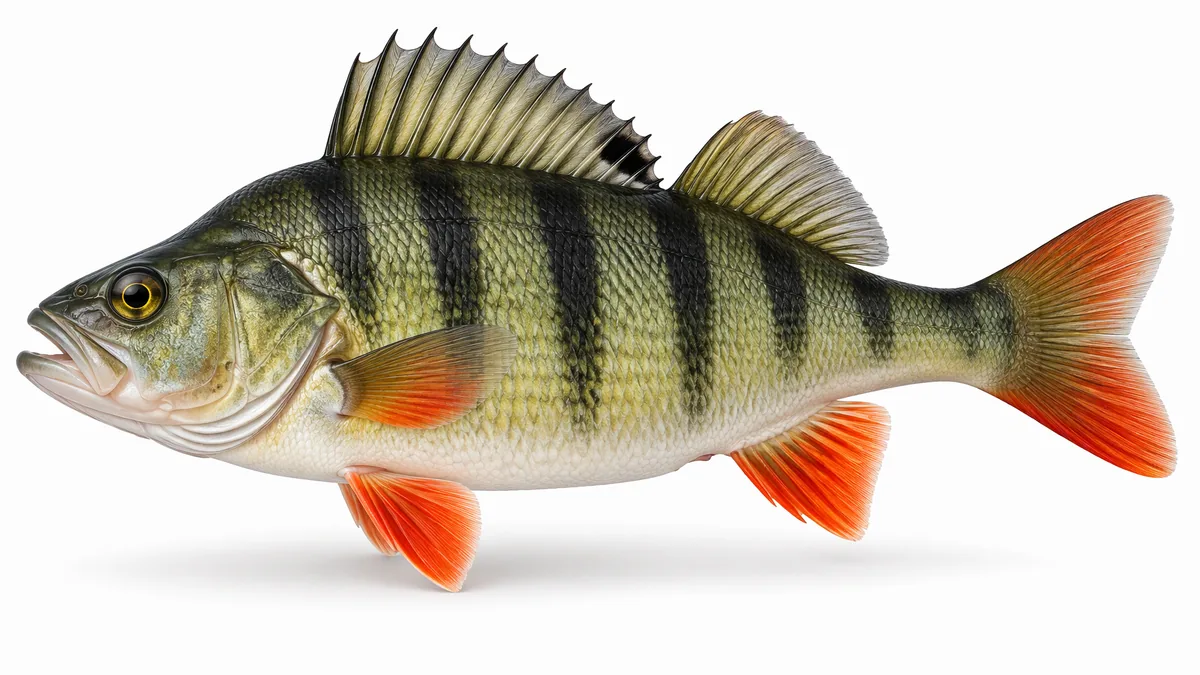
How do you tell a perch from a walleye? A perch has bright red-orange lower fins and bold vertical bars. A walleye has plain fins, a glassy eye, a white tail tip, and grows much larger.
Learning how to catch perch is where most European anglers learn to read water, find structure and handle a spiny fish without getting hurt. Master the light approach, fish the weed edges and bridge shadows, and you will rarely be short of bites — and occasionally you will meet a perch worth photographing.
Related Articles
- How to Catch Zander — the bigger, low-light cousin of the perch family.
- How to Catch Carp — the cautious bottom-feeder that shares many perch lakes.
- How to Catch Wels Catfish — a giant predator from the same big waters.
- How to Catch European Seabass — light-tackle saltwater sport.
- How to Catch Yellow Perch — the North American lookalike and its tactics.
About the author and how this was tested
About the author
FishermanGuy
Bank, boat and kayak angler · fishing, crabbing and shrimping since 2021
I buy the gear, fish it for a season and write down what failed. No sponsored verdicts, no free-sample flattery. Every rig on this page has landed fish in water I can point at on a map.
How this was tested
- Every rig gets at least six trips on the same water before it is published.
- Gear is bought at retail. Free samples are labelled in the first paragraph.
- Dates show first publication and the last time the page was updated.