Field notes
How to Catch Carp: Baits, Rigs & Timing
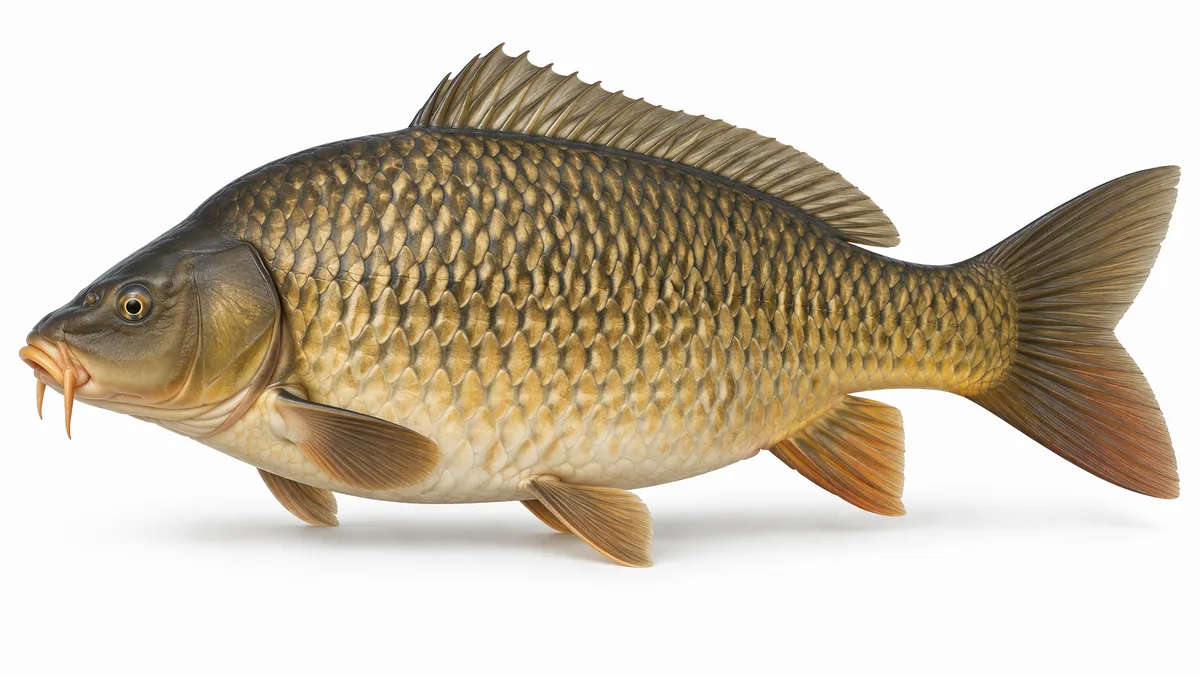
How to Catch Carp
The carp is one of Europe's most familiar freshwater fish and one of the hardest to fool. Heavy-bodied, golden-brown and armed with a pair of barbels, it roots through muddy bottoms, learns from pressure and can ignore a bait that worked a week earlier. Learning how to catch carp is really a lesson in patience and preparation: find feeding fish, bait the spot, present a hookbait among it, and wait for a confident take rather than a nervous one. For identification, range and biology, read the full Carp species profile; this guide focuses on catching them.
Best Time to Catch Carp
Carp are warm-water fish, and the best time to catch carp follows their comfort zone. They feed hardest when the water sits between about 15 and 28°C, with a sweet spot around 18 to 25°C. Below roughly 8°C they mostly shut down, and winter fishing becomes a slow game of patience for the occasional bite.
Spring, in the weeks before spawning, is a classic feeding window as carp pile on weight. Autumn is the other peak, when fish feed hard before the cold. Spawning runs in late spring and early summer once the water reaches about 18–20°C, and the period right after can slow as fish recover.
On a warm summer day, the clock matters. Dawn, dusk and the first hours of darkness are when carp move into the shallows and feed confidently. Bright, calm midday sun often pushes them into shade, under overhanging trees or into deeper water, and they become far harder to tempt. A warm night after a hot day can be one of the best times of the year to be on the bank.
Weather that warms the water and adds a little colour, such as a mild spell or a warm rain, tends to improve feeding. A cold snap does the opposite.
Best Gear for Carp
Carp tackle is built for long waits and powerful runs, not for casting tiny lures. A dedicated carp rod in the 12 ft range with a 2.5–3 lb test curve handles both the cast and the fight, and a large pit reel with a smooth, reliable drag gives you the line capacity for a big fish's first run.
| Component | Carp-ready choice |
|---|---|
| Rod | 12 ft carp rod, 2.5–3 lb test curve |
| Reel | 10000–12000 size pit reel with a smooth front drag |
| Main line | 15–20 lb monofilament or braid |
| Hooklink | 15–25 lb coated braid or fluorocarbon |
| Hooks | Strong wide-gape hooks, size 4–8 for boilies |
| Bait | 15–20 mm boilies, sweetcorn, particles, paste |
| Extras | 42 in landing net, padded unhooking mat, weigh sling, bite alarm |
A bite alarm or a swing indicator lets you rest while you watch the water, and a large soft-mesh landing net is essential — carp are big, and a small net costs fish. The padded unhooking mat and weigh sling protect the fish and your back.
Do not cut corners on the mat. A carp dropped on hard ground can be injured, and a fish lifted badly can hurt you.
Best Bait for Carp
The best bait for carp depends on the water and the season, but a few approaches work almost everywhere. Warm water suits sweet, starchy baits: sweetcorn, boilies and paste made from steamed sweet potato and flour. In cold water, fishmeal and shellfish-flavoured baits, and plain worms, often out-fish the sweet stuff.
Natural and particle baits. Sweetcorn, worms, prawns, snails and particles such as tiger nuts and hemp all catch carp. They are cheap, effective and easy to bait with. A bed of particles or corn draws fish in and holds them while they feed.
Boilies. These shelf-stable, hard baits come in 15–20 mm sizes for most carp, with bigger sizes for specimen waters. Fishmeal boilies suit cold water and big fish; fruity and sweet boilies suit warm water. A single boilie on a hair rig, fished over a small bed of freebies, is the backbone of modern carp fishing.
Paste and dough. A soft paste around the hook or on a method feeder releases scent quickly and is deadly in the margins. It is also the classic bait for wary fish on pressured waters.
The bait matters, but the baiting matters more. A modest bait presented over a well-baited spot beats a fancy bait dropped on bare bottom.
Carp Rigs
A carp rig is designed to do one thing well: hook a wary fish that has mouthed and rejected baits before. These three cover most situations.
Hair rig. The classic. Tie a loop of hair from the bend of the hook, thread a boilie onto it with a bait stop, and position the hook just below the bait. When a carp sucks in the boilie, the hook follows and turns in the lip. Keep the hair short enough that the hook sits close to the bait, and check the point is sharp before every cast.
Bolt rig. Add a heavy inline lead or a lead clip behind the hair rig. The weight anchors the rig so that when a carp takes the bait and moves off, the hook sets against the lead. This self-hooking action is why bolt rigs dominate pressured carp waters.
Method feeder rig. For margins and method waters, mould groundbait or pellet mix around a method feeder with a short hooklink and a hair-rigged bait buried in the mix. The feeder delivers a tight patch of attraction and the hookbait in one package, which is ideal for casting accuracy and for drawing fish to a precise spot.
On rivers, a running lead and a longer hooklink let the bait move naturally in the current. Whatever the rig, keep it simple, keep it sharp and check the hooklink for damage after every fish.
How to Catch Carp, Step by Step
- Find the fish. Look for bubbles, stirred mud, tails breaking the surface or fish basking in the margins. Feeding carp give themselves away.
- Pick a clear spot. Choose a firm, snag-free area to cast to, ideally near weed, an overhanging tree or a depth change.
- Bait the spot. Spread a bed of particles, corn or boilies and let the fish find it. On pressured waters, bait lightly and often rather than heavy and once.
- Present the hookbait. Cast a hair-rigged boilie or a paste bait onto the baited area and tighten up to the lead.
- Sit back and watch. Use a bite alarm or a float. A carp bite often starts with small taps as the fish tests the bait, then builds to a steady pull or a screaming run.
- Strike on the run. When the line pulls away steadily, lift the rod and set the hook. Do not strike at the false bites.
- Play the fish patiently. Keep the rod bent and let the drag do the work. Carp make powerful first runs; do not try to bully them.
- Land and unhook on the mat. Use a large soft-mesh net, wet the mat, unhook with forceps, and support the fish with two hands for photos.
- Release carefully. Return the fish head-first, hold it upright until it kicks away, and give it time to recover.
The false bite is the heart of carp fishing. Carp mouth and reject baits, and learning to tell a test from a take is the skill that separates a blank from a good session.
Where to Catch Carp
Where to catch carp is mostly about warm, slow, shallow water with a soft bottom. Ponds, lakes, reservoirs, canals, gravel pits and the lower reaches of rivers all hold fish. Carp root through mud and silt for food, so a weedy or muddy bottom suits them, and they tolerate low oxygen and warm, coloured water better than most species.
In a lake, look for the margins: under overhanging trees, along steep banks, beside weed beds and snags, and in deep holes when the sun is high. In warm weather, carp cruise just under the surface, and on hot, still days you may see backs and tails breaking the surface.
On rivers, fish the creases, inlets and slack water behind bends, and any deeper hole where food collects. On canals, moored boats and bridge holes hold fish, and the deeper channel is worth a cast.
Depth shifts with the season and the time of day. In summer, fish shallow margins at dawn and dusk and deeper water at midday. In winter, find the deepest, most sheltered water and fish slowly. Any spot with food, cover and a soft bottom is worth a cast.
Carp Regulations and Safety
Carp rules vary widely across Europe, so check before you fish. In England and Wales, carp are treated as coarse fish: rivers have a closed season from mid-March to mid-June, many stillwaters do not, and most carp fisheries are catch-and-release only. In parts of central and eastern Europe, carp are also a food fish, and a minimum size and daily bag limit usually apply. In Germany and Austria, anglers often need a licence and a permit that lists the rules for the specific water.
As of 2025, the Environment Agency in England and Natural Resources Wales publish the legal framework, but the fishery owner usually adds stricter conditions. Always confirm the season, size and keep rules for the exact water you plan to fish.
On safety, carp are not venomous, but the throat holds pharyngeal teeth that can pinch a finger pushed too far in, so keep fingers clear when unhooking. The bigger risk is weight. A 30 lb carp lifted badly can hurt your back, and a dropped fish can be injured. Use a padded unhooking mat, wet your hands and the mat first, and support the body with two hands. Never lift a carp by the jaw or hold it vertically by the gill cover. Crouch for photos and keep the fish low over the mat, and return it head-first so it can recover.
Common Mistakes and Carp Tips
- Fishing an unbaited spot. Carp respond to bait. Find feeding fish, then feed them and fish among the freebies.
- Striking at false bites. Carp test baits. Wait for a steady run before you lift the rod.
- Heavy baiting on pressured water. Too much bait spooks wary fish. Bait lightly and often instead.
- Ignoring the margins. Big carp often feed close in, under trees and beside weed, not far out.
- Poor unhooking mats. A dry or hard surface strips the slime coat. Wet everything first.
- Lifting by the jaw. Support the belly and keep the fish low; a dropped carp can be badly hurt.
- Fishing cold water fast. Below about 8°C carp slow down. Fish deep, small and slow.
- Keeping the biggest fish. Catch-and-release protects the breeding stock and the fishing.
FAQ
What is the best time to catch carp? Dawn, dusk and after dark in warm weather, and spring before spawning or autumn as fish feed up. Water in the 18–25°C range is when carp feed most confidently.
What bait for carp works best? Sweetcorn, boilies and sweet potato paste in warm water; fishmeal baits and worms in the cold. Baiting the spot matters as much as the bait itself.
What are the best carp fishing techniques for beginners? Find feeding fish, bait a small spot, and fish a hair-rigged boilie or sweetcorn over it. Wait for a steady run before striking, and use a bite alarm or float.
Do carp bite at night? Yes. In summer, carp often feed confidently in the shallows after dark, and night sessions can be some of the most productive of the year.
How big do carp get? Most adults run 40–70 cm and 2–7 kg. A 30 lb fish is a trophy, and the largest recorded carp reach roughly 40–51 kg, though record claims vary by source.
What is the difference between a common carp and a mirror carp? They are the same species. A common carp is fully scaled; a mirror carp has only a few large, irregular scales. Both have barbels.
Learning how to catch carp rewards preparation over luck. Find the warm, weedy corners where they feed, bait the spot, and present a hookbait among it. Then be patient. The reward is a slow, deliberate take and a powerful first run that has kept European anglers on the bank for centuries.
Related Articles
- How to Catch Perch — a spiny predator that shares carp lakes but hunts very differently.
- How to Catch Wels Catfish — Europe's largest freshwater fish in the same big waters.
- How to Catch Zander — a low-light predator for when the carp go quiet.
- How to Catch European Seabass — saltwater sport for the same patient angler.
About the author and how this was tested
About the author
FishermanGuy
Bank, boat and kayak angler · fishing, crabbing and shrimping since 2021
I buy the gear, fish it for a season and write down what failed. No sponsored verdicts, no free-sample flattery. Every rig on this page has landed fish in water I can point at on a map.
How this was tested
- Every rig gets at least six trips on the same water before it is published.
- Gear is bought at retail. Free samples are labelled in the first paragraph.
- Dates show first publication and the last time the page was updated.